
The short answer
For most dairy plants, the cobot vs palletizer operator question turns on three things: how heavy the cases are, how fast the line runs, and how often the pallet pattern changes. A cobot makes sense for steady, moderate-speed end-of-line stacking of uniform cases that sit inside its payload, with one trained person still on the cell each shift. It does not fit heavy or irregular cases, very fast lines or frequent pattern changes, where a conventional palletizer or a dedicated palletizing cell is usually the better match.
Key takeaways
- A cobot fits steady, moderate-speed end-of-line stacking of uniform cases that stay within its payload.
- Heavy cases, fast lines and frequent pattern changes usually favor a conventional palletizer.
- A cobot cell still needs one trained person on every shift, so the plan is fewer staff on palletizing, not zero staff.
- Dairy-specific turnover, overtime and night shift data were not found, so measure your own hours before deciding.
- Measure case flow, case weight and pattern count before comparing any option.
Cobot vs palletizer operator at dairy plants: which makes sense?
For most dairy plants, the cobot vs palletizer operator question turns on three things: how heavy the cases are, how fast the line runs, and how often the pallet pattern changes. A cobot makes the most sense where stacking is steady, the line runs at a moderate speed, the cases are uniform and inside the robot's payload, and one trained person stays on the cell each shift. It does not fit heavy or irregular cases, very fast lines or frequent pattern changes. In those cases a conventional palletizer or a dedicated palletizing cell usually fits better.
The comparison is reasonable because the motion is the same. A cobot stacks cases onto pallets with the same repetitive pick and place motion a palletizer operator performs at the end of the line. When cases arrive in a predictable position and the stack follows a known pattern, the robot can take over the stacking while people handle the parts of the job that need judgment. The real test is whether your cases, line speed and pattern mix stay inside what the robot is built to handle.
Cobots are growing, but they remain a minority of robots. According to the International Federation of Robotics, about 66,000 cobot units were installed worldwide in 2025, which is 11% of 603,000 industrial robot installations. Cobot installations grew 7% that year, slower than the 11% growth in overall industrial robot installations, so a cobot is a considered choice for a specific line rather than a default for every dairy plant.
What does a palletizer operator actually do during a shift?
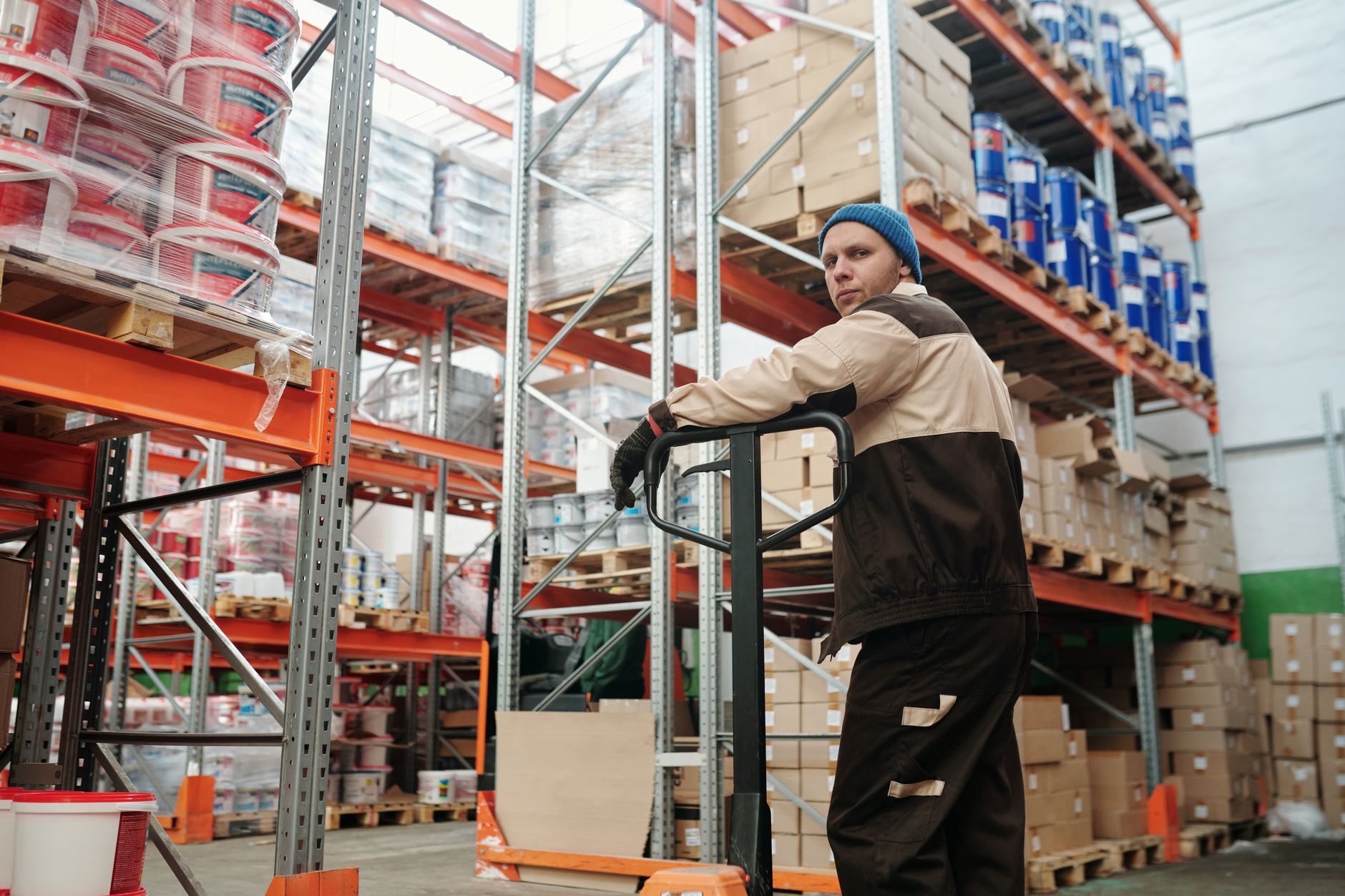
At the end of a dairy line, the palletizer operator receives cases from the packing equipment and builds each layer to the pattern on the pallet. The operator checks the stack for leaning, crushed corners and labels facing the wrong way, places slip sheets or interlayers where the pattern calls for them, and starts the wrapper when a pallet is full. Full pallets go to staging, and counts are recorded for the shift log.
A large share of the shift is not stacking. Between pallets there are pattern changes, pallet swaps, checks on code dates, and quick decisions about a case that looks damaged. When the line stops, the operator clears jams, restarts the flow and tells the packing team which upstream stop caused the trouble. Experienced operators learn those patterns, which is one reason the job depends on people as much as on repetition.
That is also why end-of-line pallet work slows production. If the operator cannot keep pace with the case flow, cases back up on the conveyor, the packer slows or stops, and output drops upstream. A stacking motion that looks simple becomes the bottleneck when a run is at full speed or when a pallet change takes too long.
Which parts of the palletizer job can a cobot take, and which can it not?
A cobot handles the picking and placing that repeats. It can take uniform cases from a known infeed position and place them into a programmed pattern, layer after layer, without the fatigue that builds over a long shift. Multi-pattern support and offline pattern programming are common in palletizing equipment, so a pattern set can often be loaded rather than taught by hand.
Dairy has a working example. According to Dairy Foods magazine, a robotic cell in a cold area at 30°F carried 20 to 30 lb corrugated cases from an outfeed conveyor to a pallet at up to 1,200 cycles per hour, with the pattern built in offline software. That figure is vendor-reported and describes a robotic cell, not a cobot, so treat it as a sign of what the category can do rather than a rate to plan on.
A cobot cannot judge the case that is wrong. It will not notice a crushed corner, a leaking carton or a label facing the wrong way unless a camera or a separate check is added for that purpose. It also does not clear a jam, swap a pallet, drive a full pallet to staging, or decide that the line should slow down. Those tasks stay with people, and they decide whether the cell runs a full shift.
Payload is the hard limit. Butter cases can reach 50 lb, and according to Dairy Foods magazine, the robotic palletizers in one large California dairy cooperative's butter installation were rated for payloads up to 310 lb. That is a different class of machine, so a cobot's payload has to cover your heaviest case plus the gripper, and its reach has to cover the full pallet footprint.
- Steady pace over a long run
Cobot
Holds the same cycle from the first pallet to the last, as long as case flow is steady
Palletizer Operator
Slows as the shift goes on, but adjusts to the flow in front of them
- Pattern changes
Cobot
Runs a pattern loaded in advance; a new pattern needs setup and a check
Palletizer Operator
Changes the pattern by routine and by eye, and catches a wrong layer early
- Heavy or awkward cases
Cobot
Limited by rated payload and a fixed grip
Palletizer Operator
Handles awkward loads within safe lifting limits and knows when to ask for help
- Damaged or mislabeled cases
Cobot
Stacks them unless a camera or separate check is added
Palletizer Operator
Spots and removes them as they come down the line
- Clearing jams and swapping pallets
Cobot
Needs a person to clear the jam or swap the pallet
Palletizer Operator
Handles these directly and keeps the line moving
- Night coverage
Cobot
Runs the same cycle late in a long night, with a person still watching the cell
Palletizer Operator
Brings judgment and covers breaks, but alertness drops late in a shift
How many dairy plants are there in the US, and how common are cobots?
According to NASS data cited by the Agricultural Marketing Resource Center, the US had 1,266 dairy product manufacturing plants in 2019, down 60 from 2017. Wisconsin had 199, New York 123 and California 114. The most recent national total found for this page is from 2019, so treat it as a dated baseline rather than a count for today.
Plant count matters less than plant type. A small plant running one packaging line and a large butter or powder operation handle very different pallet loads, case weights and line speeds. Because end-of-line setups vary so much from building to building, a cobot palletizing cell should be designed around one line's cases and patterns, not a generic dairy template.
Adoption is rising from a low base. According to the International Federation of Robotics, cobots accounted for about 12% of installations in 2024, up from 10.5% in 2023. At that share, a cobot palletizing cell is still a deliberate choice that needs a clear case for one line, not a standard item in most plants.
What does the labor and hours picture look like for end-of-line pallet work?
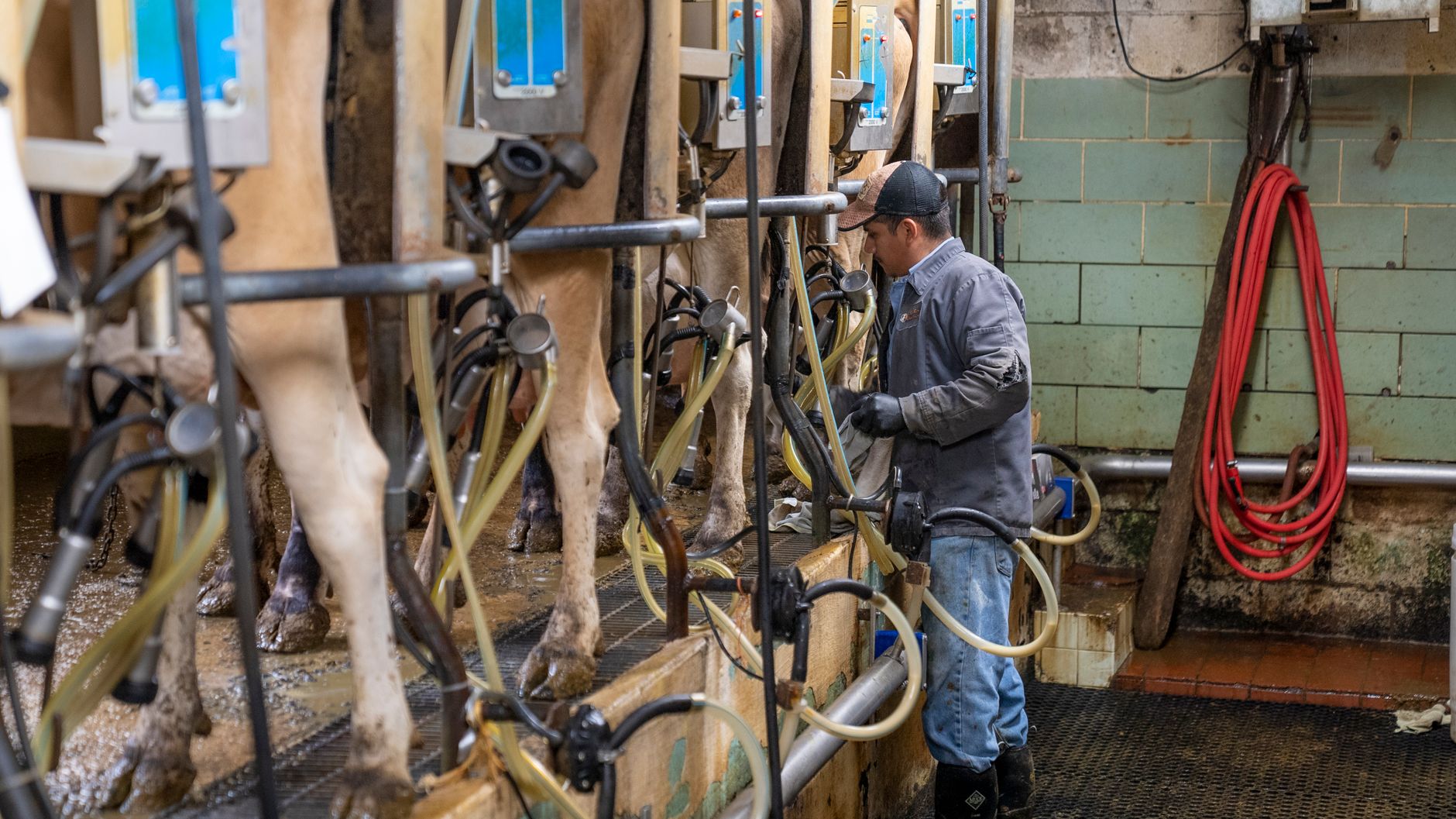
The honest starting point is that dairy-specific figures for palletizing hours, overtime, night shift share and sick days were not found for this page. What exists is broader. The Bureau of Labor Statistics estimated 645,210 employed packers and packagers, hand, in May 2023. That is the closest occupation group to manual stacking and packing, though it covers more than palletizing.
Turnover is the figure planners usually ask for. According to FRED, the separations rate for nondurable goods manufacturing was 2.7% seasonally adjusted in January 2026, and the layoffs and discharges rate was 1.1% that month, not seasonally adjusted. Those series cover all nondurable goods manufacturing, not dairy plants, so they show the general direction rather than your own turnover.
Injury rates are the other part of the picture. A Safety+Health magazine summary of the Bureau of Labor Statistics release reported total recordable cases of 2.3 per 100 full-time equivalent workers for private industry in 2024, down from 2.4 in 2023, with 888,100 cases involving days away from work and a median of 8 days away. That summary was not checked against the BLS release itself. According to Food Safety News, food manufacturing's total recordable rate was 3.6 per 100 full-time workers, most likely 2023 data.
Overtime, night shift share and sick days for dairy or food plants were not found in this research, so this page does not put a number on them. Pull those figures from your own timekeeping before deciding. The value of a cell depends on how many hours your stacking takes today, not on an industry average.
How does a team work with a cobot on the end of the line?
The cell does not run with zero staff. The robot takes over the repetitive stacking, and the plant keeps one trained person on the cell each shift to watch the stack, clear faults, swap pallets and handle any case the robot cannot take. That person is what separates a cell that runs a full shift from one that stops at the first jam.
Staffing changes in a different way. Instead of a full crew stacking at the end of the line, the plant needs fewer people on palletizing, and those people move to staging, quality checks, sanitation or line support. Plan the new roles before go-live so no one is guessing when the robot stops.
Training covers the daily start check, pattern selection, fault recovery and when to call for help. The team also needs a written rule for who declares the cell down and what the fallback is while it is repaired. We pick the robot for the site, lease it through financing, deploy and integrate it, train the staff and service it nationwide, but the person on the floor is what keeps the cell productive day to day.
What can a cobot palletizing cell not do?
Be clear about the limits before you compare options. A cobot cannot tell a bad case from a good one unless a vision or weight check is added for that job. It cannot clear its own jam, drive a pallet to staging, or change the line speed to fit a shift. Those tasks take a person, and the cell works only when someone is assigned to them.
Reach and payload set hard limits. Vendor listings for palletizing cobots vary widely in payload and reach, so compare specification sheets rather than headline figures, and check the fully loaded weight of the heaviest case. A robotic cell with a higher cycle rate is not the same as a cobot, so compare like with like.
Upstream variation is the most common failure. If the case packer delivers cases with uneven spacing, varied orientation or frequent misfeeds, the robot stops more often than the specification suggests. A cell designed around one clean case flow performs well. One that inherits a messy flow does not, and fixing the upstream flow is often the first project.
The research for this page did not cover food sanitation and washdown requirements, cold room ratings or electrical details for dairy plants. Those belong to the specific equipment and to your sanitation team. Treat any claim about cold or wet operation as something to confirm in writing, not something to assume.
How do we get started on a cobot vs palletizer operator decision?

Start with measurement, not with a robot. Record the case weight range, the heaviest case, the pattern count, case flow during a normal run, pattern changes per shift, the leading stop causes and the floor area around the palletizing station. Those numbers decide whether a cobot fits, and they make any comparison between options fair.
Then book a site assessment. We map the station, check case flow, payload and reach, and the cold or wet conditions, then recommend the robot that fits your floor. The lease is quoted after that free site assessment, as a fixed robot lease payment that covers the deployment and integration plan. Ask any other provider for the same details so the comparison stays fair.
Pilot one cell before changing the whole line. A single cell shows the real rate, the stop causes and the staff time it takes to run. Go-live support covers the first runs, and training is set before the cell takes over the stack. Ask how service response works, including who comes out and how quickly, before you sign anything.
Frequently asked questions
Want a cobot at your dairy plant?
Tell us about your site. We will recommend the robot, quote the lease, and keep it serviced.
Sources
- Agricultural Marketing Resource Center, dairy products profile (NASS data)
- U.S. Bureau of Labor Statistics, Occupational Employment and Wage Statistics, May 2023
- FRED, separations rate, nondurable goods manufacturing
- FRED, layoffs and discharges rate, nondurable goods manufacturing
- Safety+Health magazine, summary of BLS injury and illness data
- Food Safety News, poultry injuries and food manufacturing rates
- International Federation of Robotics, president's report 2026
- Dairy Foods magazine, new robotic and automated machinery for dairy plants