
The short answer
Cobot vs palletizing worker in Greenville, SC comes down to one test: does the line repeat enough to keep an arm busy? A cobot makes sense when cases are consistent and the stacking core fills a real share of the shift. It does not make sense for mixed, irregular or low-volume pallets, and even a working cell still needs people for pallet bases, exceptions, wrap and robot care, so the realistic result is one robot with fewer staff, not zero staff.
Key takeaways
- A cobot fits steady, repetitive stacking with consistent cases and enough volume to keep the arm working.
- It struggles with mixed products, irregular or damaged cases, and low-volume pallets.
- Pallet bases, exceptions, wrap and robot care stay with people.
- According to FRED, transportation, warehousing and utilities employment in the Greenville-Anderson-Greer metro was 15.6 thousand in December 2025.
- Time your own line and book a free site assessment before any lease quote.
Cobot vs palletizing worker in Greenville: when does a robot make sense?
A cobot makes sense in a Greenville, SC palletizing cell when the work repeats: similar cases, similar pallet patterns, and enough stacking in a shift to keep the arm busy. It makes less sense when the line runs many SKUs, small batches or irregular cases that change through the day, because each change needs a setup and a person still has to handle what the pattern cannot.
The floor and the product matter as much as the job. A cell needs a fixed footprint, a steady infeed that presents cases the same way every time, and a clear exit path for finished pallets. If cases arrive damaged, crushed or unstable, the robot spends its time stopping instead of stacking.
It does not make sense for a site with very low palletizing volume, where one worker covers many tasks anyway, or a building whose layout cannot change. In those cases a person on the stack, supported by a better lift aid, may be the simpler and lower-risk choice.
What does a palletizing worker actually do in a shift?
A palletizing worker takes cases from a conveyor or staging table, places them in a set pattern on a pallet, and keeps the stack square enough to wrap and move. The core of the job is repetitive and physical. Most of the active time is spent reaching, turning, lifting and stacking in the same posture.
Around the stacking, the job includes building the pallet base, adding layer sheets where the pattern calls for them, checking that the stack is stable, moving full pallets to the wrap station, and clearing jams or misfed cases. Many workers also restock empty pallets and keep the infeed tidy so the line does not starve.
Our research did not find published hour figures for how this time splits on a palletizing line. The split between active stacking and everything else is the number that drives the robot decision, so time the job on your own line over several normal shifts before deciding. Include the slow periods and the jam periods, not only the best hour.
Median hourly wage, Laborers and Freight, Stock, and Material Movers, Hand
$4,228
Monthly cost of one full-time worker in Greenville, SC, at the median wage plus payroll costs (an estimate, not a quote).
- Repetitive stacking
Cobot
Places each case to a taught pattern with the same placement on every layer.
Palletizing Worker
Stacks well, but accuracy and pace depend on fatigue and attention across a long shift.
- Night or unattended hours
Cobot
Can run a scheduled shift only when the cell is set up and cleared for that use.
Palletizing Worker
Can watch the stack, call for help and adjust when a pallet looks wrong.
- Mixed or irregular cases
Cobot
Needs a new pattern, gripper check or setup for each product family.
Palletizing Worker
Adapts by hand to new sizes and damaged cases without a setup change.
- Pallet exceptions
Cobot
Stops for a fault, and a person has to clear it before the cell restarts.
Palletizing Worker
Spots a leaning stack or a wrong item and fixes it at the pallet.
- Pallet bases, slip sheets and wrap
Cobot
Usually needs separate equipment or a person, so the cell does not cover it.
Palletizing Worker
Handles all of it with the same worker in the same shift.
Which palletizing tasks can a cobot take, and which can it not?
A cobot is strongest at the repetitive core: picking cases from a known infeed position and placing them to a stored pattern, layer after layer. Once the pattern is taught and the infeed is consistent, it places the same case in the same place without the fatigue that builds over a long shift.
It is weaker at the edges. Pallet base building, slip sheet handling, pallet exchange and wrap usually need separate equipment or a person. Irregular or damaged cases, mixed products with very different sizes and weights, and loads outside the arm's payload or reach are the common reasons a cell still needs a person nearby.
The gripper is the practical limit. A gripper that handles one case format well can struggle with another, so each new product family needs a check before it goes on the cell. Put that check into the scope of work before you agree to anything, because it decides how often the team changes tooling.

What does the local labor picture look like for this job in Greenville?
The government wage data on this page gives the local wage for this job. Use it as the labor baseline, then add what a wage line does not show: the time lost to lifts and fatigue, injury and claims time, and the coverage needed for breaks, absences and training.
The metro picture is moving. According to FRED, the Federal Reserve Bank of St. Louis data service, transportation, warehousing, and utilities employment in the Greenville-Anderson-Greer metro was 15.6 thousand in December 2025, not seasonally adjusted, up from 15.1 thousand in 2024 and 14.6 thousand in 2023. That series covers Anderson, Greenville, Laurens and Pickens counties. USAFacts, citing BLS state and local data, reports that the metro added an average of 550 jobs a month in 2025.
Two national references are useful for the same job. According to the Bureau of Labor Statistics Occupational Outlook Handbook, hand laborers and material movers held about 6.9 million jobs in 2025, with 4 percent growth projected from 2025 to 2035, or about 288,900 new jobs. For turnover, the BLS JOLTS release reports that the 2025 annual quits rate was 2.0 percent economy-wide, and annual quits fell by 1.3 million from 2024. Those figures describe the whole economy and the occupation, not this shift on this line. We did not verify overtime, night shift or sick day rates for this job in this research pass, so measure those in your own time records rather than trusting a national average.
How many hours would a robot take over on a palletizing line?
The honest answer depends on the line, and our research did not produce sourced hour figures for palletizing shifts. What we can say is which tasks move. The stacking core moves to the cell. Pallet bases, exceptions, wrap, staging and cell care stay with people, and that limits the hours the robot can free.
Think in hours of human attention, not headcount. If stacking is most of a worker's active time on a steady line, the cell can free a meaningful share of that person's shift for the other tasks. If stacking is a small slice of the day, the case for the robot is weaker and the savings are harder to find.
Ask for a time study of your actual line that counts idle time, jams and changeover, not only cycle time. Cycle time on a spec sheet is the best case. The gap between the best case and a normal shift is where the payback argument succeeds or fails.
| Task | Today | With a robot |
|---|---|---|
| Stacking cases to the pattern | Most of a worker's active time on a steady line | Done by the cell, paced by the infeed |
| Building pallet bases and slip sheets | A recurring task between pallets | Stays with a person or separate equipment |
| Clearing jams and misfed cases | Unscheduled, and it interrupts the stack | Still needs a trained attendant at the cell |
| Moving full pallets to wrap and staging | Steady moves to the wrap station | Unchanged, with fewer people on the stack |
| Pattern and gripper changes | A worker adjusts the stack by hand | A planned change run by a trained operator |
| Cell care and cleaning | Little or none | A new recurring task for the attendant |
The research pass did not find sourced hour figures for palletizing shifts, so these rows are qualitative. Measure your own line with a time study before using any hour figure.
How does a team work with a robot on the stack?
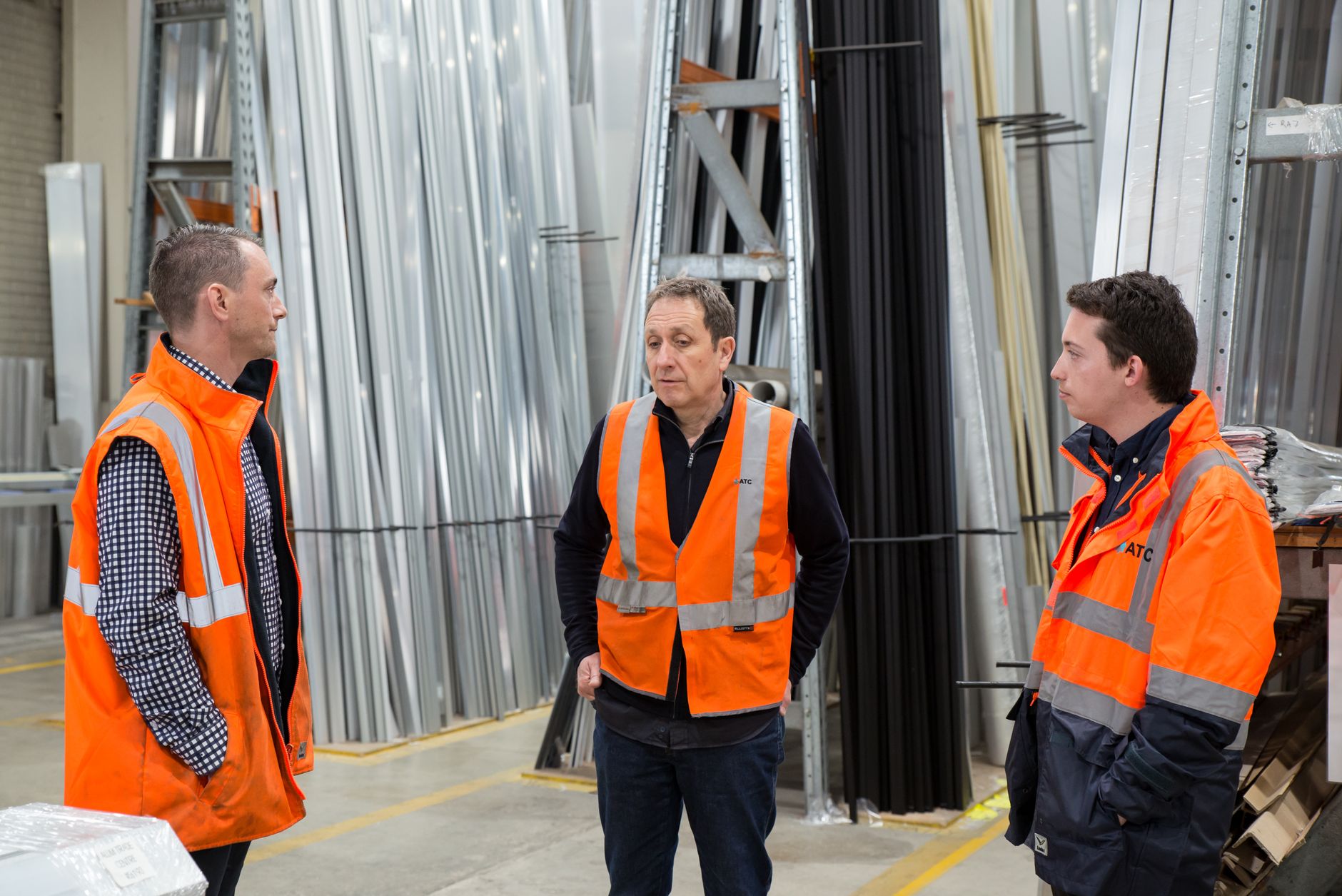
The realistic model is a robot plus fewer staff, never zero. A cell that stacks cases still needs people to feed the infeed, build pallet bases, handle exceptions, move full pallets to wrap and dock, and maintain the robot and its gripper.
People on the line change jobs more than they disappear. Operators become cell attendants: they clear faults, swap grippers for new case formats, check the pattern on the first pallets of a run and keep the infeed fed. That can be a better use of a worker than repetitive lifting, but only if the site trains them for it.
We are a US commercial robot integrator. We choose the robot for the site, lease it through financing, deploy and integrate it, train the staff who run it, and service it nationwide. Training and service are part of the deployment, because a cell waiting on a fault is lost time on the line, and the people who run it need to know what to do when that happens.
What can a cobot not do on a palletizing line?
It cannot replace judgment about a bad pallet. A person sees a leaning stack, a crushed corner or a case that is the wrong item, and stops the line. A cobot will place the case unless a sensor or an operator catches the problem first.
It cannot run without maintenance. Grippers wear, sensors need cleaning, and the pattern must be updated when the product changes. Plan a service schedule, and plan for downtime when a part fails, because a single cell with no backup means the line waits until the part is replaced.
It cannot fix an upstream problem. If cases arrive out of spec, the cell slows or stops. Fix the infeed before you judge the robot, and do not judge the cell on a week of bad incoming product.
What do adoption and injury figures say about palletizing automation?
Adoption is rising. According to the International Federation of Robotics, about 38,000 industrial robots were installed in the US in 2025, up 11 percent, and installations in the food sector rose 30 percent. These are preliminary figures, but the food sector growth matters for any palletizing line in food or beverage.
Cobots are a growing share of North American orders. According to the Association for Advancing Automation (A3), cobots accounted for 7,212 units of robot orders in full-year 2025, or 19.6 percent of robot units ordered and 10.7 percent of robot revenue. Total North American robot orders rose 6.6 percent in the same year.
Injury exposure is the other side of the case. According to a GAO report from October 2024, as reported by trade press, musculoskeletal disorders were the leading cause of injuries among warehouse and delivery workers. In a 2024 OSHA case at a Nebraska food producer, reported by trade press, manual lifts of boxes up to 99 pounds from a conveyor to floor-level pallets were cited, with stacks up to nine boxes high. One case does not set a trend, but it shows the exposure a stacking cell is meant to reduce.
How do you start a cobot palletizing project in Greenville?
Start with the data you already have: pallet counts per shift on each line, a time study of the real stacking work, the case sizes and weights, and the local wage for this job from the government wage data on this page. Those inputs turn a general question into a line-specific one.
Then book a free site assessment. We map the cell, check the infeed and the floor, and confirm whether the work fits a cobot. A fixed robot lease payment is quoted after that assessment, through lease financing, not before. If the work does not fit, we say so and point you to the simpler option.
Consider a pilot on one cell before a second. A single leased unit, with backup coverage arranged in advance, lets you test the real case mix over a few normal weeks before committing to more cells. Our service approach uses on-site dispatch and remote triage, and we can review insurance terms and operator training with you before go-live.
Frequently asked questions
Put a robot to work in Greenville.
We walk your site, learn the job, and recommend the unit that fits. Then we quote the lease, deploy it, and keep it serviced.
Sources
- US Bureau of Labor Statistics, Occupational Employment and Wage Statistics (OEWS May 2024)
- FRED, Greenville-Anderson-Greer transportation, warehousing and utilities employment
- USAFacts, Greenville SC jobs added (citing BLS)
- BLS Occupational Outlook Handbook, Hand laborers and material movers
- BLS JOLTS release, 2025 annual data
- International Federation of Robotics, US robot industry press release
- A3 full-year 2025 robot orders, Power Motion Tech coverage
- GAO October 2024 warehouse ergonomics report, as reported by trade press
- OSHA palletizing case, as reported by trade press