
The short answer
Cobot vs palletizing worker in Kansas City comes down to how repeatable the work is and how hard the shifts are to staff. A cobot makes sense when case sizes are similar, pallet patterns repeat, and the line runs long or night shifts that are hard to fill, while a palletizing worker still fits better when patterns change often, loads arrive damaged or the line is too small to keep a robot busy. The realistic outcome for most lines is a robot plus fewer staff, not zero staff.
Key takeaways
- A cobot fits steady, similar-size case stacking on long or hard-to-staff shifts.
- The robot moves the palletizing worker toward supervision, so plan for a robot plus fewer staff.
- Pattern changes, damaged cases and forklift work stay with people.
- Sector injury and turnover data support the case, but your own logs make the decision.
- Lease terms come as a fixed robot lease payment quoted after a free site assessment.
Cobot vs palletizing worker in Kansas City: which makes sense?
A cobot makes sense for a Kansas City palletizing line when case sizes are similar, pallet patterns repeat, and the line runs long or night shifts that are hard to staff. A palletizing worker still fits better when patterns change often, loads arrive damaged or irregular, or the line is small enough that the robot would sit idle for much of the shift.
For most lines the realistic outcome is neither a full replacement nor a robot standing alone. It is a collaborative robot doing the repetitive stacking with fewer people on the line, while a person handles loading, load checks, exceptions and changeovers. Zero staff is not a model we recommend, because a palletizing cell still needs someone to feed it, clear jams and respond when a load fails.
Three things decide which side of the line you land on: how steady your product mix is, how hard your shifts are to staff, and how often you change patterns. The rest of this page covers what the work involves, what the data says, and what to check before you decide.
What does a palletizing worker actually do in a shift?
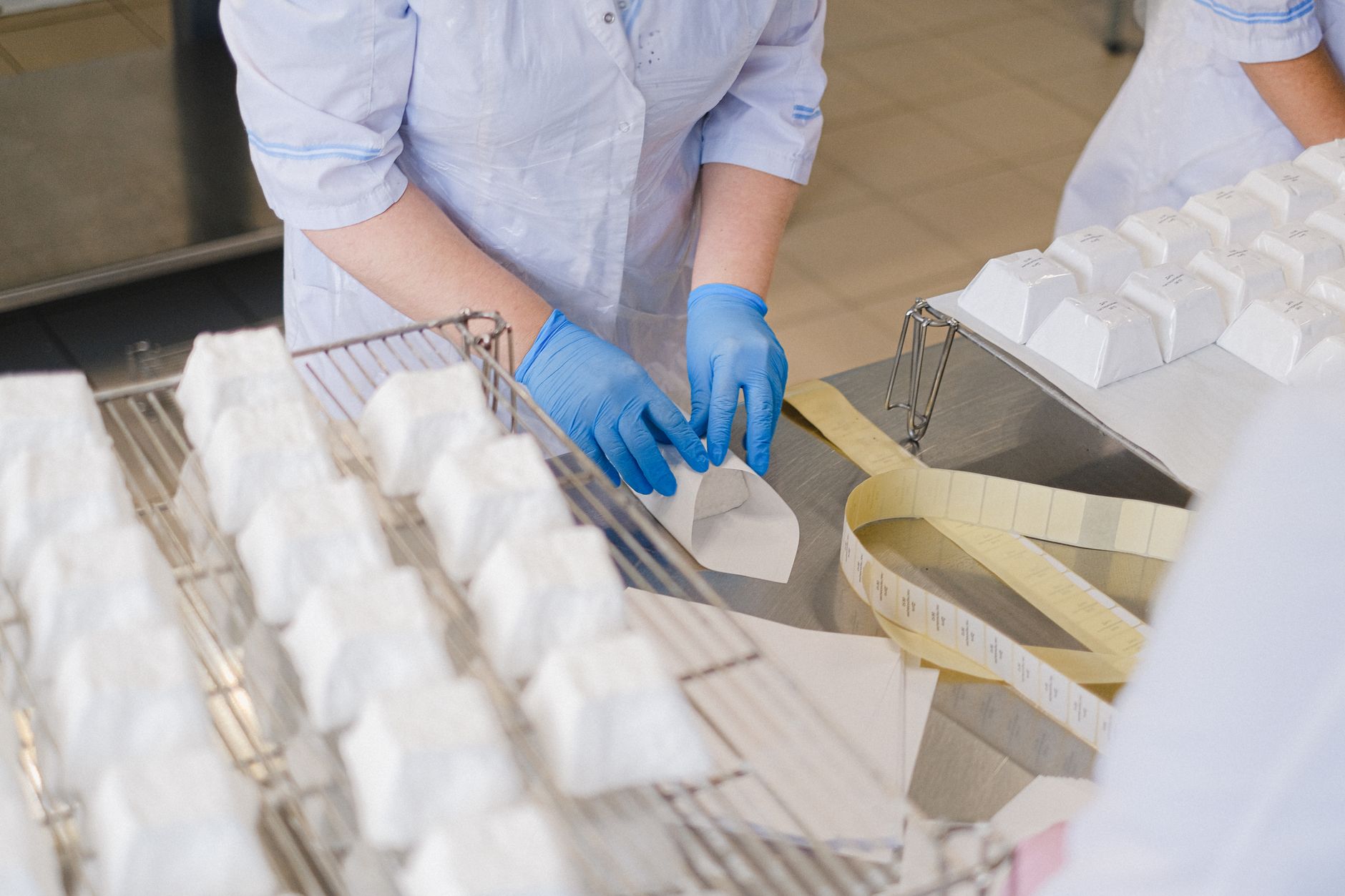
On a typical palletizing line the worker does far more than stack. The shift starts with pallet dispensing or slip sheet loading. Cases then arrive on an infeed conveyor, and the person builds each layer to a pattern, turning or rotating cases so the stack interlocks. When a pallet is full it leaves the station, usually by forklift or conveyor, and a new one starts.
Much of the time goes to repetition at one reach and one height. The worker bends, twists and lifts case after case, and corrects the pattern when a case arrives crushed or off size. That repetition is why injury data matters here. In BLS data for 2016, overexertion was the leading injury event for the transportation and material moving group, as covered in the labor section below.
Around the stacking, the worker also handles the tasks that change the work: checking pattern sheets, adjusting for a new case size, clearing a jam, wrapping or labeling if no separate station does it, and keeping counts. Those tasks are where a robot needs a person, and they are easy to undercount when labor is estimated from stacking alone.
Median hourly wage, Laborers and Freight, Stock, and Material Movers, Hand
$4,542
Monthly cost of one full-time worker in Kansas City, MO, at the median wage plus payroll costs (an estimate, not a quote).
Which parts of palletizing can a cobot take, and which can it not?
A cobot is well suited to the repeated middle of the job: picking uniform cases from an infeed, placing them to a programmed layer pattern, and placing slip sheets between layers. It works best when case size, weight and orientation stay inside a narrow band, because the gripper and the program are built around that band.
It is a weaker fit for work that needs judgment or variety. A cobot does not decide that a case is crushed and should be pulled, it does not rebuild an unstable stack, and it does not handle a new case size without reprogramming and sometimes new tooling. Dock coordination and forklift work around the cell stay with people.
- Cases outside the designed size, weight or orientation range
- Crushed, leaking or damaged cases that need to come off the line
- Unstable stacks that need a person to rebuild the pattern
- Mixed-SKU runs with frequent pattern changes
- Pallet staging, forklift moves and dock coordination
- Wrap or label handling where no separate station is in place
- Same layer pattern all shift
Cobot
Holds the programmed pattern without tiring
Palletizing Worker
Holds the pattern well but tires and drifts over a long shift
- Crushed or irregular cases
Cobot
Slows or stops and needs a person to clear the fault
Palletizing Worker
Spots the bad case and pulls it at once
- New case size or pattern
Cobot
Needs reprogramming, a test run and sometimes new tooling
Palletizing Worker
Adjusts from a pattern sheet after a short briefing
- Short-staffed shift
Cobot
Runs the cell only with a trained operator present, so it does not replace a missing person
Palletizing Worker
Needs an available worker and a break schedule
- Odd tasks and cross-training
Cobot
Limited to the programmed task
Palletizing Worker
Handles rework, tidying, forklift support and other station work
- Floor footprint and guarding
Cobot
Needs a fixed cell footprint and guarding
Palletizing Worker
Moves between stations without a fixed footprint
What do the hours, turnover and injury numbers say?
The government wage data on this page gives the local wage for this job, and the labor picture around that wage decides whether the robot pays off. According to the BLS Kansas City release using May 2025 data, the metro had 104,360 jobs in transportation and material moving, 9.5 percent of local employment. That is a broad group, not palletizing alone, so it shows how deep the local labor pool is rather than how many palletizers work in the metro. The BLS Kansas City release for May 2023 data also put the metro's mean wage for all occupations below the national figure.
Turnover is harder to pin down for this job in this metro. According to Fountain's analysis, quits in transportation, warehousing and utilities averaged 2.2 percent a month in 2025, against 2.0 percent for total nonfarm. That is a sector rate, not a palletizing rate, and we did not find a verified Kansas City figure for this occupation. A FRED series for transportation, warehousing and utilities in the Kansas City, MO-KS metro read 66.1 for December 2025, in thousands and not seasonally adjusted, which sizes the local sector but not turnover. Pull your own turnover log before you use any sector rate.
Injury records point the same direction. According to BLS, the days-away-from-work rate for transportation and material moving was 229.3 per 10,000 full-time equivalent workers in 2016, against 91.7 for all workers, and the same group's rate was 193.7 in 2018, with a median of 13 days away from work. For laborers and freight, stock, and material movers, hand, the BLS days-away incidence rate was 306.8 in 2016, 300.7 in 2017 and 252.1 in 2018. The direction is down, but these rates remain well above the all-worker rate reported for 2016.
Are other plants adding cobots?
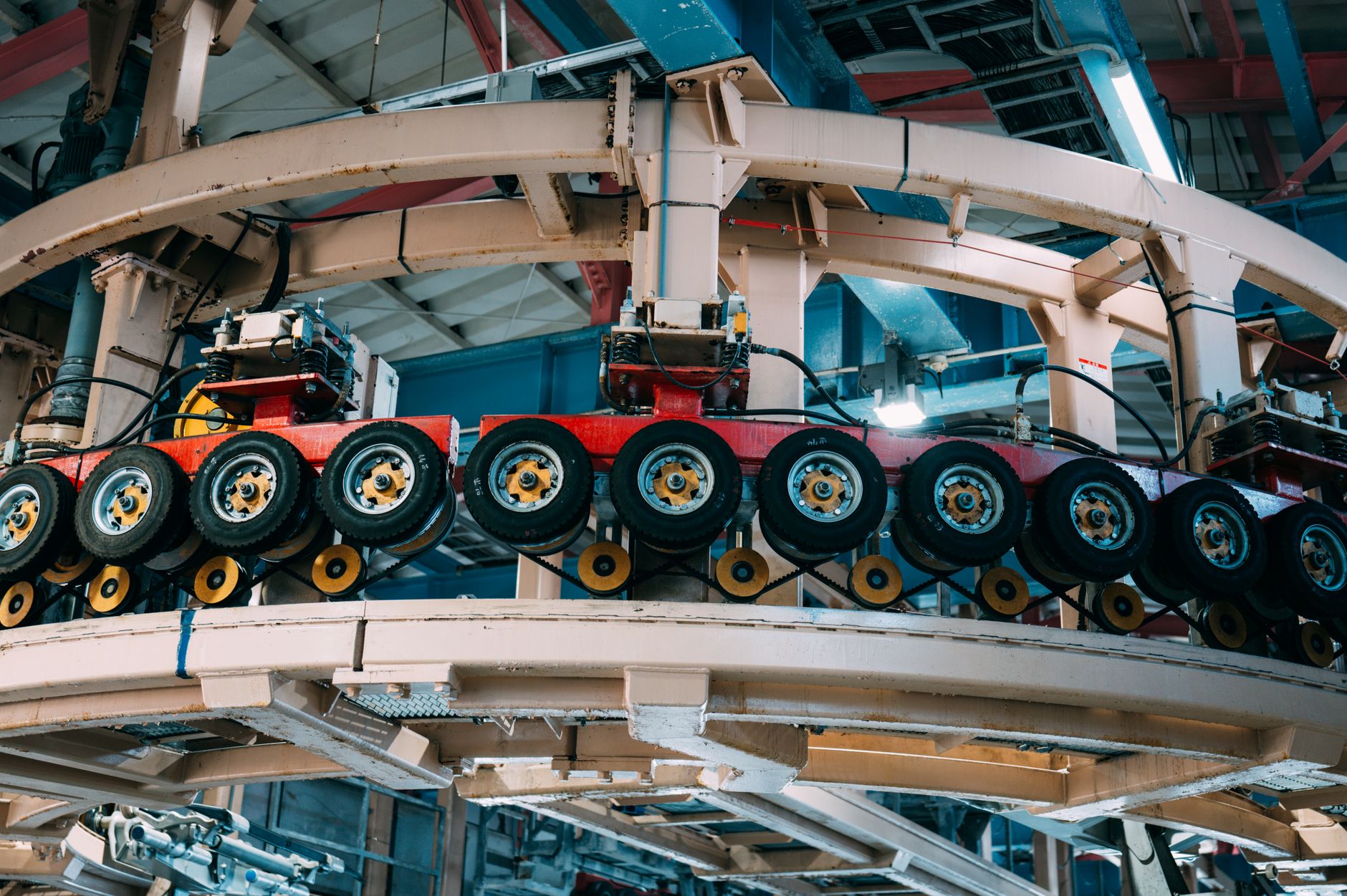
Adoption is growing. According to A3's full year 2025 North American figures, 36,766 robots were ordered, up 6.6 percent in units, and cobots made up 7,212 units, or 19.6 percent of robots ordered. Cobots were 28.6 percent of orders in the fourth quarter of 2025 alone, a higher share than the full-year figure.
A3 does not break out palletizing applications, so these figures show how fast cobot demand is moving across industries, not how many palletizing cells are running in Kansas City or anywhere else. Treat the trend as a reason to look seriously, not as proof that your line fits.
The decision still rests on your pallet patterns, case data and staffing gaps. An industry average cannot tell you whether your infeed is stable enough for a cell to run through a shift.
How does a team work with a robot on palletizing?
The working model is a robot plus fewer staff, not a robot in place of the whole line. The robot takes the repeated stacking through the middle of the shift, and people handle infeed, loading, load checks, pattern changes, jams and forklift moves. A station that once had one worker stacking by hand may run with one person covering the cell and the surrounding tasks.
The change in the day is mostly in what people do. Instead of lifting case after case, the operator sets up the cell, watches the stack, clears exceptions and keeps the infeed supplied. That work is still physical, but it is less repetitive, and it moves the person toward supervising a process rather than repeating the same lift.
Plan for coverage gaps. If the robot stops, the line needs a trained person who can run the station by hand until the cell is back. Keep at least one trained backup on each shift, or the robot's downtime becomes your line's downtime.
What can a cobot palletizer not do?
A cobot palletizer does not fix a poor pattern or an unstable product mix. If cases arrive in varied sizes, damaged or in random order, the robot slows or stops, and the labor case shrinks quickly. Fix upstream variation before the robot, because the robot will not absorb it.
It also will not run unattended for a full shift without someone present. Restocking pallets and slip sheets, clearing jams and responding to faults take a person, and uptime depends on that person being trained and on the site being organized around the cell.
Expect a setup period. Each new pattern or case change needs programming and a test run, and the first weeks usually reveal edge cases in the infeed. Treat that period as a learning phase, and measure against steady state only after it has settled.
How do leasing and payback work for a cobot palletizer?
We lease the robot through financing, and the lease is a fixed robot lease payment quoted after a free site assessment. Our team picks the right robot for the site, deploys and integrates it, trains the staff and services it nationwide, so the quote covers the working cell rather than a machine on its own.
Payback depends on how many shifts the cell runs, how much of a staffing gap it covers, how much of the day the robot actually works, and how often the patterns change. We measure those inputs during the site assessment, including nights, weekends and the changeovers that still need a person. We do not give a general payback figure because it depends on the line.
Ask for maintenance terms with the quote. A lease that includes service and on-site dispatch changes the risk, because every stopped hour gives back part of the labor case.
How do you get started in Kansas City?
Getting started is a sequence, and the order matters more than speed.
- Run a free site assessment that maps the infeed, patterns and staffing gaps
- Sort case data into the size, weight and pattern ranges the cell must handle
- Deploy and integrate one leased unit on one line, with a backup plan
- Train the operators and the staff who will cover the station by hand
- Go live with support, then review uptime and labor coverage after the first period
Frequently asked questions
Put a robot to work in Kansas City.
We walk your site, learn the job, and recommend the unit that fits. Then we quote the lease, deploy it, and keep it serviced.
Sources
- US Bureau of Labor Statistics, Occupational Employment and Wage Statistics (OEWS May 2024)
- BLS Kansas City metro OEWS release, May 2023 data
- BLS Kansas City metro OEWS release, May 2025 data
- BLS TED, nonfatal injuries and illnesses in 2016
- BLS TED, transportation and material moving injuries in 2018
- BLS injury and illness snapshot, laborers and freight, stock, and material movers, hand
- A3 robot orders, full year 2025
- Fountain, warehouse turnover rate analysis
- FRED, transportation, warehousing and utilities, Kansas City metro