
The short answer
A delivery robot vs food runner decision at an airport concourse restaurant comes down to one question: is most of the runner's work a repeated trip between the counter and seating during gate-rush peaks? A robot fits that repeated trip, while a food runner still covers crowded terminal legs, table recovery and anything that needs a person to decide. It does not fit where the route changes daily, where the room is quiet most of the shift, or where orders are large, heavy or fragile and must cross busy aisles, and in practice the setup is a robot plus fewer staff, never zero staff.
Key takeaways
- The delivery robot vs food runner choice turns on whether gate-rush trips repeat on the same route.
- A robot takes the counter-to-seat run; a person still handles crowded terminal legs and table recovery.
- No published count of airport concourse restaurants was found, so measure your own gate-rush trips first.
- Food service turnover is high, so staffing gaps are the pressure a robot can realistically ease.
- Start with one leased unit after a free site assessment, and keep staff on the floor.
Is a delivery robot vs food runner the right call for an airport concourse?
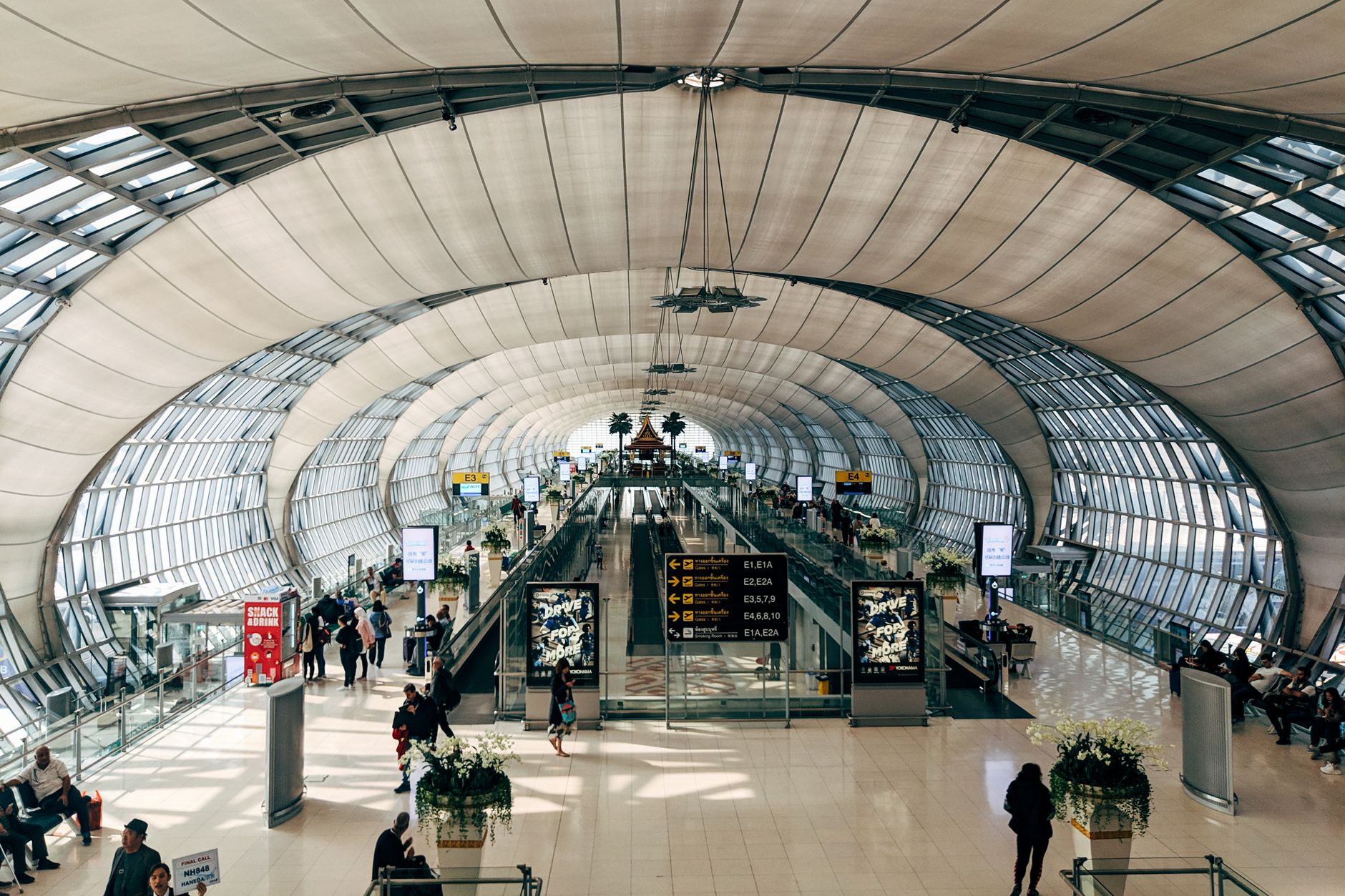
Short answer: a delivery robot makes sense when the work is a repeated run on a known route, and it is a poor fit when the route is improvised. Airport concourses are unusual because demand arrives in waves. A gate that boards at once can fill a restaurant within minutes, then the room goes quiet until the next bank of departures.
The robot is strongest in that peak. It can take the same counter-to-seat trip again and again while staff hold the pass, the register and the tables. It is weakest where the layout shifts, where seating sits along a long walkway with people standing in the path, or where the operator expects one machine to cover the whole terminal.
We would not recommend a robot where the restaurant depends on a runner for heavy trays, large volumes of hot drinks, or guests who need a person to explain an order. A robot is a route tool. It does not replace the judgment a runner brings to a crowded space.
What does a food runner actually do in an airport concourse shift?
In a concourse restaurant the runner is rarely doing one job. They take finished orders from the pass or a counter window, carry them to seating, confirm the right order reached the right party, and clear tables when guests leave for their gate. They also restock condiments, cutlery and drink stations, and they cover for a cook or cashier when a line backs up.
The terminal adds friction. Aisles fill with rolling bags, people wait near gates, and a runner has to route around them with a tray in hand. Seating is often shared with the public corridor, so a tray travels through the same space as passengers heading to their flights.
This matters because a runner's day is a mix of predictable trips and unpredictable ones. The predictable trips are the part a robot can take. The unpredictable ones need a person, and they often happen in the same minute as the predictable ones.

Median hourly wage, Waiters and Waitresses
$3,798
Monthly cost of one full-time worker, at the median wage plus payroll costs (an estimate, not a quote).
Which parts of the runner's work can a delivery robot take, and which can it not?
A delivery robot is built for the fixed run: pick up at a known point, travel a mapped route, stop at a known seating zone, and return. That covers the bulk of counter-to-seat trips during a rush, and it can cover empty-tray returns to a bussing point if the route is mapped that way.
It cannot do most of the human part of service. It cannot answer an allergy question, correct a wrong order, move a family's bags, or step in when a guest spills a drink. It also cannot judge a crowded aisle the way a person does, so the route has to be designed to keep it out of the densest flow.
A simple test: is the carry a long run that repeats, or a short improvised one? The first is what a robot does well. The second stays with the runner.
- Usually suits a robot: a long, repeat run on a mapped route with a clear lane.
- Usually stays with a runner: short, improvised trips through a crowd.
- Usually stays with a runner: hot, heavy or fragile orders.
- Usually stays with a runner: table recovery tied to a guest's question or complaint.
- Repeat counter-to-seat trips
Delivery Robot
Repeats the same mapped route on every trip
Food Runner
Adapts within seconds when an aisle is blocked
- Crowded terminal aisles
Delivery Robot
Waits or detours on its mapped path and needs a route designed around crowds
Food Runner
Steps around people and rolling bags and keeps the tray level
- Guest questions and allergies
Delivery Robot
Cannot answer, so staff must step in
Food Runner
Answers, checks and corrects the order
- Table recovery
Delivery Robot
Only where a bussing route is mapped
Food Runner
Clears tables and resets seating in one trip
- Unusual or fragile orders
Delivery Robot
Standard orders on the mapped route
Food Runner
Large, hot or fragile orders and special requests
How do gate-rush peaks compare with the crowded terminal route?
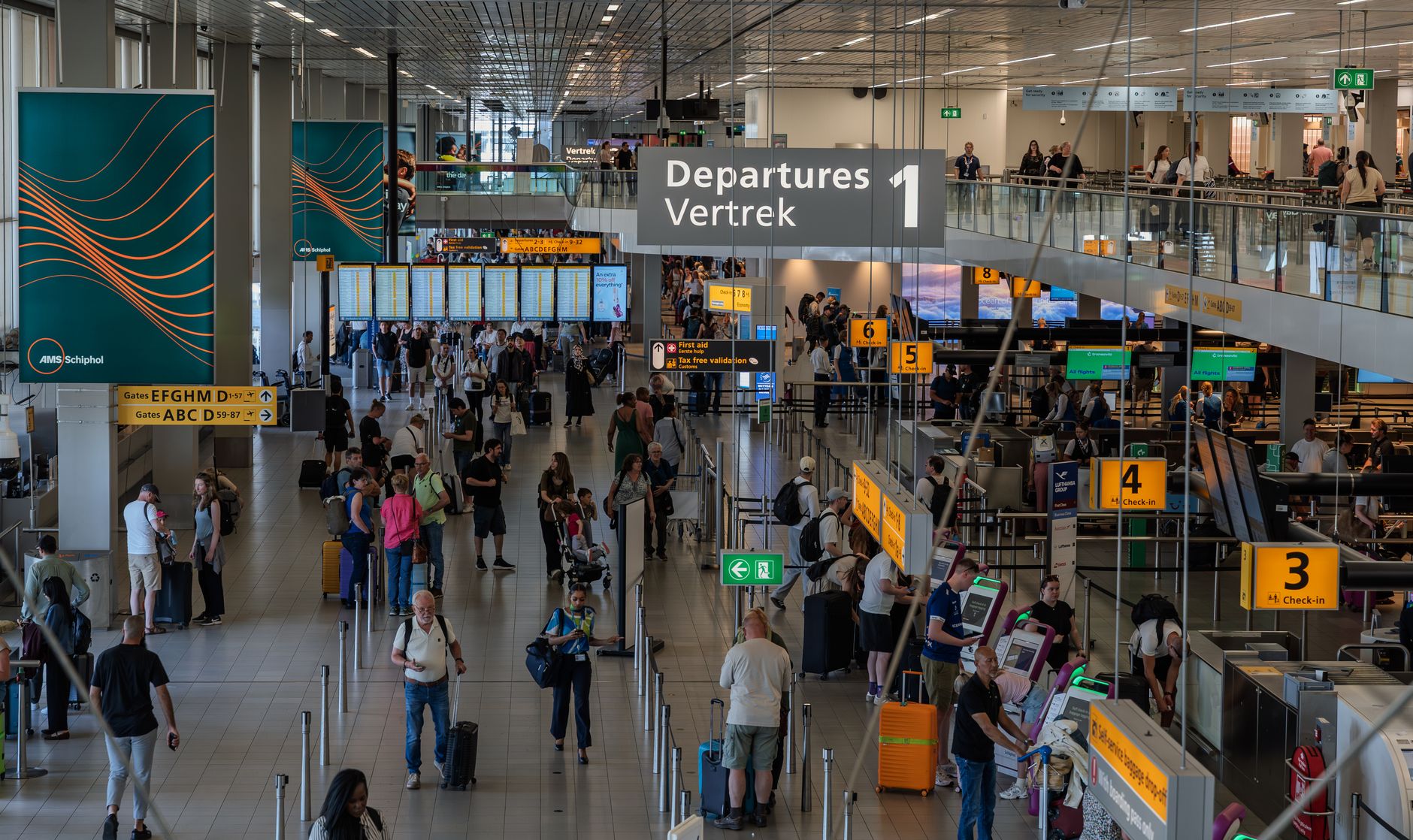
Peaks are where the economics show up, and the traffic behind them is large and uneven. According to a secondary statistics site that compiles TSA checkpoint data, 3,133,924 travelers were screened on 30 November 2025, the busiest single day in the figures it reports. Labor Day weekend 2025 brought nearly 10.4 million travelers screened from Friday through Monday, according to Travelpulse.
A restaurant inside the security line never sees the national total. It sees its own banks of departures. The useful measure is how many orders leave the counter in the first minutes after each bank, and whether the route for those orders stays clear.
The crowded terminal route is the harder test. Peaks have a shape you can plan for, but the terminal itself does not stay still. A runner adjusts to a blocked aisle in seconds. A robot needs a route mapped with that aisle in mind and a plan for when the aisle stays blocked.
What does the labor picture look like for this job?
The labor pressure is real but industry-wide. According to the Bureau of Labor Statistics Economics Daily, the quits rate for accommodation and food services was 3.5% in August 2026, down from 3.9% in August 2025, while the national private-sector quits rate was 2.1% that month. Accommodation and food services is broader than restaurants alone, so read the figure as sector churn, not as a measure of your concourse.
Counts show the same movement. Federal Reserve Economic Data, which draws on the same BLS survey, lists quits in accommodation and food services at 785 thousand in July 2025, 742 thousand in August, 514 thousand in October, and 583 thousand in November. Counts move with the season and with hiring, so watch the trend rather than any single month.
For the job itself, the Occupational Outlook Handbook counts 2,329,700 waiters and waitresses employed in 2024, and projects employment to decline 1% from 2024 to 2034, about 16,300 fewer jobs. It also projects about 456,700 openings a year on average over the decade, so recruiting is a continuing task, not a one-time one.
We did not find published overtime, sick-day or night-shift rates for this job in this research. Pull those from your own timekeeping before you decide, since they will tell you more about your site than any national average. The government wage data on this page sets the wage side of the same picture, and it should be weighed against the hours a robot would take over.
How does the team work with a robot, and why never zero staff?
The working model is a robot plus fewer staff. The runner moves from carrying every tray to managing the run: watching the robot on its route, clearing exceptions and keeping service personal. The robot takes the repeat trip, and the person takes the decision.
Zero staff is the wrong setup for three reasons. Robots pause: a route can be blocked, a battery can run low, or a sensor can need a reset. Guests ask questions no machine can answer. And a terminal changes faster than any map. A restaurant with no staff has no one to restore service when the robot stops in the middle of a rush.
Training matters more than the machine. Staff need to load the unit, clear a blocked route safely, know when to call for remote help, and know when to take an order by hand. We train the team on site and provide go-live support, so the first peak is not the first time anyone touches the robot.
Does a robot change injury and strain risk for servers?
Serving carries real hazards. A BLS study of food and beverage servers, using 2003 to 2008 data, found that in 2008 servers had 3.3 heat-burn cases per 10,000 full-time workers, against 1.6 for all occupations. The same-level fall rate was 18.6 per 10,000, against 16.6 for all workers. These are older figures and should be read as a pattern, not as a rate for today.
A robot removes the carry, and with it the heavy tray and the hot plate on the longest run. That is where much of the strain and burn exposure builds up. It does not remove the floor. Slip and trip risk comes from wet floors, cords and passengers' bags, and a robot adds a moving object to the same lanes.
The honest read: plan the route to keep the machine away from crowds, keep staff trained on the handoff, and do not treat a robot as a safety program on its own. Injury figures for this job should come from the latest BLS survey, not from this study.
Are other restaurants already using robots for delivery?
Adoption is growing, but it is early. In a Popmenu survey of 359 US operators reported in 2025, 34% had adopted AI technology and 48% planned to in 2025. The survey was run by a vendor, so treat the figures as indicative, and note that AI technology is not the same as a delivery robot.
Datassential data, cited in trade coverage, says half of US restaurants plan to adopt some automation within two to three years. A plan is not actual use. For a concourse operator, the more useful question is whether comparable terminal sites have a route and service model that works, and that answer comes from a site assessment, not from a national percentage.
For context, the count of restaurant and bar establishments was 627,086 in 2025, a net gain of 7,167 from 2024, according to StartBusinessByState using BLS QCEW data. Airport concourse sites are not broken out in that count, and our research did not find a published total for them, so size the opportunity from your own terminal map and gate schedule.
What can a delivery robot not do at an airport concourse?
The robot cannot run the restaurant. It cannot cook, run a register, handle cash, manage allergies, read an unhappy guest, or decide whether a delayed flight means an order should wait. It cannot push through a crowd or wait politely in a line of rolling suitcases unless the route was designed for that.
It is limited by the building. Stairs, escalators, elevators, narrow gate hold rooms and shifting layouts each need separate planning. A concourse that rebuilds its seating every season needs a route review each time, because a robot is only as good as the map it runs on.
It cannot fix a bad layout. If the counter sits at one end of a long concourse and seating sits across a moving walkway, the robot adds distance and pauses. In that case the honest recommendation is a runner, not a robot.
It also cannot cover the floor during a stoppage. When it pauses, someone has to take the tray. That is why staffing stays in the plan.
How do we start a delivery robot lease for a concourse restaurant?
Start with a free site assessment. We map the counter, the seating zones, the blocked aisles and the gate-rush pattern, then recommend whether the route supports a robot and how many units it needs. If the answer is no, we say so.
The lease is financed, and the lease payment is quoted after the site assessment, once the route and shift plan are known. We deploy and integrate the unit, train the staff, provide go-live support, and service the robot nationwide, so the team is not left to manage a machine alone.
Begin with one unit on the busiest concourse and a defined route. Track the peak trips it takes, each pause, and each moment a person had to step in. Those numbers, from your own site, will decide whether a second unit makes sense.
Frequently asked questions
Want a delivery robot at your airport concourse restaurant?
Tell us about your site. We will recommend the robot, quote the lease, and keep it serviced.
Sources
- US Bureau of Labor Statistics, Occupational Employment and Wage Statistics (OEWS May 2024)
- BLS Occupational Outlook Handbook: Waiters and Waitresses
- BLS Economics Daily: Quits rate accommodation and food services August 2026
- FRED: Quits in Accommodation and Food Services (JTU7200QUL)
- BLS Monthly Labor Review: Workplace Hazards of Food and Beverage Servers, 2003-2008
- StartBusinessByState: Restaurant and bar establishment counts (BLS QCEW)
- TSA checkpoint travel numbers (secondary statistics site)
- Travelpulse: Labor Day 2025 air passenger numbers
- Restaurant Technology News: Popmenu survey on AI technology adoption