
The short answer
In a delivery robot vs food runner comparison at a stadium concourse, the robot makes sense when the job is mostly the repeatable trip, carrying built orders from the kitchen pass to seating areas on a mapped route during short, heavy peaks. It does not make sense as a replacement for staff, because order taking, hand-offs, spills, age checks and crowd problems still need people. The practical setup is a robot plus fewer runners, never a robot with no staff at all.
Key takeaways
- The robot fits the repeatable kitchen to seat trip, not the whole runner job.
- Game-day peaks are short and heavy, which is where a route robot earns its place.
- Crowds and blocked aisles set the robot's pace, so the route survey matters more than the robot model.
- Plan for a robot plus fewer runners, because people still handle the work a robot cannot.
- Get a free site assessment before deciding, and compare the lease payment quote with your own shift data.
Delivery robot vs food runner at stadium concourses: which makes sense?
A robot fits the trip, and a person fits the job. A food runner on a concourse does two things: moves orders between the kitchen pass and the seating areas, and deals with everything that goes wrong along the way. A delivery robot can take the first part on a mapped route. It cannot take the second, and that is where most of the judgment sits.
Use the runner's own route as the test. If a mapped path from the kitchen pass to the main seating zones stays mostly open during peaks, a robot has room to work. If the same path is packed for most of the game, the robot spends its time waiting, and the case weakens quickly.
A robot is most likely to earn its place where the kitchen to seat distance is long, the orders repeat in predictable patterns, and the stand is short on runners at exactly the times the crowd peaks.
What does a food runner actually do during a stadium shift?
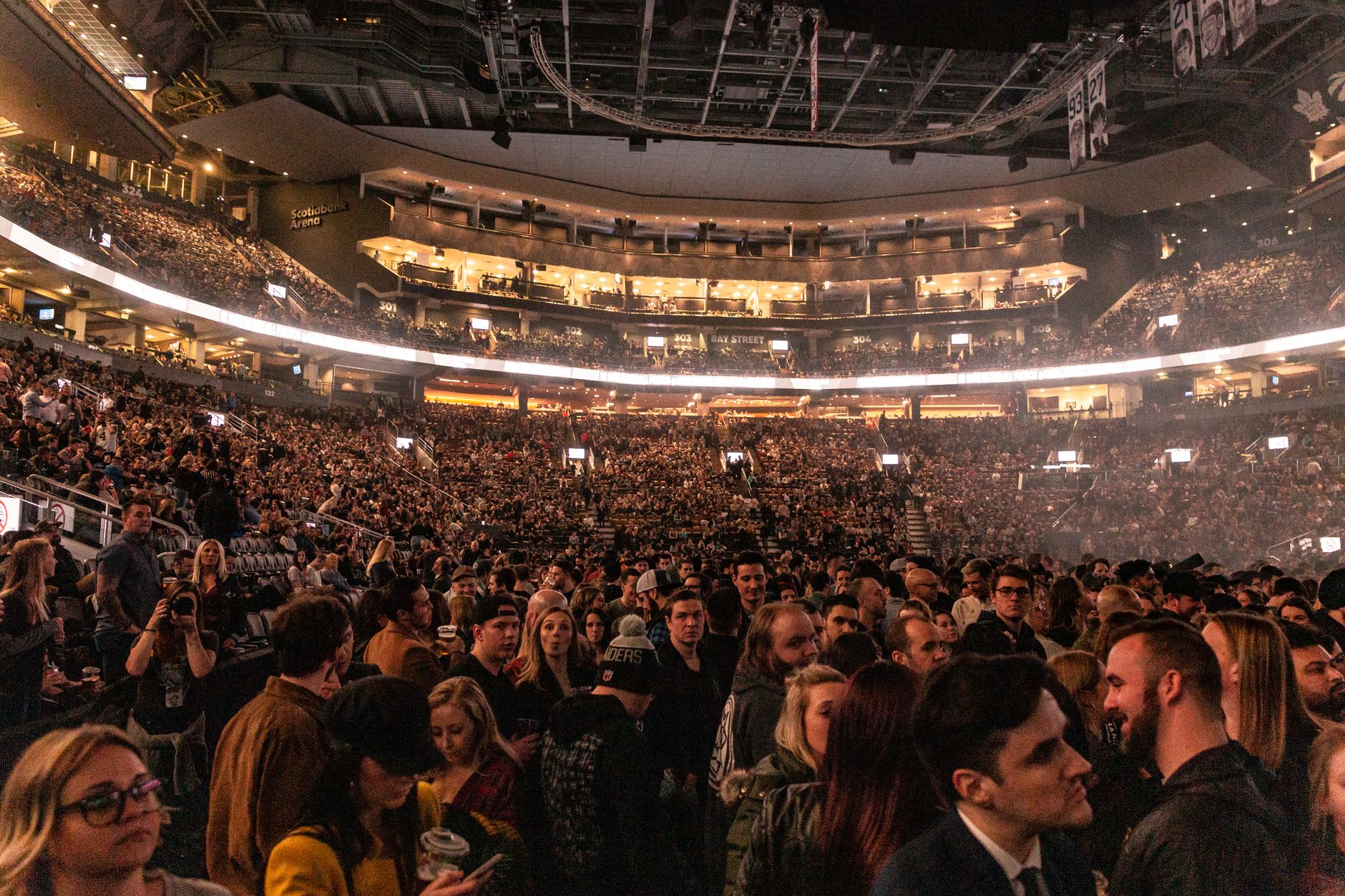
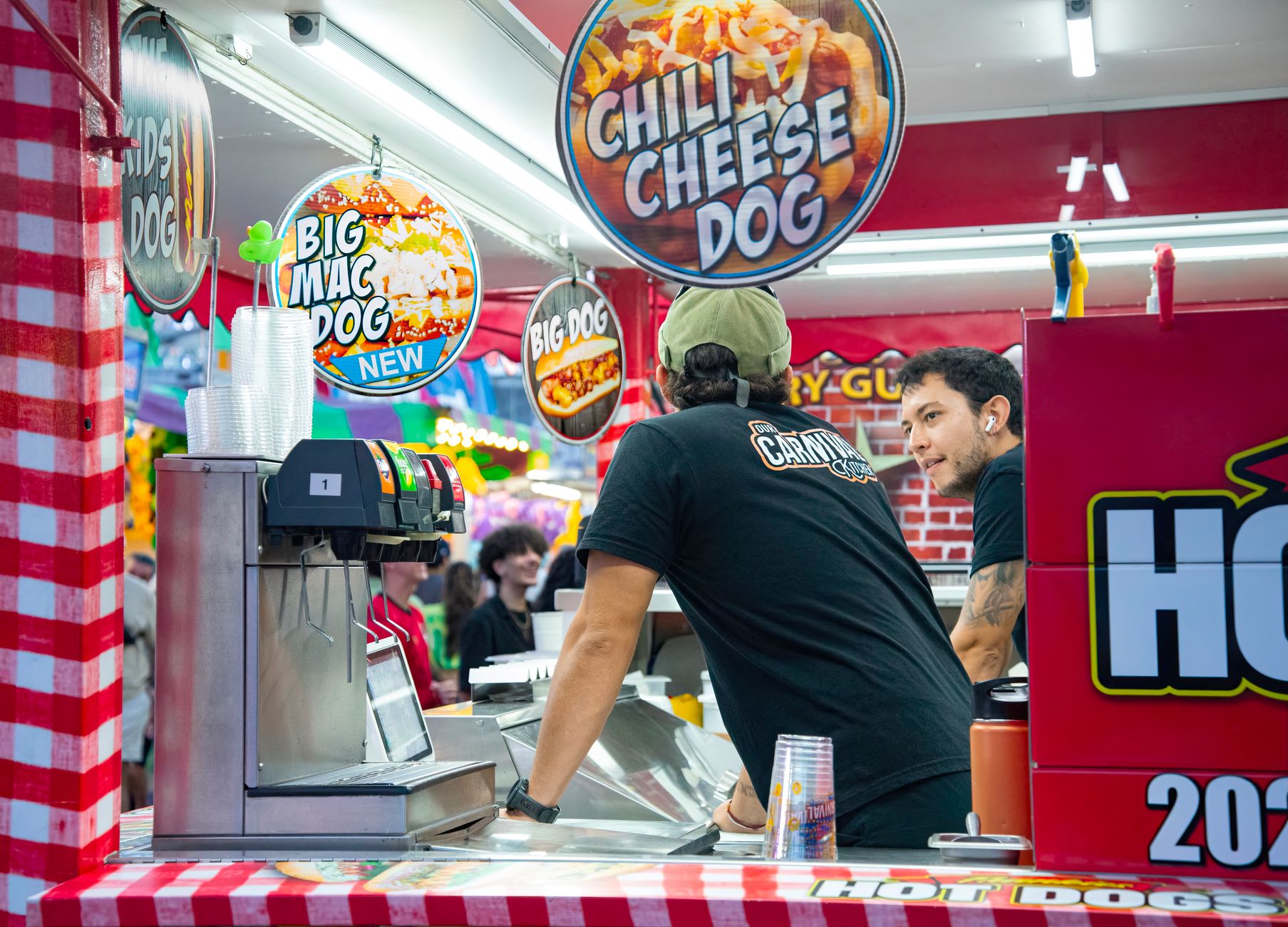
On a game day the shift is built around peaks. Orders stack up before kickoff, at halftime and after the final whistle, and the runner moves between a kitchen pass or stand, a service window and the seating bowl. Most of the walking is repetitive: pick up a built order, check it against the ticket, carry it along the route, hand it off, then bring back empty trays or containers and repeat.
The rest of the shift is not about distance. Runners answer guest questions, flag spills and blocked aisles, call for help when a line backs up, and keep the stand stocked along their route. These tasks shift with the crowd, so the work can change every few minutes.
Venue staffing is large at the operation level but says little about one stand. According to MetLife Stadium's CEO as reported by CBS News, total game-day staffing across all roles, including concession workers, is about 4,000 people on an NFL Sunday. That figure covers every role, so it describes the size of the operation, not how many runners a single stand needs.
According to a Front Office Sports article, about 182,000 people were directly employed by the spectator sports industry in a prior June. The copy we reviewed does not show a date, and the figure covers all spectator sports rather than concessions, so use it only for scale.
Median hourly wage, Waiters and Waitresses
$3,798
Monthly cost of one full-time worker, at the median wage plus payroll costs (an estimate, not a quote).
Which parts of a runner's job can a delivery robot take?
The robot takes the transit segment that repeats the most: the carry along a fixed route. A built order goes onto the robot at the kitchen pass, travels a mapped path to a designated drop point near the seating zone, and the empty tray or container comes back on the same route. The runner keeps the hand-off and the guest contact.
The BLS report on full-service restaurants lists cuts and lacerations with days away from work at 23.6 cases per 10,000 full-time workers in 2019. That is a restaurant figure, not a stadium one, but it is a reason to check which hand-offs and glass-handling steps show up in your own incident log before you decide where the robot goes.
- Carry built orders from the kitchen pass to a set drop point in a seating zone on a mapped route
- Return empty trays and containers on the same path between peaks
- Repeat the same trip pattern at every peak once the route is set
- Free the runner for hand-offs, order checks and guest problems during the busiest minutes
- Repeat carry on a mapped route
Delivery Robot
Steady pace, same path every trip, no breaks
Food Runner
Can speed up in a rush and step around a blocked aisle
- Hand-offs and guest contact
Delivery Robot
Cannot hand over an order or answer a question
Food Runner
Handles every guest interaction
- Dense crowds and blocked aisles
Delivery Robot
Slows, stops or reroutes, so throughput drops
Food Runner
Finds a way through the crowd
- Spills, lost tickets and kitchen shortages
Delivery Robot
Reports the problem but cannot fix it
Food Runner
Fixes it on the spot
- Consistency across a long game
Delivery Robot
Runs the same pattern at every peak without fatigue
Food Runner
Pace drops late in a shift and crews change
Which parts of the job stay with people?

Order taking, guest hand-offs, age or ID checks where the venue requires them, cash and card handling, and any call that needs judgment stay with the runner. So do spills, lost tickets, guests who need help finding a seat, and the quick reroute when a kitchen runs short on one item. A robot can report a problem. It cannot fix it.
This changes the staffing math. If you remove runners until the robot is the only one moving product, the stand loses the people who keep guests moving through the line. The target is fewer runners on the repeat trip, with the same people on the tasks that need a person.
What does the labor picture look like for food service staff?
Food service staffing turns over fast, which makes peak coverage harder to hold. According to Homebase's 2025 statistics, average restaurant employee turnover is 75%, with front-of-house at 41%, back-of-house at 43%, and restaurant managers at 28%. Homebase is a workforce software company reporting its own data, so treat it as a vendor figure. A Toast analysis based on BLS data puts the rate at 73.9%, in the same range.
How turnover is counted matters. BLS counts separations, not the share of individual workers who leave in a year, so the same workforce can produce rates that look much higher or lower depending on the method. Read these figures as a sign of constant replacement, not as an exact count of people who quit.
The national picture is about replacement more than disappearance. According to the BLS Occupational Outlook Handbook, about 2,329,700 people held waiter and waitress jobs in 2024, with a projection of a 1% decline from 2024 to 2034, or 16,300 fewer jobs. The same handbook projects about 456,700 openings a year on average over the decade, mostly from workers who leave, so a stand is always hiring to replace people.
According to BLS JOLTS data for November 2025, total quits were little changed at 3.2 million, a rate of 2.0%, while quits in accommodation and food services rose by 208,000 that month. Swings like that matter to a stand that needs a fixed crew at peak.
The government wage data on this page for waiters and waitresses sits beside this text. Use it to frame the hours and shifts you need to cover, and keep the lease decision tied to route and peak data rather than pay.
How does a team work with a delivery robot on game day?
The team works as a robot plus fewer runners, never zero staff. A small group of runners works a bank of stands or a concourse section. The robot takes the repeat carry on the mapped route, while runners handle hand-offs, checks and problems. Staff are not taken off the shift. They move to the work that needs a person.
In our deployments, we pick the robot for the site, lease it through financing, deploy and integrate it, train the staff and service it nationwide. Training covers loading and unloading, clearing the path, and what to do when the robot stops in a crowd. The lease payment is quoted after a free site assessment, so no number is committed before we see the route.
What can a delivery robot not do on a concourse?
Crowds are the hardest limit. A concourse at halftime is dense, and people step into paths without warning. The robot slows, stops or reroutes, so its effective speed on a busy route is well below its speed on an open floor. If the route is blocked for most of the game, the robot becomes a cart that waits.
It cannot fix a slow kitchen. If the pass cannot build orders fast enough, the robot sits at the pickup point, and the bottleneck simply moves. Check the pass rate before counting on the robot to speed guest service.
It cannot handle access on its own. A route that needs stairs, a crowded elevator or a gate that closes during play needs a separate plan. Route design, charging location and backup coverage on game days also need someone who knows the venue well.
When does a delivery robot not make sense?
A robot is a poor fit when the walk is short, the peaks are small, or the kitchen pass is the real limit. A short walk leaves little for the robot to save. Small peaks leave it idle most of the shift. A slow pass means it waits.
It also does not fit a venue where the seating layout forces the route through the busiest gate, or where crowd flow changes sharply from one event to the next. A person can change direction faster than a robot can replan. Work through the checklist below before you decide.
How do you get started with a stadium delivery robot?
Start with a free site assessment. We map the kitchen pass, the drop points and the seating zones you want to cover, then measure the route at the times that matter, such as pre-kickoff and halftime. You get a recommendation for the robot that fits your route, and a fixed robot lease payment quoted through financing based on your site.
Run a pilot before any rollout. Start with one leased unit on one route for a few home events, then track order time, runner time on hand-offs and the number of stops in crowds. Those three numbers show whether to extend the route, change it or stop.
Plan the staffing change with the same care as the robot. Keep the runners who handle hand-offs and problems, and adjust the crew only after the pilot shows where the repeat trip sits in your shift. We handle deployment, integration and training, and we service the unit nationwide, so the stand has one contact for the whole program.
Frequently asked questions
Want a delivery robot at your stadium concourse?
Tell us about your site. We will recommend the robot, quote the lease, and keep it serviced.
Sources
- US Bureau of Labor Statistics, Occupational Employment and Wage Statistics (OEWS May 2024)
- BLS Occupational Outlook Handbook, Waiters and Waitresses
- Homebase, Restaurant employee turnover statistics 2025
- BLS JOLTS release for November 2025
- BLS TED, Nonfatal injuries and illnesses in full-service restaurants in 2019
- CBS News, MetLife Stadium game-day workers
- Front Office Sports, spectator sports employment and concessions