
The short answer
A delivery robot makes sense at a hotel pool bar when the walk from bar to lounge chairs is long, repeats through peak hours, and carries drinks and small plates that fit a sealed tray. It does not make sense when the route is short, the deck is wet or stepped, or most of the work is cash, tabs and clearing glass, which still need a person. In the delivery robot vs food runner choice, the robot takes the repeat trips while the food runner keeps the bar, the deck and guest contact.
Key takeaways
- The robot takes the repeat carry from bar to lounge chairs, while the food runner keeps the bar, the deck and guest contact.
- A pool bar is a poor fit when the route is short, wet or stepped, or the sale is mostly cash, tabs and clearing glass.
- Turnover in food service is high, so a route that does not depend on one runner is easier to keep covered at peak.
- The lease is quoted after a free site assessment, so the walk, the peak volume and the deck decide the number.
- Plan for a robot plus fewer staff, never zero staff.
Delivery Robot vs Food Runner at Hotel Pool Bars: Which Makes Sense?
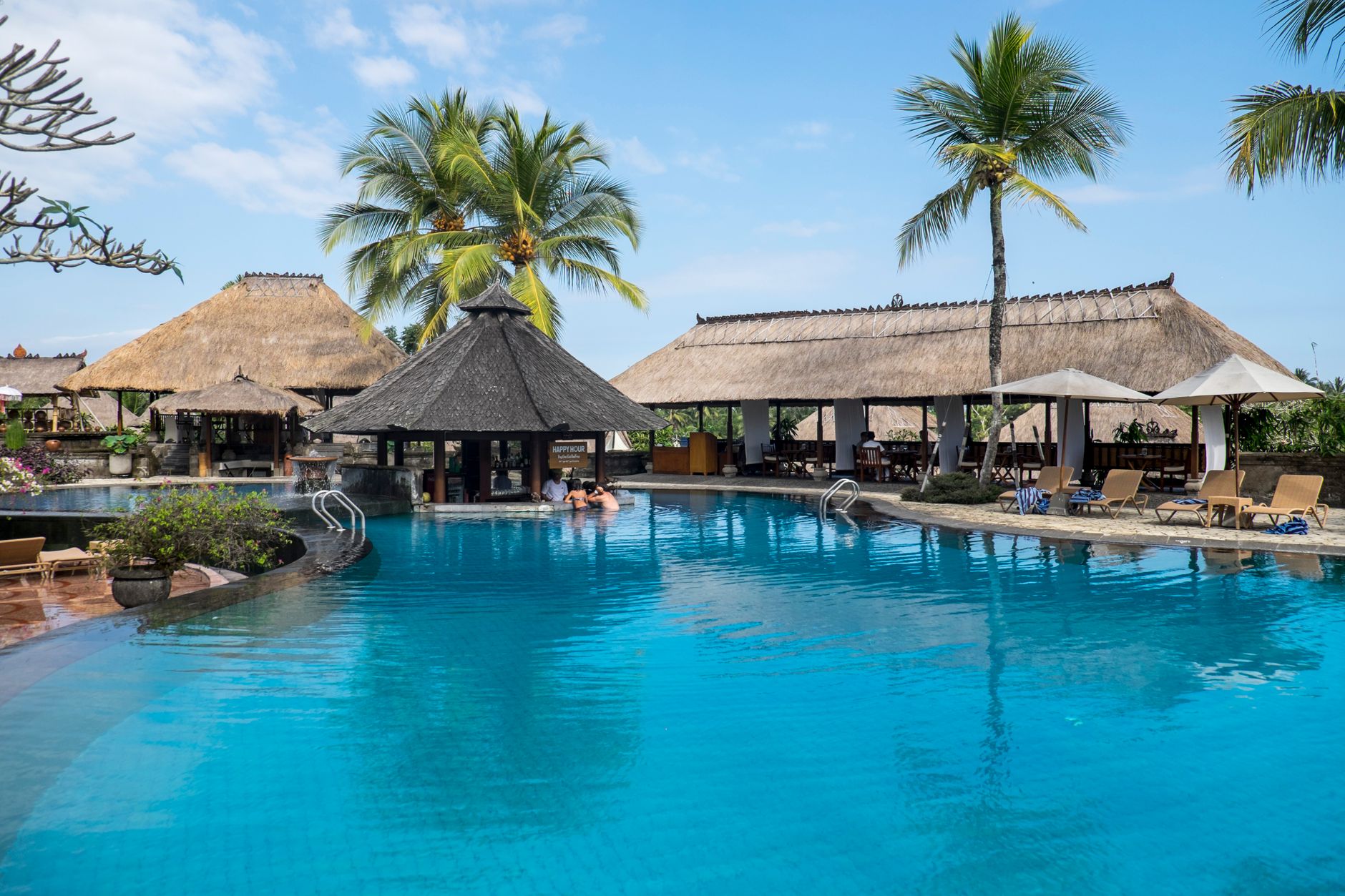
The answer depends on the walk. A pool bar where a food runner makes the same trip from the bar to the lounge chairs many times an hour has a repeat-trip problem, and a delivery robot is built for repeat trips along a set route. It carries the drinks and small plates a runner carries, and it makes each trip the same way.
It makes less sense when the bar sits close to the guests, when the deck has steps, wet tile or crowded lanes that cannot be kept clear, or when most of the work is taking cash, opening tabs and clearing glass. In those cases a person is still the faster choice, and a robot adds one more thing to manage. The Bureau of Labor Statistics, in a 2023 article using 2021 Quarterly Census of Employment and Wages data, counts roughly 65,000 hotels, motels and other lodging establishments, so the number of properties that could consider this setup is large.
The useful question is not whether a robot can move. It is how many trips a shift makes on one route, and how many of those trips a runner spends walking rather than serving.
What does a food runner do in a hotel pool bar shift?
A food runner at a pool bar usually works between the bar, the service point and the lounge area. The job is repeated trips: picking up drinks and small plates, walking them to guests on chairs and cabanas, and bringing back empty glasses and plates. In peak hours the same route may be walked again and again with little idle time.
Much of the shift is walking rather than hands-on service. A runner also watches for guests who want a second round, notices when a bar item is running low, and keeps the deck clear enough to walk safely. These are judgment tasks, and a robot does not do them.
Pool bar work follows weather and occupancy, so the same route can be busy one week and quiet the next. That makes the shift hard to staff evenly, and it is why operators often ask how much of the runner's day is pure walking. Time a few peak shifts before you assume the answer.

Median hourly wage, Waiters and Waitresses
$3,798
Monthly cost of one full-time worker, at the median wage plus payroll costs (an estimate, not a quote).
Which parts of the run can a delivery robot take?
A delivery robot can take the carry leg: a loaded tray or insulated compartment from the bar to a set stop on the deck, and the return leg if staff load it. Drinks in lidded or sealed containers and small plates that stay put on a flat tray fit this work. The robot runs the repeat route while a person stays at the bar or works another task.
It cannot take the parts of the job that need a person. It does not pour, mix or open a bottle, and it does not check identification, take payment, open or close a tab, or read a guest's mood. It cannot clear broken glass or spilled drinks on the deck, and it should not be asked to carry anything that could tip.
- Repeat carry from bar to lounge chairs
Delivery Robot
Runs the same route the same way on every trip
Food Runner
Adjusts the route on the fly and can carry extra items at once
- Peak hour coverage
Delivery Robot
Covers the repeat leg without breaks, but staff must load and clear it
Food Runner
Covers a full shift, takes breaks and can cover for a colleague
- Guest contact and upselling
Delivery Robot
None
Food Runner
Suggests drinks, notices a guest who wants more and handles complaints
- Cash, tabs and identification
Delivery Robot
Cannot do these
Food Runner
Can do these
- Wet deck, steps and crowds
Delivery Robot
Limited to a mapped, clear route and stops when blocked
Food Runner
Navigates the deck and can clear spills, though carrying still carries risk
- Turnover and training
Delivery Robot
Keeps its route when a runner leaves, but still needs trained staff to load it
Food Runner
Each new hire needs training on the route and the bar
What does the labor picture look like for pool bar service?
The government wage data on this page gives the local wage for this job, and it is the right starting point for the labor math. Nationally, the Bureau of Labor Statistics Occupational Outlook Handbook reports about 2,329,700 waiter and waitress jobs in 2024, with employment projected to decline about 1 percent over 2024 to 2034. The occupation is also commonly part time, which matters when you plan peak coverage with a few people on fixed shifts.
Turnover is the bigger pressure. Figures attributed to Black Box Intelligence on its site put hourly full-service restaurant turnover at 96 percent by Q3 2024, down from a 125 percent peak in late 2021 and early 2022. Hourly limited-service turnover was 135 percent in Q3 2024, down from 173 percent in Q1 2022. Those figures describe restaurants, not hotel pool bars, and should be confirmed in the underlying Black Box report before they are quoted.
Homebase, a scheduling vendor, reports about 75 percent annual turnover for the food industry in 2025. Fountain's 2025 QSR Workforce Snapshot reports a 3.7 percent quits rate for accommodation and food services in August 2025, a one-month measure that cannot be compared with annual turnover. For hotels, the American Hotel and Lodging Association's 2025 State of the Industry, as reported by Hotel Management, projected 14,000 more hotel employees in 2025, reaching 2.17 million workers, about 200,000 short of 2019.
On injuries, the Bureau of Labor Statistics 2024 national rate for private industry is 2.3 per 100 full-time workers, cited here through a state BLS office and to be confirmed against the national release. This research did not find overtime, night-shift or sick-day data for pool bar staff specifically. Ask the hotel for its own schedule and absence records before estimating how much a robot changes.
What does a robot shift look like at a hotel pool bar?
A robot shift is planned around the peak. Before service, staff load the tray, confirm the route to the lounge rows is clear, and set the stop points at chair rows or cabanas. During service the robot runs the same route while bar staff keep orders moving, and at close it returns to its charging spot.
The gain comes from keeping one route busy without sending a person on it again and again. Bar staff still pour, check tabs and handle guests. What changes is the number of carry trips a runner has to make on foot.
How does the team work with a robot?
The team does not drop to zero staff. The model is a robot plus fewer people, with bar staff and one runner or floor lead still running the deck. The robot takes the repeat carry, and people keep the parts that need judgment and contact. Turnover makes this useful, because the route keeps moving while people rotate in and out.
Training matters more than the hardware. Staff need to know how to load a tray, how to stop or clear the robot, what to do when a guest steps into its path, and who to call when something fails. We train the staff as part of deployment, so the route does not depend on one person who knows it.
What can a delivery robot not do at a pool bar?
A delivery robot cannot run the bar. It does not handle cash, card payments, tabs or identification, and it cannot judge whether a guest has had enough. Service that depends on conversation, such as recommending a drink or settling a complaint, stays with people.
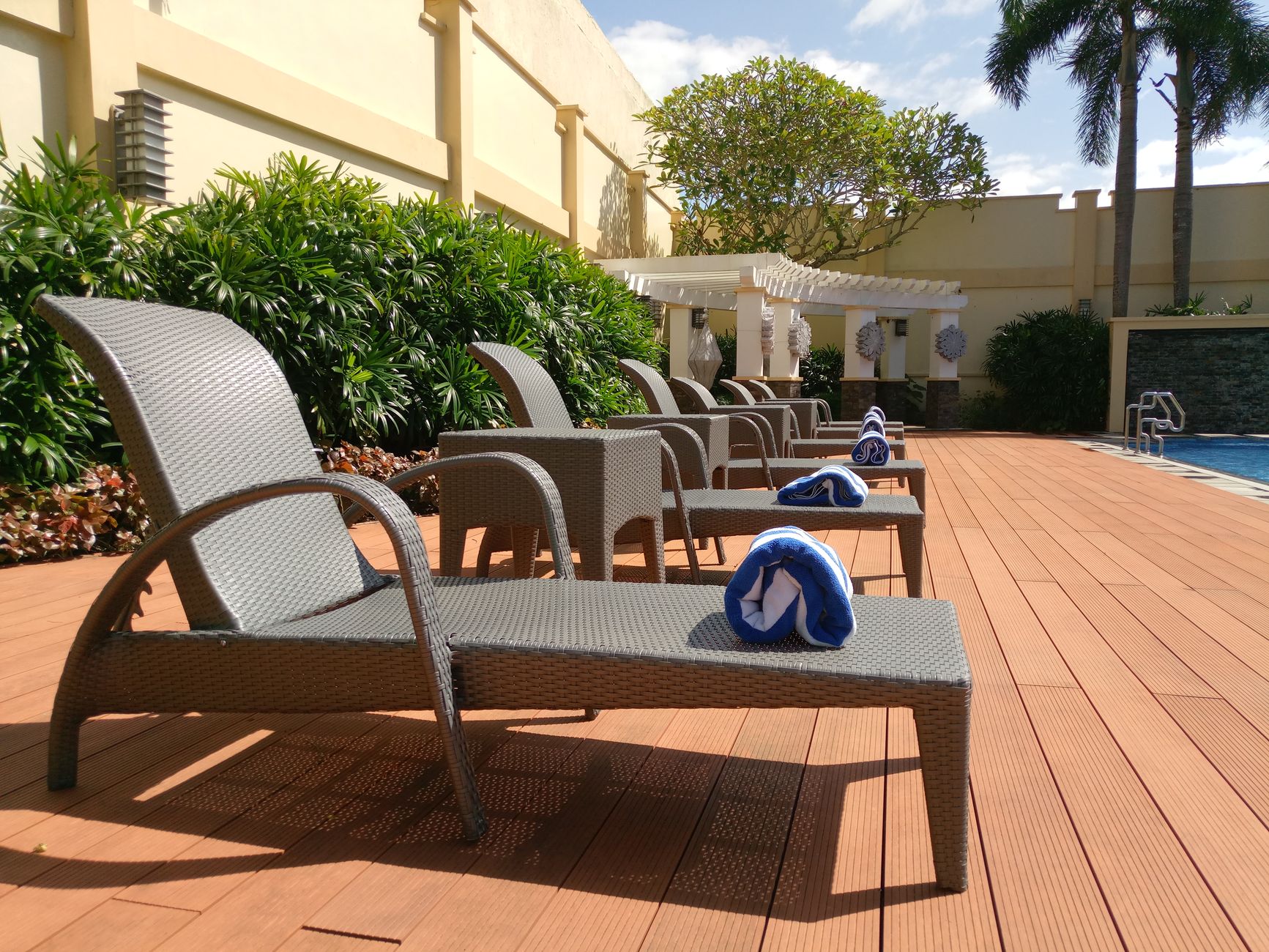
Physical limits matter too. Wet or sloped decking, steps, loose cables, umbrella bases and crowds can block a route, and the robot will wait or stop when it cannot pass. Broken glass, spilled drinks and anything that could tip stay with staff. The route should be one the robot can map and the team can keep clear, not whatever path guests happen to create.
How does leasing and deployment work for a pool bar robot?
Robots are leased through financing. The lease is quoted after a free site assessment, which measures the route, the peak volume, the deck surface and the charging spots. The fixed lease payment comes out of that assessment, so the number reflects the actual site rather than an estimate.
We are a US commercial robot integrator. We pick the right robot for the site, arrange the lease, deploy and integrate it, train the staff and service it nationwide. For a hotel, one partner handling the whole setup is simpler than coordinating a vendor, a deployment crew and a repair contractor. Start with one leased unit on the busiest route, and add more only if the peak justifies it.
What should you check before you start a pool bar pilot?
Start with the route, not the robot. Time the runner's trips during a peak shift, count how many are repeat carries, and note where the path is wet, stepped or crowded. That gives a site assessment the numbers it needs, and it shows whether the walk is long enough to matter.
Then pick one route and one stretch of the season. A pilot on a single lounge zone, measured against the same peak period, tells you more than a full deck rollout. Use the hotel's own staffing and overtime records as the baseline, because this research did not find pool-bar-specific hour data.
Adoption figures point the right way but do not prove anything about your site. According to Restaurant Dive, citing older Deloitte data, about 47 percent of customers were willing to order from drone or autonomous-vehicle delivery. Use that to gauge guest acceptance, not to size your savings.
Frequently asked questions
Want a delivery robot at your hotel pool bar?
Tell us about your site. We will recommend the robot, quote the lease, and keep it serviced.
Sources
- US Bureau of Labor Statistics, Occupational Employment and Wage Statistics (OEWS May 2024)
- BLS Occupational Outlook Handbook, Waiters and Waitresses
- BLS, Recognizing Hotel Employees on National Hotel Employee Day (2023)
- Hotel Management, AHLA 2025 State of the Industry
- Black Box Intelligence
- Fountain 2025 QSR Workforce Snapshot
- Homebase, Restaurant Employee Turnover
- BLS Injuries and Illnesses, 2024 (as cited by BLS Guam)
- Restaurant Dive, Deloitte on customer acceptance of automation