

The short answer
For a delivery robot vs food runner in Baton Rouge, the robot makes sense when the kitchen to dining room route is long, repeated and level, and runners spend much of each rush carrying trays rather than serving guests. It does not make sense for a small room with short trips, heavy table bussing or uneven patio ground, because the robot moves trays and bins on a set path and cannot take orders, clear tables or read a room. For most restaurants the practical answer is one robot working beside the existing team, not a replacement for the runner role.
Key takeaways
- A delivery robot takes repeated carrying on a fixed route, not table service.
- Runner turnover is high, so the labor problem keeps coming back rather than appearing once.
- Measure your own runner trips before judging the fit, because no verified hours figure for runners was found.
- Plan for a robot plus staff, with backup coverage for the busiest shifts.
- The lease payment is a fixed robot lease payment quoted after a free site assessment.
Delivery robot vs food runner in Baton Rouge: the short answer
The useful question is not whether a robot can replace a runner. It is which part of the runner's shift is repeated carrying, and whether that part is large enough to justify a robot. A delivery robot earns its place on the longest, most repeated route in the building, usually the trip between the kitchen pass and the dining room, when the floor is level and mostly clear.
It does not earn its place in a small room where trips are short, on a patio with gravel or steep ramps, or in a shift where most of the work is taking orders and clearing tables. In those rooms a runner or a server with a tray still does the job faster. Many restaurants land somewhere in between, which is why a site assessment matters more than a general rule.
What does a food runner actually do in a shift?
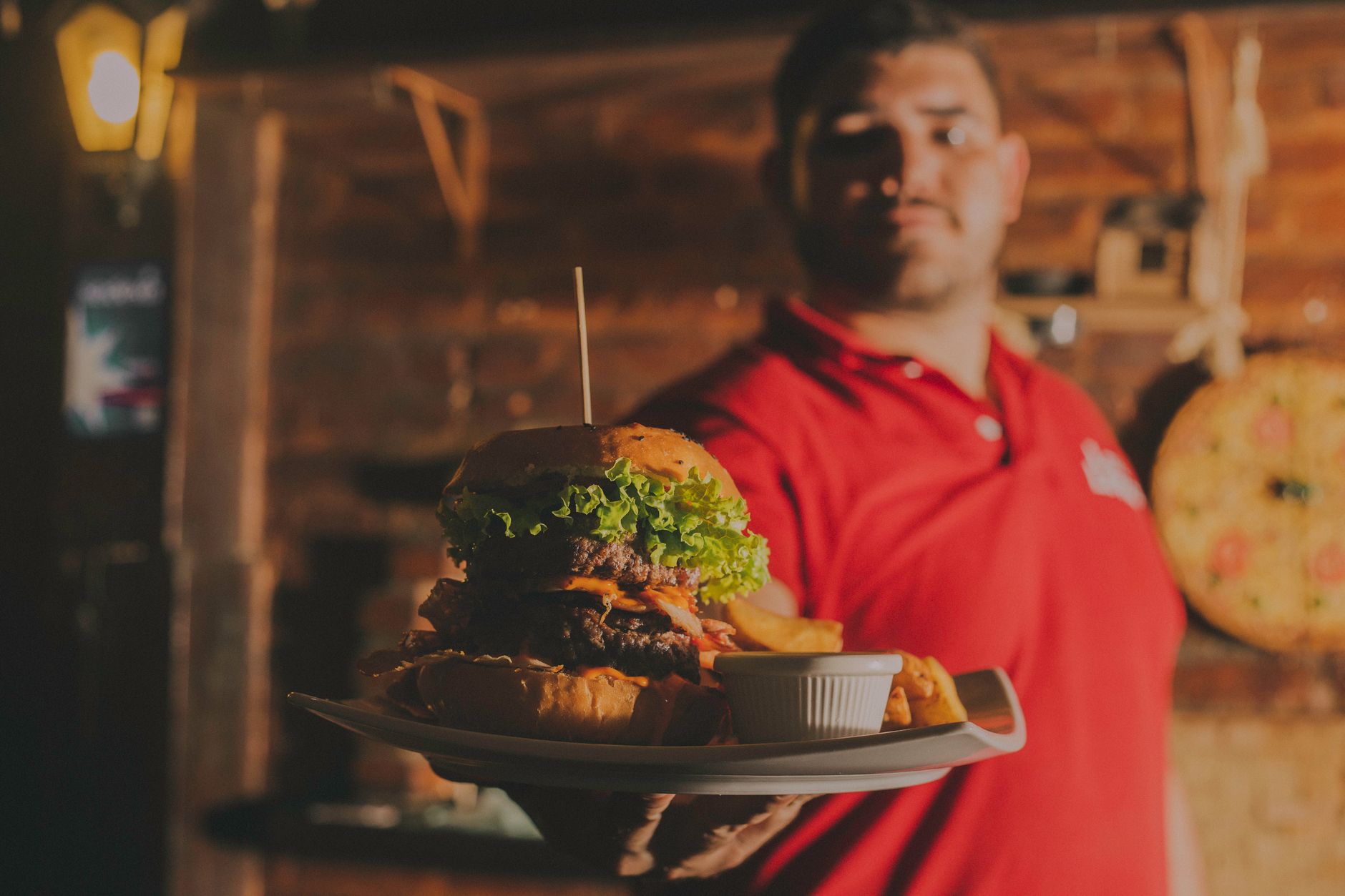
A food runner sits between the kitchen and the guests. The shift is made of short, unpredictable jobs: pick up plates at the pass, carry them to the right table, return with empty plates, clear and reset tables, refill drinks and condiments, restock service stations and carry dirty dishes to the wash area. Rush periods compress these into bursts, and the runner often takes whatever task is nearest.
Because the work is spread across a shift, few restaurants track how far runners walk. Managers usually see the result, slow food or stacked tickets, rather than the cause. That makes the first step of any robot decision a simple log of where runners go and how often, not a guess.
Labor pressure has eased by one measure since 2021. A blog summary of the National Restaurant Association's 2026 State of the Restaurant Industry report says the share of operators reporting insufficient staffing fell from 78 percent in 2021 to 22 percent in 2025. We did not check that figure against the association's own report, so treat it as a secondary reading.
Median hourly wage, Waiters and Waitresses
$1,820
Monthly cost of one full-time worker in Baton Rouge, LA, at the median wage plus payroll costs (an estimate, not a quote).
Which parts of the runner job can a robot take, and which can it not?
A delivery robot takes the carrying. It can move trays, bins of clean plates, stock and dirty dishes along a mapped, repeated route, stop when a person steps into its path and return to a set spot. That covers the part of the job that is physically repetitive and predictable.
It cannot take the parts that depend on a person. It does not take orders, check on a table, lift plates from a guest's table, clear a spill, reset a table, talk to a guest or decide what to do when a chair blocks its route. Those steps stay with staff, and they are often the parts that shape the guest experience.
The fit also depends on the building. The robot needs a path it can map, doorways it can pass through, and an elevator if the dining room sits on another floor. Thresholds, ramps and loose floor surfaces are the features most likely to change the plan, so we check them first.
- Carrying trays on a fixed route
Delivery Robot
Repeats the same mapped path, stops for people in the way and returns to its base
Food Runner
Adapts to a rush, a spill or a blocked aisle and can carry several plates by hand
- Taking orders and checking in
Delivery Robot
Cannot take an order or ask a guest how the meal is
Food Runner
Reads the table, answers questions and handles requests
- Clearing and resetting tables
Delivery Robot
Does not lift plates from guest tables
Food Runner
Clears, resets and handles glassware and spills
- Consistency on a long route
Delivery Robot
Takes the same route every trip without slowing down over a shift
Food Runner
Slows down during a rush or after hours of carrying
- Covering a missed shift
Delivery Robot
Cannot cover for a person and needs a staff member nearby to load it
Food Runner
Can cover a gap the same night if a trained person is available
- Downtime
Delivery Robot
Needs charging, cleaning and service, so it needs a backup plan
Food Runner
Can take over the route at once if trained
How many hours does the runner job take, and how much turnover is there?
We did not find a published figure for how many hours a food runner spends walking or carrying in a shift, either for Baton Rouge or nationally. Any hour estimate for a specific restaurant should come from that restaurant's own log. The hours table on this page lists what to measure.
Turnover is the labor problem that stays. According to Toast's analysis of BLS data, average annual restaurant turnover was 79.6 percent over ten years, and 71.6 percent on average from 2013 to 2019. Fountain's 2025 QSR Workforce Snapshot reports a quits rate of 3.7 percent for Accommodation and Food Services in August 2025, which it describes as the highest of any major US industry. Each departure starts training again. A robot on a fixed route can reduce how much of the job depends on any one person's walking, which matters most when a runner leaves mid-week.
For the local wage, the government wage data on this page covers the waiter and waitress role. According to the BLS Baton Rouge release, the survey sampled 3,119 establishments with a 61 percent response rate, so the figure is a sample-based estimate. Runner pay may differ from that role, so confirm the rate with your own payroll before comparing costs.
Night shifts, overtime and sick days: what the data does and does not show

We did not verify Baton Rouge figures for overtime, night shift share or sick days for food runners. Those numbers exist in payroll records and in some workforce studies, but they were not in the research gathered for this page, so we will not estimate them.
What we can say is where the pressure comes from. High turnover means new runners work busy shifts before they are fully trained, and a restaurant short one runner on a Friday rush covers the gap with overtime or with servers pulled off tables. A robot on a fixed route can keep the carrying going during a short-staffed rush, as long as a staff member is still on the floor to load it and handle exceptions.
Plan for sick days the same way. A robot does not call in sick, but it does need charging, cleaning and service. A spare unit or a runner on call is what keeps the rush covered when the robot is down.
How does a team work with a delivery robot?
The right setup is always a robot plus staff, never zero staff. The robot takes the repeated trip from the pass to the dining room and back to the dish area. Runners or servers keep the table work: taking orders, checking in, clearing, resetting and handling problems. A smaller staff number is realistic only after a trial shows the room can run that way.
Roles need to be written down. Name who loads the robot, who clears its route at close, who responds when it stops, and who covers the job while it charges. Handoffs between staff and the robot are where a new setup tends to strain first, so settle them before go live.
Keep a backup for peak hours. A backup robot program or spare unit coverage means the restaurant is not waiting on one machine. Without a backup, the runner stays on the job and the robot is an extra, not a replacement.
What can a delivery robot not do? An honest limit list
A delivery robot cannot serve a guest. It cannot read a table that wants something it did not ask for, cannot take payment, cannot check identification for an order that needs it, and cannot clean up a spill or a dropped plate on its own. When its path is blocked it stops and waits, which is safe but slow during a rush.
Guest reaction is the second limit. A Deloitte survey from 2023, reported by Restaurant Dive, found nearly half of Americans open to ordering from a restaurant that delivers by drone or autonomous vehicle. That is openness to delivery, not proof that diners want a robot bringing their food. Test the reaction in your own dining room with a short pilot before changing front of house.
Finally, a robot is equipment that needs a service plan, dispatch when it fails, and a plan for software updates and repairs. We provide on-site dispatch and remote triage through our service team, but the restaurant still needs one internal owner for the robot on every shift.
How do you decide whether a delivery robot is worth it for your restaurant?
Decide on five things: route length, floor condition, peak headcount, runner turnover and guest reaction. A robot is worth testing when the route is long and repeated, the floor is level and clear, the room is busy enough that runners spend much of the rush carrying, turnover keeps breaking the labor plan, and guests accept it in a pilot.
If one of those is missing, the answer can still be yes, but the fit is weaker. Check them in the order of the list below, starting with the route, because it decides how many trips a robot can take.
Injury rates, restaurant counts and what they mean for this decision
The BLS injury data for food services is older and broad. A BLS Economics Daily article from 2019, using older data cited as 2017, reports 77.9 days-away-from-work cases per 10,000 full-time workers for food services and drinking places, and 38.3 for drinking places alone. SafetyRecord, a third-party site citing BLS SOII data, reports 1.3 work-related injuries and illnesses per 100 full-time workers for drinking places in 2024. We could not confirm that figure on bls.gov, so we treat it as secondary.
No verified figure in this research shows that delivery robots reduce injuries in restaurants. A reasonable hypothesis is that fewer heavy trips reduce strain, but test it with your own incident log rather than assume it. Track lifting, slips and trips for the runner role before and after a pilot.
The market is large. According to StartBusinessByState, using BLS QCEW 2025 annual averages, there were 627,086 restaurant and bar establishments in 2025, up 1.2 percent from 2024. Each of them faces the same runner question on its own floor.
How to get started with a robot lease in Baton Rouge
Start with a free site assessment. We map the route, measure the floor, check thresholds and elevators, observe a rush and agree on what the robot should carry. We pick the robot for the site, not the other way round.
We lease robots through financing, so the cost comes as a fixed robot lease payment quoted after the site assessment. This page does not list a number. Deployment and integration, staff training and nationwide servicing are part of how we work with restaurants. A one unit pilot is a practical way to test a route before committing to more.
Bring your last three months of runner schedules, a sketch of the kitchen and dining layout, and a list of where food slows down. That is enough for a first answer on whether the robot fits and for the labor plan around it.
Frequently asked questions
Put a robot to work in Baton Rouge.
We walk your site, learn the job, and recommend the unit that fits. Then we quote the lease, deploy it, and keep it serviced.
Sources
- US Bureau of Labor Statistics, Occupational Employment and Wage Statistics (OEWS May 2024)
- BLS Occupational Employment and Wages, Baton Rouge, May 2024
- Toast analysis of BLS data on restaurant turnover
- Fountain 2025 QSR Workforce Snapshot
- StartBusinessByState, BLS QCEW 2025 restaurant establishments
- BLS Economics Daily, injury and illness rates in food services (2019)
- Restroworks summary of NRA 2026 State of the Restaurant Industry
- Restaurant Dive, Deloitte survey on diner attitudes
- SafetyRecord analysis of OSHA Form 300A injury data