
The short answer
A delivery robot vs food runner in Boston comes down to the route. A robot makes sense when the runs are repetitive, follow a mapped path between the kitchen pass and the dining room, and the restaurant is short of runners at predictable peaks. It does not make sense where the job is mostly judgment at the table, where the floor is too crowded to route safely, or where the goal is to cut floor staff, since the robot works best with people still on the floor.
Key takeaways
- A robot covers the repetitive runs, while a person keeps the table, the questions and the fixes.
- Compare any robot lease quote against the local wage for this job in the government wage data on this page.
- Restaurant staffing problems are about shift coverage and churn, so judge a robot by the gaps it fills.
- Plan for always a robot plus fewer staff, never zero staff on the floor.
- The lease payment is quoted after a free site assessment, once the route and floor have been mapped.
Delivery robot vs food runner in Boston: when does a robot make sense?
A food runner in a Boston restaurant does more than carry plates. The person checks tickets, moves food from the pass to the right table, clears used dishes, restocks side stations and answers guests. A delivery robot can take only the part of that job that can be planned as a fixed route, so the real question is what share of the runs is predictable enough to hand over.
A robot tends to fit when the dining room is large, the route between the kitchen pass and the stations is long and steady, and the floor has enough clear path for traffic to keep moving. It fits poorly in a tight bar, a crowded counter service room, or a site where most dishes are finished at the table. Those rooms depend on people who can improvise, and a robot cannot.
The test is practical. If the run is repetitive, can be mapped, and happens often enough to matter, the restaurant deserves a site assessment. If most of the job is judgment, the better spending goes into training the people already on the floor.
What does a food runner actually do in a Boston restaurant shift?
The job is mostly walking, with small tasks between the walks. According to the Bureau of Labor Statistics Occupational Outlook Handbook, waiters and waitresses held 2,329,700 jobs nationally in 2024, and most learn the work on the job, often on variable or part-time schedules. Food runners are not a separate category in that count, so treat the figure as the closest national profile for the front of house role.
A typical loop in a full-service room goes like this: pick up plates at the pass, check the ticket against the table, carry the food over, return for a missing item, bus empty plates to the wash station, and reset the side station. Each loop is short, but the loops repeat through the dinner rush, and the walking adds up over a shift.
Much of the work depends on reading the room. Runners notice a guest waving, a spill, a stalled ticket, or a table that just cleared. None of that is a fixed route, so none of it is a robot task. Separating route work from judgment work is the first step in the decision.
Median hourly wage, Waiters and Waitresses
$4,167
Monthly cost of one full-time worker in Boston, MA, at the median wage plus payroll costs (an estimate, not a quote).
Which parts of food running can a delivery robot take, and which can it not?
A delivery robot can take scheduled runs: moving finished plates or drinks from the kitchen pass to a set of stations or tables on a mapped route, and returning empty trays to the wash area. It works best on fixed routes with clear floor and a known stop list. A person still loads it, confirms the table, and hands off the food.
It cannot take anything that needs a decision or a hand. It cannot describe a dish, take an order, fix a wrong order, answer an allergy question, handle a spill, or serve from a bar counter. Tables reached through unusual seating, stairs or a crowded patio sit outside a fixed route as well.
The honest split is this: the robot takes a share of the walking, and the person keeps the contact. The comparison below sets out the difference point by point.
- Scheduled runs on a fixed route
Delivery Robot
Repeats the same mapped loop without fatigue
Food Runner
Adapts the route when the room or the crowd changes
- Night and sick-day coverage
Delivery Robot
Runs the scheduled loop without calling in sick
Food Runner
Can cover a missing host, a question or a spill
- Guest questions and recommendations
Delivery Robot
Cannot take part
Food Runner
Answers, recommends and recovers an order
- Unexpected spill or obstacle
Delivery Robot
Waits or reroutes only within mapped space
Food Runner
Clears it, resets the area and keeps service moving
- Walking distance per shift
Delivery Robot
Steady on a mapped loop and charged between runs
Food Runner
Needs breaks and covers a loop that changes through the night
- Cost to add capacity
Delivery Robot
Lease payment quoted after a site assessment
Food Runner
Wages and training, measured against the local wage for this job in the government wage data on this page
- Training time
Delivery Robot
Short operator training plus map setup
Food Runner
Longer to train, but the skill carries across every task
How many hours does food running take, and what does the labor picture show?
No time study was run for this page, so no minutes per task are claimed here. The figure to measure is the runner loop: how many runs an hour, how far each run travels, and how many of those runs follow a route a robot could take. A site assessment measures that on your floor, and the table below shows where to look.
The labor picture moves fast. According to the Bureau of Labor Statistics JOLTS release, quits in accommodation and food services fell by 136,000 in October 2025 and rose by 208,000 in November 2025. Single months swing widely, so read these as signs of churn rather than a steady rate. A runner trained in spring may be gone by fall, and that training cost repeats.
Night and weekend shifts show the gap most clearly. Coverage thins at the end of a long service, and a sick day can leave one runner covering the whole room. A robot does not call in sick, but it cannot cover a missing host or a question at a table, so the case is steadiest when the gap is predictable and repeats.
The national outlook explains part of the churn. According to the same Occupational Outlook Handbook, employment is projected to fall 1% from 2024 to 2034, a net loss of about 16,300 jobs, yet about 456,700 openings a year are expected, including replacements for workers who leave. Hiring stays a constant task even when headcount is flat.
What does the Boston restaurant market look like for this decision?
Massachusetts is a large restaurant state. According to the National Restaurant Association 2025 Massachusetts fact sheet, the state has 15,294 restaurant locations, and the sector ranks as the second-largest private employer in the state. The same fact sheet family, in its 2023 edition, reported 273,600 eating and drinking place jobs within a restaurant and foodservice workforce of 344,000.
The market has been under strain. A late 2024 Axios report, citing the Massachusetts Restaurant Association, said the state had about 12,000 fewer restaurant jobs than in February 2020. That gap is one reason operators look at automation for the routine part of the floor, though the link is an observation, not a measured result.
According to the National Restaurant Association 2025 pocket guide, roughly 1 in 10 Americans work in the industry, and over 9 in 10 restaurants have fewer than 50 employees. Most Boston sites are small operations, where one missing runner changes the whole floor. According to FRED, the economic data service of the Federal Reserve Bank of St. Louis, the Boston metro division had 112.7 thousand accommodation and food services jobs in September 2025, not seasonally adjusted. That series includes hotels and is broader than restaurants, so use it for scale only.
How does a team work with a delivery robot?
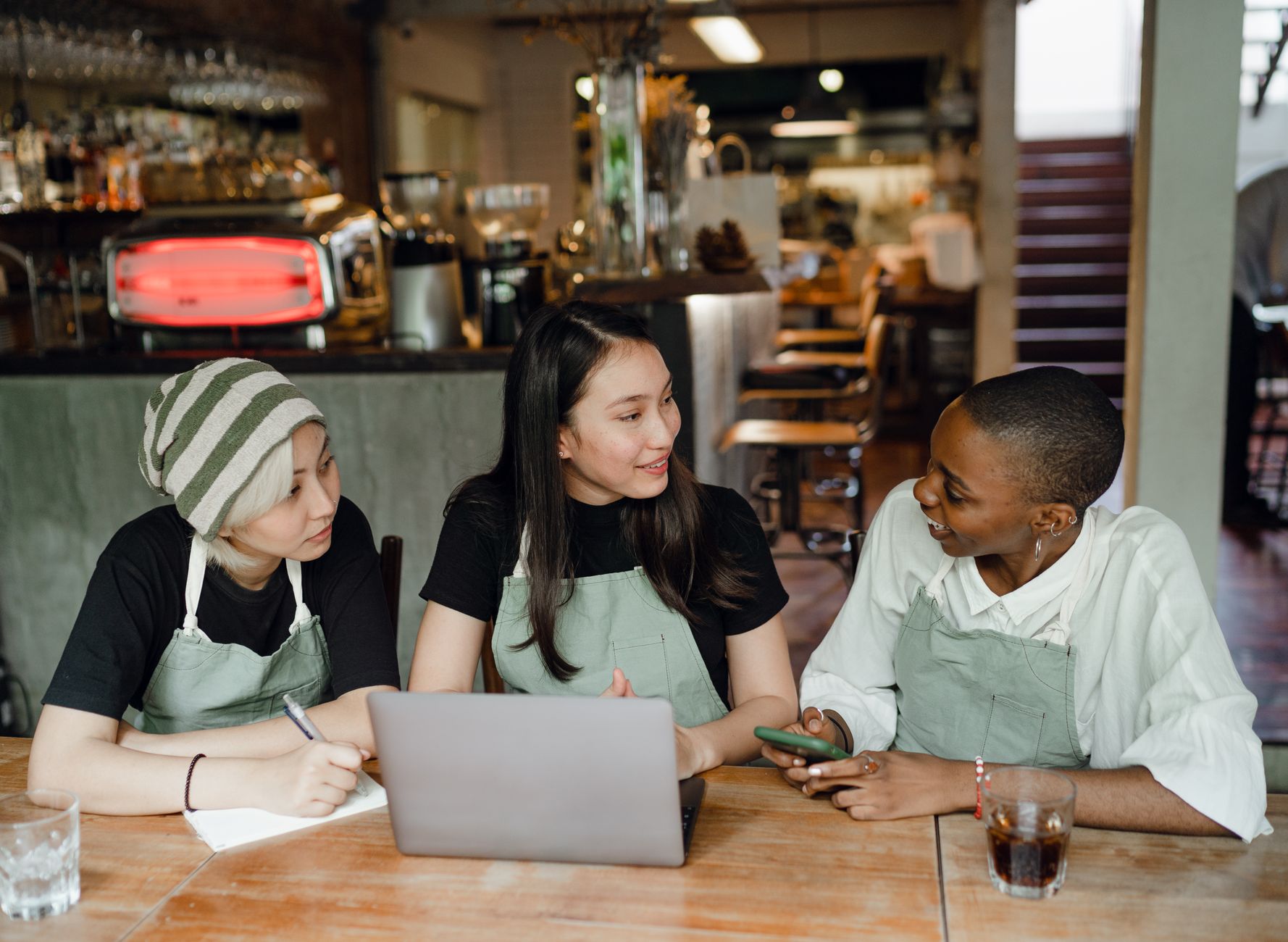
The team keeps its people, and the robot takes a share of the runs. We work from one rule: always a robot plus fewer staff, never zero staff. A restaurant that tries to run a dining room on a robot alone fails at the first table with a question, a spill or a missing order.
In practice, the host or server loads the robot at the pass, confirms the table, and keeps the handoff. The robot moves between stops and returns to the wash area or a charging point. The person at the table carries the conversation, the checks and the fixes. Staff time moves from walking to serving, which is the part guests notice.
Expect a short adjustment. Staff need to learn when to call the robot, how to clear an obstacle, and what the robot does when a route is blocked. Service Robot Co. covers that training on site during deployment. When you judge the result, look at the reduction in walking, not a reduction in people.
What can a delivery robot not do in a restaurant?
A robot is a route tool. It does not understand a guest, a menu change or a kitchen running behind. It cannot read every crowded aisle, a child running between tables, or a chair pulled into its path, so the floor layout has to stay clear and the route has to be tested before service.
The building matters as much as the robot. Stairs, narrow doors, uneven thresholds, a patio that changes with the weather, or a freight elevator booked at dinner all limit where a robot can go. Older buildings often have tighter corners than newer ones, and a site assessment finds those limits before any lease is signed.
Robots also add upkeep. They need charging, map updates after a layout change, and someone to respond to a fault. Faults are handled remotely where possible and dispatched on site where not. Plan for at least one staff member who knows the robot's basic checks.
What do diners think about robots in restaurants?
Guest attitudes are mixed, and that shapes placement. A 2025 survey of 1,000 US respondents, as summarized in a restaurant trade news report, found that a slim majority of diners accept some AI use for efficiency, but most do not want robots running the dining experience.
The same report cites research finding that 32% of diners would prefer not to see robots prepare their food. The date of that figure is unclear, so treat it as a rough signal. The practical reading is that guests accept a robot carrying plates in the back of the room far more readily than a robot that appears to be serving them.
Placement follows from that. Keep the robot on its route, with a person at the table. Guests should see staff first and the robot second.
How do you get started with a delivery robot lease in Boston?
Start with a walk-through of the room, not a robot specification. Measure the runner loop, the dining room footprint, the stairs and lifts, and the hours when the gap appears. A free site assessment maps the route and tests the floor, and the lease payment is quoted after that assessment, based on the actual site.
Choose a pilot before a full rollout. One leased unit on the busiest route is a clean test of whether the walking drops and the team stays intact. Set a target for runner trips and for staff feedback, then decide whether a second unit is justified. Service continues after go-live, and faults are handled as they come up.
Bring the people who will run the robot into the assessment, including the host and the lead server. A plan the floor team helped write is more likely to survive a busy Friday night.
Frequently asked questions
Put a robot to work in Boston.
We walk your site, learn the job, and recommend the unit that fits. Then we quote the lease, deploy it, and keep it serviced.
Sources
- US Bureau of Labor Statistics, Occupational Employment and Wage Statistics (OEWS May 2024)
- BLS Occupational Outlook Handbook: Waiters and Waitresses
- BLS JOLTS release (January 2026 archive)
- National Restaurant Association Massachusetts state fact sheet
- BLS Injuries, Illnesses and Fatalities: Full-Service Restaurants 2018
- FRED: Boston metro accommodation and food services employment
- Restaurant Dive: coverage of diner attitudes toward robots
- National Restaurant Association 2025 pocket guide
- Axios Boston: 2024 restaurant openings and closings