
The short answer
For a delivery robot vs food runner in Bridgeport, the deciding question is how much of the runner's shift is repeated carrying. A delivery robot makes sense when the route is long, fixed and busy, such as kitchen pass to dining room, and when the team wants staff time moved to guest work. It does not fit when the runner also clears tables, hosts, handles guest problems or covers unpredictable rushes, and in most Bridgeport sites the right answer is a robot plus fewer runners, never a robot with zero staff.
Key takeaways
- A robot takes the repeated carrying on a fixed route, not the whole food runner job.
- Public data for the Bridgeport metro is modeled, so a timed log of your own shifts matters more than any regional average.
- Turnover estimates for restaurants run high, so a robot can ease staffing gaps but does not remove the need to hire.
- Guest questions, allergies, checks and table work stay with people.
- Start with one leased unit after a site assessment, then decide on more only if the log supports it.
Delivery robot vs food runner in Bridgeport: when a robot fits and when it does not
A delivery robot fits a Bridgeport operation when most of a runner's trips are the same trip over and over, such as kitchen pass to a dining room or a dining hall to a set row of tables, along a path the robot can map and repeat. It also fits when the owner wants a runner's time moved toward guest contact, because the robot makes the same trip the same way on every ticket, including the last one of a rush.
It does not fit when the runner's job is mostly everything else: clearing, resetting tables, checking on guests, working the host stand, answering an allergy question or splitting a check. A robot cannot read a room, and an operator who expects it to will find the floor short on coverage at the worst moment. It also does not fit a site with a long unmapped route, aisles that change through the night, or a kitchen that cannot keep a clear path to the dining room.
What does a food runner actually do in a shift?
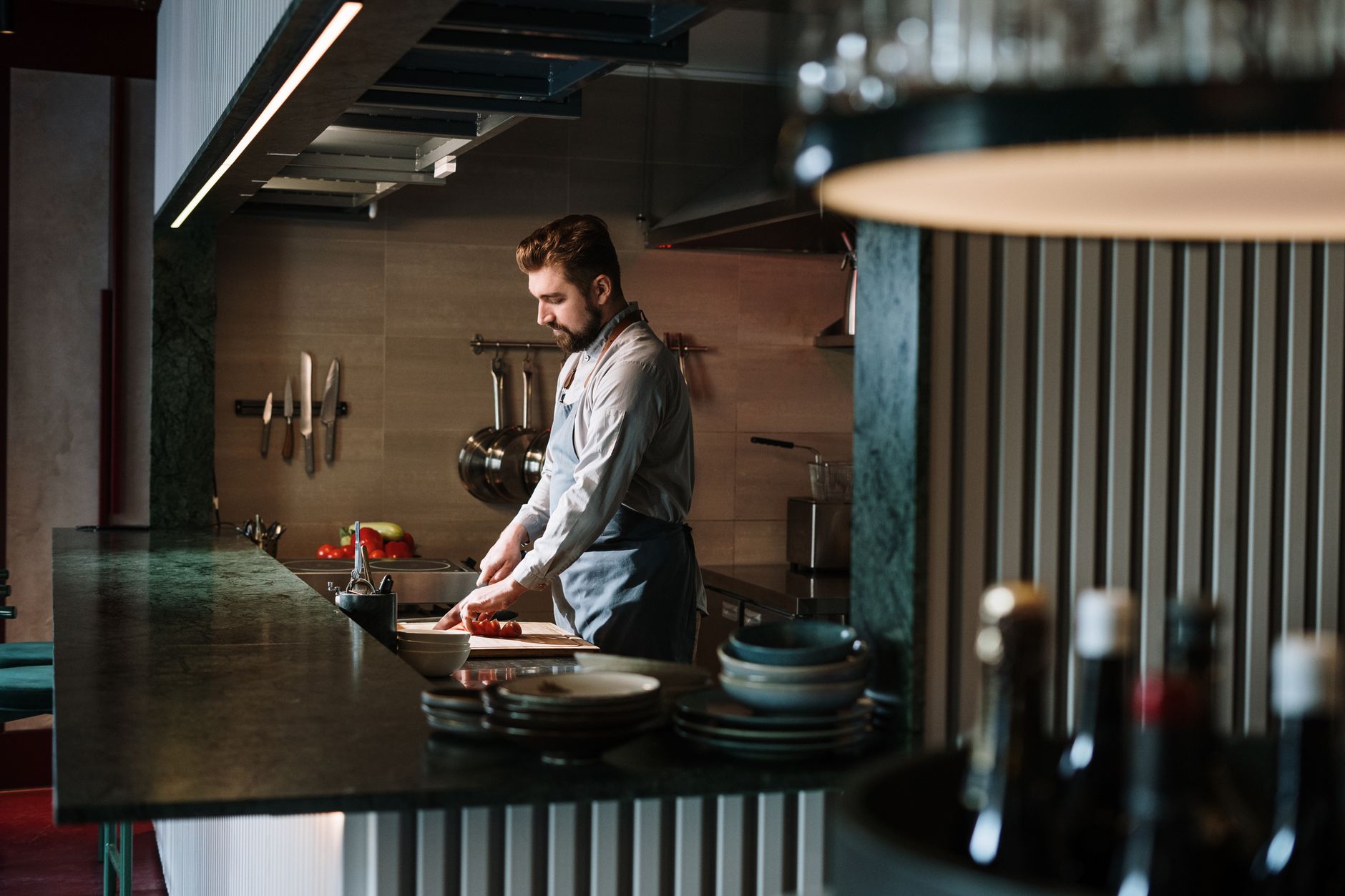
A food runner in a Bridgeport restaurant or dining room usually picks up finished plates at the pass, checks the ticket against the table, carries the food over and comes back for the next one. Between trips the runner clears used dishes, brings drinks and condiments, resets tables and helps the server when the floor gets busy. The runner also handles small problems, such as a dish that is wrong or a plate that needs to go out first for a child.
The walking is the easiest part to measure and the easiest part to automate. The rest of the shift, reading the room and fixing problems on the spot, is where a person earns the hour. Owners who judge a robot only by counting trips usually undercount the work that stays with a person, so the review should list every task the runner does, not just the carrying.
Median hourly wage, Waiters and Waitresses
$4,151
Monthly cost of one full-time worker in Bridgeport, CT, at the median wage plus payroll costs (an estimate, not a quote).
Which parts of the run can a robot take, and which can it not?
A delivery robot can take the repeated transport leg: loading a tray or tub at the pass, traveling a mapped route to a station or table, and returning to a charging or staging point. It can also cover off-peak runs, such as moving stock from a back kitchen to a side station, so a person is not walking that path during service.
It cannot take the parts that depend on judgment or touch. It cannot confirm an order at the table, ask about an allergy, explain a substitution, read a crowd, or lift and unload a plate at a guest's seat. Plan on the robot ending at a staging point, with a person doing the handoff at the table and the reset afterward.
- Repeated carrying on a fixed route
Delivery Robot
Handles it on a mapped path, the same way on every trip
Food Runner
Handles it, but slows as the rush builds
- Guest questions and allergies
Delivery Robot
Cannot answer or confirm an order
Food Runner
Answers, checks and escalates to the kitchen
- Clearing and resetting tables
Delivery Robot
Not part of its job
Food Runner
Done between runs
- Crowded or unmapped space
Delivery Robot
Stops or waits when the path is blocked
Food Runner
Steps around people and makes a call
- Off-peak stock moves
Delivery Robot
Runs on schedule without a person walking the path
Food Runner
Walks the path and pulls staff from other work
- Closing and late coverage
Delivery Robot
Can run late, but cannot close the building
Food Runner
Closes the building and handles problems
What do Bridgeport and Connecticut labor numbers show?
The local wage for this job is shown in the government wage data panel beside this text, drawn from the Bureau of Labor Statistics occupation for waiters and waitresses. That is the closest official category to a food runner, though employers may classify runner roles differently, so check your own payroll codes before comparing. Use the panel for the cost of a person's hour and the rest of this page for the hours that need covering.
Scale is useful context but not a Bridgeport count. According to the National Restaurant Association, the Bridgeport-Stamford-Norwalk metro had 38,011 direct eating and drinking place jobs in 2025, and 46,945 total including indirect and induced effects. Those are modeled estimates, and the same association put statewide eating and drinking place employees at 117,900 in 2025.
The state trend is softer. Connecticut food services and drinking places employment, a seasonally adjusted Bureau of Labor Statistics series published through FRED, was 124.4 thousand in June 2025, 122.0 thousand in July and 121.7 thousand in August. Three months is not a trend, but the series does not show a labor pool growing to meet demand.

How much of the shift does running food take?
Official data does not give the share of a shift that a food runner spends carrying food, and no verified hour count for this task in Bridgeport was found. The honest way to size it is to time one or two busy weeks yourself, logging each trip, each clearing run and each reset, then compare those trips with the total hours on the runner schedule.
The table below shows which steps change with a robot. Fill in the today column from your own log before deciding. A site where the runner spends most of the shift on repeated transport gets far more from a robot than a site where the same person spends most of the shift on tables and guests.
| Task | Today | With a robot |
|---|---|---|
| Carry finished plates from the pass to a dining room | Repeated on every ticket during the rush | Robot takes the mapped route, staff hand off at the table |
| Return empty tubs and used dishes to the kitchen | Runner walks back and forth between trips | Robot carries tubs on a set return run |
| Move stock from the back kitchen to a side station | Scheduled walk, often pulled from floor work | Off-peak run without a person walking the path |
| Clear and reset tables | Runner does it between trips | Still done by staff |
| Answer questions, check orders and handle problems | Runner handles it on the floor | Still done by staff |
No verified hour figures for this task in Bridgeport were found. Time one or two busy weeks in your own log to fill in the today column before deciding.
How does a team work with a robot on the floor?
The robot works best as one part of a team that stays the same size on the floor. A workable setup keeps a server and at least one runner or busser on each section, and moves the repeated carrying to the robot during the rush. Staff still handle the table, the check and any guest problem. A site with zero staff is not a setup this model covers.
We integrate the robot for the site, train the staff who load it, clear its path and handle a stuck unit, and service it nationwide. A remote check comes first when a unit stops, and an on-site dispatch follows if needed. Many owners start with one leased unit after a free site assessment and a lease quote, then add a second only if the timing log supports it.
What can a delivery robot not do?
It cannot serve a guest or correct an order. Wrong plates, a wrong table and a guest who waves for help still need a person to notice and respond. The robot also cannot make the split-second call a person makes in a crowded aisle, so a mapped route with clear sightlines is a requirement, not a nice extra.
Space and route limits matter. Stairs, doorways a tray cannot clear, thresholds that change height, and aisles that people block during a rush all need checking before deployment. A route that changes every week is a weak first candidate. A stuck unit, a low battery or a blocked path leaves plates waiting, so staffing has to include someone who can cover the run.
Adoption data is thin. According to a January 2025 Popmenu survey of 359 U.S. operators, 34 percent had adopted AI technology and 48 percent planned to in 2025. That covers AI broadly, not robots, and no current U.S. survey was found that shows how many restaurants use delivery or server robots.
How do turnover, sick days and night shifts change the staffing math?
Turnover in food service is high by industry estimates. Homebase reports average restaurant employee turnover above 75 percent in 2025, with front-of-house at 41 percent and back-of-house at 43 percent. DailyPay, citing Black Box Intelligence for 2025, reports limited-service turnover of about 110 percent and full-service turnover of 92 to 101 percent. These are vendor and secondary estimates, and one analysis cautions they are not directly comparable to Bureau of Labor Statistics separation counts without a clear definition.
The Bureau of Labor Statistics projects waiters and waitresses employment to decline by about 16,300 jobs from 2024 to 2034, which it rounds to a 1 percent decline from 2,329,700 jobs in 2024. The same projection expects about 456,700 openings a year on average, mostly from workers who leave. Those openings are the main hiring load, and a robot does not remove the need to fill them.
The Bureau of Labor Statistics also notes that schedules can include early mornings, late evenings, weekends and holidays, and that part-time work is common. A robot does not solve a call-out at 7 pm on a Friday. It can reduce how many people must walk repeated routes during service, which may lower the number of unfilled runner shifts, but the size of that effect depends on your own call-out log. No public source gives sick-day rates for this job in Bridgeport.
How do we get started in Bridgeport?
Start with a free site assessment. We map the route, time the runner work with you, check surfaces and doorways, and identify which trips the robot can cover and which must stay with staff. The lease quote follows the assessment, so the terms match your site and your schedule before any decision.
After go-live, we keep support close. Staff are trained on loading, clearing and responding to problems, and the unit is serviced nationwide with remote triage and on-site dispatch. Ask during the quote about backup coverage for days a unit is down, so the floor is not left without a runner.
If your timing log shows the runner's day is mostly tables, guests and resets, the honest answer is to keep the person and skip the robot, and we will say so.

Frequently asked questions
Put a robot to work in Bridgeport.
We walk your site, learn the job, and recommend the unit that fits. Then we quote the lease, deploy it, and keep it serviced.
Sources
- US Bureau of Labor Statistics, Occupational Employment and Wage Statistics (OEWS May 2024)
- Bureau of Labor Statistics, Occupational Outlook Handbook: Waiters and Waitresses
- Bureau of Labor Statistics, Beyond Bad Tipping: Workplace Hazards of Food and Beverage Servers
- FRED, Connecticut food services and drinking places employees (BLS data)
- National Restaurant Association, Connecticut economic impact of the foodservice and restaurant industry
- National Restaurant Association, Connecticut state fact sheet
- Homebase, restaurant employee turnover
- DailyPay, QSR and restaurant turnover rates
- Restaurant Technology News, Popmenu survey on AI adoption