
The short answer
For cleaning robot vs janitor in Bridgeport, a robot makes sense when a building has large, mostly open floors, a set cleaning window (often overnight), and night shifts that are hard to fill. It does not replace a janitor for restrooms, trash, spills, glass or detail work, so the realistic setup is a robot plus fewer staff, not zero staff. Lease terms are quoted only after a free site assessment, because floor layout decides the answer.
Key takeaways
- A floor scrubber robot suits large, open, mostly flat floors cleaned on a fixed schedule.
- Restrooms, trash, spills and glass still need a person in almost every building.
- Plan on a robot plus fewer staff, not a robot in place of the whole crew.
- Manufacturer and distributor throughput figures depend on floor type and layout, so test them on your floor.
- The lease quote follows a free site assessment, not a web estimate.
Cleaning robot vs janitor in Bridgeport: when a robot makes sense
The short answer is that a cleaning robot is a floor machine, not a janitor. It can run a scrubbing route on a fixed schedule, often overnight, without an operator on the machine. It cannot empty bins, clean a restroom, handle a broken bottle, or judge an unknown spill. The decision turns on which part of the cleaning workload is large, repetitive and hard to staff.
A robot makes sense in Bridgeport when most of the square footage is open hard floor, the cleaning is repeatable, and the building cannot reliably fill the night shift. Warehouses, big-box stores, gyms and school corridors tend to fit. A robot is a weak fit where the floor is mostly carpet, crowded with equipment or stairs, or where the work is spread across many small rooms.
Even when the fit is good, the robot changes the janitor's job rather than removing it. The useful question for most buildings is how many hours of floor work move to the machine, and what is left for people.
What does a janitor actually do in a shift in Bridgeport?
A janitor's shift is mostly a list of small, interrupting tasks. Typical work includes emptying trash and recycling, restocking paper and soap, cleaning restrooms, wiping high-touch surfaces, sweeping entries, responding to spills, and moving furniture or equipment. The work is spread across rooms, floors and hours, which is why a night custodian often covers much more than the floor.
According to the Bureau of Labor Statistics Occupational Outlook Handbook, janitors and building cleaners held about 2.4 million jobs nationally in 2024. The same source projects 2% growth over the decade from 2024 to 2034, which it calls slower than average, for a net gain of 47,800 jobs. It also estimates about 351,300 openings a year on average, mostly from replacement demand, so many openings are people leaving rather than new roles.
We could not confirm the Bridgeport metro count of janitors for May 2024 in our search, so this page does not state one. The government wage data on this page covers the pay side of the same job.
Median hourly wage, Janitors and Building Cleaners
$4,212
Monthly cost of one full-time worker in Bridgeport, CT, at the median wage plus payroll costs (an estimate, not a quote).
Which cleaning tasks can a robot take over, and which can't it?
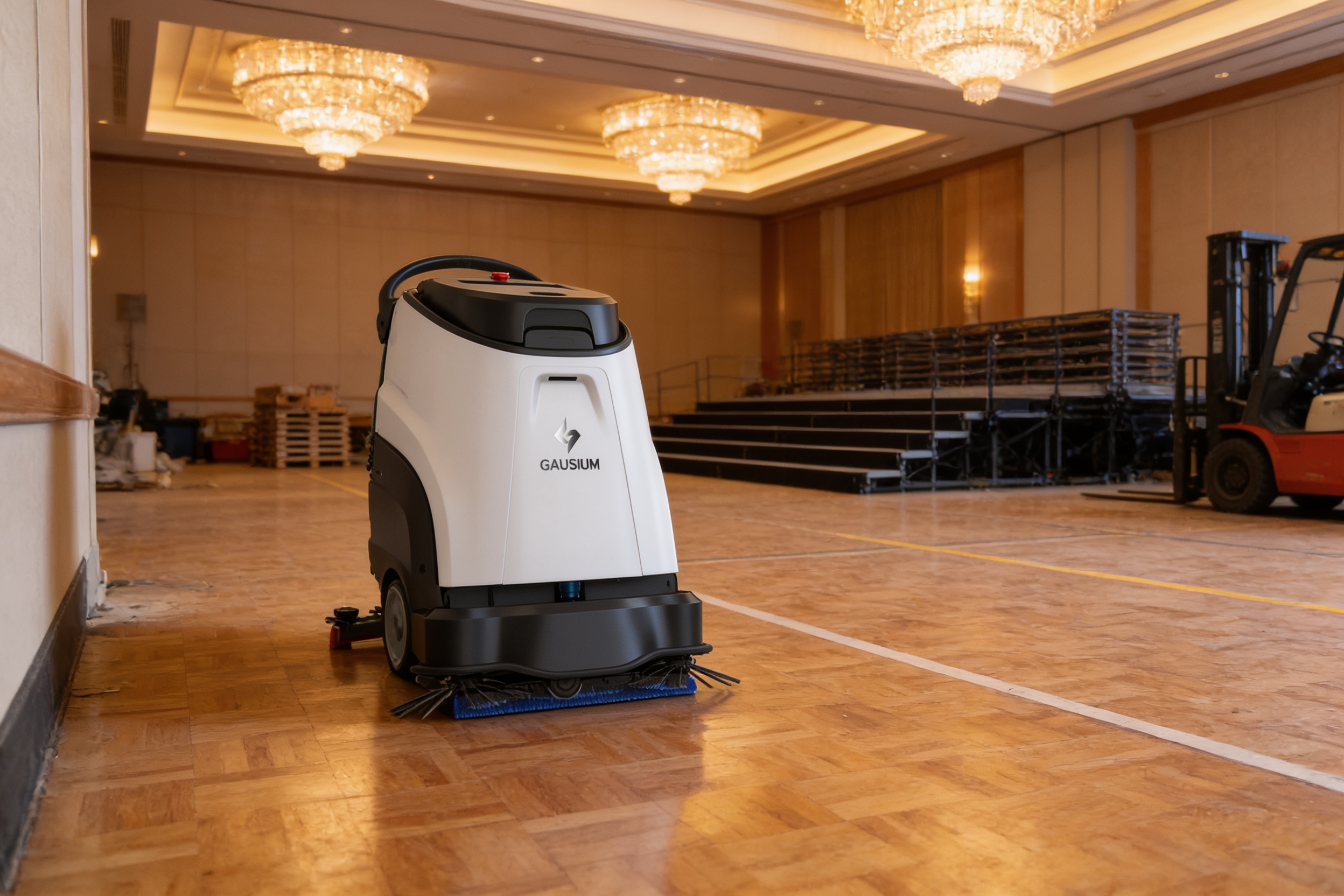
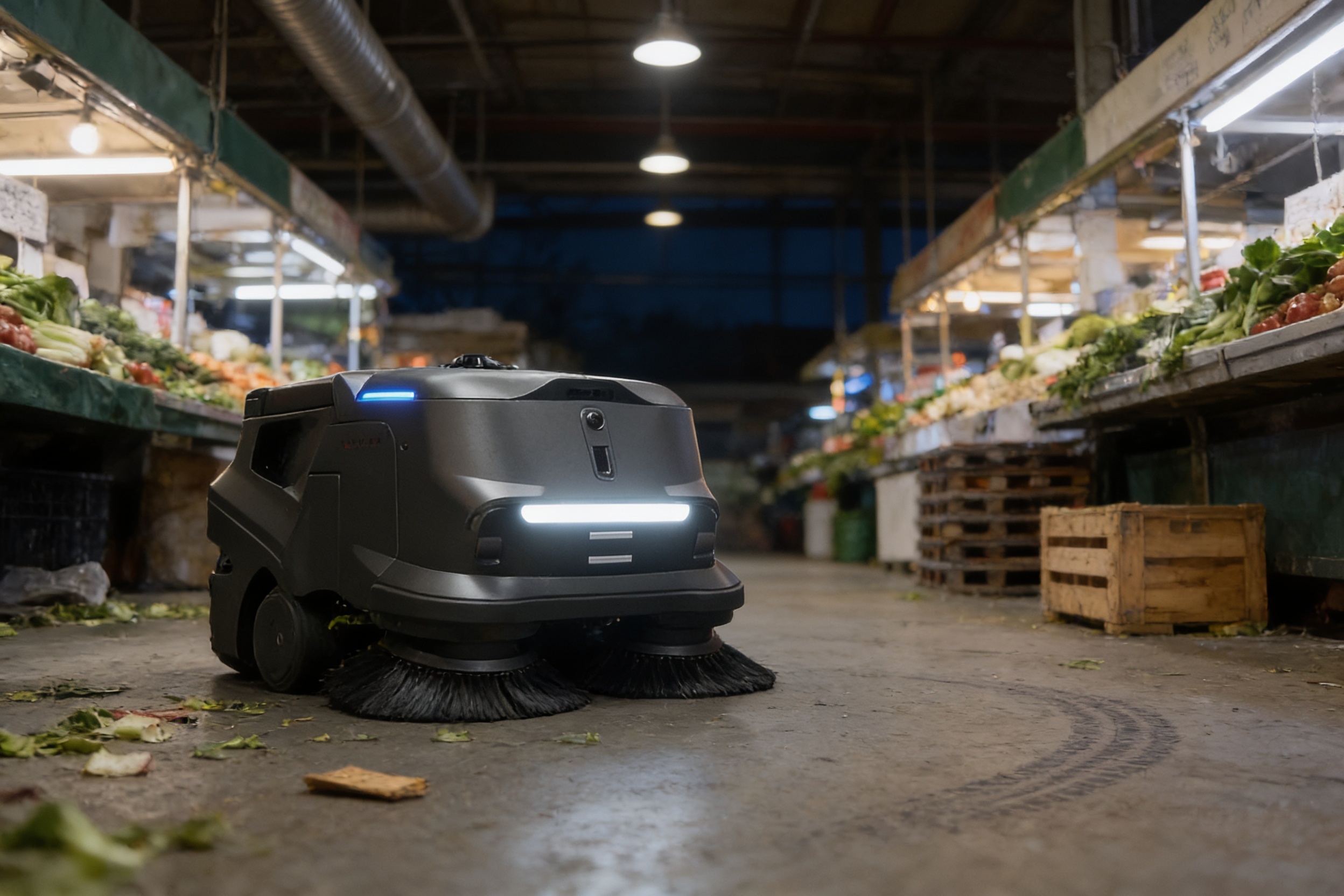
A floor scrubber robot handles the repeatable floor passes: scrubbing or sweeping main aisles, corridors and open floor along a mapped route. It can run the same path every night at the same speed and log where it went. That consistency matters for audits and for buildings where the floor is the main job.
It cannot handle tasks that need reach, judgment or hands. Trash removal, restroom cleaning, dusting, glass, stairs, spill response in unpredictable spots and moving obstacles still need a person. A robot can avoid obstacles it detects, but a dropped pallet or a puddle from an unknown source is a job for staff.
The split is usually this: the robot takes the long floor routes, and staff take everything that stops a route or needs a human decision. Build the robot's map around the floor work, and build the staff schedule around the rest.
- Night coverage
Cleaning Robot
Runs a mapped floor route on a set schedule with no operator on the machine
Janitor
Starts and stops a shift, adapts to what is on the floor, and works several areas at once
- Restrooms and trash
Cleaning Robot
Cannot do this work
Janitor
Does this work and checks it by eye
- Spill response
Cleaning Robot
Can avoid detected obstacles but cannot judge an unknown spill
Janitor
Assesses the spill, cleans it and reports it
- Consistency on open floor
Cleaning Robot
Same path, speed and coverage every night, with a log
Janitor
Varies with fatigue, attendance and the route the person chooses
- Flexibility
Cleaning Robot
Limited to the mapped route, so a changed layout needs a remap
Janitor
Adapts to moved furniture, events and new tasks on the same night
- Absence and cover
Cleaning Robot
Does not call in sick, but needs service and backup cover
Janitor
Absence affects the shift, and cover must be found
How much labor is in the job? Turnover, overtime and injury data
Turnover drives most staffing decisions, and it is the number with the weakest public data. The Bureau of Labor Statistics page for this occupation does not publish an occupational turnover rate. Industry figures vary widely. A janitorial trade blog reports estimates from as low as 75% to as high as 400%, and says the sector sits above construction, education and retail, with only leisure and hospitality higher. According to a 2025 cleaning services statistics roundup, industry turnover is 42%, though the roundup names no clear primary source. A reader survey run by a janitorial trade publication reports an average of 73%, but its date and method are unconfirmed.
Labor shortage is the more consistent theme. The same trade publication survey reports that 61% of janitorial companies name labor shortages as a major obstacle to growth, though its sample and date are unconfirmed. For a building manager, the practical meaning is that unfilled night shifts are common, and a vacancy can last long enough to leave areas uncleaned.
On injuries, a third-party analysis of Bureau of Labor Statistics 2024 data puts janitorial cleaning at a total case rate of 2.5 per 100 full-time workers, against 2.3 for all private industry. We have not checked that figure against the BLS table itself, so treat it as a directional signal. A robot can take repetitive floor passes off people, but it adds its own safety rules for people who walk through its path. We did not verify overtime or sick-day figures for this occupation in this search, so this page leaves them out. Your own payroll and absence records are the numbers to use.
How does a team work with a robot?
The team that works best with a robot is still a team. A robot plus fewer staff is the model, never zero staff. The robot takes the long floor routes on a night schedule, and one or two people handle the work that stops a route: restrooms, trash, spills and any area the robot cannot enter. Someone needs to be on site or reachable during the shift for alerts and dispatch.
Staffing changes in a few specific ways. Night shifts that were hard to fill become a smaller crew with clear duties. Day staff can take over the detail work the night crew never reached. Supervisors spend more time on the map, the schedule and exceptions than on sweeping aisles. Training matters: staff need to clear the robot's path, respond to an alert and recognize when a floor is not ready.
We train staff as part of deployment, and the first weeks are the time to adjust the route, the speed and the schedule. The janitor's job shifts from pushing equipment to supervising a machine and handling the exceptions.
What does the local wage data mean for the decision?
The government wage data on this page covers janitors and building cleaners in the Bridgeport area, from the Bureau of Labor Statistics May 2024 estimates. Read it next to your own hours, not on its own. A wage shows what an hour of a janitor's time costs. It does not show how many hours the building needs, or whether the night crew can be filled at all.
The cost comparison has four parts: the hours the robot takes off the floor, the hours still needed from people, the vacancy and overtime cost of shifts you cannot fill, and the lease. The lease is a fixed robot lease payment, quoted after a site assessment, and it depends on the robot, the floor, the schedule and the service plan. We do not quote a number from a web page.
Some buildings find the case rests on coverage more than savings. A night shift that is always short, or a floor cleaned less often than it should be, has a cost even when the wage line looks the same. Other buildings find the robot takes too little of the work to matter. The site assessment should show which group you are in.
What can a cleaning robot not do?
A robot cannot clean a restroom, empty a bin, handle chemicals in a closed space, or decide that a stain needs a different product. It cannot climb stairs, and it will not reliably handle a floor covered in cords, pallets, temporary signs or loose debris unless the site is prepared. It is not a security device and should not replace the people who know the building.
Floor type limits the job. Smooth, open hard floors are the easy case. Carpet, rough concrete, thresholds, ramps and uneven transitions need testing on site. A distributor comparison table notes that actual throughput depends on floor type, layout and the shift schedule, so manufacturer numbers should not drive a site decision without a test.
Reliability has limits too. A robot can get stuck, a sensor can get dirty, and a route can be blocked. That is why the service plan matters and why a backup plan matters. Ask what happens when a unit is down on a Friday night.
What does the throughput claim mean for coverage?
Manufacturer and distributor numbers look large, and they should be read carefully. According to a distributor comparison table, ride-on autonomous floor scrubbers are listed at about 45,760 square feet per hour, and walk-behind autonomous scrubbers at about 33,440 square feet per hour. For two listed scrubber models, the stated run times are 4.5 hours and 5 to 6 hours. These are manufacturer-reported figures, not field measurements.
Convert the claim into your building. Take the open floor area the robot can actually reach, divide by the throughput, and add time for charging, turns, obstacles and route changes. Then compare that with the hours your crew spends on the same floor today. A building with a large open floor and a short window gets a different answer than one with many small rooms.
We did not find an independent field study or a recent adoption survey for autonomous floor scrubbers, so this page cites no adoption rate. The honest test is a site assessment followed by a trial on one zone where results can be measured.
How do you get started with a robot lease in Bridgeport?
Start with a free site assessment. We map the floor, measure the open area, review the shift and list the tasks that stay with staff. The assessment answers whether a robot fits, which route and model suit the floor, and what the lease quote looks like. Nothing is quoted from a web page, and nothing is committed before the assessment.
Our team chooses the robot for the site, arranges a lease through financing, deploys and integrates it, trains staff, and services it across the country. Robots are only leased, through financing, so the payment comes as a quote after the assessment. The lease structure means no upfront capital for the robot itself.
A common first step is one leased unit on one zone, with a clear measure of hours moved and coverage achieved. If it works, the team adds units or zones. If the floor is not suited, the assessment should say so before any lease is signed.
Frequently asked questions
Put a robot to work in Bridgeport.
We walk your site, learn the job, and recommend the unit that fits. Then we quote the lease, deploy it, and keep it serviced.
Sources
- US Bureau of Labor Statistics, Occupational Employment and Wage Statistics (OEWS May 2024)
- Bureau of Labor Statistics, Occupational Outlook Handbook: Janitors and Building Cleaners
- Third-party analysis of BLS 2024 injury data (janitorial cleaning)
- Janitorial trade blog on turnover estimates
- 2025 cleaning services statistics roundup
- Janitorial trade publication reader survey
- Distributor comparison table, autonomous floor scrubbers