
The short answer
Cleaning robot vs janitor in Baton Rouge is usually the wrong way to frame the decision, because the robot works best as a partner to fewer staff, not a replacement for the whole crew. It makes sense for buildings with large, mostly clear floors that need the same scrubbing or sweeping pass every night, and it does not make sense where most of the shift is restrooms, trash, spills and furniture-heavy rooms. The decision turns on how many staff hours go to floor passes, which you can measure on site before you commit to anything.
Key takeaways
- A cleaning robot works best beside a janitor and fewer staff, not in place of the whole crew.
- Open, mostly clear floors on a fixed nightly route are the strongest case for a robot.
- Restrooms, trash, spills and judgment calls stay with people.
- Measure your own floor hours and the local wage for this job, then compare them with a fixed lease quote after a site assessment.
Cleaning robot vs janitor in Baton Rouge: when does a robot make sense?
Cleaning robot vs janitor in Baton Rouge is really a question about floor passes, not about whether a building needs people. A cleaning robot makes sense where a large share of the janitor's time goes to repeating the same route on open floor, such as corridors, lobbies, retail aisles or warehouse floors, and where that route is predictable enough to run after close. In those buildings the robot takes the repetitive part of the shift while fewer staff handle everything else.
It does not make sense when most of the shift is restroom work, trash, spills, stairs or rooms full of moving furniture. Small sites with little open floor usually gain little, because the robot needs enough clear, uninterrupted area to justify its setup. A janitor also remains the better choice where the job depends on judgment, such as deciding whether a spill is a hazard.
Baton Rouge is one of the larger metros for which we hold government wage data for this job, so the panel beside this text shows the local wage for janitors and building cleaners. Treat that figure as one input, not the answer. The decision turns on how many staff hours go to floor passes at your building and whether a robot can run there without a person in the room.
What does a janitor actually do in a Baton Rouge shift?
A janitor's shift is rarely one job. Most shifts mix emptying trash and recycling, cleaning restrooms, restocking supplies, wiping high-touch surfaces, responding to spills and floor care. The mix shifts by building: an office shift leans on restrooms and kitchens, while a warehouse shift leans on sweeping and scrubbing long aisles.
Floor care is the part that repeats most. A 2026 janitorial efficiency article says floor care consumes a significant portion of janitorial labor hours and describes it as repetitive and schedule-driven. The article does not give a percentage, so the share of your own shift has to be measured on site.
Because the work is split into many small tasks, time is often lost between them. A worker who stops to set up a machine, fetch chemicals and wait for a floor to dry spends the shift in another way than one doing only the floor pass. Mapping each task and its minutes on a normal night shows which ones are candidates for the robot.
Median hourly wage, Janitors and Building Cleaners
$3,161
Monthly cost of one full-time worker in Baton Rouge, LA, at the median wage plus payroll costs (an estimate, not a quote).
Which floor tasks can a cleaning robot take, and which can it not?
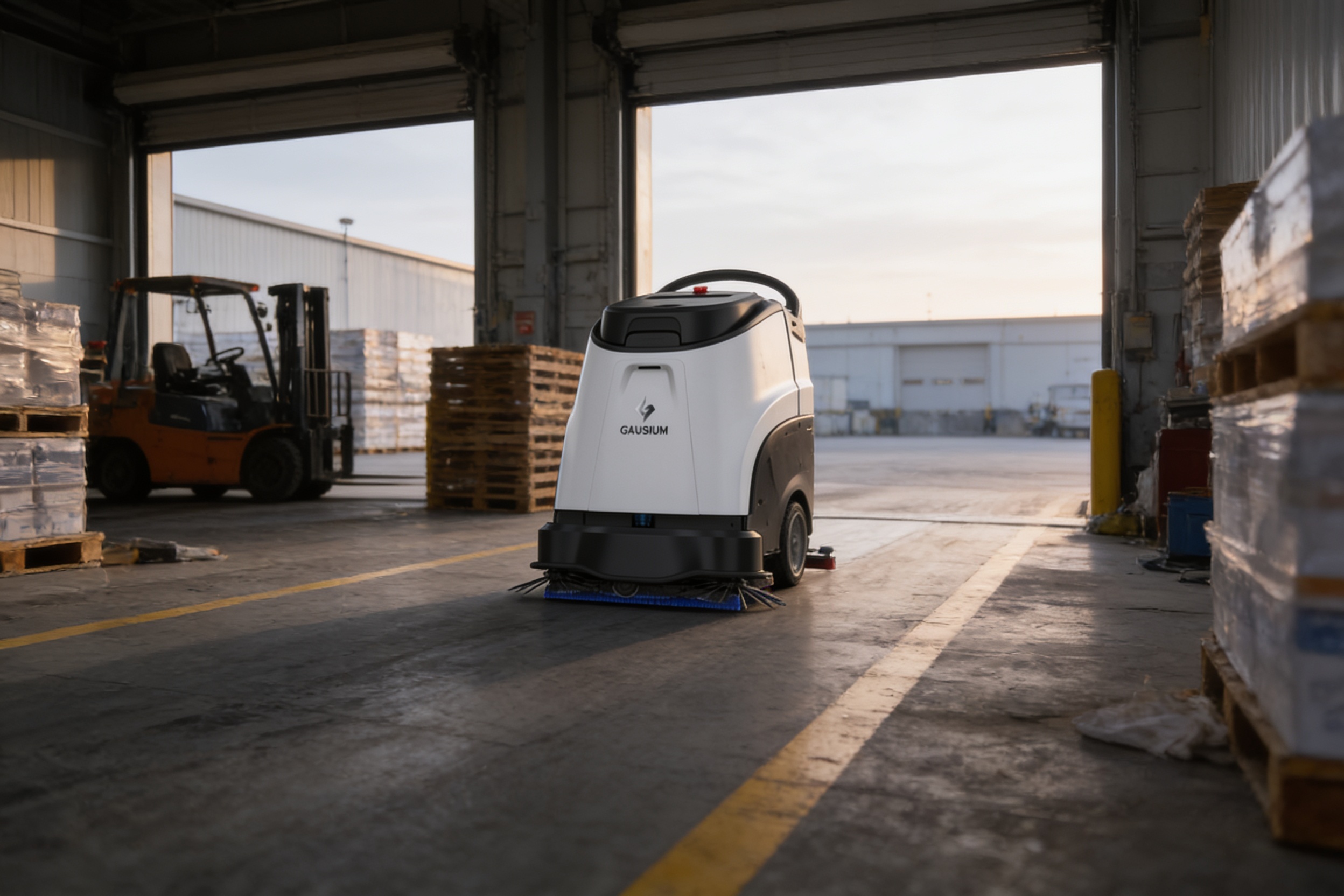
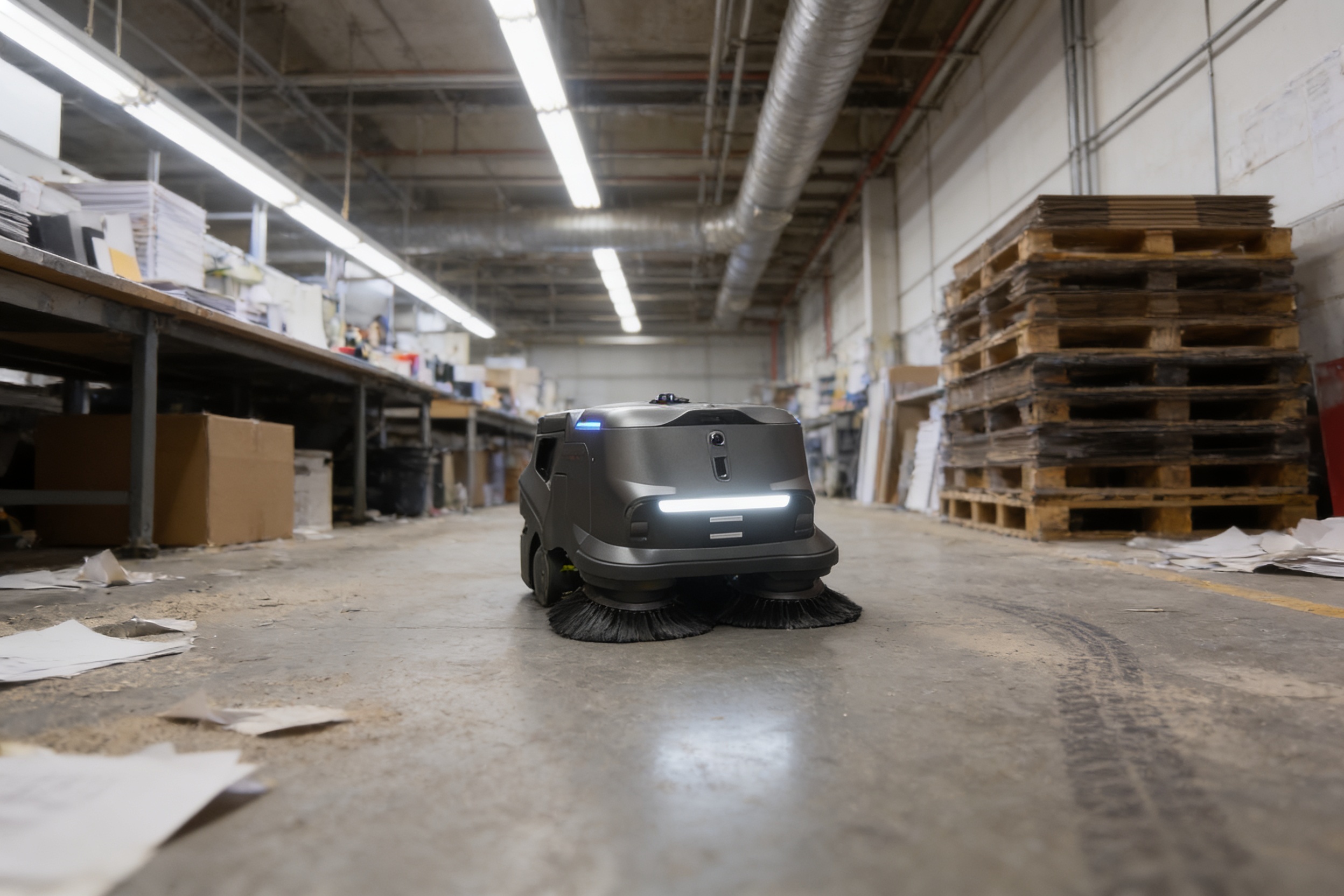
A cleaning robot can take the open-floor passes it is built for: scrubbing or sweeping large clear areas along a set route, repeated nightly. Corridors, lobbies, retail aisles and warehouse floors are the usual candidates. Once the route is mapped and set up, the robot runs without an operator, which is what makes overnight cleaning possible with no one on shift.
It cannot take work that needs hands, judgment or a change of plan. Restroom cleaning, emptying bins, wiping surfaces, picking up litter, stairs, glass, and deciding what a spill is all stay with staff. Those tasks are often the larger part of a janitor's shift, so the robot takes a share of the work, not the whole job.
- Restroom cleaning
Cleaning Robot
Not part of the route, so it stays with staff
Janitor
Full cleaning with supplies and checks
- Night coverage
Cleaning Robot
Runs a mapped open-floor route after close with no operator in the room
Janitor
Needs a scheduled shift, breaks and cover for sick days
- Repeat consistency
Cleaning Robot
Makes the same pass on the same path every run
Janitor
Quality varies with fatigue and workload, but adapts on the spot
- Spills and unexpected mess
Cleaning Robot
Cannot judge the hazard, so a person must clear it
Janitor
Assesses the hazard and acts immediately
- Trash and high-touch surfaces
Cleaning Robot
Does not do this work
Janitor
Empties bins and wipes handles and counters
- Obstacles and layout changes
Cleaning Robot
Needs a clear path, and changed layouts need re-mapping
Janitor
Works around carts, cords and moved furniture
What does the labor picture look like for janitors?
According to the BLS Occupational Outlook Handbook, there were about 2.4 million janitor and building cleaner jobs nationally in 2024. Services to buildings and dwellings was the largest employing sector, at 35%. The handbook projects employment growth of 2% for 2024 to 2034, which it describes as slower than average.
Turnover is the hardest figure to pin down. A janitorial trade blog reports that the janitorial turnover rate held relatively steady in 2020 while most industries' rates jumped, but it cites no table, and we did not find a BLS or other government turnover figure for this occupation. Use your own hiring and exit records for turnover, and treat any unsourced turnover percentage as unverified.
Labor pressure is what the industry surveys point to. A 2026 industry release reports that 44.6% of contractors expect labor challenges to increase. We did not verify published overtime, night shift or sick day rates for this occupation, so those figures have to come from your own timesheets and call-out logs.
How many hours does a cleaning robot take back from the shift?

Public data does not publish hours per shift for janitors in a given building, so the hours at your site have to be measured. The only hour figure verified for this page comes from a 2023 vendor-published hospital case study, which reported that one hospital's floor crew went from 16 total manhours per night to 5 after adding robotic scrubbers. That is one vendor-reported site, not independently verified, so read it as an example of the change to test for, not a forecast.
To measure your own hours, log one or two normal weeks of floor work: start and end times for each floor pass, setup and cleanup for any machine, and time spent waiting for floors to dry or moving between areas. Separate the floor passes a robot could run from the time that stays with staff. The gap between those two totals is the figure that matters for the decision.
A 2026 industry release reports that about 32% of building service contractors plan to adopt robotic floor equipment within 12 months, about double the 2025 share. A separate 2026 industry news analysis of a 2019 survey reports that 77% of respondents cited labor savings as a driver. Both show where the market is heading, but neither measures hours saved at a building like yours.
How does a robot plus fewer staff work in practice?
The model we plan for is always a robot plus fewer staff, never zero staff. The robot takes the repetitive floor route after close, and the janitors who remain handle restrooms, trash, spills, checks and the tasks that need judgment. Fewer staff on floor passes means the remaining team has time for the work the robot cannot do, which is where the labor saving becomes real.
Our company leases the robot through financing, deploys and integrates it into the building, trains the staff who run it, and services it nationwide. The person who checks the machine at the start and end of each run becomes the main point of contact on site. Training that person on start, stop, floor checks and basic response matters more to a clean result than any single machine feature.
Plan the change in writing before the robot arrives. Decide which shift tasks move to the robot, which staff hours fall away through scheduling or attrition, and which tasks remain with people. Put the checks in a shared routine, so the robot's run does not depend on one person's memory.
What can a cleaning robot not do?
A cleaning robot does not clean restrooms, empty trash, dust, wipe high-touch surfaces or handle stairs and glass. It cannot judge that a spill is a hazard, or that an area has changed and needs another route. It needs a clear path, so pallets, carts, loose cords or moved furniture will interrupt a run.
It does not run without attention. Someone must check the machine and the floor before and after each run, respond to alerts and clear obstacles. Floors that are very uneven, heavily wet or changed often in layout may need another machine or a person.
Results also depend on the floor. Very dirty, sticky or dusty floors can need more than a single pass, and some surfaces will not suit a given machine. That is why the site assessment checks floor type, obstacles and the route before any lease quote is given.
Is a cleaning robot lease worth it for a Baton Rouge business?
Whether it is worth it depends on four things you can measure: floor hours per shift, the local wage for this job shown in the panel, which staff hours you can reassign or drop, and the lease quote after a site assessment. Payback is the point where the lease cost is covered by hours that move to other work or fall out of the schedule. Hours that will not change do not count.
Be strict about which hours count. If a janitor must still be on the building for the same length of shift, the robot removes floor time but not the shift, and the saving is smaller. Count only hours you can actually reassign or remove from the schedule, and check that figure against the staffing you already have.
A fixed robot lease payment is easier to compare with a crew than an open-ended bill, because it does not rise with the extra hours a shortage creates. Ask the quote to show what service, training and deployment cover, and compare it with the hours you measured. That comparison is the answer for your building.
How do you get started with a cleaning robot lease in Baton Rouge?
Start with a free site assessment. We map the floor, check the route and obstacles, measure the floor passes you want to move, and recommend a machine that suits the floor. Consider starting with one leased unit on the cleanest, most open floor, so you can test the route and the staff routine before scaling.
The lease payment comes in a quote after the site assessment, not from a price printed on this page. The quote reflects the machine, the route and the financing term, so it is specific to the building. Ask for the terms in writing, including what service covers and how a failed unit is handled.
Before the assessment, measure one or two normal weeks of floor hours, confirm the local wage for this job in the panel, and list the tasks that will stay with staff. Bring those three items to the visit. It shortens the work and gives you a clear basis for the decision in either direction.
Frequently asked questions
Put a robot to work in Baton Rouge.
We walk your site, learn the job, and recommend the unit that fits. Then we quote the lease, deploy it, and keep it serviced.
Sources
- US Bureau of Labor Statistics, Occupational Employment and Wage Statistics (OEWS May 2024)
- BLS Occupational Outlook Handbook: Janitors and Building Cleaners
- Building service contractor industry release, 2026 (turnover, adoption and labor figures)
- Industry news analysis of a 2019 janitorial survey, 2026
- Janitorial efficiency article, 2026
- Vendor-published hospital healthcare case study, 2023
- Janitorial trade blog on turnover trends