
The short answer
Cleaning robot cost in Baton Rouge depends on how much floor the robot covers, how many hours it runs each night, how the site is mapped and integrated, and how many units are deployed. Labor is the cost a robot takes over, so the starting point is how many staff hours your floors take now. A lease quote is set after a free site assessment that measures those inputs on your own floors.
Key takeaways
- Floor area, shift pattern, mapping work and the number of units set most of the cost at a Baton Rouge site.
- Labor hours should be timed on your own floors rather than taken from an average.
- Heat, humidity and afternoon storms shape where a unit charges and when it runs in Baton Rouge.
- Ask for a quote that itemizes mapping, software, service, training and insurance so offers compare fairly.
- The lease quote follows a free site assessment, and no price is set before that visit.
What does cleaning robot cost in Baton Rouge depend on?
People searching for cleaning robot cost in Baton Rouge usually want two answers: what the robot replaces, and what it takes to keep it running on their floors. Both depend on the site more than on any general figure. Two buildings of similar size can get quotes that are far apart, since one may have open aisles and sealed concrete while the other has offices, carpet, stairwells and tight corners.
A quote is built from five groups of inputs. The first is the floor itself: how much area the robot must cover, what surfaces it crosses, and what obstacles sit in the way. The second is the schedule: when the floor is cleaned, how many hours the unit can run without an operator, and whether the work now falls on a night crew. The third is layout work, meaning mapping, route setup and integration with doors, lifts or other equipment. The fourth is the number of units. The fifth is service, meaning how fast a unit must be back in operation when something goes wrong.
None of these can be priced from a web page, and this page does not give a figure. Each one can be measured on site, which is why the quote follows a free site assessment.
What drives the cost up or down at a Baton Rouge site?
Floor area is the largest single driver because it sets how many unit-hours a night the site needs. Long open aisles are simpler to cover than a building broken into many small rooms, so the shape of the floor matters about as much as its total size.
Surfaces and obstacles come next. Sealed concrete, tile and vinyl are the simplest case. Carpet, thresholds, ramps, cords, pallets left on the floor and furniture that moves every day all add mapping and supervision time. Stairs and elevator transitions sit outside what a floor unit does, so any route that crosses them must be planned as a separate job.
Shift pattern decides whether the robot replaces staff time or adds to it. A site that already runs an overnight crew can often hand the open floor to the unit and move that crew to spot work. A site cleaned only during the day, with heavy foot traffic, needs another plan, because the unit must share space with people and gets fewer clean hours.
Traffic and mapping work together. A busy lobby or a cafeteria that fills at lunch changes route timing, and each change to furniture or layout can call for a remap. Integration adds its own time, since doors, elevators, dock plates and building systems have to work with the unit's route.
Number of units and service coverage finish the picture. One unit suits a contained floor. More units cover a large site, or keep one available while another charges or waits for service. Faster response times and a spare unit during repairs both raise cost, so the quote should state the response time it assumes.
Who runs these robots in Baton Rouge, and what does the labor look like?
East Baton Rouge Parish had 12,542 total employer establishments and 244,574 employees in 2023, according to Census QuickFacts. Those totals cover every industry, so they describe the local labor market a cleaning crew competes in, not the number of cleaners. The Census figure covers the parish only, not the full metro area.
The businesses most likely to run these units in Baton Rouge are the ones with large open floors and hours that are hard to staff: warehouses and distribution sites, grocery and big-box stores, hotels and event venues, gyms, schools and university buildings, office towers and medical clinics. What they share is a large floor, a fixed cleaning schedule and a crew that is hard to recruit and keep.
Nationally, the Bureau of Labor Statistics projects employment of janitors and building cleaners to grow 2 percent from 2024 to 2034, which is slower than the average for all occupations. The Occupational Outlook Handbook also lists about 351,300 openings a year on average over that decade. Slow growth paired with a steady stream of openings means employers keep hiring for this work every year, so a plan that depends on one full crew is exposed to that churn.
FRED's series for full-time wage and salary workers in janitors and building cleaners showed 1,655 thousand workers in 2025. That series counts full-time jobs only, so it understates the total workforce in the trade.
How many labor hours does a cleaning robot take over?
Hours are the lever that moves the quote most, and local hour figures are the one number this page cannot supply. The research behind it did not find a published shift length or floor-area average for janitorial work in Baton Rouge, so none is stated here. The reliable method is to time your own floors.
Time one full cleaning pass in each zone, from setup to put-away. Count how many passes happen each night and how many staff touch the floor between passes. Add the minutes for restarts, spill response and supply runs. That total is the labor the robot can take over, and it sets how many units the site needs.
The table below sets out the task-by-task split for a typical site. The right-hand column is what stays with people. Staff still handle spills, restrooms, high-touch surfaces, edges the route skips and the checks that confirm coverage.
How do Baton Rouge heat and humidity change the job?
Baton Rouge has a long, wet, hot year. Climate-zone.com, citing NOAA 1991 to 2020 Climate Normals at the Baton Rouge Metro AP station, reports about 60.9 inches of annual rainfall, with July the wettest month at 6.7 inches and October the driest at 3.5 inches. Average annual relative humidity is 76.5 percent, ranging from 62 percent in January to 78 percent in August.
Temperatures stay high for much of the year. The same source gives an annual average high of about 78°F and an average low of about 57°F, and it gives an average of 84 days at or above 90°F, mostly June through September. WBRZ records show 140 days at or above 90°F in 2023 and 139 in 2024, and describes the 2024 count as the second highest. The sources differ on the average because they use other station periods and methods, so plan around measured conditions at your site rather than a regional average.
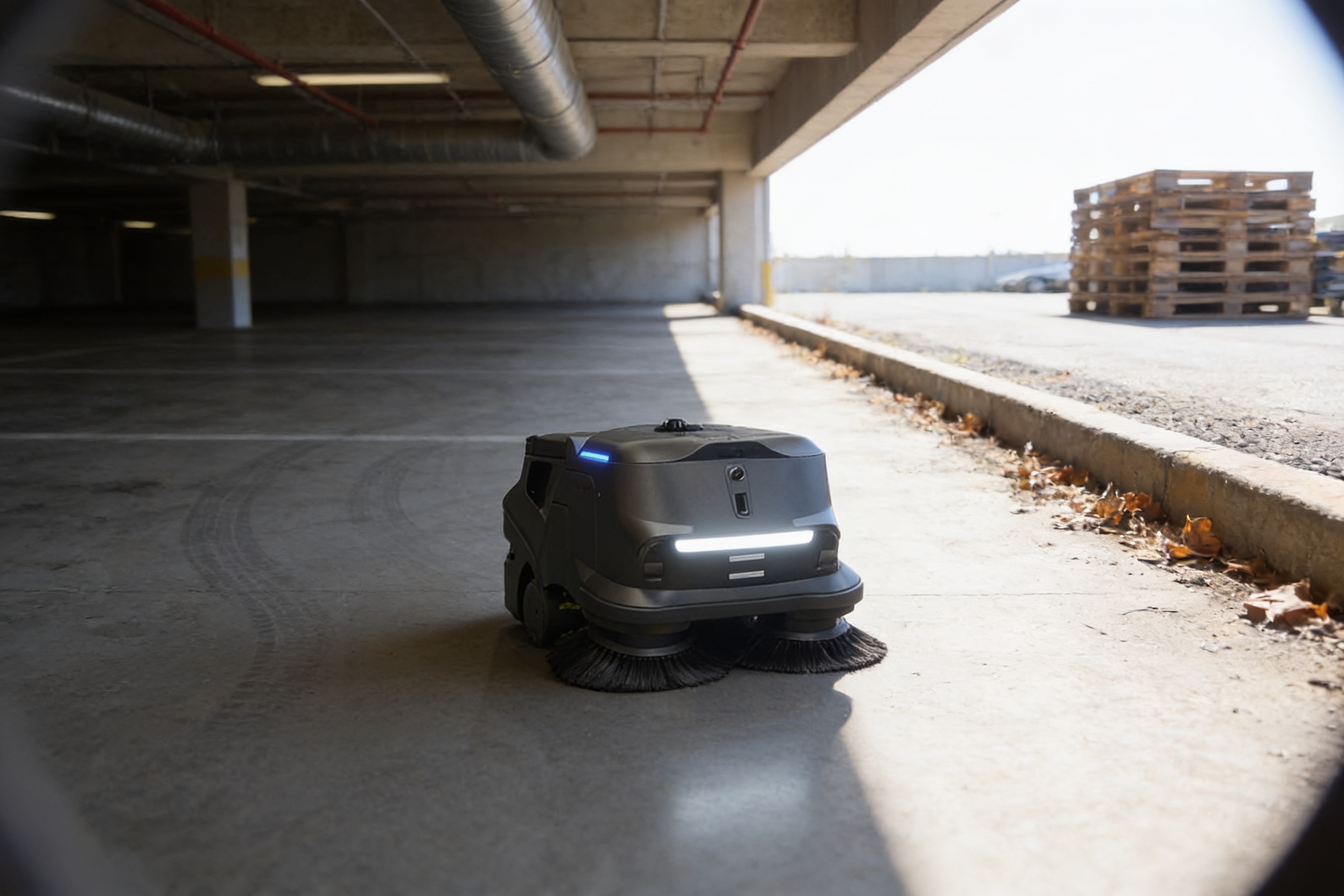
For a robot, the practical effects are where the charging dock sits and how it is ventilated, when the unit runs during the hottest part of the day, and how quickly floors dry after afternoon storms. Humidity and rain also track more soil onto floors, which can change how often a zone needs a pass. A site assessment checks these conditions before any lease is set.
How does leasing through financing work?
We lease commercial robots through financing. The lease sets a fixed lease payment over a set term, and the written quote shows the term, the payment and what the agreement covers. The lease spreads the cost across the term instead of asking for the full amount at once.
A quote should cover the unit, deployment and integration, mapping, staff training and the service plan for the term. It should also say which software, insurance and support items are included, and how a unit outage is handled. Ask for each item on its own line, so the lease can be read against the labor it replaces.
Lease terms change with the number of units and the service level, so a single-unit trial and a full-floor deployment get separate quotes. Robot lease options at the same site can be compared only when the scope behind each one is written out. Staff can then check the labor hours against the lease term rather than against a headline figure.
How do you get a quote after a free site assessment?
The quote follows a free site assessment. That visit is where the inputs from the earlier sections get measured: floor area and surfaces, obstacles and layout, shift times, traffic, charging space, power and network access, and the route the unit would run.
We map the planned route, time the existing cleaning in each zone and note where a floor still needs a person. The output is a written quote that states the lease term, the fixed lease payment, what it includes, and the service response time it assumes.
To make the visit faster and the quote more precise, bring floor plans, your cleaning schedule and the name of the person who will supervise the unit. Those three items let the assessment focus on the floor rather than on paperwork.
What can a cleaning robot not do, and is it worth it?
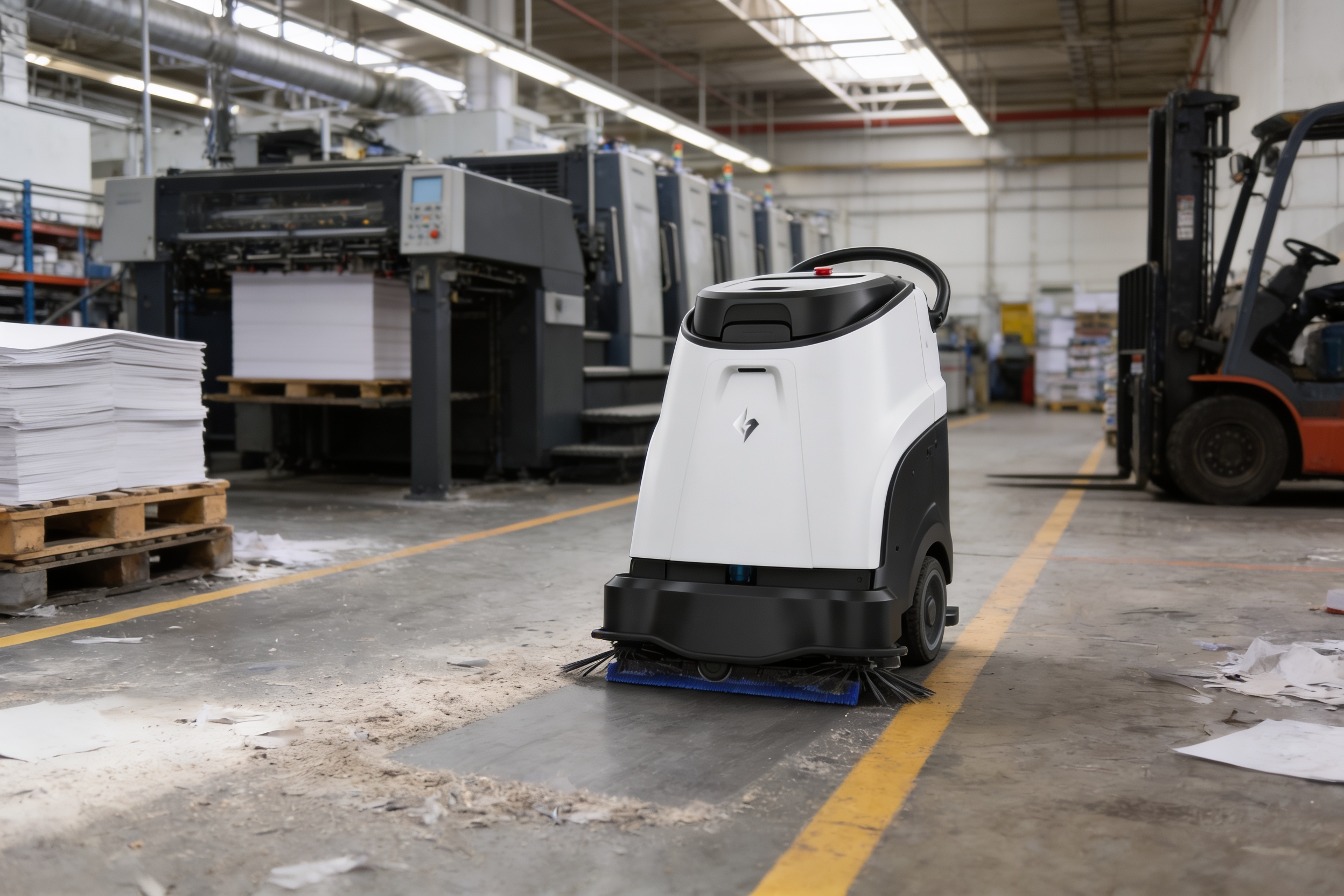
A floor cleaning robot works a mapped route across open floor. It does not climb stairs, and it does not handle cords, loose debris or large spills. Restrooms, high-touch surfaces and the edges and corners a route skips stay with people. The list below sets out the work that usually remains with staff.
Adoption gives some context. The AACEM/ISSA Autonomous Cleaning Survey used a 2019 baseline, sent to nearly 23,000 building service contractors, in-house service providers and facility managers. Of those, 62 percent of building service contractors, 68 percent of in-house service providers and 69 percent of facility and property managers said they had not used autonomous cleaning equipment.
Later figures show movement. CMM reports that 43 percent of respondents to an ISSA/CMM benchmarking survey reported plans for autonomous cleaning equipment, and that robotic or autonomous equipment was the technology most likely to be added within the next year. CMM also reports that robotic floor and carpet equipment use rose from 7 percent three years earlier to 21 percent in 2025, according to the Facility Cleaning Decisions 2025 management survey.
Injury data shows where the risk sits, though it does not prove a robot prevents injuries. BLS reports 21,100 nonfatal injury and illness cases involving days away from work for janitors and cleaners, except maids and housekeeping cleaners, in 2020, and 42 fatal work injuries in 2020 compared with 45 in 2019. That snapshot covers 2016 to 2020, so it is older data and not a rate for today.
Whether a robot is worth it at your site comes down to the hours you measure, the labor those hours represent, the lease quote and the service terms. A site with a long night schedule and a large open floor usually has the most to gain. A small, cluttered site with many stairs and tight rooms may not, and the site assessment will say so.
- Stairs and elevator transitions
- Cords, loose debris and large spills
- Restrooms and high-touch surfaces
- Edges, corners and furniture the route skips
- Coverage checks and restarts after a stop
Frequently asked questions
Put a robot to work in Baton Rouge.
We walk your site, learn the job, and recommend the unit that fits. Then we quote the lease, deploy it, and keep it serviced.
Sources
- Census QuickFacts, East Baton Rouge Parish, Louisiana
- Bureau of Labor Statistics, Occupational Outlook Handbook: Janitors and Building Cleaners
- Bureau of Labor Statistics, Injuries, Illnesses and Fatalities snapshot: Janitors and Cleaners, 2016 to 2020
- AACEM/ISSA Autonomous Cleaning Survey Report
- CMM, The Top 3 Cleaning Robotics Trends of 2026
- FRED, Full-time wage and salary workers: Janitors and Building Cleaners
- Climate-zone.com, Baton Rouge, Louisiana climate
- WBRZ, Baton Rouge records year's first 90-degree day