
The short answer
Cleaning robot cost in Austin is set by the site, not by a single figure: how much floor the robot covers, what that floor is made of, when the robot runs, and how much mapping, integration and service the building needs. Labor hours and the local labor pool decide whether the lease pays back on your floor. We build the quote after a free site assessment, and that quote is the only number that applies to your building.
Key takeaways
- Floor area, surfaces, shift window and layout move the lease quote more than any other factor.
- Austin has a large general cleaning workforce, but turnover across the field makes overnight shifts hard to staff.
- Mapping, integration, staff training and service are real costs that the quote has to name.
- A free site assessment produces the quote for your building before any lease terms are set.
What does a cleaning robot cost in Austin?
Cleaning robot cost in Austin is not a number you can look up. It depends on the building: the floor area the robot must cover, the surfaces and layout it runs on, the hours it works, and how much setup, integration and service the site needs. The figure that matters is the lease quote for your address, which we build after a free site assessment.
The comparison most owners make is between the lease and the work the robot takes off the schedule. The lease covers the machine through financing. The labor hours it replaces, and what open shifts cost you in gaps and overtime, decide whether the lease earns its place on your floor.
According to the AACEM/ISSA Autonomous Cleaning Survey published in 2019, the survey was distributed to nearly 23,000 building service contractors, in-house providers and facility managers. The full report is available to paid ISSA members, so the figure here is the survey distribution count only.
What moves the cost up or down at a site like yours?
Floor area is the first factor, but it works through time. A large open floor that one unit can finish inside an overnight window is a different job from a smaller floor that needs two passes or a second unit. Our assessment measures the route, the time it takes, and whether one unit can finish before the building opens.
Surfaces and layout come next. Sealed concrete, epoxy, tile and commercial carpet behave differently under a scrubber or sweeper. Steps, ramps, loading docks and high thresholds either add setup or rule out a route. A route through a retail sales floor after close is a different job from the same route through a warehouse aisle, because fixtures, displays and carts reshape the path every week. Traffic matters too. An empty office corridor at night is simple, while a busy lobby needs timing rules that change the setup.
Units and service complete the picture. One unit on one floor is a pilot. Two or more units can share a route, and a spare unit can cover a repair window, which adds to the lease but reduces gaps in coverage. Service response depends on how far the site is from technicians, so the quote states the terms for your address.
How big is the cleaning labor pool in Austin?
City-stats, citing Bureau of Labor Statistics occupational data for 2024, reports about 15,240 janitors and cleaners, except maids and housekeeping cleaners, in the Austin-Round Rock-San Marcos metro area. That is the general pool a building draws from when it staffs an overnight clean. The figure is a metro estimate from an aggregator, so use it as context rather than as a headcount for any one building.
WageDex, drawing on May 2025 BLS-based data, reports about 210 building cleaning workers in the same metro under the all other classification. That is a narrower label, so the two counts should not be added. Together they suggest the general pool is deep while the specialist category is small, and that how a building classifies its cleaners changes how it searches for staff.
Austin job postings we reviewed for evening janitors show part-time work, with pay that varies by building location, and commercial day porter roles appear in South Austin. The national Bureau of Labor Statistics handbook says many janitors work evenings because offices are cleaned after hours, and that 24-hour facilities use nights, weekends and holidays. Evening coverage is where a robot and a small staff can share the work.
What work does the robot take over, and how many hours?
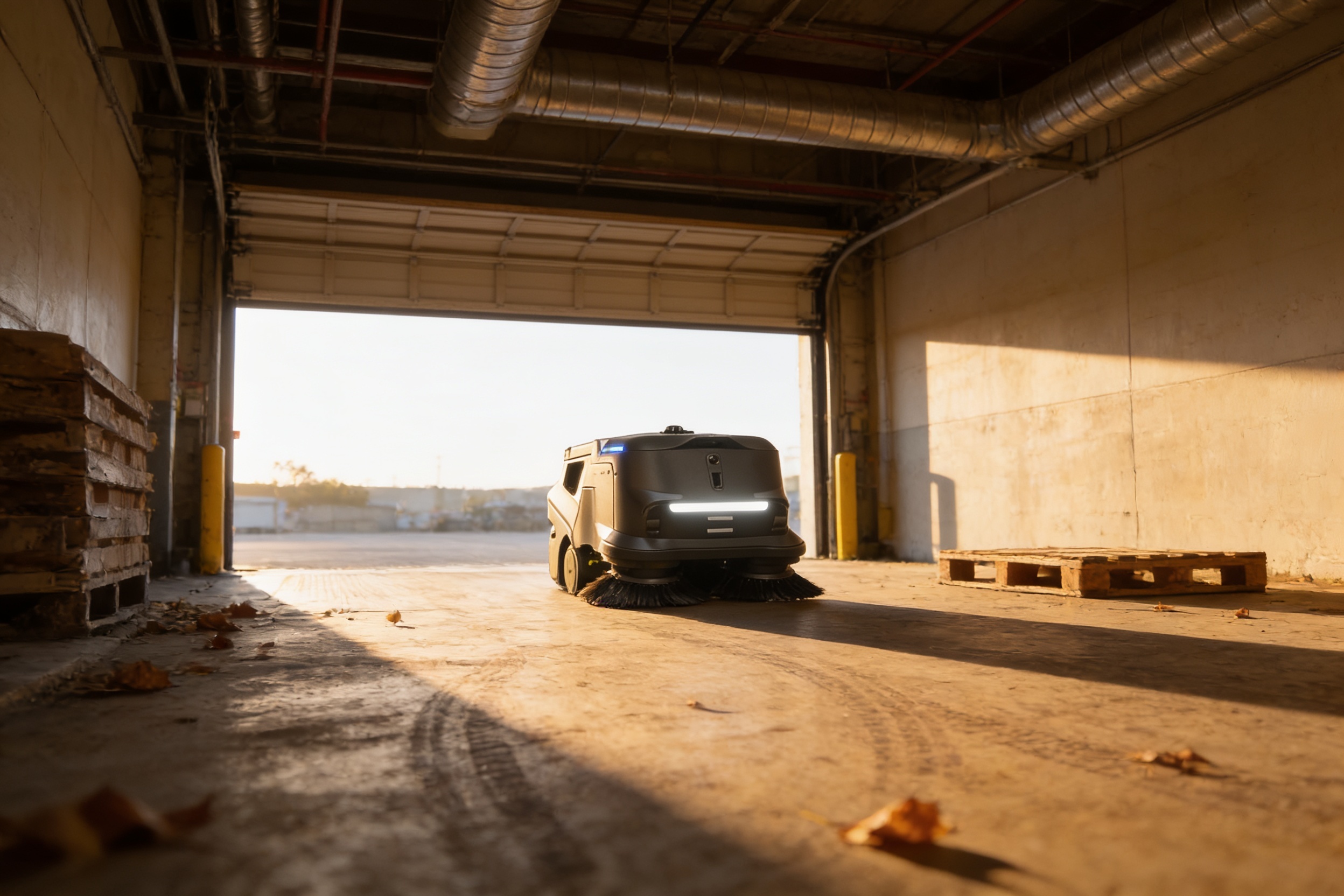
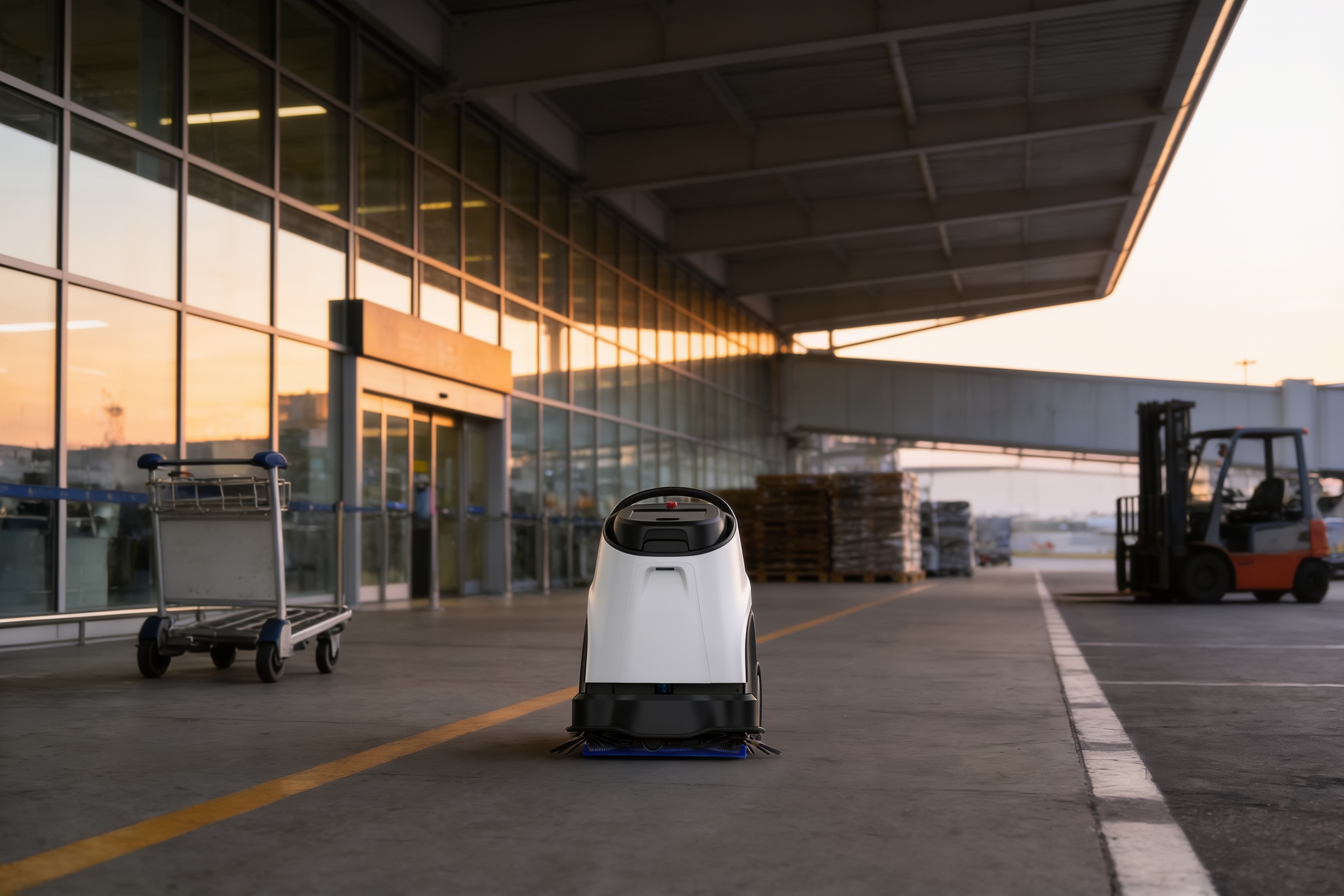
Most of the labor sits in repeated passes: scrubbing or sweeping main corridors and aisles, clearing the floor before opening, and finishing the route after the building empties. The robot takes the route passes. People still handle restrooms, spills, detail edges and anything the sensors flag. The table shows the task split we use when we scope a site, and the hour amounts come from your own schedule during the assessment, not from a published standard.
The national Bureau of Labor Statistics handbook says most janitors work full time, part time is common, and many work evenings. That schedule is what makes unattended overnight runs useful, because the robot can take the route while the building is closed and staff handle what it cannot.
Injury exposure is part of the labor picture too. According to the Bureau of Labor Statistics injury snapshot, janitors and cleaners, except maids and housekeeping cleaners, recorded 45 fatal injuries in 2019 and 42 in 2020. The snapshot does not give a current injury rate, so these counts show scale only.
How much does turnover change the staffing math?
Turnover is the staffing risk that managers most often underestimate. A janitorial industry blog summarizing Bureau of Labor Statistics data reports average annual total separation rates around 45 percent since 2017, excluding 2020. We did not check that figure against the underlying BLS table, so treat it as an industry summary. A staffing research page reports 150 to 200 percent annual frontline turnover at multi-site cleaning operators, and a Netchex industry blog says commercial cleaning turnover typically ranges from 50 to over 100 percent.
The practical effect is that an overnight shift is rarely staffed by the same person for long. Each departure means recruiting, onboarding and a learning curve before a replacement can run a route alone. A robot does not remove the need for people, but it keeps a mapped route running when one person leaves, and that continuity is a real part of what the lease delivers.
How does leasing through financing work, and what does the quote include?
We lease robots through financing, so the site does not carry the full equipment cost up front. The quote shows a fixed robot lease payment for the term and reflects the site survey, the units, the route, deployment and integration, staff training and service. The cleaning robot cost in Austin for your building is the number on that quote, and we do not state one before the building has been walked.
A useful quote states the term, what the payment covers, what happens at the end of the term, how a failed unit is replaced, and how quickly service arrives. Ask whether a backup unit is included or available during repairs. A common path is to start with one leased unit on a limited route, measure the hours it takes over, and add units only where those hours hold up.
What can a cleaning robot not do?
A cleaning robot works well on mapped routes with predictable obstacles. It does not climb stairs, handle most high thresholds without setup, or clean a spill it was not set up to expect. It cannot judge a restroom, empty a bin, or tell a dropped item from a floor hazard the way a person can, so those tasks stay with staff.
Where it runs matters as much as what it does. Route layout, clutter, and door and elevator arrangements decide how much floor one pass covers. We check these before the quote, and we tell you when a site is a poor fit. Local climate and building-stock details were not verified for this page, so it makes no claim about heat or building age. The site assessment covers those conditions for your building.
How do I get a quote after a free site assessment?

Start with a free site assessment. Tell us the building type, floor area, floor surfaces, the hours you want covered, and how many staff work the overnight shift. Bring a floor plan and the cleaning crew schedule if you have them, so the assessment can compare the route with the hours already on the books. We confirm whether the route fits a robot, how many units make sense, and what deployment and service look like for your address.
The quote comes after the assessment, not before. It shows the fixed lease payment for the term, the financing terms, what deployment, integration, training and service include, and what the site must provide, such as access and a charging location. That is the comparison that matters on an Austin floor: the quoted payment against the hours and staffing you already plan for.
Frequently asked questions
Put a robot to work in Austin.
We walk your site, learn the job, and recommend the unit that fits. Then we quote the lease, deploy it, and keep it serviced.
Sources
- U.S. Bureau of Labor Statistics, Occupational Outlook Handbook: Janitors and Building Cleaners
- City-stats, citing BLS OEWS 2024 data (aggregator)
- WageDex, building cleaning workers all other, Austin-Round Rock-San Marcos (BLS-based, May 2025)
- Janitorial Manager blog on turnover rate changes
- Stealth Agents research page on janitorial staffing costs
- Netchex blog on janitorial and cleaning turnover
- U.S. Bureau of Labor Statistics, Injury and Illness snapshot for janitors and cleaners
- ISSA, AACEM/ISSA Autonomous Cleaning Survey report