
The short answer
Cleaning robot cost in Birmingham depends on the floor area to cover, the surfaces and layout of the building, the shifts the robot runs, the number of units, and the mapping, integration and service the site needs. Those inputs set the fixed lease payment, which is quoted only after a free site assessment. The labor hours moved to the robot are the other side of the math, and they are measured on the floor rather than assumed.
Key takeaways
- Floor area, surfaces, shift pattern, unit count and integration move the quote more than any headline figure does.
- Mapping, software, maintenance, insurance and training are the costs most often left out of a comparison.
- Birmingham office vacancy was reported at 16.70% and 20.69% for 2024, depending on the source, so office figures alone do not settle the case.
- Janitor hours are the baseline, and we time them on your floor before we quote.
How much does a cleaning robot cost in Birmingham?
A cleaning robot cost in Birmingham is not a single number. The lease payment for a floor scrubber or sweeper is set by what the site asks of the machine: how much floor it covers, what the floors are made of, when it runs, and how much setup and service the building needs. We set the payment after a free site assessment, once the space has been walked and measured.
For a business here, the useful question is what the robot takes off the schedule. Most floor cleaning in a commercial building is a crew working a fixed route at fixed hours, so the baseline is the labor already scheduled. The robot takes the repeat work on large open floors and leaves staff free for the jobs that need a person.
This page explains each input, the costs people miss, how the lease works, and what a quote covers. It uses the public figures we could verify and says plainly where local numbers are still missing.
What drives the cleaning robot cost at a Birmingham site?
Several inputs do most of the work in a quote, and floor area comes first. The cost rises with the square footage covered and with the number of separate zones the robot must visit, because each zone adds mapping and route time. Surface type is next. Polished concrete, sealed epoxy, tile and carpet need different brushes, water and speed, and a single threshold or ramp can stop a route until it is handled.
Shift pattern is third. A robot that runs one overnight shift in an empty building needs simpler rules and fewer units than one working around active traffic all day. Traffic changes the safety zones and speed settings, and it can change how many units the floor needs. Number of units follows: one machine covers one floor plate, while a fleet needs charging planned around the shifts and a spare unit for the days one is out of service.
Integration and service decide the rest. Integration covers linking the robot to doors, lifts, building systems and whatever reporting the facility team already uses. Service covers scheduled maintenance, remote triage and on-site repair when a part fails. Both are written into the lease quote, which is why two buildings of the same size can get different quotes.
Which Birmingham businesses run floor cleaning robots?
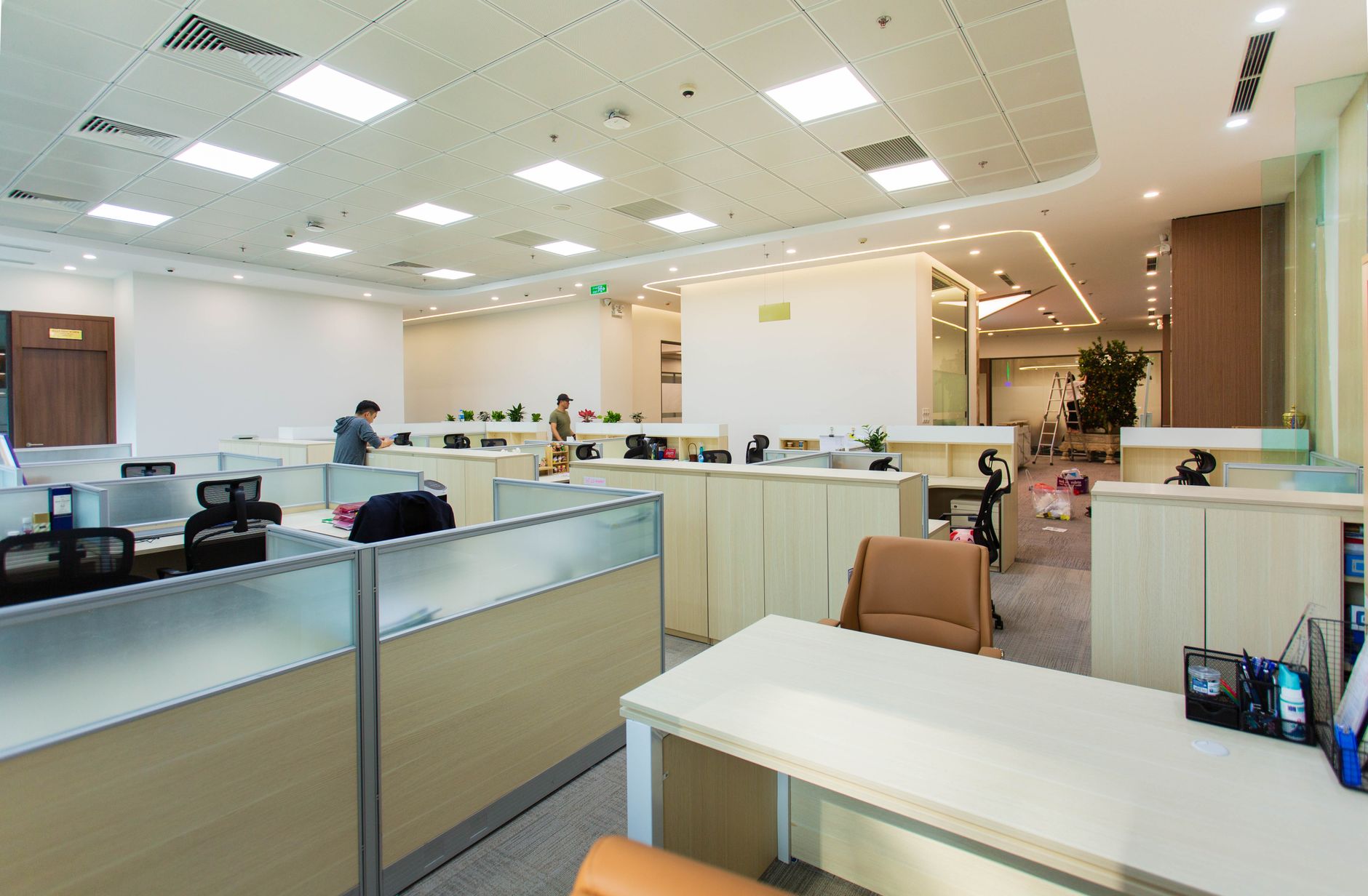
The sites that fit best are large, open and busy at predictable hours. In Birmingham that usually means multi-tenant office floors, large retail boxes, warehouses and distribution buildings, hospital and medical corridors where the floor work repeats, and event halls where turnaround between bookings is the bottleneck.
The office stock is large. Cushman & Wakefield put the Birmingham metro's multi-tenant office stock at about 18.8 million square feet across five submarkets, as reported in trade press. Leasing picked up in 2025, with 640,255 square feet leased according to Cushman & Wakefield, about 14% above 2024. CoStar reported 651,507 square feet for the city in 2025. The two firms count differently, so treat the range as the answer rather than either single figure.
Vacancy shows how much space sits empty. CommercialCafe reported 16.70% for 2024 for buildings of 25,000 square feet or more, while Colliers reported 20.69% at the end of 2024. Net absorption was negative 35,336 square feet in the fourth quarter of 2025 and positive 56,786 square feet for the full year, per Cushman & Wakefield as reported in trade press. Owners of partly empty buildings often weigh a floor program against a smaller tenant base, so the case tends to rest on consistent overnight coverage.
These are office figures. They describe the buildings, not the cleaning work inside them. We did not find Birmingham counts of cleaning robot sites, and we did not verify local building age or climate data, so this page makes no claims about either.
What does the labor side look like in Birmingham?
Floor cleaning is staffed by janitors and building cleaners. The Bureau of Labor Statistics counted about 2.45 million of these jobs nationally in 2024 and projects growth of 2% from 2024 to 2034, slower than average, with about 47,800 new jobs. Most openings come from replacement rather than growth. BLS projects about 351,300 openings a year on average over the decade, including replacements.
According to the BLS handbook, the work involves long periods on your feet and frequent heavy lifting, and most workers learn the job on site. For a facility manager, that means a shift can be short-handed for reasons unrelated to pay, and the cleaning plan often depends on a few people who know the route well.
The Birmingham figures sit in the BLS metro release for the Birmingham area, which reports wages for all occupations for May 2024. We did not verify janitor-specific counts or wages for this metro, so this page does not state them. As part of the site assessment, we check the latest metro table for these occupations and use it in the quote.
We also did not verify a turnover rate or an injury rate for this occupation, so neither is used here. Turnover matters for a robot program because every departure restarts training on the route, and the robot does not remove that need entirely.
How many hours does a cleaning robot take over?
The honest answer depends on the building, and this page gives no hour benchmarks. We found no verified figures for hours per task, per floor type or per square foot, in Birmingham or nationally. The table below describes which work moves to the robot, not how many hours that saves. We time the hours on your floor during the site assessment and show the arithmetic in the quote.
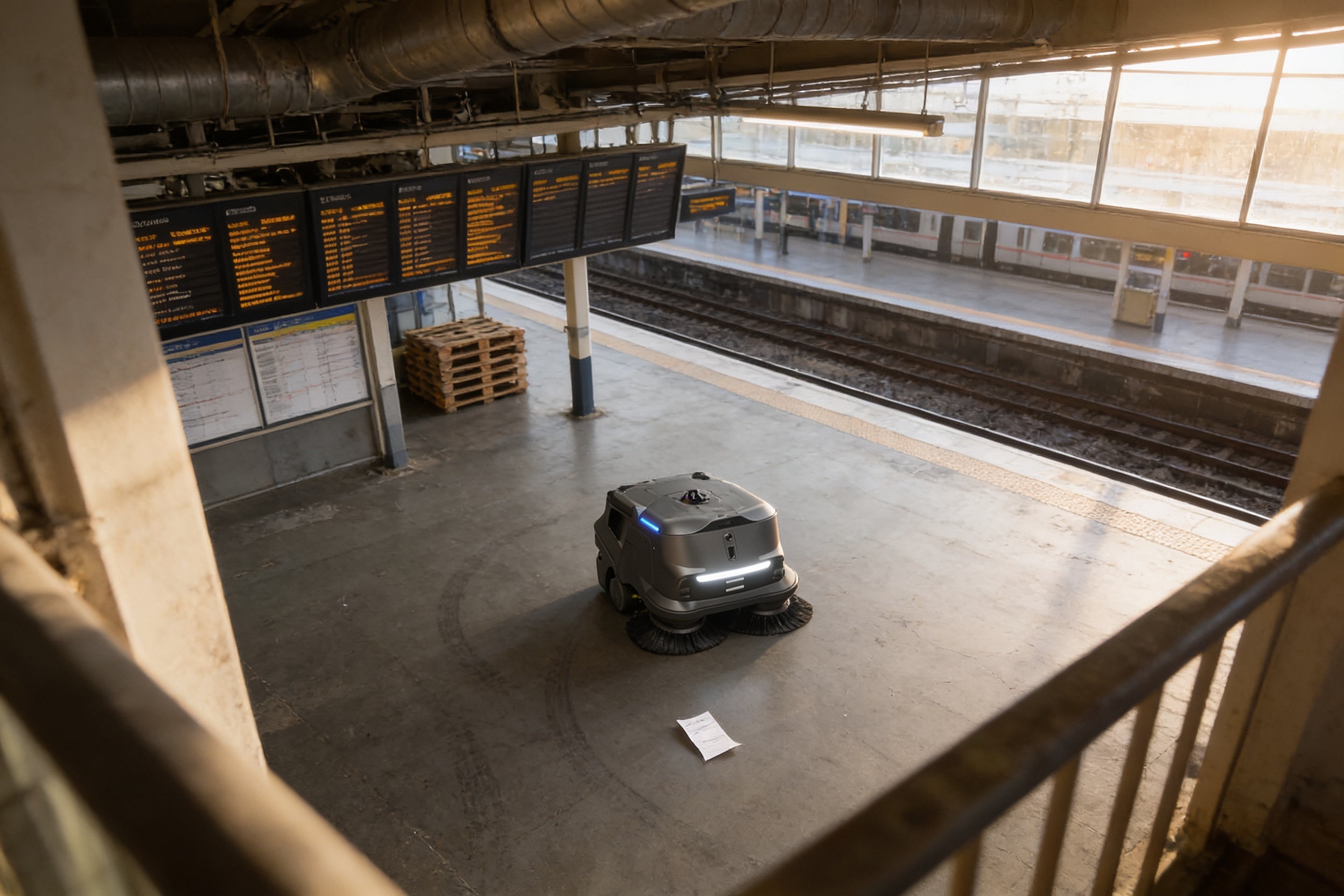
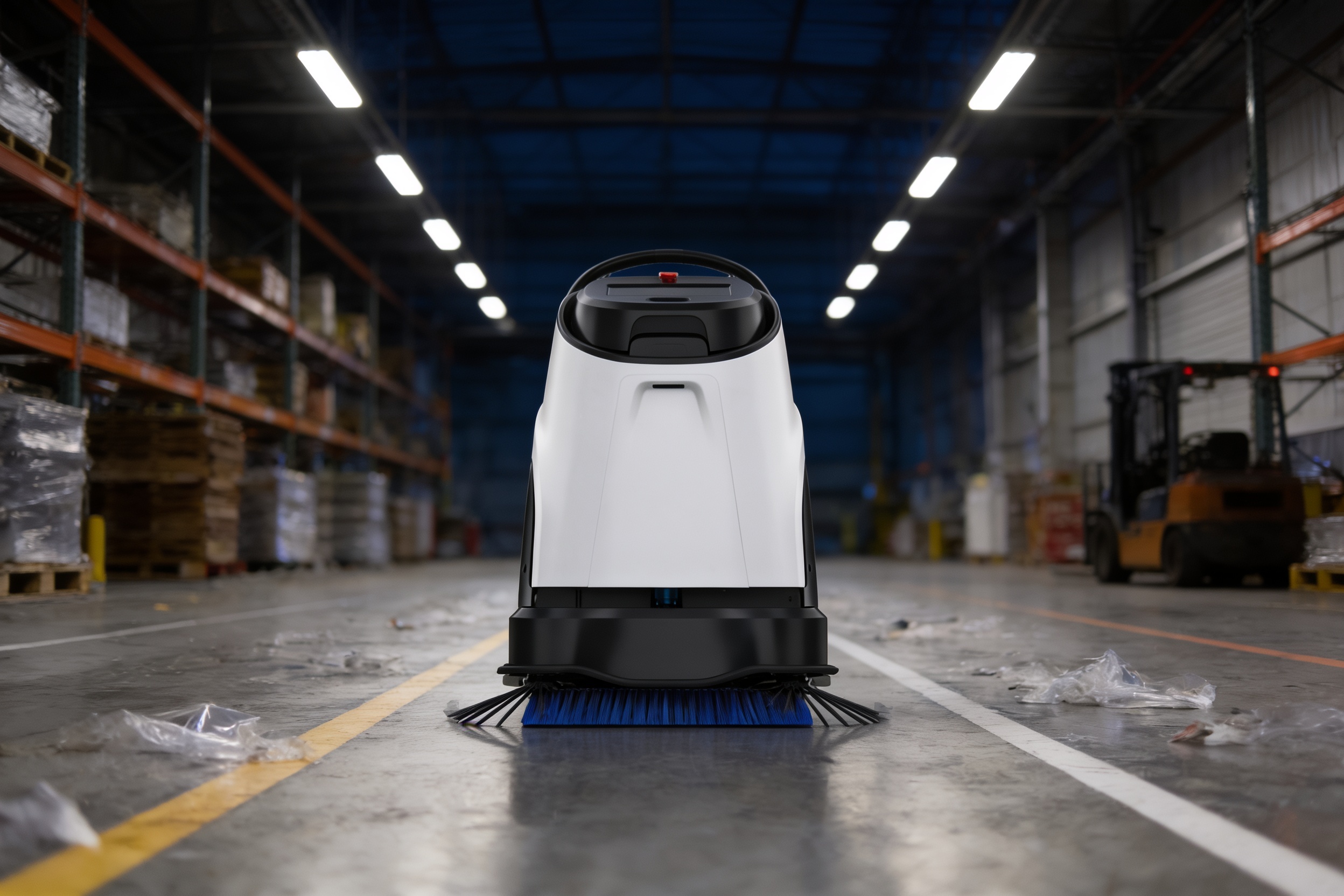
What changes is who does the repeat work. A crew walking a fixed loop through a large open floor does the same route every shift. The robot takes that loop, while staff handle the spots a machine cannot reach, the restrooms, detail work, and anything that needs judgment.
How common is autonomous floor cleaning right now?
Adoption is still early, but it is moving. In a 2019 survey by AACEM and ISSA of nearly 23,000 building service contractors, in-house service providers and facility or property managers, 62% of building service contractors, 68% of in-house service providers and 69% of facility or property managers had not used autonomous cleaning equipment. About 26% of facility or property managers reported using it. The survey is older, so treat it as a baseline.
Newer signals point the same way. The CMM 2026 In-House and Facility Management Benchmarking Survey found that robotic or autonomous equipment is the cleaning technology facility managers are most likely to add within the next year. Adoption figures show interest, not fit, so use them to frame the question for your site and leave the answer to the floor measurement.
Peer adoption does change expectations. Staff, service contractors and insurers start asking about robots once a few nearby buildings run them. That makes an early, measured pilot easier to explain internally.
How does leasing through financing work, and what does the quote include?
We lease robots through financing, so the business keeps its cash for operations and pays a fixed robot lease payment over the term. Financing is the route to the machine, and the quote states the term and the payment. Lease options vary by site, so we set them after the assessment rather than from a published table.
The quote is the output of the site assessment. It lists the units, the route plan, mapping, integration, staff training, deployment and service, including scheduled maintenance, remote triage and on-site dispatch from our nationwide network. It also states what is not included, such as building work, door changes or power upgrades a site may need.
Before you sign, ask for three things: the term and the payment, the service terms and how fast a technician is dispatched, and what happens when a unit fails. A spare unit or loaner plan decides how much floor you can lose on a bad day, so it belongs in the quote, not in a side conversation.
What can a cleaning robot not do?
A floor robot does one job well on the floor it knows. It does not wipe a restroom, clean a glass wall, move furniture, or handle a spill that is still wet when the machine passes. It needs a clear route, and a blocked aisle or a loose cart stops it until someone clears the path.
It also struggles with surfaces it cannot read well. Highly reflective floors, dark patches, thresholds, and some loose-fiber carpets can confuse sensors or halt the route. The site assessment tests those edges before anything is committed, and a zone the robot cannot handle is left to staff or another method.
It does not replace the people who keep the building working. It shifts the mix: fewer repeat loops, more time for spot work, reporting, and problems that need a person. We recommend planning that new mix of staff work before go-live, rather than cutting headcount first.
How do I get a quote for a Birmingham site?
Start with the floor. Send the building address, the approximate floor area, the surface types, the shift hours and any known traffic patterns, and we will arrange a free site assessment. We walk the space, measure the zones, check surfaces and thresholds, and time the existing route, so the quote is built on the floor rather than on a guess.
The quote comes after the assessment. It sets the number of units, the lease term and the fixed robot lease payment, and it lists mapping, integration, training and service in the same document. If a zone will not suit a robot, the assessment says so and recommends what covers that zone instead.
Most sites start with one leased unit on one floor. That gives you a measured route, real hours and a service record before you decide on more units. Ask for that pilot if the floor is large or the surfaces are mixed.
Frequently asked questions
Put a robot to work in Birmingham.
We walk your site, learn the job, and recommend the unit that fits. Then we quote the lease, deploy it, and keep it serviced.
Sources
- BLS Occupational Outlook Handbook, Janitors and Building Cleaners
- BLS regional release, Birmingham area occupational employment and wages, May 2024
- AACEM and ISSA 2019 autonomous cleaning equipment survey
- CMM 2026 In-House and Facility Management Benchmarking Survey
- Real Estate Business, Birmingham office market (Cushman & Wakefield data as reported)
- CoStar, Birmingham office take-up 2025
- CommercialCafe, Birmingham office market trends
- GlobeSt, Birmingham office demand 2025 (Colliers figures)