
The short answer
Delivery robot vs food runner in Fresno, CA comes down to route and room layout: a robot makes sense on long, repeated, fixed routes such as kitchen to a far dining room or patio, with staff still on the floor. It does not make sense as a full replacement for a food runner in crowded rooms, at tableside service, or on a small team where nobody is free to load and check it. For most Fresno operators the answer is one robot working beside the team, not in place of it.
Key takeaways
- A robot fits long, fixed, repeated routes, while a food runner fits crowded rooms and tableside work.
- Food services and drinking places in the Fresno metro averaged about 33,900 employees in 2025, according to BLS data published through FRED.
- National separations in accommodation and food services ran between 4.8% and 6.1% from October 2025 to January 2026, according to BLS data on FRED.
- No published source we found measures how many hours a food runner works per shift, so time your own floor before deciding.
- Plan for one robot plus the same team, never a robot with zero staff.
Delivery robot vs food runner in Fresno: which makes sense?
A delivery robot vs food runner decision in Fresno is mostly a question of geometry. A robot earns its place when food moves along a predictable path, such as from a kitchen pass to a dining room or patio that is far enough away that runners walk it many times a shift. It earns less when the room is tight, guests sit close together, or the trip is short enough that walking is not the bottleneck.
People matter too. Food services and drinking places in the Fresno metro averaged about 33,900 employees in 2025, up from 33,200 in 2024, according to BLS employment data published through FRED. Labor is available, but turnover and shift gaps still drive the decision for many operators, and a robot does not fix either one by itself. Use the rest of this page to test the fit for your own room.
What does a food runner actually do in a shift?
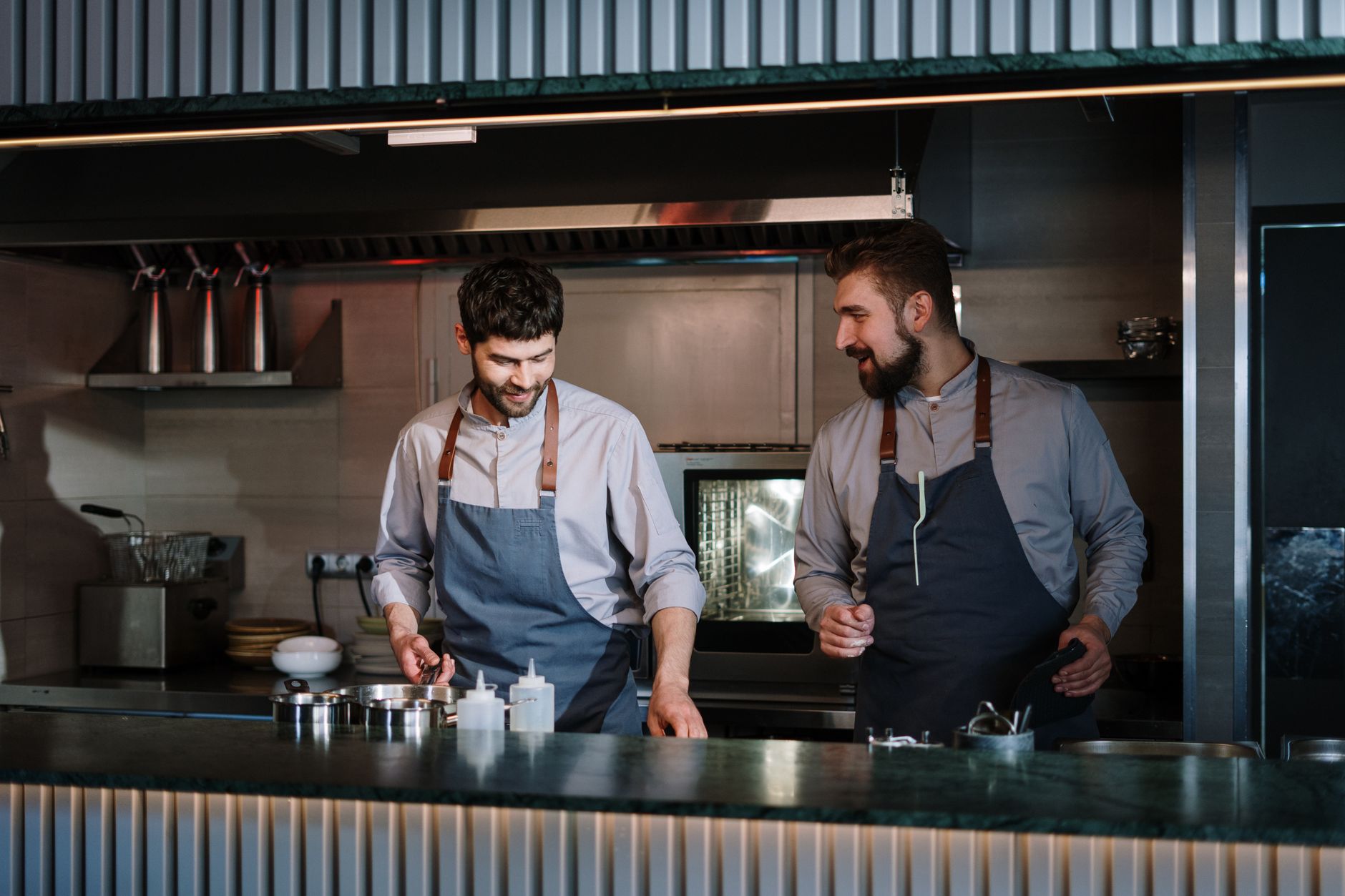
A food runner works in a loop: pick up plates at the pass, check the ticket and table number, carry the food, set it down, and return for the next one. Between loops they clear empty plates, refill water and bread, reset tables after guests leave, and answer quick questions about the menu or kitchen timing.
Two parts of the job are easy to miss. Runners are often the eyes of the floor, spotting a spill, a guest waving for help, or a table ready to bus. Their pace also follows the kitchen. When the pass backs up they wait, and when it clears they run. Much of the job is walking and waiting, which makes route-based carrying a candidate for a robot, but that is a hypothesis to test on your own floor.
Median hourly wage, Waiters and Waitresses
$3,744
Monthly cost of one full-time worker in Fresno, CA, at the median wage plus payroll costs (an estimate, not a quote).
Which parts of the run can a robot take, and which can't it?
A delivery robot can take the fixed, repeatable carrying: moving finished plates from the kitchen to a set table zone, returning empties to the dish area, and shuttling items between a bar station and a patio. These trips follow a route, so the robot runs them the same way every time and the staff member no longer makes the walk.
It cannot take the parts that need judgment. It does not set a plate in front of a guest, read a table's mood, handle a spill, or notice that a bread basket needs refilling before anyone asks. It also cannot cover the whole floor alone, because it follows one path with a fixed set of stops. The split is simple: the robot moves things along a route, and the person does the service.
- Fixed route trips
Delivery Robot
Runs the same kitchen to zone path every time
Food Runner
Adjusts the route when a table moves
- Crowded rooms
Delivery Robot
Stops or reroutes when a lane is blocked
Food Runner
Steps around people and past chairs
- Tableside service
Delivery Robot
Cannot serve a guest or read a request
Food Runner
Handles requests, complaints and small fixes
- Peak pace
Delivery Robot
Holds a steady pace but cannot read the pass
Food Runner
Reads the pass and adjusts, though may wait on it
- Attendance
Delivery Robot
Does not call out sick, but needs someone to load it
Food Runner
Can call out sick and needs cover
- Spills and hazards
Delivery Robot
Can stop and alert, cannot clean up
Food Runner
Spots and cleans up spills
What do the labor numbers say for Fresno and nationally?
Local data for the Fresno metro is useful but limited. BLS employment in food services and drinking places was 34,200 in August 2025 and 34,000 in September 2025, according to FRED, with a 2025 annual average of about 33,900. Those counts show a steady pool of workers. They do not show how many people leave, how many hours are overtime, or who covers sick days.
National turnover is the better signal we have. The BLS job openings and labor turnover series for accommodation and food services shows total separations, which include quits, layoffs, discharges and other exits, at 4.8% in October 2025, 5.6% in November 2025, 5.9% in December 2025, 6.1% in January 2026 and 5.4% in February 2026, according to FRED. Quits alone were 3.5% in August 2026, down from 3.9% in August 2025, according to a BLS Economics Daily note. Layoffs and discharges, not seasonally adjusted in that series, were 2.0% in October 2025 and 1.1% in December 2025, so quits make up a large share of the exits.
Injury data belongs in the picture too. In 2018, full-service restaurants reported a days-away-from-work rate of 73.1 per 10,000 full-time equivalent workers, against 89.7 for all private industry, with cuts, lacerations and heat burns more common than across private industry, according to BLS. Food services and drinking places reported 77.9 in 2017, and special food services such as caterers and food trucks reported 107.6, according to BLS. These figures are dated, but they show that the work involves hot plates, sharp edges and crowded aisles, and a route robot can take some of that exposure off the staff. The research pass did not find verified Fresno figures for overtime, night shift share or sick days, so pull those from your own timesheets.
How much of the runner's time does a robot take over?
No published source we found measures how many hours a food runner spends per shift, or how many of those hours a robot can take. A vendor's marketing claims large weekly hour savings, but those claims give no method. We also found no independent study of hours saved, failure rates, crowded-room navigation or maintenance burden. Treat vendor hour claims as a question to test, not an answer.
The real number comes from a timed walk-through on your own floor. Count the runner's trips over one lunch push and one dinner push, note the distance of each route, and mark which trips are fixed and which need judgment. The fixed trips are the robot's share. The table below lists the tasks and where to measure them.
| Task | Today | With a robot |
|---|---|---|
| Carry finished plates from the pass to a fixed zone | Measure with a timed walk-through on lunch and dinner | Robot runs the route, staff load and check it |
| Return empty plates to the dish area | Count the trips and the walk distance | Robot returns on the same path |
| Shuttle items between the bar and the patio | Time it across a week of shifts | Robot runs when the route is clear |
| Tableside service and guest questions | Stays with the runner | No change, staff keep this work |
No published source we found gives hours per shift for food runners, so this table lists tasks and where to measure them. Fill in the hours from your own timing. Vendor hour claims are not independently verified.
How does a team work with a robot?
The team stays. The robot joins the floor and works alongside the same people, with runners handling tableside service and the robot handling the fixed carry on one or two routes. We do not recommend zero staff, because someone has to load the robot, clear a blocked path, deal with a guest standing in the lane, and keep the unit charged and clean.
A workable shift names one person as the robot's owner for that service. That person checks the route before opening, loads the unit at each push, and handles any stop the robot cannot clear. Runners keep the guest-facing work. We train staff during go-live support so the robot is treated as a tool on the team, not a replacement for it.
What can't the robot do?
The robot cannot work a tight room with no clear lane, cannot serve a table, and cannot answer a guest's request that is not on the ticket. Crowded patios and bar areas, where chairs move and guests step into paths, need a route that staff keep clear. A robot that stops often is slower than a runner who walks around a table.
There is little independent evidence on how well these robots handle crowded rooms in practice. The IFDA's 2025 survey of 500 restaurant operators measured interest in autonomous delivery and robots, not how many operators run them. We found no 2025 survey giving the share of restaurant operators who do, and no verified measure of how diners in Fresno would respond. Plan a trial to answer that question for your own room.
How should a Fresno operator weigh the wage question?
The government wage data shown next to this page covers waiters and waitresses in Fresno, the local wage for this job, and it is the closest local anchor for front-of-house labor here. Food runner pay is not listed separately in the research, so treat that wage as a rough anchor, not a verdict. A robot takes a share of trips, not a whole job, so the saving depends on how many runner hours it actually replaces and whether the team can cover the busiest shifts with one fewer position.
The math that matters is the hours that move, valued at the local wage, compared with the fixed lease payment quoted after a free site assessment. If the robot takes a few hours a shift from runners who then work a fuller shift, the gain is small. If it lets you run one fewer position on the busiest nights, the gain is larger. Build the calculation from your own timing data, not from a generic claim.
How do we get started?
Start with a free site assessment. We map the route, measure lanes and doorways, note every stop, and check where the kitchen pass and dish area sit relative to the dining room. If the fit is clear we recommend one unit. If the room is not a good fit yet, we say so plainly. One leased unit on a fixed route is the lowest-risk way to test the idea before adding a second.
We pick the robot for the site, lease it through financing, deploy and integrate it, train the staff who will work with it, and service it nationwide, with on-site dispatch and remote triage when something stops. Where a site needs one, we can arrange a spare unit for busy service. The fixed lease payment comes in a quote after the site assessment, so you can compare it with your own timing data before you commit.
Frequently asked questions
Put a robot to work in Fresno.
We walk your site, learn the job, and recommend the unit that fits. Then we quote the lease, deploy it, and keep it serviced.
Sources
- US Bureau of Labor Statistics, Occupational Employment and Wage Statistics (OEWS May 2024)
- FRED, BLS food services and drinking places employment, Fresno MSA
- FRED, BLS JOLTS total separations, accommodation and food services
- FRED, BLS layoffs and discharges, accommodation and food services
- BLS Economics Daily, quits rate in accommodation and food services, August 2026
- BLS, Full-service restaurants injury and illness 2018 fact sheet
- BLS Economics Daily, injury and illness rates in special food services, 2019
- National Restaurant Association, 2025 State of the Restaurant Industry Pocket Guide
- IFDA, 2025 survey of restaurant operators on interest in order and delivery technology