
The short answer
For most scrap yards, the drone vs overnight security guard choice comes down to coverage and response. A drone can fly the fence lines and stacked metal piles on a fixed route and report activity from above, which a walking guard covers slowly, but it cannot open a gate, verify an alarm on the ground, or stay on site through the night. A drone makes sense as a supplement at large, fenced, mostly unlit yards with clear airspace, while on-site staff still need to handle access and response at yards with busy gates, hot work or frequent after-dark visitors.
Key takeaways
- A drone covers fence lines and stacked piles from above, but it cannot respond on foot.
- Scrap yards are spread out, and tall stacks block ground-level sight lines.
- Routine flights beyond visual line of sight depend on a federal rule we could not confirm as final, so check the legal route first.
- A drone pairs with fewer staff, never zero staff, and a person must still answer alarms and control gates.
- Measure yard size, sight lines and gate traffic in a free site assessment before choosing a setup.
Is a drone or an overnight security guard the right choice for a scrap yard?
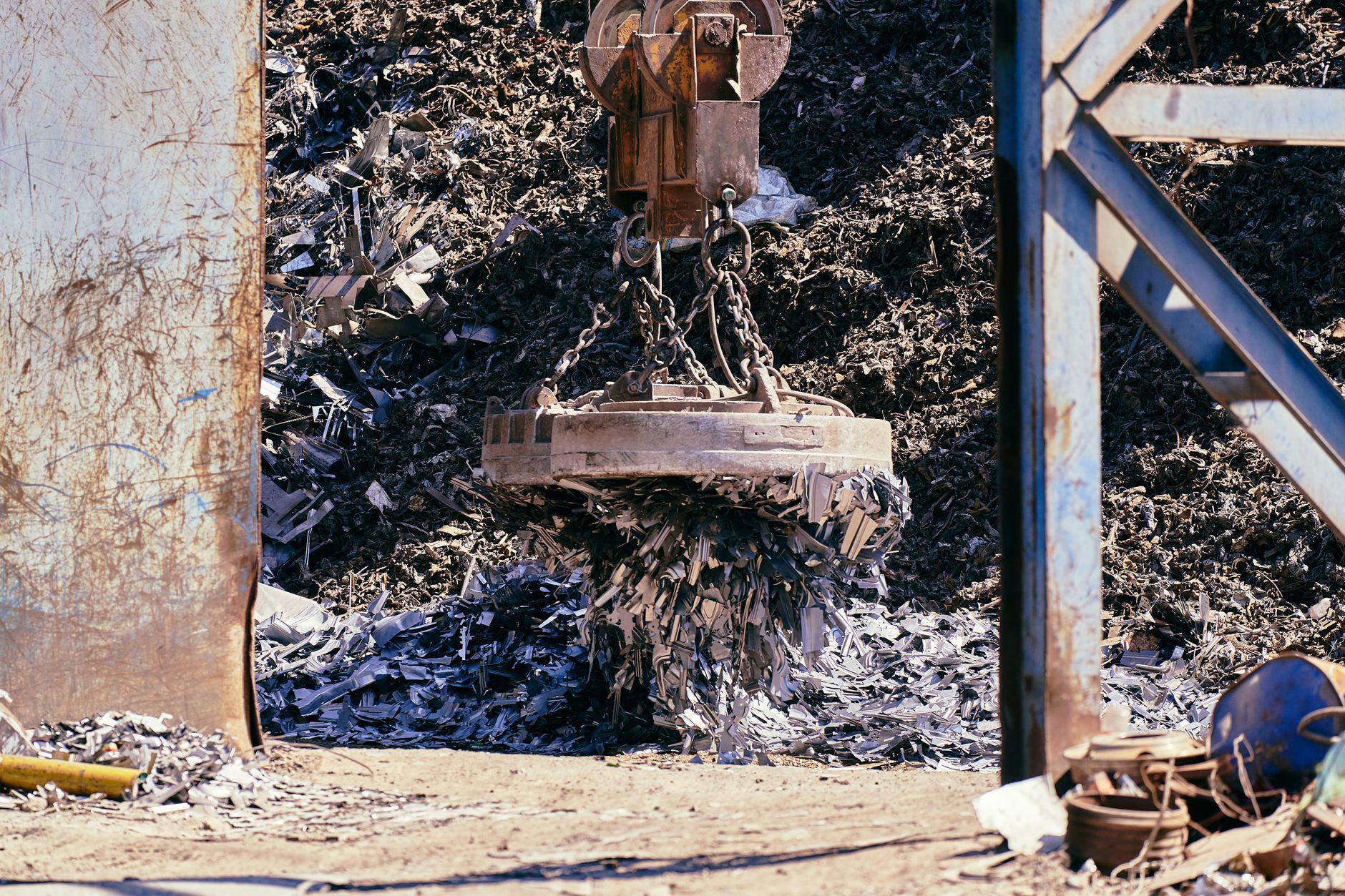
A drone makes sense for a scrap yard when the site is large, fully fenced, and mostly quiet at night, and when the main job is seeing what is happening across the ground rather than acting on it. Yards of this kind hold long fence lines, stacked metal piles, and dark gaps between stacks. A walking guard must cover that ground in a loop, so areas checked early in the round go unwatched for a long stretch. A drone can fly the same perimeter and yard sweep on a set route and report activity across the whole site.
A drone does not make sense as the only overnight protection at a yard with frequent gate traffic, deliveries after dark, or hot work that needs a person watching for fire. It also falls short where the nearest responder is far away and an alarm needs a hand on a lock, gate or door. In those cases the work is about people and action, not just observation.
For most operators the sensible answer is a team: a drone on the perimeter and yard sweeps, plus fewer staff on site who answer alarms, control gates and keep the log. We set that structure from the site assessment, and we do not propose any overnight setup with zero staff.
What does an overnight security guard actually do during a scrap yard shift?
The overnight guard's work at a scrap yard is mostly rounds, checks and logs. The guard walks the fence line, checks gates and padlocks, looks along the stacked piles and the lanes between them, and watches for vehicles that do not belong. Most of the walk is repetitive, and it is hard to hold full attention through a long loop, which is one reason many sites pair patrols with cameras.
When an alarm or camera event fires, the guard verifies it on foot, checks the area, and calls police or the on-call manager. The guard also records each round in a log, noting anything unusual such as a cut lock, a fence gap, or a vehicle parked with its lights off. Those logs matter for insurance claims and for the next shift's handover.
Many yards also ask guards to watch for hot work such as cutting or torch work on scrap, and to check loads moving through the gate after hours. A guard can step in physically, speak to a visitor, and block a gate. Observation alone does not cover those tasks. We did not find verified guard hours per shift for scrap yards in our research this run, so this section describes the work rather than timing it.
Median hourly wage, Security Guards
$4,317
Monthly cost of one full-time worker, at the median wage plus payroll costs (an estimate, not a quote).
Which patrol tasks can a drone take over, and which stay with people?
A drone can take the aerial parts of the patrol: flying the fence line on a fixed route, looking across stacked piles from above, checking the perimeter for breaches visible from altitude, and sweeping the open yard lanes. Its camera sees the tops of piles, the gaps between stacks, and vehicles parked in the open. Some payloads add thermal sensors that can show a warm body behind a pile, though the result depends on the sensor and conditions and should be tested on the actual site.
The drone cannot open a gate, handle a padlock, speak to a driver at the scale house, or walk into a building to check a door. It cannot verify a ground alarm, and it cannot stop anyone. Wind, rain and low battery also limit flights, so a drone route is a schedule that must be planned, not a constant watch.
A practical split gives the drone the repetitive observation along the perimeter and across the yard, and gives people the access, verification and response. A drone can also check a suspected area before a guard walks into it, which cuts unnecessary walking. Confirm that split during the site assessment rather than assuming it.
- Fence line coverage
Drone
Flies the perimeter on a fixed route and sees across stacks from above
Overnight Security Guard
Walks the fence line in a loop, so early sections go unwatched between rounds
- Alarm response
Drone
Reports the event and points staff to the area, but cannot reach it
Overnight Security Guard
Verifies on foot, checks the area and calls police or the on-call manager
- Gates and access
Drone
Cannot open, close or check a padlock
Overnight Security Guard
Controls gates, checks loads and speaks to visitors
- Weather and low light
Drone
Grounded by strong wind, rain or low battery, and the camera degrades in poor visibility
Overnight Security Guard
Keeps working through weather, though fatigue builds on long shifts
- Spaces behind dense stacks
Drone
Sees pile tops and open gaps well, but low hiding spots may not show
Overnight Security Guard
Can look behind a pile in person, though a long loop leaves some areas unchecked
- Consistency over a long night
Drone
Flies in planned cycles with no fatigue, plus charging gaps to schedule
Overnight Security Guard
Attention is hard to hold through a repetitive loop, and sick days need cover
How do the labor and turnover numbers affect overnight staffing?
Guard staffing is under pressure. A vendor-run survey of more than 300 security professionals, in its 2025 physical security operations benchmark, found that 42% of providers name turnover as their top operational challenge, according to that benchmark. The figure reports how managers rank problems, not a measured turnover rate, so read it as a sign of pressure rather than a precise count.
The Bureau of Labor Statistics projects security guard employment to be roughly flat from 2024 to 2034, with a total change of about 5,100 jobs, according to its Occupational Outlook Handbook. A flat outlook means the labor pool will not grow much to fill hard-to-staff overnight posts. The handbook does not give night-shift pay premiums or sick-day rates, so we cannot quote those from this research.
Injury exposure matters for overnight staffing too. The CDC's National Institute for Occupational Safety and Health reported in a 2020 bulletin, using Bureau of Labor Statistics data, that injury rates among wholesale recycling workers were 4 times higher than for private industry overall. That category is close to scrap work, but the bulletin does not isolate overnight guards, so use it as context for the staffing plan, not as a yard-specific rate.
The government wage data on this page gives the local wage for this job. Use it to compare a full overnight post against a team with fewer staff plus a drone lease quote, once the site assessment has the real staffing count.
How many scrap yards are there, and why does metal theft drive the decision?
A third-party market research estimate counts 521 scrap metal recycling businesses in the US in 2026, up 0.6% from 2025. That is a count of businesses, not yard sites, so one business can run several yards. Use the figure to size the market, then count sites from your own list.
The USGS reports that in 2023 the five leading steel scrap processors handled 26 million tons across 354 facilities. That covers only the five largest processors, so it shows the scale of the big operators rather than the typical small yard.
Theft is the reason many yards keep overnight coverage. A security trade publication, citing National Insurance Crime Bureau data, reported that metal theft claims were down more than 78% since 2014. Ohio, New Jersey, Pennsylvania, New York and Illinois had the most claims. The publication did not state the year of the data, so confirm the latest claim picture with your insurer.
An older 2009 study of 51 US cities found that the number of scrap yards in a city was the strongest predictor of its metal theft rate. Yard density tracks theft, so a cluster of yards in one area strengthens the case for coverage that can watch many sites, and for a clear response plan at each one.
How does the team work when a drone flies the yard?
The working model is a robot plus fewer staff, never zero staff. The drone flies the perimeter and yard sweeps on a set plan. A staff member watches the feed or alert queue, confirms what the drone reported, and sends a person to the ground when something needs hands. The overnight person still controls gates, answers alarms, and keeps the log.
We handle the setup. A site assessment maps the yard, marks no-fly areas, checks sight lines under the stacks, and sets the route and charging position. We train the on-site staff on alert handling, the escalation chain and the log format, then provide go live support. The staffing level should come out of the assessment, not a guess.
Training matters more than the aircraft. A monitor who knows when to call a person and when to hold makes the team work. Plan a handover at shift change so the next person knows which alerts were open and which flights were scheduled.
Is a drone legal for overnight yard patrol right now?
Flying beyond the operator's visual line of sight is the main legal question for a large yard. The FAA proposed a rule in August 2025 that would allow routine beyond visual line of sight operations without a waiver. We could not confirm in this research that the rule is final, so check its status before you plan a route.
Until a final rule takes effect, beyond visual line of sight flights generally need a waiver. One secondary report says waivers can enable up to one mile of beyond visual line of sight operation for emergency response and law enforcement. The proposed categories named in reporting included package delivery, agriculture, aerial surveying and civic uses such as policing, but not commercial site security, so do not assume a patrol waiver is routine.
Ask your legal and insurance contacts about flight authority, nearby airspace, and liability before you commit. We can review the flight plan in the site assessment, but the legal route is your decision, made with counsel.
What can a drone not do at a scrap yard?
A drone cannot be the only overnight protection. It cannot physically stop a person, cannot close a gate, cannot check a locked door, and cannot judge in the dark who belongs. Those tasks are why the human layer stays in every plan we build.
Weather is a real limit. Strong wind, rain and low visibility can ground the aircraft or leave the camera useless for part of the night. Battery life sets the length of each flight, so the drone works in cycles rather than watching without pause. Plan the gaps and write them into the security plan.
Dense stacks hide things. A drone sees the tops of piles well and the gaps between them less well, and a person low behind a stack may not show on camera. Pair the drone with ground checks and fixed sensors where the yard needs them. That is a reason to keep those checks, not to skip them.
The drone adds observation, not hands. Shift handovers, police calls and insurance logs still need people who can act and sign.
How do you get started with a drone plan at a scrap yard?
Start with a free site assessment. We measure the yard, map the fence lines and stacks, note gate traffic, and check sight lines under and between piles. We also review your existing overnight coverage and the response time from the nearest on-call person.
Next, decide the split. Many yards begin with one leased unit in a pilot, then add capacity if the alerts and logs show the route works. We also offer a backup unit for downtime, on-site dispatch when needed, and remote triage across our nationwide service coverage. Robots are leased through financing, and the lease is quoted after the site assessment, with the staffing picture set alongside it.
Run the pilot for a set period, then compare alert quality and log completeness against your existing patrol and decide the staffing level. We integrate the drone with your alarm and camera systems and train your staff, so the handoff is clear from the first night.
Frequently asked questions
Want a drone at your scrap yard?
Tell us about your site. We will recommend the robot, quote the lease, and keep it serviced.
Sources
- US Bureau of Labor Statistics, Occupational Employment and Wage Statistics (OEWS May 2024)
- Third-party market research estimate, scrap metal recycling businesses
- US Geological Survey, Mineral Commodity Summaries, iron and steel scrap
- CDC National Institute for Occupational Safety and Health, wholesale recycling bulletin (2020)
- Bureau of Labor Statistics, Occupational Outlook Handbook, security guards
- Vendor-run physical security operations benchmark survey (2025)
- Security trade publication citing National Insurance Crime Bureau data on metal theft claims
- Crime prevention study of 51 US cities on scrap yards and metal theft (2009 data)
- Federal Aviation Administration, beyond visual line of sight rulemaking