

The short answer
For resort hotel grounds, the robotic lawn mower vs groundskeeper decision is about which tasks run on a schedule and which need a person. A robotic lawn mower makes sense when turf is large and mostly open, paths and lawn are clear at night, and mowing can run while guests are asleep or before they are up. A groundskeeper is still needed for edges, beds, trees, irrigation, litter and anything guest-facing, so the usual answer is a robot plus fewer staff, not a robot in place of a crew.
Key takeaways
- A robotic mower takes over open turf on a set overnight schedule, not the whole grounds job.
- Groundskeepers still handle edges, beds, trees, irrigation and guest-facing work.
- Hotel labor turnover is high, so moving early and night mowing hours to a machine can ease scheduling.
- The real test is open turf area and a clear lawn, measured on your own site.
- Lease terms, maintenance and the payment are set in a quote after a free site assessment.
Robotic lawn mower vs groundskeeper: when does a robot make sense on resort grounds?
A robot mower earns its place on resort grounds when the job is mostly repetitive turf cutting on a schedule that does not collide with guests. Large lawn areas between buildings, long straight paths, and open courtyards give a mower room to run in passes. If mowing can happen after midnight or before the first guest walks out, the saving is in hours that would otherwise need a crew on the lawn during the day or on an early shift.
It makes less sense when the grounds are small, heavily planted, or full of obstacles. Ornamental beds, tight garden rooms, many trees, steep banks, and loose hoses or furniture left on the lawn all force a person back into the job. A resort with a few small lawns and dense landscaping is usually a groundskeeper job with better tools, not a robot job.
The fair comparison is not a robot against a person. It is which share of the grounds calendar moves to a machine, and what the remaining people do with the hours they get back. That split depends on your site, so the rest of this page walks through it task by task.
What does a groundskeeper actually do on a resort shift?
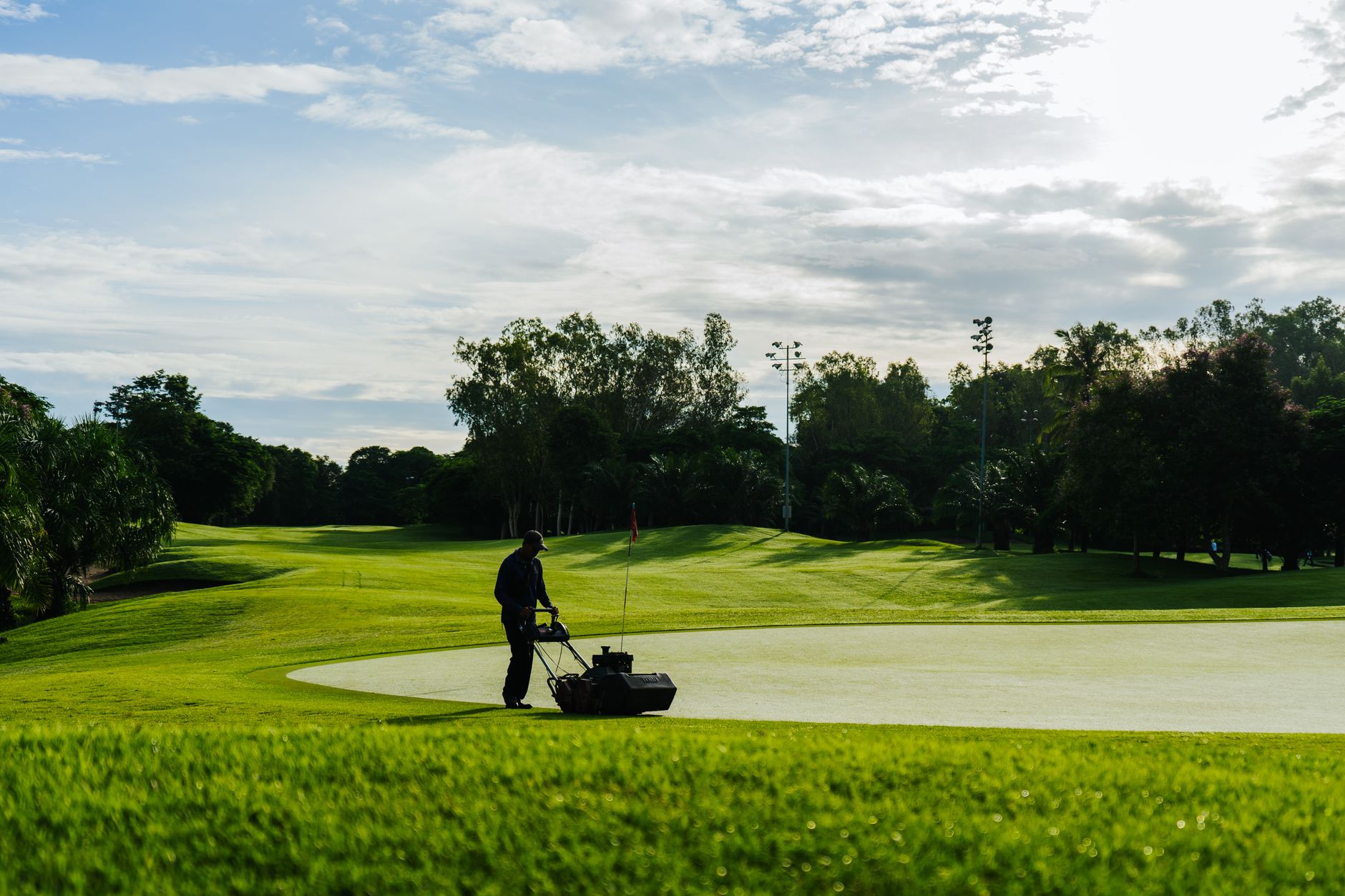
A groundskeeper at a resort rarely spends a whole shift on a mower. The work is spread across edges along walks and drives, planting beds, litter, leaf and debris control, irrigation checks, and quick responses to guest requests such as a fallen branch or a spill by the pool. Mowing is one task on the list, and it has to be finished before guests appear around the buildings and paths.
The national picture is a large trade. According to the Bureau of Labor Statistics Occupational Outlook Handbook, grounds maintenance workers held about 1.3 million jobs in 2024, and 1,192,500 of those were landscaping and groundskeeping workers. The same source projects 4 percent growth from 2024 to 2034, with about 171,600 openings a year, so employers compete for the same people every year.
On a resort, the groundskeeper's day has to be planned around the guest calendar. Early mowing keeps noise away from rooms, daytime edging handles what the mower cannot reach, and the afternoon goes to beds, irrigation and anything a guest reports. Those are the zones a robot would not cover.
Which grounds tasks can a robotic lawn mower take over, and which can it not?
A robot mower can take over the cutting of open turf on a fixed schedule. Frequent light passes keep the lawn trimmed around buildings and along paths without a crew mowing in daylight, and the mower can run in the hours when a person would otherwise need to be on the lawn. Manufacturers list maximum green area per model, so check your lawn acreage against those limits before assuming one unit covers the property.
It cannot trim edges by hand, work around loose objects without someone clearing them, prune trees, weed beds, fix irrigation heads, or respond to a guest. Those tasks stay with the groundskeeper. The table below lays out the work pattern. Hour counts are not in it because the research for this page did not return verified hotel or resort figures for mowing time, so time each task on your own grounds before you decide.
How much labor does a resort grounds crew really take up?
Turnover is the labor problem most resort operators already feel. According to The Staffing Agency's Hospitality Labor Report (2025), as summarized by HospitalityNet, annual turnover in hotels and restaurants runs roughly 70 to 80 percent, and quick-service roles often exceed 100 percent. Grounds roles are not identical to housekeeping, but the same hiring pool and seasonal peaks apply, so a crew can lose people faster than it can fill them.
Property counts show how wide the market is. According to the American Hotel and Lodging Association, its members alone are more than 32,000 lodging properties representing more than 3,200,000 rooms, and that count covers members only. CoStar projected 953 hotels and 108,366 rooms to open in 2025, up from 721 hotels and 73,682 rooms in 2024. According to Lodging Econometrics, the US hotel construction pipeline stood at 6,146 projects and 720,089 rooms at the end of Q4 2025, so new resorts and expansions keep adding grounds to maintain.
Injury exposure is part of the labor picture. According to the Bureau of Labor Statistics injury snapshot, private-industry landscaping and groundskeeping workers had 12,380 nonfatal injury and illness cases with days away from work in 2019, at an incidence rate of 185 per 10,000 full-time equivalent workers. BLS also reported 124 fatal work injuries in that group in 2019, down from 142 in 2018. The latest series the research found ends in 2019, so treat these as a baseline, not a current rate.
Two things the research did not confirm: overtime and night shift costs, and sick-day rates for resort grounds crews. No verified figures for those came back from the search. Pull them from your own payroll and scheduling records. A robot removes some of the hours that create overtime and night shifts, but only your data shows how many.
How does a team work with a robot mower on resort grounds?
The team always keeps people on the grounds. The robot takes the scheduled turf passes, and the staff take everything else. A typical setup keeps a groundskeeper on the day shift, moves the crew's early mowing hours onto the robot, and assigns one person to check alerts, reset the lawn, and handle faults. Zero staff is not a workable plan for a resort, because a mower stops, a sprinkler breaks, and a guest asks for help.
Overnight, the robot runs while guests sleep, but it still needs a person who can read the alert log, clear a blockage at dawn, and confirm the lawn is ready for the morning. Daytime staff use the time they regain for edges, beds, trees and guest requests. The timeline below shows what a night looks like when the setup is working.
The schedule is the key design decision. Mowing windows should sit where guests do not walk the lawns, and staff need one clear handoff point. If the handoff is unclear, the robot's hours are wasted and the crew ends up doing the same work twice.
What can a robotic lawn mower not do on resort grounds?
The honest limits matter as much as the savings. A robot mower does not trim edges with the control a person has, does not lift and move a dropped towel or a child's toy, and does not handle trees, planting, pruning or irrigation repairs. It also needs a clear lawn at the start of each run, so a night with furniture left out or a hose across the grass can stop the cycle.
Weather and terrain matter too. Wet turf, steep banks and poor drainage change how a mower handles the lawn, and the site assessment should check them. A robot cannot answer a guest or stand watch by a pool deck, so guest-facing work stays with staff in every version of this plan.
- Night coverage
Robotic Lawn Mower
Runs scheduled passes while guests sleep
Groundskeeper
Needs overtime or a night shift to cover the same hours
- Edges and corners
Robotic Lawn Mower
Stops at boundaries and leaves gaps that need hand work
Groundskeeper
Trims by hand with control at walks, drives and beds
- Obstacles on the lawn
Robotic Lawn Mower
Stops when hoses, toys or furniture block the route
Groundskeeper
Moves the object or mows around it on the spot
- Trees, beds and irrigation
Robotic Lawn Mower
Not its job
Groundskeeper
Inspects, prunes, weeds and repairs sprinkler heads
- Guest contact
Robotic Lawn Mower
None
Groundskeeper
Answers requests, handles spills and reports issues
- Absence and turnover
Robotic Lawn Mower
Keeps mowing on schedule, though it still needs someone to check alerts
Groundskeeper
Absence cuts crew hours, and hiring is hard in hospitality
How do you decide and get started with a robot lease for grounds?
Start with a site walk. Map the open turf, the boundaries, the obstacles, the trees and beds, and the mowing windows that fall outside guest hours. Count the staff hours that go to mowing now, and count the hours that go to edges and beds, because those will not change. That split is what makes the decision concrete.
We are a commercial robot integrator. We pick the robot for the site, lease it through financing, deploy and integrate it, train the staff, and service it nationwide. Most resort grounds start with one leased unit on one lawn, a pilot run, and a go live check before expanding to other turf.
Use the checklist below before you ask for a quote. The lease payment is quoted after a free site assessment and depends on the site, not on a catalog page.
Is a robotic lawn mower worth it for resort grounds, and what does the cost look like?
Worth it depends on hours moved, not on the machine. A robot is worth considering when it takes a repeating block of mowing off a crew that is hard to schedule and hard to fill, and when the grounds have enough open turf to keep the unit busy. The payback math is simple once you have the hours from your own shift records.
On cost, the usual structure is a fixed lease payment through financing, with no upfront capital, and the terms are set in a written quote. Ask what the quote includes, such as maintenance, insurance and replacement coverage while a unit is down, and what it leaves out. Wording on coverage matters more than the headline payment.
Expect the quote to change if the lawn is smaller, the schedule tighter, or the obstacles more frequent. A robot that sits idle for much of the week is a poor fit however it is financed.
Frequently asked questions
Want a robotic mower at your resort hotel grounds?
Tell us about your site. We will recommend the robot, quote the lease, and keep it serviced.
Sources
- Bureau of Labor Statistics, Occupational Outlook Handbook: Grounds Maintenance Workers
- Bureau of Labor Statistics, Landscaping and Groundskeeping Workers injury snapshot 2015-19
- HospitalityNet, Hospitality Labor Report coverage
- Lodging Magazine, Lodging Econometrics U.S. hotel construction pipeline Q4 2025
- CoStar, hotel openings article
- American Hotel and Lodging Association, member listing