
The short answer
The autonomous forklift cost for roofing supply yards depends on lane length and layout, the number of shifts, traffic from people and trucks, how the unit connects to your order and inventory system, how many units you need, and how far a technician must travel. Surface condition and outdoor exposure also change the setup and service work. Because each yard differs, the lease payment is set in a quote after a free site assessment.
See what a autonomous forklift costsRun the numbers in the ROI calculator
Key takeaways
- The cost comes from lane layout, shift count, traffic, integration, unit count and service, not from one equipment figure.
- Hidden costs sit in mapping updates, software, maintenance, insurance and training, so ask for each as its own line.
- Labor pressure is documented across warehouse work, and the staffing gap is the main reason yards look at automation.
- Forklift injury figures are older and industry-wide, so a yard plan must address tip-overs and mixed traffic from the start.
- Units are leased through financing, and the payment comes in a quote after a free site assessment.
What does autonomous forklift cost for roofing supply yards depend on?
There is no single number for this kind of site, and anyone who quotes one without walking the yard is guessing. The cost has three layers that move independently: the lease on the equipment and its financing, the setup work that makes the unit safe and useful in your yard, and the service that keeps it running through a shift. Two yards with the same pallet count can land far apart on setup alone.
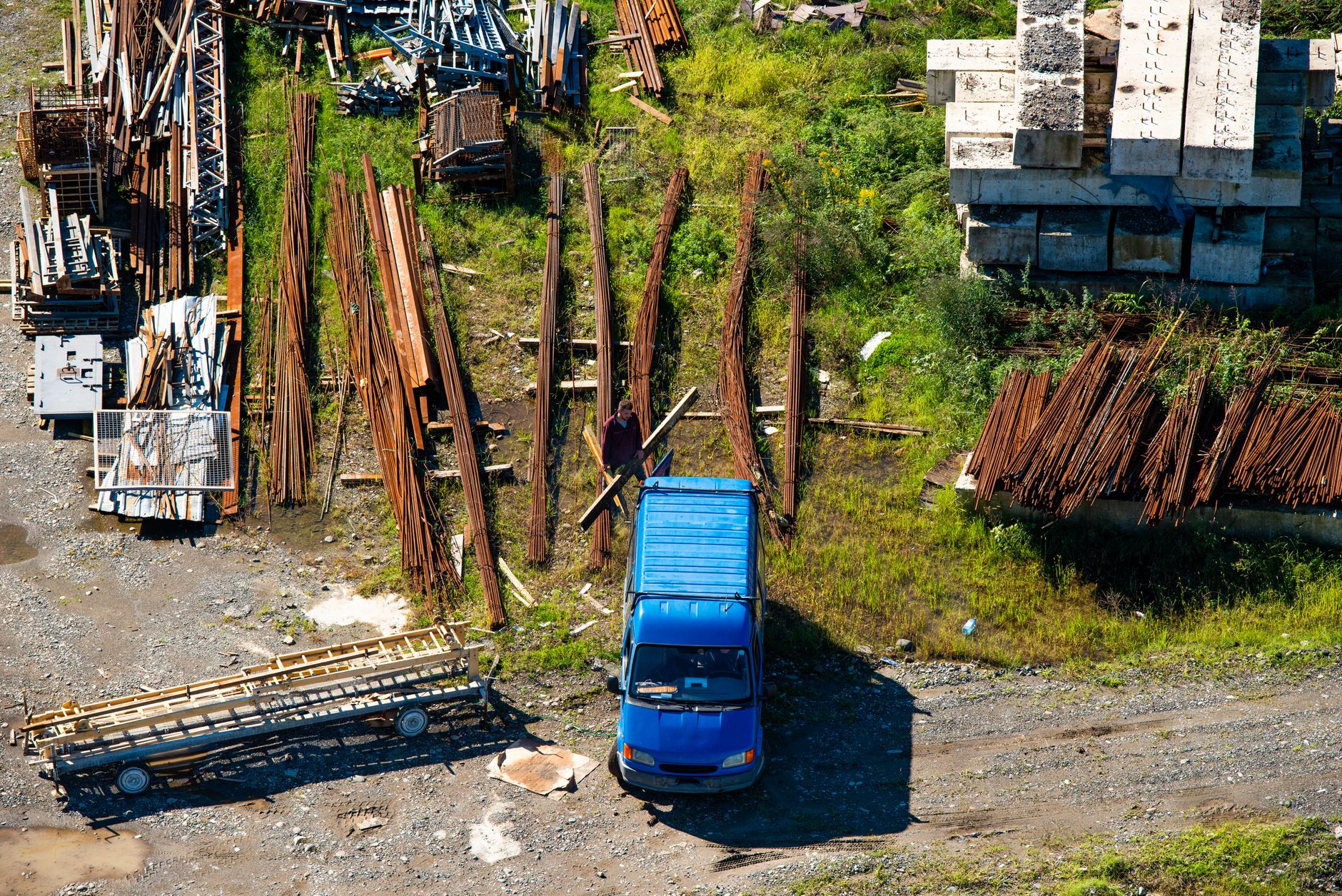
Roofing supply yards suit this kind of automation because the core work is palletized material moving along fixed aisles and yard lanes. Shingle pallets are heavy and similar in shape, and the trips between staging areas, racks and truck loading points repeat across the day. Repetition helps because the unit runs the same routes many times. It does not remove the need for a site survey, which decides where lanes run, where people walk and where the unit must slow or stop.
Treat the cost question as a question about your yard's layout and daily routine, not about the machine alone. We choose the unit after the survey, so the same routine can call for a different setup at a different yard.
Which factors raise or lower the cost at a roofing yard?
Lane length and layout matter most. A long route means more mapping, more safety zones to define and more travel time between pickup and drop, which can change how many units a yard needs for the same move count. Measure lanes as trucks actually run them, including the spots where trucks back in and where pallets wait on the ground.
Surface and weather come next. Level, sealed concrete with clear markings is easier to map and hold than gravel, broken pavement, standing water or steep grades. Outdoor yards also face temperature swings and wet weather that affect sensors, batteries and tire wear, so the site assessment should look at the surface in the seasons the yard actually runs.
Shifts and traffic shape the rest. One shift in a closed yard is a simpler job than around-the-clock work beside trucks, driven forklifts and walking crews. Mixed traffic adds stop zones, lane rules and supervision. Unit count follows from moves per hour, lane count and how much cover you need while one unit is out for service.
Integration and service distance finish the picture. A manual task list is simpler than a live link to order or inventory software, and each connection adds testing and upkeep. The time to a qualified technician also matters, because a long wait for a repair leaves a lane uncovered unless a spare is planned.
How many people run yard forklifts, and what does the labor base look like?
The Bureau of Labor Statistics Occupational Outlook Handbook, using 2024 data, reports that material moving machine operators held about 867,700 jobs. Of those, 792,500 were industrial truck and tractor operators, the group that drives the forklifts this work is meant to relieve.
The same source projects 1 percent growth for the occupation from 2024 to 2034, which it describes as slower than average for all occupations. It also projects about 83,200 openings a year on average over the decade. Most openings come from replacement rather than new jobs, which is a rough sign of how often seats need refilling, though it is not a turnover rate.
We did not find a published national count of roofing supply yards or their forklift counts. The size of the question at your site has to come from your own yard measurements, shift schedule and pallet counts, not from an industry total.
Why is hiring forklift operators the pressure point?
The labor problem is documented mostly across warehouse and logistics work, not roofing yards specifically, so read these figures as the closest published picture. A 2025 press release, cited by a staffing firm, says 43 percent of logistics and warehouse employers are short-staffed at least once a week. The release reports that employers see limited qualified talent for forklift and equipment operators, without giving a separate figure for that role.
A 2025 survey of 600 fulfillment-center managers, as reported by Supply Chain 247, found 52 percent ranked finding reliable, quality labor as their top challenge. The same report says 50 percent of managers said staffing was easier in 2025 than in 2024, up from 38 percent. Even with that improvement, reliable labor is still the top complaint, and a yard with an unfilled shift has no backup route.
A yard that loses one driver to a call-out feels it on every truck. Automation does not replace the need for people, but it can take the routine moves so that the staff you do have handle the exceptions and the loading peaks.

What do forklift injury figures mean for a yard plan?
Older federal figures show that forklift work carries real risk. An OSHA Region I directive from fiscal 2017 estimated about 85 forklift fatalities and about 34,900 serious injuries a year, and about 1.5 million workers operating over 855,900 powered industrial trucks. Those figures describe the whole industry, not roofing yards, and they predate newer equipment.
A safety-industry summary of OSHA data reports that forklifts were the source of 78 work-related deaths and 7,290 nonfatal injuries with days away from work in 2020. The same summary attributes to BLS 75 to 94 workers killed per year in forklift mishaps from 2011 to 2017. On older OSHA data it reports tip-overs as the most common cause of operator fatalities, at 42 percent.
Johns Hopkins estimates about 100 workers are fatally injured per year in forklift and other powered industrial vehicle incidents. The practical reading is that tip-overs are the cause to plan for first, and any yard plan has to hold whether a person or a unit drives the truck.
How does leasing through financing work, and what does the quote include?
We are a US commercial robot integrator. We pick the robot that fits the site, lease it through financing, deploy and integrate it, train your staff and service it nationwide. Leasing keeps the upfront commitment small and turns the equipment into a fixed lease payment you can plan around.
Financing terms vary by credit, term length and the size of the deployment, so the payment is set in the quote, not in general advice. The quote, sent after a free site assessment, states the lease payment, the term and what the payment covers. It also lists deployment and integration, training, service and any software or insurance items as separate lines.
Start small when the yard is large. A pilot with one leased unit on one lane set shows how the layout, the queue and your staff behave before more units are committed. Ask in the quote whether spare unit coverage is included for the days one unit is out for service.
What can an autonomous forklift not do in a roofing yard?
An autonomous forklift runs repeatable moves on a mapped route. It does not decide what to do when the route changes without a map update, when a pallet is damaged or shifted, or when a load needs judgment. Those calls stay with trained staff, and the plan should say so in writing.
It is not a fit for every task in the yard. Unpredictable work such as one-off loads, odd-shaped material, pallets staged in unmarked spots and work on uneven or flooded ground usually stays with a driver. Roof work, driving on public roads and anything outside the mapped yard are outside what this unit does.
It also does not remove the need for supervision. Someone still watches the queue, the lanes and the status screen, and someone clears blocked paths. The honest plan keeps staffed drivers for exceptions while the unit takes the routine moves.
How do I get a quote after a free site assessment?
Start by gathering what the assessment will ask for. Bring a sketch of the yard with lanes and staging points, the shift schedule, typical pallets moved per shift, the trucks that load, and the surfaces you run on. Those answers set the lane count, the units you need and the setup work.
The site assessment is free. We walk the yard, measure the routes, check the surfaces and note where traffic conflicts happen. From that we choose the robot that fits the site, and the quote follows with the lease payment, the term and each service item.
Ask that the quote show the hidden items as their own lines: mapping updates, software, insurance coordination, training and service response. That keeps the comparison fair and leaves the sign-off decision with the person who owns the budget.
- Yard sketch with lanes, staging points and truck loading spots
- Shift schedule and the hours the yard runs outdoors
- Typical pallet moves per shift, from dispatch records
- Surface types, grades and any areas with standing water
- Traffic patterns for trucks, driven forklifts and walking crews
- Existing integration with order or inventory software
Frequently asked questions
Upcoming builders & gcs events
- ExpoConstructing Industry Connections Symposium & ExpoNov 18, 2026Pennsylvania Farm Show Complex, Harrisburg, PA
- Trade showAPC/PennDOT/PA Turnpike Fall SeminarNov 18 to 20, 2026Hershey Lodge, Hershey, PA
- ExpoPittsburgh Remodeling ExpoFeb 5 to 7, 2027Acrisure Stadium, Pittsburgh, PA
- ConferenceHealthcare Project Delivery Conference 2027Feb 10 to 11, 2027Manchester Grand Hyatt, San Diego, CA
Want an autonomous forklift at your roofing supply yard?
Tell us about your site. We will recommend the robot, quote the lease, and keep it serviced.
Sources
- BLS Occupational Outlook Handbook: Material Moving Machine Operators
- OSHA Region I directive CPL 04-00-023D (fiscal 2017)
- Safety industry summary of OSHA and BLS forklift statistics
- Johns Hopkins publication listing on forklift and powered industrial vehicle injuries
- Supply Chain 247: warehouse labor shortage report coverage
- Staffing firm summary of 2025 press release on logistics staffing