
The short answer
The cost of an autonomous forklift for seed and fertilizer warehouses depends mostly on the site: how much floor the robot covers, how dusty and uneven the surfaces are, how many shifts it runs, how many people share its routes, how much mapping and software integration is needed, and how many units and service visits the operation calls for. A quote is set after a free site assessment that measures those factors, and it arrives as a fixed lease payment through financing.
Key takeaways
- Floor area, dust, shift pattern and shared traffic move the quote more than the choice of machine does.
- Spring peaks and hard-to-keep driver crews call for peak coverage, not only an average day.
- Mapping, integration, training and service are the hidden items to confirm in writing.
- Leasing through financing turns the scope into one fixed lease payment after a free site assessment.
- Dust raises the housekeeping and maintenance load, so the cleaning plan belongs in the quote.
How much does an autonomous forklift cost for seed and fertilizer warehouses?
The short answer is that the cost of an autonomous forklift for seed and fertilizer warehouses follows the building more than the vehicle. Two warehouses of the same floor area can come out far apart if one has heavy dust, narrow aisles, a long spring peak and tight integration with inventory systems, while the other has clean floors and one shift a day.
This page does not state a figure, because a fair number depends on the site itself. It explains what moves the number so you can check the right items before a quote arrives. The final figure is set in a free site assessment, where we measure floor area, surfaces, shifts, traffic, mapping, integration, units and service.
Read the rest as a set of questions. What work does the robot take? Where does it run? What keeps it running through the busiest weeks? Those three answers carry most of the quote.
Why do seed and fertilizer warehouses call for their own plan?
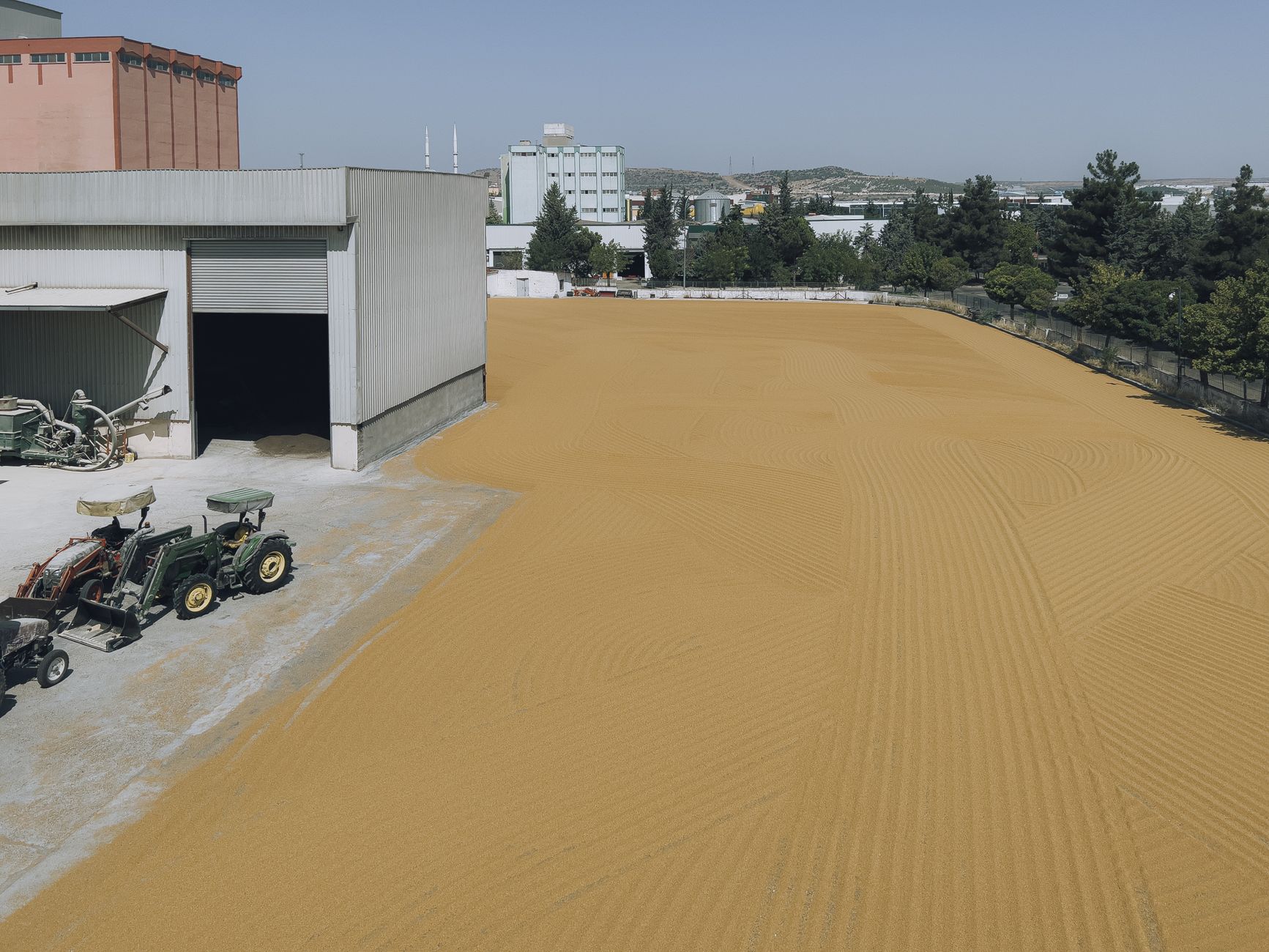
Ag supply is spread across many sites. USDA Rural Development's 2020 cooperative statistics bulletin reports 7,801 other ag cooperative locations, such as branches, plants, elevators and service centers, in addition to headquarters. Many of those sites follow the same seasonal rhythm, with stock building ahead of planting and then moving out in a short window.
Dust is the condition that changes the plan most. OSHA's combustible dust poster lists agriculture, chemicals, food, grain, fertilizer and tobacco among the industries where combustible dust explosion hazards exist. It advises frequent, thorough housekeeping to clear dust from work areas, overhead surfaces and concealed spaces, so a cleaning schedule is part of running the site, not an extra.
For equipment, dust means more frequent cleaning, more grit on wheels and sensors, and a maintenance schedule that accounts for particles rather than assuming a clean floor. That work belongs in the quote, not in a footnote.
What moves the autonomous forklift cost up or down?
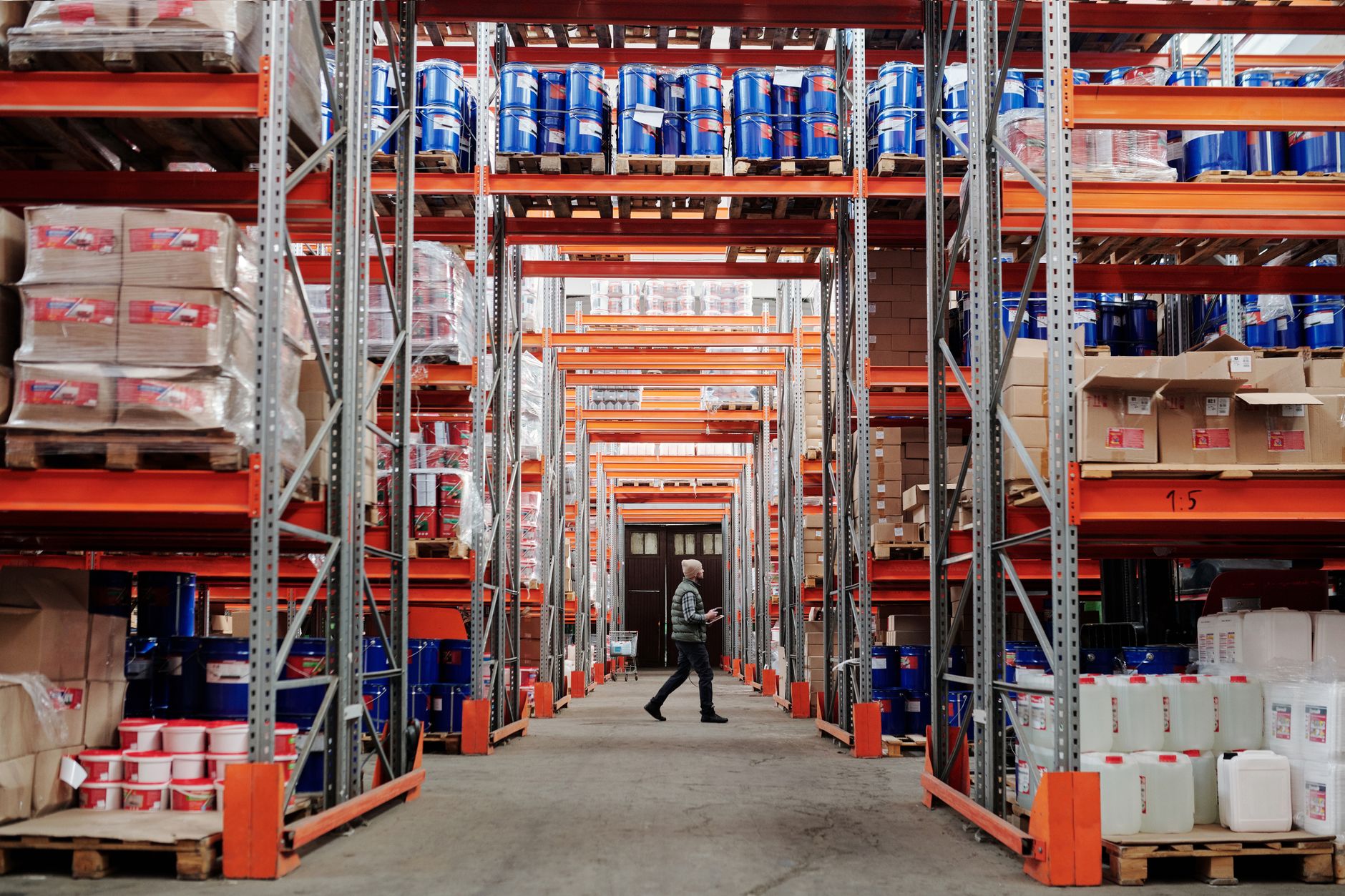
Floor area and route length come first. A building with long, straight racking runs usually needs fewer stops and fewer units than one split into many short aisles and cross-dock lanes, though the answer depends on how the moves are spread. The site assessment counts moves per hour and per shift, then sizes the fleet from that count.
Surfaces and dust come next. Uneven concrete, expansion joints, ramps and dust-covered floors change how a route is mapped and how often the floor has to be cleaned. A site with level floors and a sealed dock scopes more simply.
Shift pattern and shared traffic matter a great deal. A unit that runs overnight with no staff on the floor needs a simpler safety plan than one that runs through a day shift with people walking the same aisles. Spring peaks can push move counts well above the average week, which can add units or extend coverage hours.
Mapping and integration are often the largest unknowns. The robot needs an accurate map of the site and has to receive pallet moves from the systems your team already uses. Clean inventory data and fewer overlapping tools make scoping faster. Finally, the number of units and the service plan decide how a breakdown in peak season is handled. One unit covers one set of routes, and a fleet needs cover for breakdowns, charging and spring volume.
How much driver workload can an autonomous forklift take over?
Staffing is why many operations look at this option. The Bureau of Labor Statistics' May 2020 OEWS estimate put total employment for industrial truck and tractor operators at 640,950. An OSHA Region I directive for FY2018 estimates that about 1.5 million workers operate more than 855,900 powered industrial trucks. Those figures describe the whole country, not your site, but they show how much of the warehouse workforce depends on operators.
Hard-to-keep crews are the operating problem. The 2025 State of Warehouse Labor report found forklift operators among the hardest roles to staff, and most respondents reported turnover below 10 percent. The summary we reviewed was cut off before the higher turnover bands, so read the full report before drawing a conclusion about your own roles.
Training rules shape the work too. OSHA's powered industrial truck rules require operator performance evaluations at least once every three years, and after initial training, refresher training and certain events. The OSHA eTool says only trained and competent operators may run a powered industrial truck, and the employer must certify that training and evaluation. Every new seasonal hire on a manual truck adds that certification work.
What do forklift injury and incident figures mean for the plan?
Safety figures belong in the cost conversation because they show what a mistake can cost in people and downtime. A forklift safety summary that cites OSHA data attributes to OSHA about 35,000 serious and 62,000 non-serious forklift injuries per year. The same summary attributes 67 forklift-related deaths in 2023 to the National Safety Council, and reports 2,248 forklift-related OSHA citations in 2024, which placed powered industrial trucks sixth on that year's top-10 list.
These come from a secondary summary, so check the primary OSHA and National Safety Council pages before quoting them in a formal document. The point holds either way: training, evaluation and route separation have to be written into the plan from day one, not added after an incident.
Dust adds a second layer. Combustible dust rules and housekeeping duties apply on top of the forklift program, so a dusty site needs a cleaning plan and a traffic plan that work together. Autonomous units can reduce the number of people driving near racking, but they do not remove the need for clear walkways and a written response plan.
How does leasing through financing work, and what goes in the quote?
Leasing through financing lets you run an autonomous forklift on a fixed robot lease payment instead of tying up capital in equipment. The payment is set after a free site assessment, because the assessment measures the floor, the moves and the support the site needs.
A complete quote should show the lease terms, deployment and integration, training, service and spare coverage, and what is excluded. If a line is unclear, ask for it in writing before you sign. Every line should match the scope discussed on site.
Many operations start with one leased unit on one route. That lets your team test the layout, the dust plan and the handoff from crew to unit before the spring peak, and it gives a real comparison before any larger commitment.
What can an autonomous forklift not do at this kind of site?
An autonomous forklift runs repetitive pallet moves on mapped routes. It does not pick orders, reconcile a bag count that does not match the system, or decide that a damaged pallet is safe to move. Those jobs stay with staff, and the quote should assume they do.
Exceptions are where value is lost when planning is weak. A blocked aisle, a spill, a pallet off its footprint or a route change during a peak all need a person to respond. Name who clears those events and how fast, rather than assuming the unit covers them.
Some work will stay manual, such as off-route loads or tight areas outside the mapped network. Keep that capacity in the plan, which is why training and evaluation stay on the books for those operators.
How do I get a quote, and is it worth it?
Start with a free site assessment. Bring a rough floor plan, the number of pallet moves per shift in a normal week and in peak season, the surface and dust conditions, the systems the unit must connect to, and the staffing picture. That is enough to scope routes, units and service, so the quote reflects your site rather than an average.
Whether it is worth it depends on your numbers. This page cannot calculate a payback period, because the inputs are your own moves, hours and exception rates. Adoption is moving in one direction: A3 reports that companies in North America ordered 36,766 robots in 2025, up 6.6 percent in units over 2024. That figure covers robots of all types, so treat it as market direction, not a benchmark for your warehouse.
When the quote arrives, compare it with the staffing you would otherwise need through peaks, including overtime and temporary drivers, and with the effect of a stopped unit in the busiest weeks.
Frequently asked questions
Want an autonomous forklift at your seed and fertilizer warehouse?
Tell us about your site. We will recommend the robot, quote the lease, and keep it serviced.
Sources
- Bureau of Labor Statistics OEWS, May 2020, industrial truck and tractor operators
- OSHA Region I directive on powered industrial trucks, FY2018
- OSHA eTool: powered industrial trucks training
- OSHA combustible dust poster
- Forklift accident statistics summary (secondary, citing OSHA and National Safety Council)
- 2025 State of Warehouse Labor report
- A3 release on North American robot orders, 2025
- USDA Rural Development 2020 cooperative statistics bulletin