
The short answer
Autonomous forklift cost for pallet manufacturing plants depends mostly on how far loads travel, how many stops each route makes, how many shifts the robot covers, and how much mapping, dock integration and service the site needs. Route count and service response move the lease quote more than any single feature on the spec sheet. Every plant has its own layout, so the fixed lease payment is set in a written quote after a free site assessment.
Key takeaways
- Route length, stop count and number of units drive most of the cost at a pallet plant.
- Mapping, dock integration, software, maintenance and training are the costs people most often miss.
- Hours saved depend on the moves your plant makes each shift, which only your own records and a site walk can show.
- Robots are leased through financing, with the payment shown in a quote after a free site assessment.
- Forklift injuries are serious: the Bureau of Labor Statistics counted 74 fatal forklift-related work injuries in 2017.
Autonomous forklift cost for pallet manufacturing plants: the short answer
The cost of an autonomous forklift at a pallet manufacturing plant comes from the work the machine must do, not from its feature list. Loads move between cutting and assembly lines, storage and outbound trucks, and the cost rises with the distance, the number of stops and the number of units needed to keep those moves on time. We do not publish a price on this page, because every plant has its own layout, shift pattern and dock setup.
Pallet plants suit this kind of automation because much of their traffic repeats. Lumber arrives, moves to processing, and finished pallets move to storage and then to trucks, often along the same paths every shift. A robot on a fixed route can run those repeats the same way at the start of a shift as at the end. The fit still depends on how stable the routes are, and that is the first thing we check on site.
What moves the cost up or down at a pallet plant?
Route length and stop count come first. A forklift that runs many short moves between two lines needs a simpler mapped path than one that carries loads across a yard to a dock. Longer routes and more stops mean more mapped paths, more sensing and more checks before the robot is trusted with the job, and each added stop is another point where the route can fail.
Floor and load conditions come next. Wood dust, uneven concrete, gaps at dock plates, sawn boards that overhang the forks, and pallets stacked in shifting spots all add sensing work and tighter speed limits. A clean, level floor with fixed storage lanes is the easy case. Plants that move long boards or mixed pallet sizes need more planning before the first run.
Shifts and traffic matter as much as distance. A robot on one day shift in quiet aisles needs less zoning than one running two or three shifts beside workers and other vehicles. Scheduling heavy moves into quieter hours, or giving the robot dedicated lanes, often reduces the safety work more cheaply than adding sensors.
Units, mapping and integration form the last group. One robot on one route is the simplest arrangement. Each added unit brings coordination, charging planning and more service visits. Mapping the plant, connecting the robot to dock doors and the inventory or production system, and testing the route all take site time. Service distance matters too, because a unit out of service on a night shift leaves its route uncovered until it returns.
Where does the robot work inside a pallet plant?
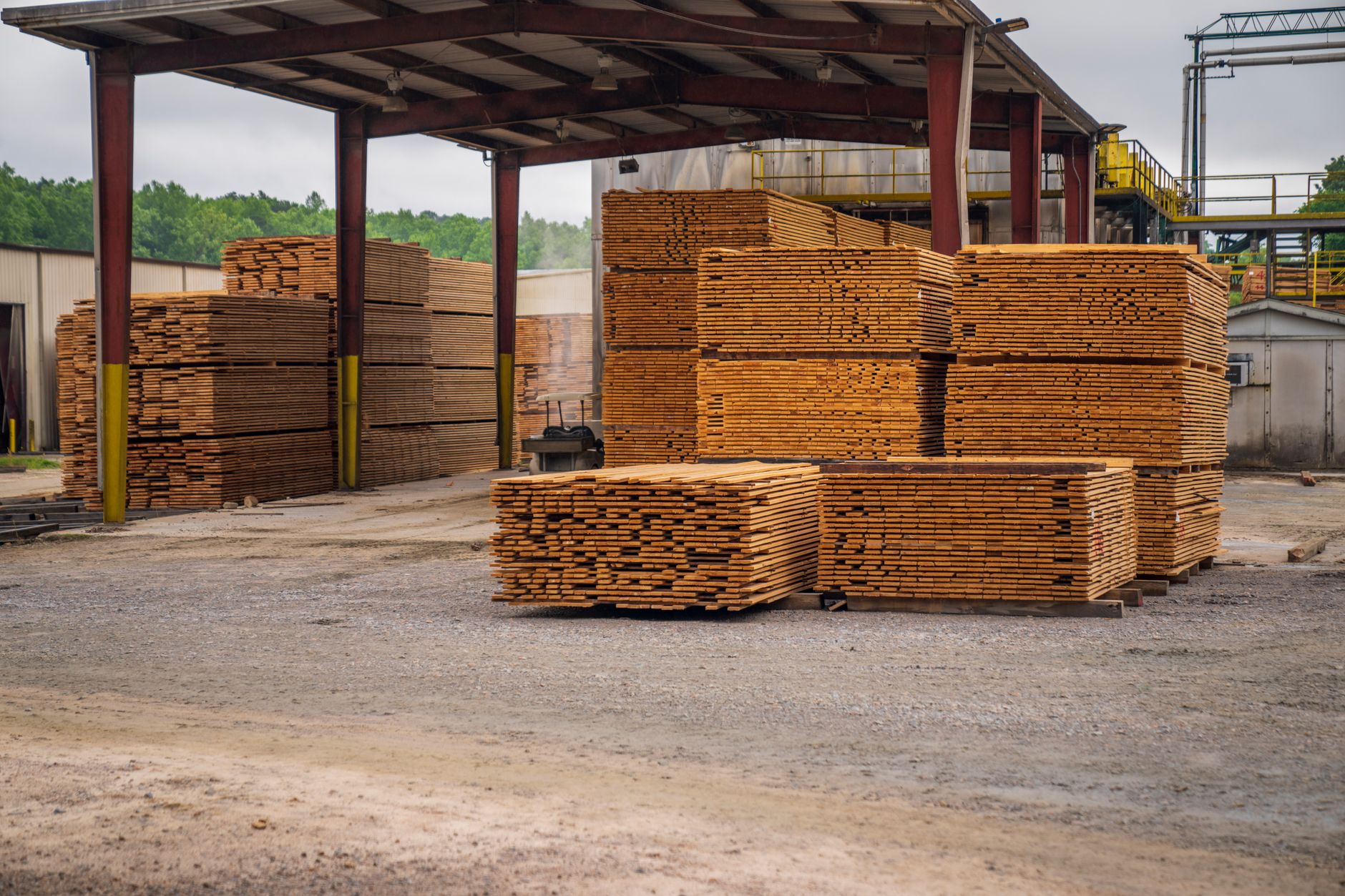
A pallet plant is not one open floor. The robot's work spreads across the receiving yard, the cutting and assembly lines, the finished pallet storage area and the loading docks. Each zone asks something else of the robot, and each one changes the route, the sensing and the staff who share it.
We walk each zone with your team before writing a route. Lumber yards and receiving areas are often outdoors or partly covered, with uneven ground and weather that affects sensing. Assembly areas are tight and busy, so the robot has to share space with workers and stations. Storage aisles are usually the most predictable place to begin.
Loading docks need the most care, because the gap between a dock and a trailer is where a load or a unit can fall. We set those routes last, after the simpler lanes have run cleanly.
How big is the pallet industry, and how risky is the work?
The industry is large enough that plant-level decisions add up. According to a compiled dataset reported by Woodworking Network, the US wood container and pallet industry has 2,364 firms and 2,767 establishments, employing 59,688 people. Our search results do not give a year for that count, so treat it as a snapshot. The NWPCA is quoted as saying there are more than 5,000 pallet companies, which likely reflects a broader definition. According to a university unit load center page, the NWPCA has more than 670 company members in 28 countries.
The risk side is serious. According to the Bureau of Labor Statistics fatal injury fact sheet for 2017, there were 74 fatal forklift-related work injuries that year, and forklifts were involved in 9,050 nonfatal injuries or illnesses with days away from work. The National Institute for Occupational Safety and Health states that most forklift fatalities happen when a worker is crushed by an overturned forklift or one that has fallen from a loading dock. A robot on fixed routes can reduce how many people walk and drive the same paths all shift, but it adds its own safety work.
Two other figures help set expectations. The Bureau of Labor Statistics lists a total recordable case rate of 4.2 per 100 full-time workers for wood product manufacturing, though the year is not stated in the snippet we reviewed. MHEDA cites 40,513 forklift-related incidents for 2021 to 2022, a figure we have not confirmed against BLS.
How many labor hours does an autonomous forklift take over?
Hour figures for pallet plants depend on the site. We did not find published data on lumber or pallet throughput per shift, or on the hours a pallet move takes in this setting. The table below describes the work task by task, and leaves the hour counts to your own timesheets, dispatch logs and a site walk.
The national labor picture gives context but not a measure. The Bureau of Labor Statistics projects 4 percent growth for hand laborers and material movers from 2024 to 2034, and lists manufacturing as employing 10 percent of those jobs. That category is broader than forklift operators, so it shows the size of the labor pool, not your hours.
Turnover for forklift and material handling work in wood manufacturing was not found in our research either. Pull turnover from your own HR records, since replacing and training an operator takes time on top of the hours already lost. A robot does not replace a trained operator on every task. It can take the repeat moves so trained staff spend their hours on loads, exceptions and dock work that need a person.
How does leasing through financing work, and what does the quote include?
Robots are leased through financing. You do not pay a large upfront charge, and the cost is spread over a fixed term as a fixed lease payment. That turns the robot into a steady line item in your operating budget, which is easier to compare against the labor hours it takes over.
The quote arrives after a free site assessment. It should show the lease term, the fixed lease payment, what mapping, integration, training and service include, and what they leave out. Ask for the response commitment for repairs and the plan for a unit out of service. Spare unit coverage matters more on a night shift than on a day shift, because a stopped unit is harder to cover when the rest of the crew has gone home.
A simple check works on your own numbers. Take the forklift hours the fixed routes consume today, subtract the hours still needed for exceptions, loads that need a person and dock supervision, then weigh what remains against the lease and service terms in the quote. Compare quotes on the same basis, using the same route list.
What can an autonomous forklift not do, and how fast is adoption?
An autonomous forklift is not a general-purpose worker. It follows mapped routes, handles loads within its limits, and stops for obstacles. It does not choose which order to fill, does not sort mixed loads, and does not clear a jam on a saw line. A plant with irregular loads, frequent layout changes or many one-off moves will see less value and more exception work, and the expected hours saved should be lowered to match.
Adoption is growing but still uneven. Robotics and Automation News reported a March 2025 survey, covering automotive manufacturing only, in which 64 percent of respondents agreed AMR use would increase in that sector. That result comes from a vendor-reported survey and does not describe pallet or lumber plants. We did not find an AMR adoption rate for those plants, so treat the trend as direction, not proof.
Where a plant has steady, repeated moves on known routes, a robot is usually the first fit. Where moves change week to week, a pilot on one route shows the true exception rate before any wider commitment.
How do you get a quote after a free site assessment?
Start with what you already have. Bring a plant map, your route list, the dock schedule, the shift pattern and the names of the people who run forklifts today. The free site assessment uses those inputs to sort moves that fit a fixed route from moves that still need a person.
After the walk, we return a written quote. Compare quotes on the same basis: the lease term, the fixed lease payment, what mapping, integration, training and service include, the response commitment for repairs, and the plan when a unit is out of service. A quote that leaves those lines blank is hard to compare.
If the work is limited, a one-unit pilot on one route is a reasonable start. It shows the hours saved, the exception rate and the service response before you commit to more units, and it lets your crew learn the routes on a small scale.
Frequently asked questions
Want an autonomous forklift at your pallet manufacturing plant?
Tell us about your site. We will recommend the robot, quote the lease, and keep it serviced.
Sources
- BLS fatal occupational injuries to forklift operators, 2017
- BLS Occupational Outlook Handbook, hand laborers and material movers
- BLS industry injury and illness data, wood product manufacturing (NAICS 321)
- Woodworking Network, how many wood pallet companies are there in the US
- MHEDA forklift incident data
- Robotics and Automation News, ABB survey on connected smart factories, March 2025
- NIOSH, forklift fatality data
- Virginia Tech Unit Load Center, current members