
The short answer
Autonomous forklift cost for precast concrete plants depends mainly on how much yard the unit must cover, what the surfaces and grades are like, how many shifts and units are involved, and how much mapping, integration and service the site needs. The lease quote is built from those inputs after a free site assessment, so no single figure applies to every plant. Your own shift records and yard layout move the number more than the forklift category does.
Key takeaways
- Yard area, surface condition and route length move the quote more than the forklift category does.
- Shift count and the number of units decide whether one unit or a fleet fits the casting schedule.
- Mapping, integration, software and training are the costs that early estimates usually leave out.
- The lease quote comes after a free site assessment, with a fixed lease payment set through financing.
- Hour savings should come from measured trips on your own shifts, not from a published average.
What drives autonomous forklift cost for precast concrete plants?
Autonomous forklift cost for precast concrete plants follows the work the machine has to do, not the forklift model on the spec sheet. A casting yard with long routes from the beds to storage, uneven ground and several stacking zones needs more mapping, more route setup and more service planning than a compact indoor plant. Two plants with the same class of unit can land on very different quotes for that reason.
We build every quote the same way. We walk the yard, measure the route from each casting bed to its storage area, count how many elements move per shift, and then size the unit count, the mapping scope and the service plan. The lease is set through financing, so the payment is known before the robot is deployed and does not depend on guesses made from a floor plan.
The rest of this page covers each factor, the costs people tend to miss, the labor hours the work takes, what the robot cannot do, and how the quote is produced.
Which site factors move the cost up or down?
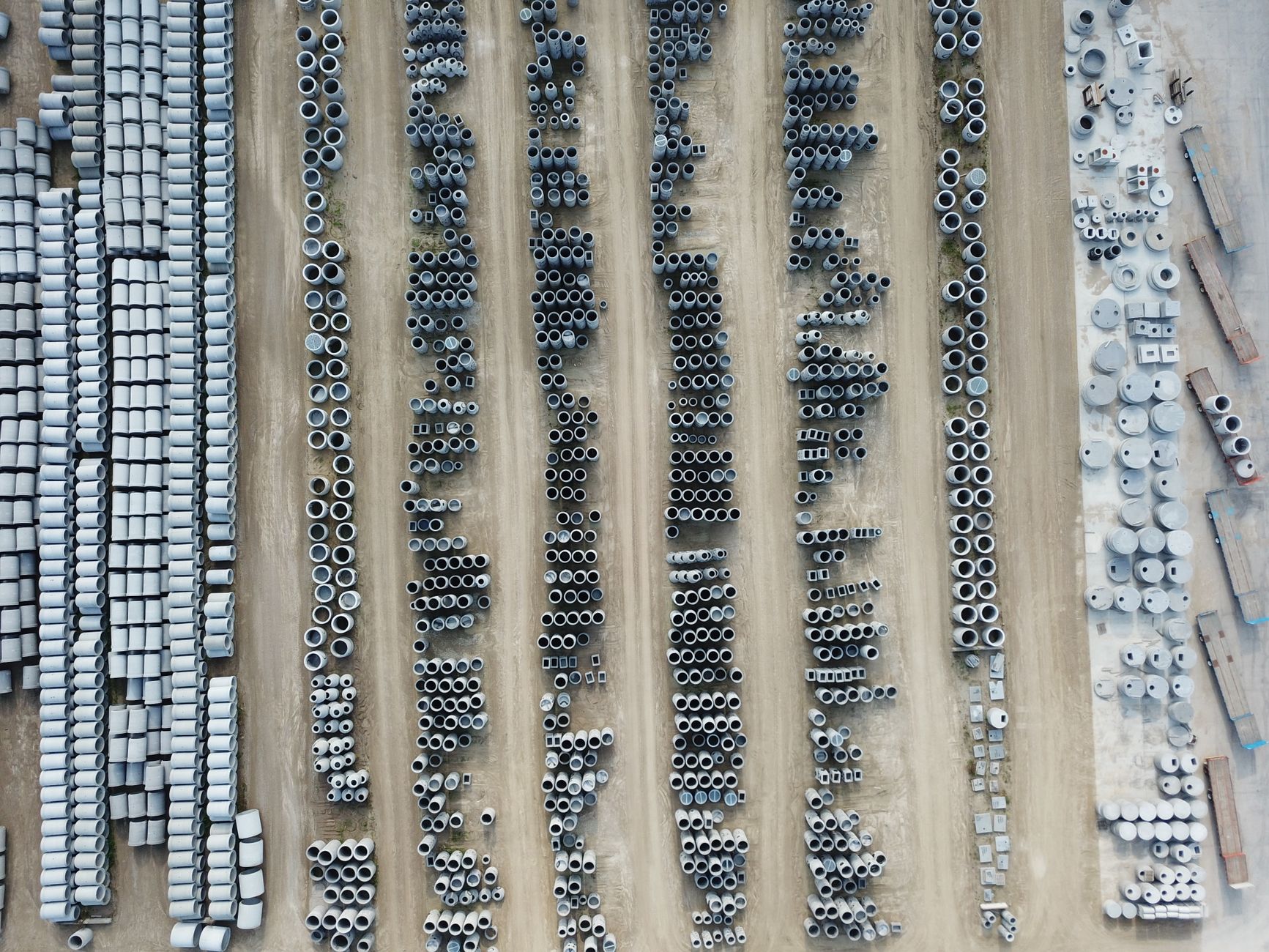
Yard size and route length come first. Industry planning material gives a sense of scale: a precast conference slide recommends 25 to 40 acres for a casting yard, and a cited bridge girder layout totals 21.07 acres with separate areas for concrete manufacturing, steel storage, beam storage sized for 25 units and equipment parking. A large yard does not automatically cost more, but every extra route from a bed to a storage row adds mapping and testing work.
Surface condition is the second factor, and people underestimate it. Outdoor concrete carries joints, cracks, ponding after rain, grade changes and wear from heavy loads. Each of these affects how reliably sensors read the route and how often the unit must stop. A yard that needs crack repair or regrading before mapping adds prep work that has nothing to do with the forklift itself.
Shift pattern and traffic change the setup. A plant that runs long or overlapping shifts needs a charging plan that fits its cycle and a service plan that covers those hours. A yard where crane traffic, walkers and open forklifts share the same bays needs tighter zones and more exclusion mapping than a yard with a clear lane.
Units and routes are the lever with a floor. One unit on a single bed to yard route is a separate job from a small fleet covering several bed rows and a second storage area. Mapping and integration scale with the number of routes more than the number of machines, so a second unit on a route that is already mapped costs less than opening a new route.
How many precast plants and workers are there in the United States?
Precast is a large industry with a concentrated footprint. According to PCI's 2025 release, 259 plants are PCI certified across North America, held by 143 producer members. The 2024 release reported 263 plants, so the count has been roughly flat. That figure covers North America, so it should not be read as a United States total.
The September 2023 precast market executive summary estimates one precast plant for every 121,000 people in the United States, and names Florida, Texas and California as the states with the most plants. Plant density is uneven, so dispatch distance for service is worth asking about if your plant sits well outside those states.
The labor side is the other scale figure. IBISWorld estimates 62,231 people employed in precast concrete manufacturing in the United States as of 2025. NPCA has flagged workforce as a leading concern for producers, and has since run a member workforce survey.
The wider labor market is tight too. The AGC and NCCER 2025 Workforce Survey reports 92% of firms that said they had difficulty hiring for open positions. Yard handling is physical and repetitive, which is exactly the kind of shift work that is hard to staff.
How many labor hours does the work take over?
No published hours per shift figure for precast yard forklift work turned up in the research for this page, so we do not print one. The labor data that is available is wider. The BLS reports about 7.0 million jobs for hand laborers and material movers in 2024, with projected growth of 4% for 2024 to 2034, about 258,400 new jobs, and about 1,008,300 openings per year, mostly from replacing workers who leave.
The useful number is the one from your own yard. Pull two or three weeks of shift logs for moves between casting beds and storage, count the trips, note the dwell time at each end and record how many people are on each leg. That data sets the hours a unit can take over, and it is the input that makes the lease comparison honest.
The table below lists the typical tasks in this kind of yard. The hours column is left for you to fill from your logs during the site assessment. The robot column describes what changes in the work, not a verified time saving.
What should you check before you decide?
Most of the inputs that change a quote are knowable before you call anyone. Gather them now, because a quote is only as accurate as the site data behind it.
The list below is the short version. Each item tends to move the number, and each can be answered from your own records or a walk of the yard.
How does leasing through financing work, and what does the quote include?
Robots are leased through financing, so the unit does not require a large upfront outlay of capital. The lease term and fixed lease payment are set in the written quote after we assess your site, and the payment stays the same for the agreed term. That gives a finance lead a figure to plan around before deployment starts.
A quote covers the scope the site needs, typically the lease for the agreed term, deployment and integration, mapping for the agreed routes, training for your staff and service terms including on site dispatch and remote triage. Maintenance sits inside the service terms, and the quote states what is excluded so there are no surprise add-ons.
Financing programs and lease terms vary by customer and by unit, so this page does not print a figure. You see the payment, the term and the scope in writing before anything is signed.
We are a vendor neutral integrator, so the unit is picked for your floor and your routes rather than for a single brand. For a precast yard, that matters because the right unit depends on load handling, surface and route length, and the lease is built around the unit that fits.
What can an autonomous forklift not do?
It does not decide what should move or when. A mapped route is a path, not a production plan. Sequencing, load priorities and the decision to pull an element for inspection stay with your team.
It works best on defined routes with a stable layout. Frequent layout changes, unmapped detours and areas where people routinely cross on foot all add exceptions that a trained operator has to handle. Load limits, climbable grades and weather conditions must be checked against the unit specification, and we confirm each one during the site assessment.
It does not inspect or repair what it carries. Checking a finished element for cracks, clearing a jammed lift or repairing a damaged surface still needs people. Plan for an operator to stay available for exception calls, maintenance and any task outside the mapped routes.
How do I get a quote after a free site assessment?
The starting point is a free site assessment. A technician walks the yard with your operations lead, measures the routes, looks at surfaces and grades, reviews shift records and agrees on integration points. We do not quote from a photo or a floor plan alone, because the route and surface details are what set the number.
The written quote follows. It names the lease terms, mapping, integration, training, service and deployment plan in one document, with exclusions stated plainly. Deployment is phased, so one route can be mapped, integrated and checked before the rest of the yard is added. Go live support and spare unit coverage are part of the plan where the site needs them.
After go live, service runs through the same team, with one point of contact for faults, dispatch and remote triage. A service plan sets response expectations in writing, so the plant knows what happens when a unit goes down during a pour cycle.
Frequently asked questions
Want an autonomous forklift at your precast concrete plant?
Tell us about your site. We will recommend the robot, quote the lease, and keep it serviced.
Sources
- Precast industry market executive summary, September 2023
- IBISWorld, Precast Concrete Manufacturing employment in the United States
- NPCA, How workforce can work for you (Q2 2025)
- AGC and NCCER 2025 Workforce Survey infographic
- BLS Occupational Outlook Handbook, Hand Laborers and Material Movers
- OSHA Regional Directive CPL 04-00-023E, Powered Industrial Trucks (FY2018)