
The short answer
The autonomous forklift cost for third-party logistics warehouses depends on the floor, the shifts and the work the unit must cover. Floor area and route length, the number of shifts and units, mapping and integration, and the service level all move the number, and none of them is fixed until a site assessment is done. A lease quote is built after that assessment and sets out the fixed lease payment, term and scope.
Key takeaways
- Floor area, route length and shift count move the lease quote more than any single hardware choice.
- Mapping, integration, training and service are the costs most often left out of early budgets.
- Operator pools are large but growing slowly, so pallet moves that stall on short shifts are a real staffing gap.
- The quote is built after a free site assessment and sets out the lease terms in writing.
- Official labor data sets the staffing picture, but the cost for your building comes from your own floor plan and shift pattern.
What does an autonomous forklift cost for a third-party logistics warehouse depend on?
The autonomous forklift cost for third-party logistics warehouses is set by the building and the work, not by a standard figure. The lease quote reflects how large and how cluttered the floor is, how many shifts the unit must cover, how much of the building needs mapping, what has to connect to the warehouse management system, and how many units run at once. Service terms and training come on top of that.
A third-party logistics operator usually runs several client programs in one building. Each client brings its own inventory rules, dock schedules and labor pool, so one unit may have to fit more than one workflow. That is where the cost question gets harder than it is for a single plant with one process.
The reason this page exists is labor. Pallet moves between receiving, racking and the dock repeat across long shifts, and they are the work that stalls when forklift operators are hard to fill. An autonomous forklift keeps those moves going through the hours a short crew would otherwise leave open. The rest of this page explains what moves the number, what it includes, and where a unit falls short.
What moves the number at a third-party logistics site?
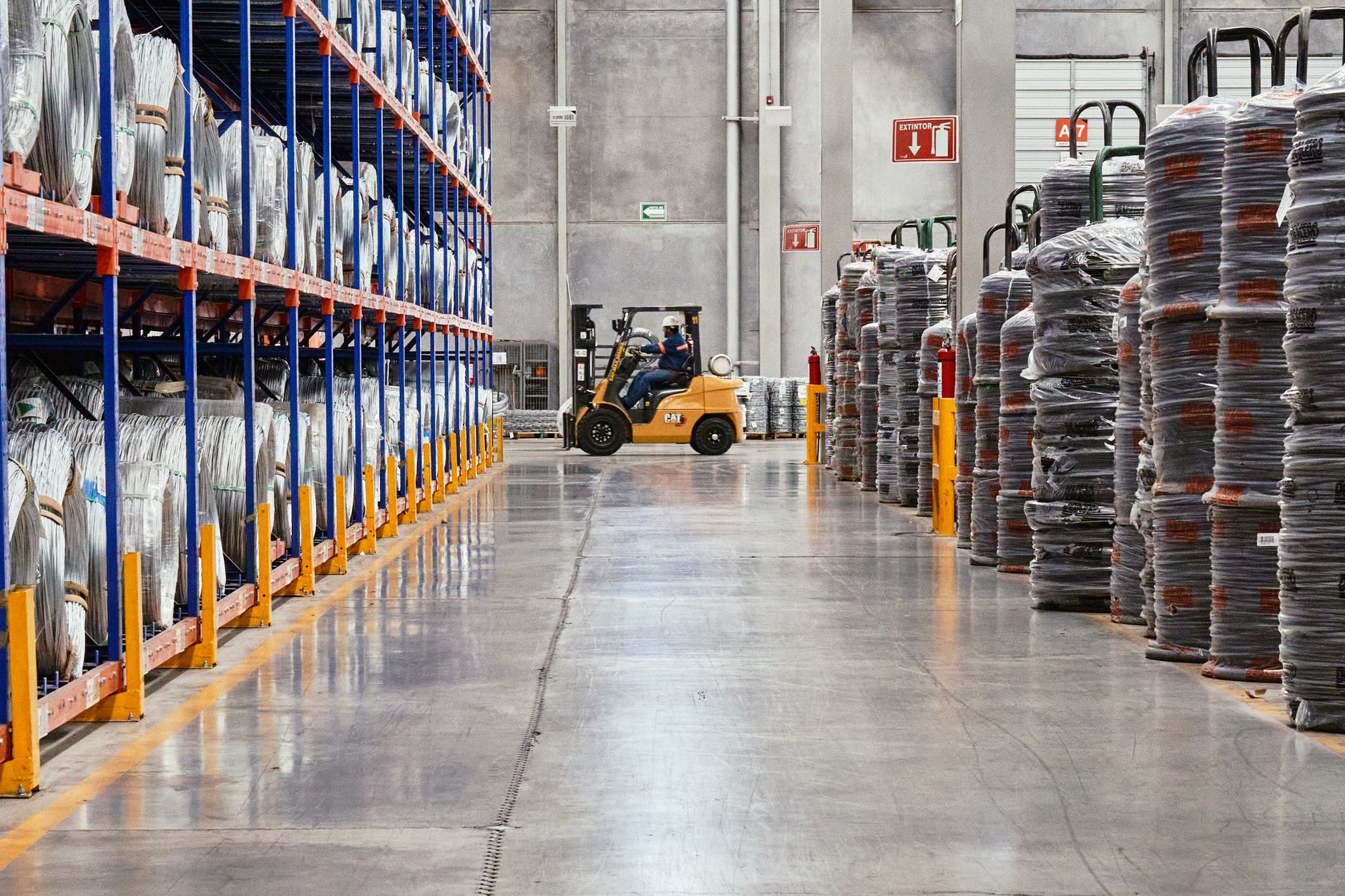
Floor area is the first lever. A larger building means longer travel between receiving, staging and racking, and more mapping at the start. It also spreads the fixed setup across more moves per shift, so the cost per move can fall as the building grows. A compact site with a short run between receiving and racking often needs fewer units to cover the same work.
Floor surfaces matter more than most budgets expect. Smooth, sealed concrete with level transitions at dock plates is easier to navigate than worn floors, expansion joints or ramps. Where a floor needs repair or leveling before a unit can run reliably, that work belongs in the quote, not in a later change.
Shift count and traffic move the number together. A unit on one day shift needs less coverage and fewer service windows than a unit that runs two or three shifts. Heavy foot and forklift traffic in shared aisles adds routing rules, marked safety zones and extra time at shift change, when the most people are on the floor at once.
Mapping, integration and unit count close out the list. Mapping is the survey that lets the vehicle locate itself, and it must be redone when racking moves. Integration connects the unit to the warehouse management system so pallet moves are assigned from live orders rather than typed in by hand. A second unit adds coverage for peaks and softens the effect of a single stop, which is why multi-unit sites plan for backup from the start.
Why are forklift operators hard to fill, and how big is the sector?
The Bureau of Labor Statistics counts about 792,500 industrial truck and tractor operators in 2024, within a material moving machine operator group of about 867,700 jobs. The same agency projects 1% growth for that group from 2024 to 34, which it describes as slower than average. A slow growth rate means the trained operator pool will not expand quickly to fill vacancies.
Hand laborers and material movers are a larger group. The same agency reports about 6.95 million hand laborers and material movers in 2024, with 4% projected growth for 2024 to 34. Those workers handle much of the same pallet and tote work, so a warehouse competes for labor across a wide pool rather than only for trained truck operators.
Turnover is harder to pin down. A staffing research page reports 35 to 49% annual turnover in warehouse and fulfillment, citing BLS JOLTS data. Check the original JOLTS series before using that range in a staffing budget.
Sector size also varies by source. A market research report estimates about 473,577 people employed in third-party logistics in the US in 2025, but estimates of this sector differ between editions, so use the count as a rough scale rather than a fixed headcount.
How many labor hours does an autonomous forklift take over?
The hour math starts with the pallet moves themselves. A receiving crew moves inbound pallets to staging, staging to racking, and racking back to the dock for outbound loads. Those are repeat trips on fixed routes. They suit a unit that does not tire, does not need a break and can hold a route through a long shift.
We measure hours on site rather than quoting an industry average. During the assessment we time a sample of moves on each route, count moves per shift, and note where work stops when an operator is missing. Those timings set the hours a unit can carry, and they show whether one unit or several are needed.
Hours saved are only part of the gain. An unfilled shift does not just leave a gap; it pushes pallets into the next shift and into dock cutoffs for every client sharing the building. A unit that holds the repeat route during a short crew keeps outbound loads on schedule across all of those programs.
How does leasing through financing work, and what does the quote include?
Robots are leased through financing, so the cost lands as a fixed lease payment over the term rather than as one large upfront outlay. The term, payment schedule and end-of-term options are written into the lease before deployment begins. Read those terms the same way you would read any equipment lease.
The quote covers the parts of the job you need to see in one place: the site assessment, unit count and configuration, deployment and integration, staff training, and service terms. We itemize each line so you can compare it against your own labor count and shift plan rather than against a single headline.
A quote depends on the floor, the shifts, the number of units and the service level, so we do not publish one number for every building. Once the site assessment is done, the quote gives the fixed lease payment and the scope it covers.
We handle the whole arc. We pick the right unit for the site, lease it through financing, deploy and integrate it, train the staff, and service it nationwide. One partner handles the lease, the install and the call when a unit stops, which keeps the number of parties you manage to one.
What can an autonomous forklift not do?
An autonomous forklift runs repeat moves on known routes. It does not replace an operator for work outside those routes, such as irregular loads, damaged pallets that need inspection, or a dock that changed overnight. Those tasks still need a person with a truck, which is why the unit covers the repeat work and staff cover the rest.
Safety is the other limit. Forklift work remains a major source of injury in warehousing. A safety summary of BLS data reports 32 occupational fatalities in warehousing and storage in 2024, and a warehousing total recordable rate of 4.8 per 100 full-time workers, against 2.6 across all industries. Those figures cover all warehouse work, not only autonomous units.
Severe injury data points the same way. According to a summary of OSHA data, transportation and warehousing accounted for 285 reports, or 26%, of forklift-related severe injury reports in 2022 to 2023. A unit does not change that exposure by itself, so aisle zones, pedestrian rules and speed limits still apply to every vehicle on the floor.
Units also depend on the floor staying set up for them. Mapping drifts when racking moves, and a blocked aisle or a damaged floor stops a route until someone clears it. A unit can flag those stops, but a person still has to fix them.
How do you get a quote for an autonomous forklift lease?
The quote starts with a free site assessment. We walk the building, time the routes, note floor surfaces and shift pattern, and map the aisles the unit would use. The assessment shows how many units the work needs and what integration the warehouse system requires.
After the assessment we send a lease quote built from your site rather than from a standard figure. It sets out the fixed lease payment, term, deployment, integration, training and service terms, and it lists what is not included so you can see the gaps before you sign.
A few inputs speed things up: a floor plan with dock doors and racking, the shifts you want covered, pallet move counts if you track them, and the warehouse system you run. Those inputs are what the quote is built from, so they are worth gathering before the first call.
Are other warehouses already using autonomous equipment?
Adoption is broad but uneven. A 2025 warehouse automation survey reported by a trade publication found that 97% of respondents use some form of automation, and 50% have automated at least half of operations. The survey was vendor reported, so read it as a direction rather than a census of the sector.
Mobile robot adoption is earlier in the curve. A 2023 benchmark reported that 76% of companies had never deployed an automated guided vehicle, and 70% had never implemented an autonomous mobile robot. That benchmark is from 2023 and vendor reported, so treat it as a starting point rather than a current count.
Adoption figures describe the sector, not your building. Your quote should reflect your floor, your shifts and your service needs.
Frequently asked questions
Want an autonomous forklift at your third-party logistics warehouse?
Tell us about your site. We will recommend the robot, quote the lease, and keep it serviced.
Sources
- U.S. Bureau of Labor Statistics, Occupational Outlook Handbook: material moving machine operators
- U.S. Bureau of Labor Statistics, Occupational Outlook Handbook: hand laborers and material movers
- Warehouse and fulfillment staffing research page
- Third-party logistics employment market research report
- Distribution center safety statistics summary
- Forklift industrial vehicle incident statistics summary
- Warehouse automation survey reported by a trade publication
- Warehouse automation benchmark study reported by a trade publication