
The short answer
An autonomous forklift cost for wallboard distribution yards depends on route length, traffic and people mix, shift pattern, floor condition, mapping and dock integration, the number of units, and the service scope. Because each yard lays out its board differently, we set the fixed lease payment in a quote after a free site assessment rather than from a standard figure. Gypsum board is heavy and chips easily at the edges, so route design and stack handling rules shape the job as much as the machine does.
See what a autonomous forklift costsRun the numbers in the ROI calculator
Key takeaways
- The autonomous forklift cost for a wallboard yard follows route length, traffic, shifts, floor condition, mapping, integration, unit count and service scope.
- USG's handbook sets a fork carriage spread of 46 to 84 inches and a 17 foot stack cap, so handling rules come before the machine.
- Hidden costs sit in mapping, remapping, software links, maintenance, insurance terms and staff training.
- We lease the robot through financing and set the fixed lease payment in a quote after a free site assessment.
- Adoption is still early, so a one route pilot is a practical first step for most yards.
What does an autonomous forklift cost for wallboard distribution yards depend on?
An autonomous forklift cost for wallboard distribution yards depends on the job the machine has to do, not on a standard figure. The main variables are the length and number of routes between storage bays, staging lanes and trailer doors, how many trucks load or unload each shift, the condition of the concrete, and how much mapping and dock integration the site needs before the first move. Each of these changes how many units are needed and how much service the site will use over the term.
Because every yard lays out its board differently, we do not quote from a table. We walk the site, measure the routes and the traffic, and then issue a quote that sets a fixed lease payment through financing. The quote names the units, the term, the setup scope, training and the service plan, so the team signing off can compare it against the work the robot will actually do.
The sections below cover each driver, the costs teams tend to miss, how leasing works, the labor hours the robot takes over, and what it cannot do. The goal is to let you judge whether the cost fits your yard before committing to a site visit.
Why are wallboard yards hard on forklifts and on the board itself?
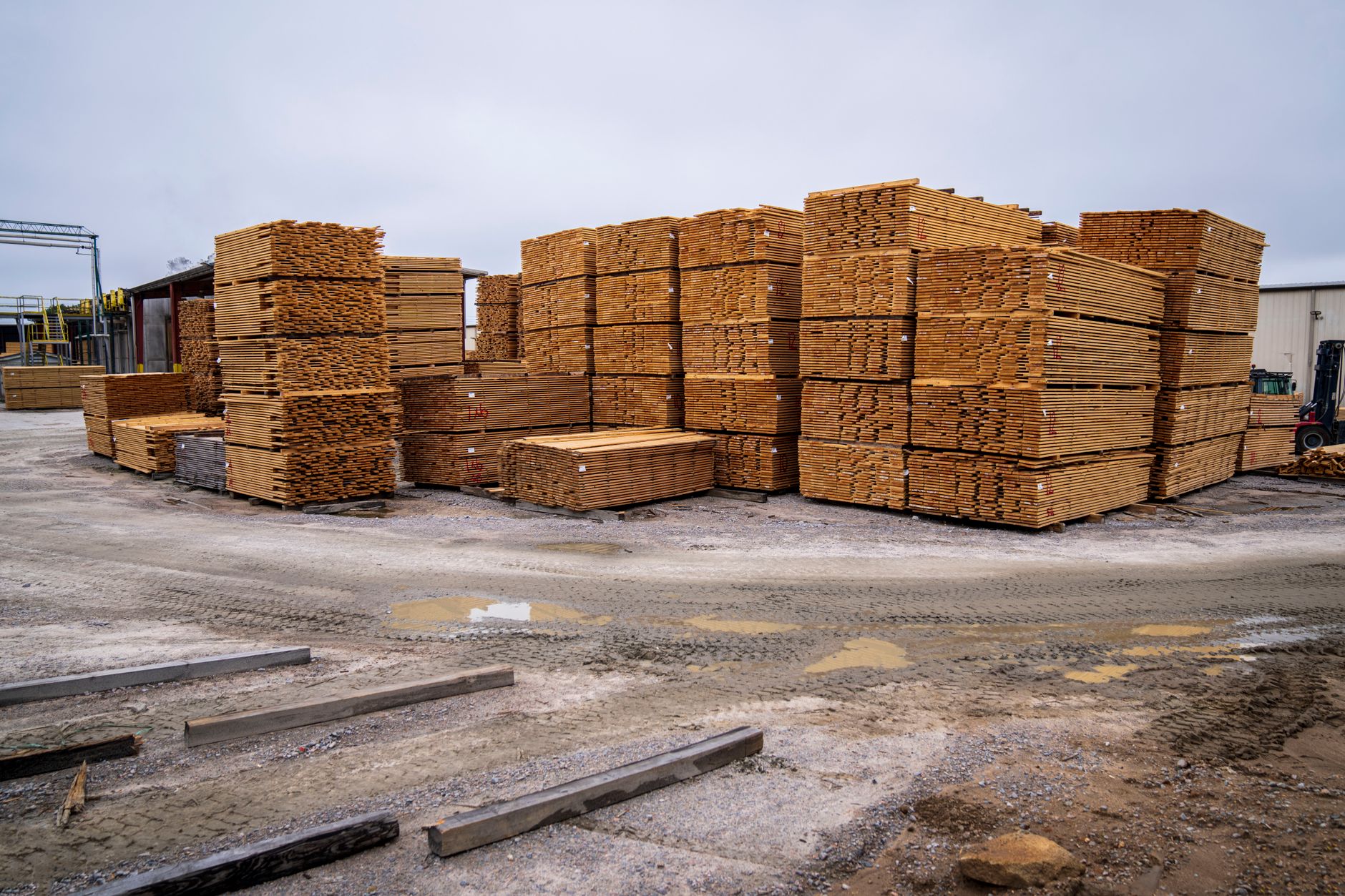
Gypsum board is heavy, flat and easy to chip at the edges. The USG construction handbook says a fork carriage spread of 46 to 84 inches suits most common panel sizes, and it warns that narrow fork spacing can break boards even when they are banded. A stack can look secure and still crack if the forks sit in the wrong place, which is why fork setup belongs in the route design and not in an operator's habit.
Storage height is the second constraint. According to the same USG handbook, stacks should be capped at 17 feet (5 m), and board should be stored flat and protected from weather. The handbook also says to store board on dunnage rather than directly on concrete, because slab moisture can ruin bottom edges within days. Those rules set how high a machine can stack, how much floor it needs, and which pallets or dunnage it must handle.
Edge damage can happen wherever stacks are set down or pushed together. USG's storage and handling sheet warns that bumping panels together can damage tongue and groove edges. A robot on a fixed path does not fix a bad dock plate or a wet floor, but it removes the variation that comes from different operators on different shifts, and that variation is hard to control with staffing alone.
Trailers add their own problems. Loading order, floor height at the dock and the gap between the trailer and the dock plate all change how a stack moves. These are site facts to measure during the assessment, because they decide whether a route can run without a person stepping in.
What moves the cost up or down at a wallboard yard?
Yard size and route length carry the most weight. A yard that moves stacks over long lanes between storage and trailers needs more travel per move and more route coverage to plan and maintain, even when the volume matches a compact yard. Route length is the first thing we measure, because it shapes how many units and how many routes the job needs.
Traffic and the people mix come next. Where staff, trucks and other vehicles share the lanes, the robot needs more mapping, more stopping and more supervision. A yard that separates people from machine lanes usually has a simpler setup, and the quote reflects whichever layout the site actually has.
Shift pattern decides how many hours a unit runs and whether a second unit adds real coverage. A single day shift with a planned load window needs fewer units than a yard that loads or unloads around the clock. Floor condition also counts. Uneven slab, open joints and standing water change how reliably a machine runs a route, and they can change the repair scope in the lease.
Mapping, integration and service scope finish the picture. Initial mapping, remapping after a layout change and links to dock scheduling or inventory records all add setup work. Each unit needs its own route setup, charging and service coverage, so the unit count multiplies most of the other costs. A site that needs a fast response and a spare unit carries a different service scope than one that accepts a planned day of downtime.
How does leasing through financing work and what does the quote include?
We lease the robot through financing, so the site does not need to fund the machine up front. The lease gives the site a fixed lease payment over the agreed term, and that payment is set in the quote after the free site assessment. The quote lists the units, the term, setup and mapping scope, integration scope, training and the service plan.
A useful quote also shows what it leaves out. If it does not mention remapping, dock integration or the response time for service, it is incomplete. Ask for each of those items to be written into the quote, so the team signing off can see what the lease payment covers and what it does not.
Terms can be sized to the site. A program can start with one unit on one route, so the team can see how the route and the staff work together before more units are added. Deployment can be phased so the rest of the yard keeps running while the first route goes live.
Before signing, compare the quote against the hidden costs in the previous section. A lease that covers mapping, training and service in writing is easier to check than one where those items appear later as separate charges.
How many labor hours does the robot take over in a wallboard yard?
The labor picture starts with the people who do this work now. The Bureau of Labor Statistics counted 778,920 people employed as industrial truck and tractor operators in May 2023, according to its Occupational Employment and Wage Statistics data. That is a national count across all industries, so it shows the size of the operator pool, not how many wallboard yards employ it.
We did not find a published figure for how many hours a wallboard yard spends moving stacks per shift or per week. Yard-specific hour data was not available in this research pass, so the table below describes the method rather than a benchmark. We measure crew time on the actual routes and trailer schedule during the site assessment, and the quote uses that measured number.
Staffing gaps hit moves that have no backup. A robot on a fixed route covers repeat moves on schedule, while staff handle exceptions, inspections and loads that do not fit the planned path. The hours that matter most are the ones that repeat every shift on the same lanes, so those are the first hours to measure.
How common are autonomous forklifts in warehouses and yards?
Adoption of autonomous machines is still early. The 2025 Industry Outlook from Modern Materials Handling, a survey by Peerless Research Group, found that about 10 percent of companies were using AGVs or AMRs, and 30 percent planned to evaluate them within one to two years. The gap between use and evaluation points to a market that is still testing before it commits.
A vendor-run survey from BlueBiotics reported that more than 70 percent had adopted or planned to adopt AMRs or AGVs, and 21 percent used self-driving forklifts. That survey's year is not clearly dated in the research, and it comes from a vendor, so treat the figures as directional rather than settled. A figure reported secondhand by Pulse says MHI's 2025 survey found robotics adoption rose to 48 percent, although that covers robots generally and not forklifts specifically.
For a yard, the practical meaning is that few sites are the first to try this technology. A pilot on one route can show the real hours, the damage picture and the staff time before a fleet is planned.
What are the safety risks, and what can an autonomous forklift not do?
Powered industrial trucks carry their own injury record. A safety summary that cites OSHA reports 2020 forklift-related figures of 78 work-related deaths and 7,290 nonfatal injuries with days away from work. Those are national counts across all workplaces, not wallboard yards, but they show why reducing foot traffic and manual handling near trucks matters.
OSHA's powered industrial truck standard is among the most frequently cited standards in federal inspections, according to an OSHA directive for fiscal year 2018. That is a reason to check the site's own compliance before adding any machine, whether it is driven by a person or by a robot.
A robot cannot fix a cracked slab, a poor dock plate or wet board stored on concrete. It cannot decide to hold a stack that looks unsafe, and it cannot handle a load that does not fit the planned path. Staff still need to inspect stacks, clear blocked routes and handle exceptions. Fork spacing and stack height still come from the handbook rules, and the site still needs people who know those rules.
The robot also does not remove the need for an emergency plan. Staff should know how to stop a unit, how to clear a route and who to call, and the training in the lease should cover those steps.
How do I get a quote after a free site assessment?
Start with what you already have. Gather a plan of the yard, the trailer door count, the shift schedule, and notes on where stacks move and where they stall. Those inputs let us size the units and the setup work before we arrive, and they shorten the time we spend on the ground.
We then do a free site assessment on the ground. We measure the routes, check the floor and the dock positions, look at traffic and people flow, and time real moves where possible. The quote comes after that visit, and it sets out the fixed lease payment through financing, the term, the setup, the training and the service plan.
If the numbers fit, a pilot with one unit on one route is a sensible first step. It lets your team see how the robot handles your board, your floor and your dock before a larger program is planned. Ask for the quote in writing, with each item named, and compare it against the hidden costs and the hours table on this page.
Frequently asked questions
Want an autonomous forklift at your wallboard distribution yard?
Tell us about your site. We will recommend the robot, quote the lease, and keep it serviced.
Sources
- Bureau of Labor Statistics, Occupational Employment and Wage Statistics, May 2023, industrial truck and tractor operators
- Safety summary citing OSHA 2020 powered industrial truck figures
- USG CGC Construction Handbook, Chapter 13, safety considerations for material handling
- USG storage and handling sheet WB2333
- OSHA directive CPL 04-00-023E, powered industrial trucks, FY2018
- Modern Materials Handling, 2025 Industry Outlook survey by Peerless Research Group
- SDCExec, BlueBiotics vendor survey on warehouse automation adoption
- Pulse, secondhand report of MHI 2025 survey on warehouse robotics use