
The short answer
Autonomous forklift cost in Jacksonville, FL is set mostly by the site: floor area and layout, the docks and aisles the unit must serve, the shifts it must cover, how much mapping and warehouse system integration the building needs, and how many units run at once. A lease quote is built from those facts after a free site assessment, and it lists the fixed payment, the term, deployment, training and service, so the number reflects your building rather than a generic estimate.
Key takeaways
- In Jacksonville, the building sets the autonomous forklift cost more than the machine does.
- Count the shift hours the unit must cover and compare them with hours you cannot staff or fill.
- Mapping, integration, service response and insurance terms are where the hidden costs sit.
- Port volume and a looser industrial market shape the buildings and labor you work with.
- The lease quote after a free site assessment is the number that reflects your floor.
What does autonomous forklift cost in Jacksonville depend on?
Most of the answer is in the building, not the machine. A Jacksonville site that runs a forklift across a long dock wall on two shifts will land somewhere very different from a single-shift cross-dock with short runs, even if both move similar pallets. The factors in this guide are the ones a site assessment measures first, because they decide what a lease quote must cover.
We do not publish one number for the whole city. A fixed figure would hide the variables that set the lease, and any number on a web page would be a guess about your floor. The quote comes after a free site assessment, and it sets out the fixed payment, the term, deployment, integration, training and service in one document. Treat any published range, including ours, as a starting point for that conversation.
Which site factors raise or lower the cost the most?
Floor area and layout come first. A bigger footprint means longer routes per pallet and more mapping work. A building with many short aisles, several dock doors and frequent racking changes costs more to map and keep mapped than one long, open run. Count each dock, staging lane and racking bay, because each is a place where the route has to be defined and tested.
Floor condition is the second driver. Flatness, joints, cracks, drains and dusty or reflective surfaces all affect how well the navigation holds. A floor that needs repair before the unit can run adds work that belongs in the quote, so the assessment checks it first and says so directly.
Traffic and shift pattern shape both the route and the service plan. Forklifts, pedestrians and carts sharing the same aisles need tighter zones and more supervision than a site with separated lanes. The number of shifts sets how many hours a unit must cover, and that matters more to the comparison than the count of machines.
Integration and unit count finish the picture. One unit on one route is simpler to deploy than several units sharing a charge plan and a task queue. Feeding tasks from your warehouse system instead of manual entry adds integration and testing, and each extra system adds more.
What does Jacksonville's freight and warehouse market look like?
Jacksonville's freight activity is tied closely to its port. According to JAXPORT's published statistics, container volume reached 1,388,841 TEUs in FY2025, up from 1,340,412 in FY2024, and 506,237 automobiles were handled that year. Port volume does not tell you about any one building, but it is the clearest local signal of how much pallet and container work is moving through the area.
Industrial space has loosened. A broker's Q3 2026 Jacksonville report put industrial vacancy at 9.9 percent, down 264 basis points. A separate broker report put total vacancy at 10.9 percent in Q2 2026, with availability at 12.6 percent. A local business newspaper, citing a broker's data, said vacancy rose from 6.1 percent to 10.6 percent in Q1 2026. These sources disagree on direction and level because their methods differ, so read them as a range, not a count.
For a tenant, this means the building you run in may be newer or easier to lease than it was not long ago. Newer buildings can offer cleaner floors and clearer layouts, which helps mapping. Confirm that in the site assessment rather than assume it from the vacancy figures.
The wider market is moving toward automation. A3 reports that North American companies ordered 36,766 industrial and collaborative robots in 2025, up 6.6 percent from 2024, and cobot orders reached 7,212 units, or 19.6 percent of the total. A3's figures exclude autonomous mobile robots, so they do not count autonomous forklifts.
How much does Jacksonville labor change the math?
Labor is the comparison most people start with, and it is the hardest to pin down locally. The right basis is the official government wage data for the Jacksonville metro, and the government wage data shown alongside this page is the place to start. Published estimates for forklift and machine operator work in Jacksonville disagree with each other. One salary aggregator says it draws on federal data but does not name the release, so treat it as a secondary source and use the official table as your baseline.
Turnover is the labor cost that does not appear on a wage line. Every new operator needs training, and a high turnover site repeats that work. A 2025 national workforce survey put average voluntary turnover across all US industries at 13.0 percent, and 26.7 percent in retail and wholesale. No clean warehouse-only figure turned up in our search, so retail and wholesale is the nearest published comparison, and your own separation records are the better measure.
The robot does not remove labor from the decision. It moves covered hours to the shifts you set, and it still needs a trained person to supervise, clear exceptions and manage charging. The saving is real where the hours it covers are hours you cannot fill or cannot staff at a reasonable level.
How does leasing through financing work, and what does the quote include?
The unit stays on lease through financing, which avoids a large upfront capital commitment. The quote comes after a free site assessment and sets out a fixed payment over the term you choose, so the number is known before you commit. Ask for the quote in writing rather than a verbal estimate.
A quote from us lists what sits inside the lease. That includes the financing terms, deployment and integration, operator training, and service after go live. Ask which items are included and which are optional, and how a backup arrangement works if a unit needs repair. A clear quote lets you compare two sites or two layouts on the same basis.
The payment is fixed for the term, so the variable part of the decision is the site: the shifts, the hours covered, the floor and the integration scope. Change one of those inputs and the quote changes with it, which is why the assessment comes first.
What can an autonomous forklift not do?
An autonomous forklift runs defined routes in mapped space. It does not solve open-ended problems on its own, such as a damaged or leaning load, a pallet outside the load specification, or a dock layout that changes every shift. A person still makes those calls, and the unit should stop rather than guess.
It also does not replace every forklift task. Heavy or irregular loads, nonstandard pallets and work outside the mapped route usually stay with an operator. Rough or damp floors, steep ramps and sharp level changes may sit outside what the unit is rated to handle, so the assessment checks them rather than assuming they are fine.
Safety stays a shared responsibility. OSHA's 2026 powered industrial truck directive cites BLS data showing 30 fatal injuries among industrial truck and tractor operators in 2024, and 39 in 2023. Older OSHA material covering 2011 to 2017 data estimated about 60,000 forklift-related injuries and illnesses. Pedestrians and forklifts remain a hazard wherever people share aisles, so the robot changes the exposure without ending the need for a safety plan.
Which Jacksonville operations fit an autonomous forklift best?
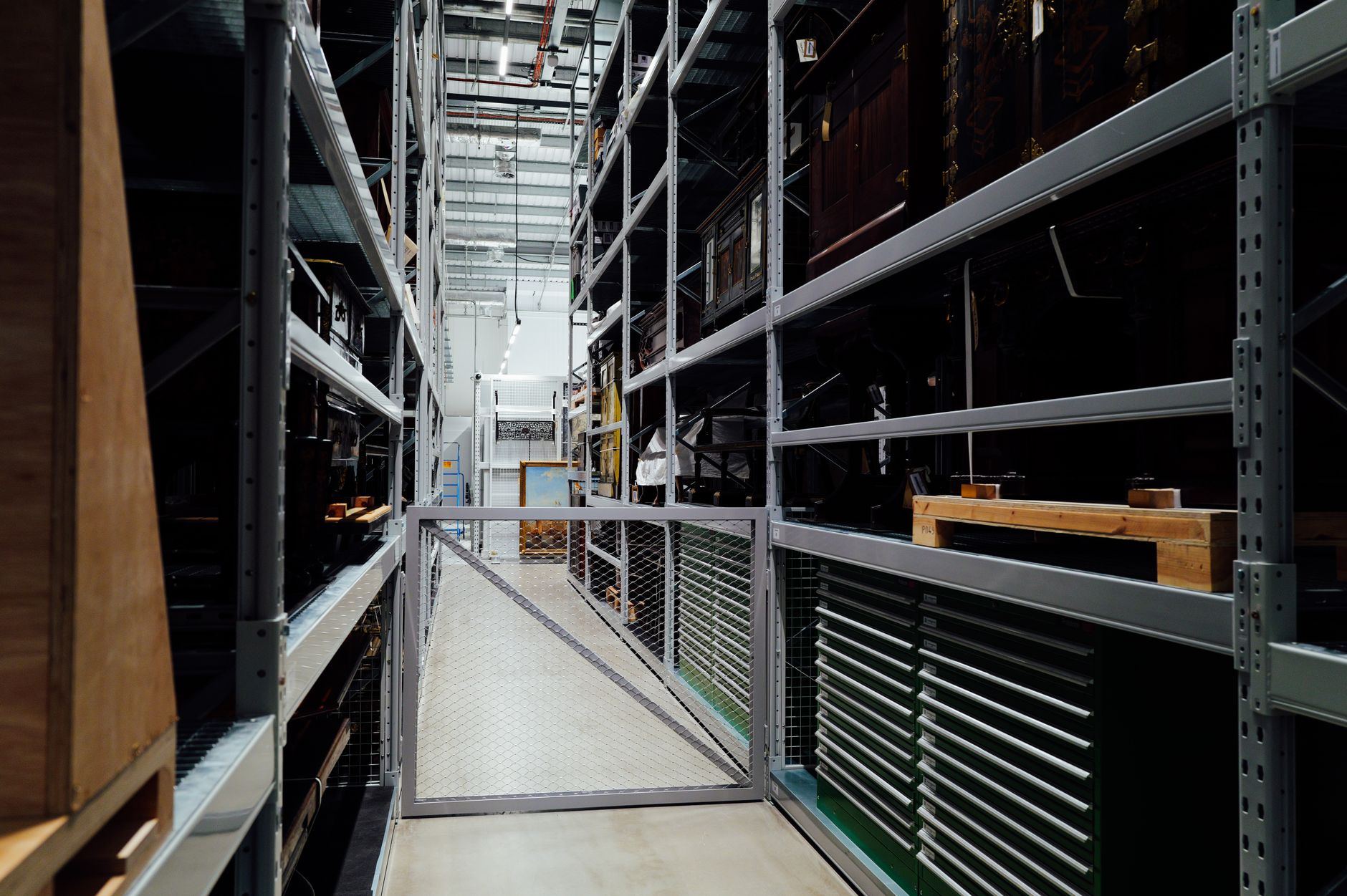
The fit is strongest where pallet moves repeat along the same routes, the building is mapped, and the shifts are long enough to justify a covered schedule. Warehouses and distribution centers near the port are the most obvious case, along with parts and vehicle-related distribution, given the automobile volumes the port handles. OSHA's 2026 directive estimates about 1.5 million U.S. workers operate powered industrial trucks, so most sites face the same training and supervision questions.
Sites with fixed routes and steady volume are the easiest to quote. Sites with changing layouts, many exceptions or mixed traffic need more assessment time and usually a tighter plan. If your operation is seasonal, ask the assessment to model the peak shifts as well as the typical week.
Your own hiring, overtime and shift coverage records will tell you more than any regional average.
How do I get a quote after a site assessment?
Start with the free site assessment. We measure the floor, aisles, dock doors and traffic, check the surfaces and the integration points, and record the shifts and hours you need covered. The output is a written lease quote with the fixed payment, the term and what is included.
Ask for the same basis when you compare vendors or layouts: covered hours, included service, integration scope, and what changes the cost after go live. Two quotes that cover different hours or different service are not comparable, even when the payment looks similar.
If the numbers work on your floor, a sensible next step is a pilot on one route or one shift, so you can check the covered hours before committing to the wider site.
Frequently asked questions
Put a robot to work in Jacksonville.
We walk your site, learn the job, and recommend the unit that fits. Then we quote the lease, deploy it, and keep it serviced.
Sources
- OSHA powered industrial truck enforcement directive, 2026
- OSHA powered industrial trucks material, 2011 to 2017 data
- JAXPORT published statistics
- A3 robot orders 2025, industry statistics
- Jacksonville industrial market report, Q3 2026 (broker)
- Jacksonville industrial figures, Q2 2026 (broker)
- Jacksonville Daily Record, logistics market report, May 2026
- Salary data for industrial truck and tractor operators, Jacksonville (third-party aggregator)