
The short answer
Cleaning robot cost in Charlotte is set by how much floor the robot covers, how many hours it runs, the surfaces and obstacles on its route, and how much mapping, integration and service the site needs. No single figure fits every building, so a lease quote is written only after a free site assessment. Local labor data gives the baseline: according to Stacker, the Charlotte-Concord-Gastonia metro had about 13,500 janitors and cleaners in May 2024, and the hours a site already spends on floors are the number any quote is measured against.
Key takeaways
- Floor area, run hours and route complexity move the cost more than any single robot feature.
- Mapping, integration and service are the costs people most often leave out of a first estimate.
- The Charlotte metro held 308,300,419 square feet of industrial inventory in Q4 2025, according to CBRE.
- Hours for your floor should come from timing your own crew, not from averages.
- A lease is quoted after a free site assessment, with the fixed payment and scope written out together.
What does a cleaning robot cost in Charlotte?
Cleaning robot cost in Charlotte is not one number. It is the result of a short list of site facts: how many square feet the robot must cover, the hours it runs, what the floor is made of, how hard the route is to map, and what the robot has to connect to. Two buildings of the same size can land far apart on a quote, because one has open floor and the other has racking, stairs and four sets of doors.
This page explains each of those drivers, shows the local labor and floor space context you can check yourself, and lists the costs people usually miss. It does not give a price, because a number before a site assessment would be a guess. When we quote a lease, the fixed payment and everything it covers are written out together.
We are a commercial robot integrator. We pick the robot for the site, lease it through financing, deploy and integrate it, train staff and service it nationwide. Those are the parts the quote covers.
What drives the cost of a cleaning robot on a Charlotte floor?
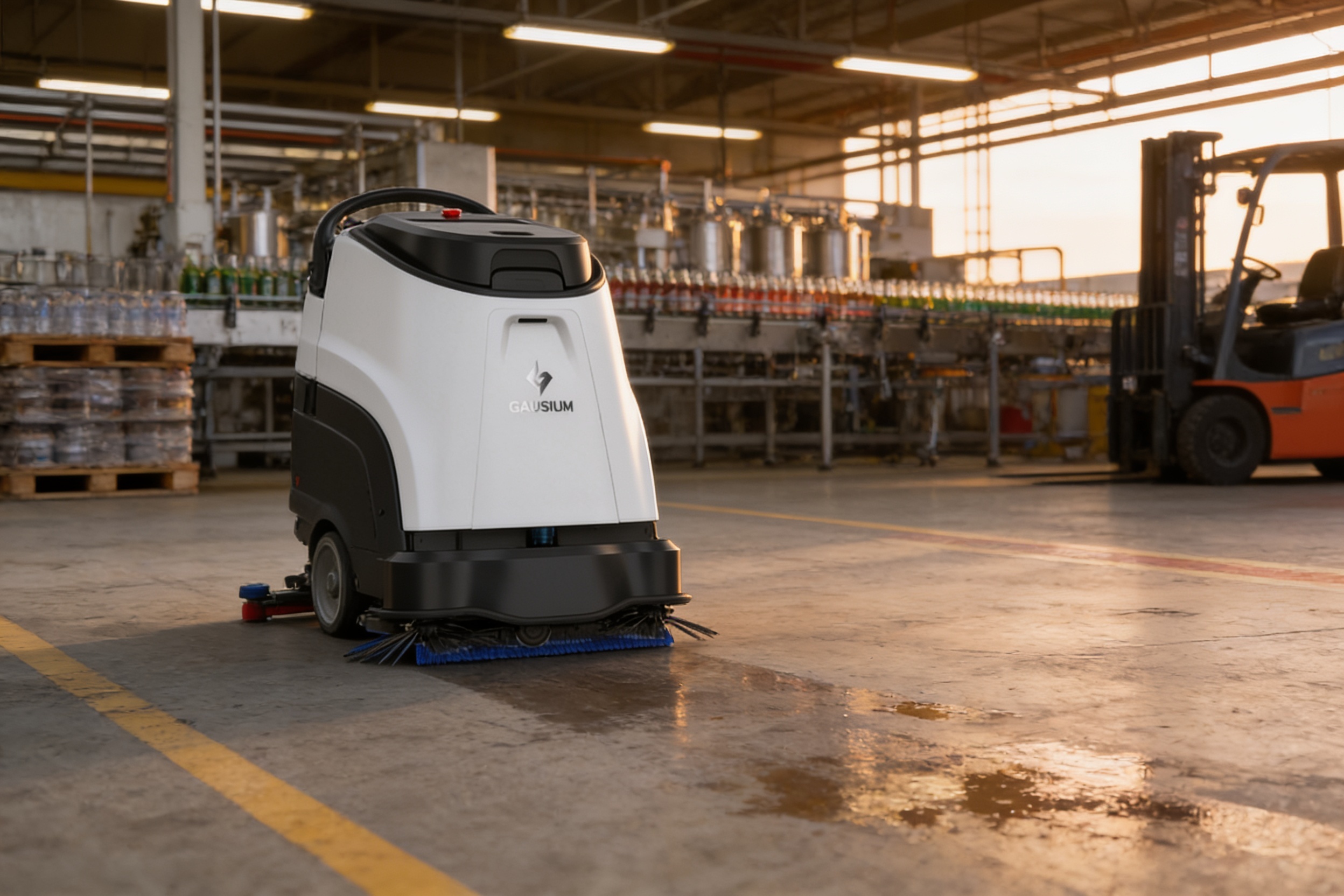
Floor area is the first driver because it sets how many passes the robot needs and how many hours it runs each night. A large warehouse aisle system and a small sales floor cost differently even when both are scrubbed on the same schedule. Area alone does not settle the number, though, because route complexity changes how much time the robot spends per square foot.
Surfaces and obstacles come next. Sealed concrete, tile and polished floors suit most scrubbers, while thick carpet, ramps, thresholds and floors crowded with pallets or cords add mapping time and limit where the robot can go. A floor cleared at the start of each shift is easier to run than one where staff must move equipment before the robot can start.
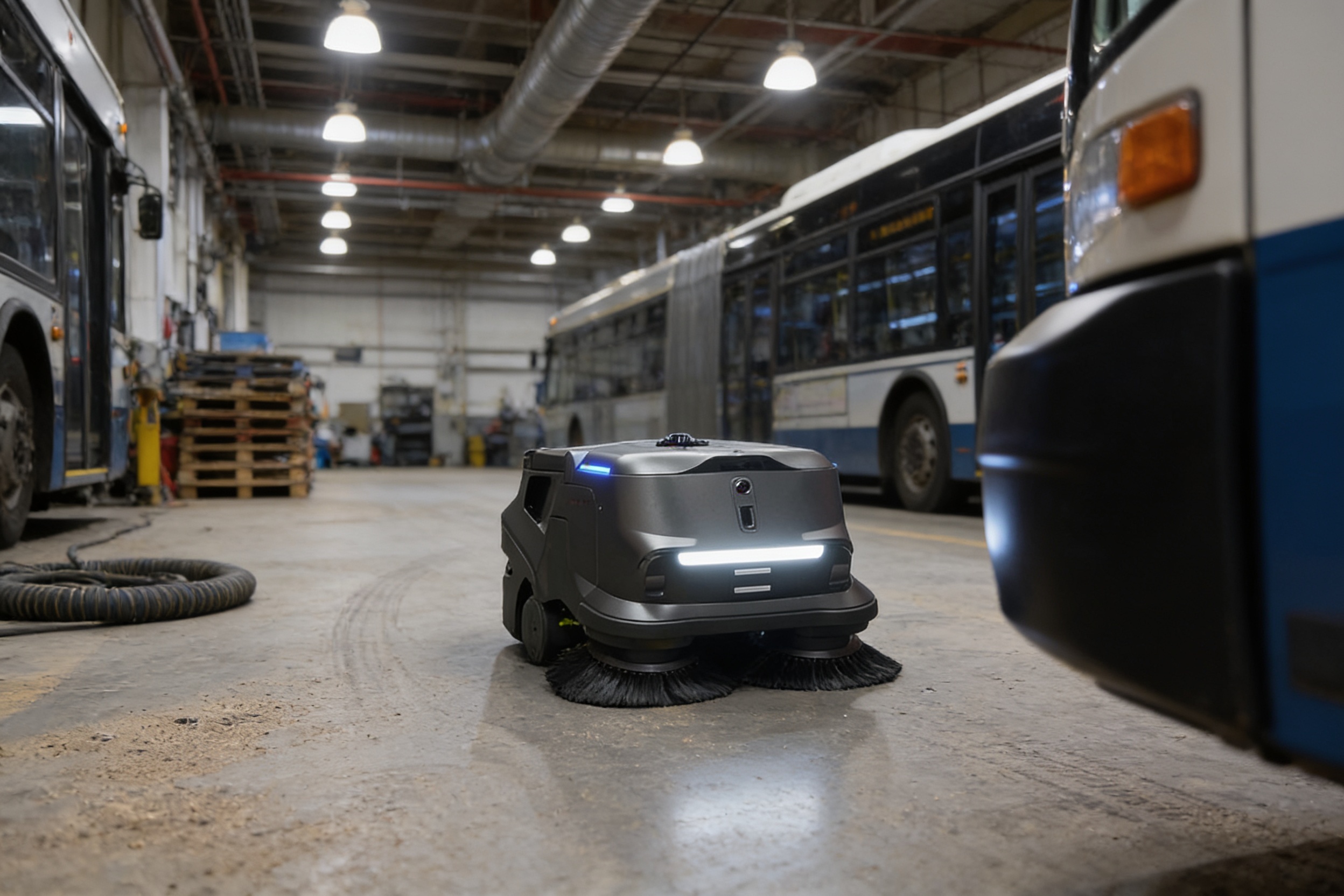
Shift pattern matters. A robot that runs in an empty building overnight needs a simpler route than one that works around customers, forklifts or delivery traffic. Traffic during work hours sets the safety rules, and those rules change how the route and sensors are configured. The number of units and spare coverage also move the cost, since one robot covering a large site leaves no room for downtime.
Integration and service round out the list. Connecting to doors, elevators or a building management system adds engineering time before go live. Service response expectations decide how many spares and how much dispatch coverage belong in the quote.
Which kinds of Charlotte businesses run cleaning robots?
Charlotte's economy spreads across several kinds of floor. Warehouses and distribution buildings are the clearest fit for scrubbing large, flat, lightly trafficked aisles. Retail stores, office corridors, gyms and hospital hallways each bring their own rules about traffic, cleaning chemicals and when the floor is free.
We did not verify counts of Charlotte commercial buildings, schools, hospitals or retail floor area for this page, so the list describes floor types, not local totals. Each site is assessed on its own layout. A warehouse with clear aisles and a store with shelving that moves each week call for routes and service visits that differ.
The zones below show where a cleaning robot usually works in buildings like these. Which of them apply to your site depends on the assessment, not on the category name.
What does the cleaning labor market look like in Charlotte?
According to Stacker, citing May 2024 figures, the Charlotte-Concord-Gastonia metro had about 13,500 janitors and cleaners, equal to 10.07 per 1,000 jobs in the area. That is a sizable local workforce, and many businesses already staff cleaning on their own schedules. Stacker is a secondary source, so check the official BLS metro table before relying on the figure.
Nationally, the Bureau of Labor Statistics counted 2,447,700 janitors and building cleaners in 2024 and projects growth of 2 percent from 2024 to 2034, which it describes as slower than average. Slower growth in the occupation can make cleaning shifts harder to fill. We did not find a local vacancy rate for Charlotte, so this page does not claim one.
Injury risk belongs in the labor picture. The BLS recorded 21,100 nonfatal injury and illness cases with days away from work for janitors and cleaners, except maids and housekeeping cleaners, in private industry in 2020. That is an incidence rate of 191.6 per 10,000 full-time equivalent workers. These are national figures from 2020, so read them as national context, not as a Charlotte rate.
We did not find an occupation-level turnover rate for janitors in the BLS pages, so this page does not state one. Turnover is a major factor in staffing cost, so ask for the site's own shift and replacement records during the assessment.
How many hours does the floor work take by hand?

Hour figures depend on the site, and this page does not publish an average for Charlotte. A cleaning robot changes the hours, not the need for judgment. It takes the repetitive passes off the crew, while staff still set up the route, clear obstacles, respond to spills and handle work the machine cannot do.
Measure the hours before you compare a quote. Time the existing crew on the main routes over several shifts, count the passes, and note which areas are cleaned by hand. Then match each task to what the robot would take over. That comparison, not a generic rate, shows whether a lease covers real labor.
The table below lists the tasks to time. It does not supply hour counts for any site.
How much industrial floor space is around Charlotte?
CBRE reported total industrial inventory for the Charlotte metro of 308,300,419 square feet in the fourth quarter of 2025, with total vacancy of 7.5 percent. Lee and Associates reported vacancy of 9.21 percent for the third quarter of 2026. These are separate firms with their own definitions of inventory, so the totals are not directly comparable, and the vacancy rates should be read as separate snapshots.
Floor area is the main reason warehouses and distribution buildings rank high on a cleaning robot shortlist. The bigger and flatter the floor, the more work one unit can cover, though that holds only when the route is clear and the unit runs most nights.
Population growth adds to the picture. The FRED series for the Charlotte-Concord-Gastonia metro shows 2,938,830 people in 2025. Wikipedia, citing Census-based estimates, reports that the metro added 54,122 people between July 2024 and 2025 and ranks it 21st by population. More residents mean more offices, schools, shops and clinics to clean, but we did not verify building counts for those types in Charlotte.
How does leasing a cleaning robot through financing work?
We lease cleaning robots through financing, so the business does not pay the full equipment cost up front. The lease carries a fixed robot lease payment, set in the quote after a site assessment. The agreement states the term, what is covered, and how a unit is handled if it needs replacement.
The quote sets out the scope in writing: the unit, the site map, deployment and integration work, staff training, and service coverage. Maintenance sits inside the service plan. Ask how spare coverage works during downtime and have the answer written into the agreement rather than left to a conversation.
Compare offers on the same scope. A lower payment that leaves out mapping, training or service is not a lower total. Line up the labor hours each robot covers, the number of units, and the response time written into each offer.
Once the quote is signed, the work moves through the steps below.
What can a cleaning robot not do?
A cleaning robot works along a mapped route on floors it can read. It does not do detail work such as edges behind equipment, glass, high dusting or restroom deep cleaning, and spill response that needs a person is still staff work. Staff still need to watch for wet floors, debris and hazards that the route did not account for.
Adoption is still early. The AACEM and ISSA autonomous cleaning survey, published in 2019, described adoption as early stage. About one-third of non-adopters said they were somewhat likely to adopt within a year. Respondents were 37 percent in-house service providers, 19 percent facility or property managers and 5 percent other. The full report is available to members only, and the data is several years old, so treat it as a snapshot rather than today's rate.
This page did not verify Charlotte climate or building-stock data. Ask for humidity, temperature and floor condition to be checked during the site assessment, so the answer comes from your building rather than from a regional assumption.
Frequently asked questions
Put a robot to work in Charlotte.
We walk your site, learn the job, and recommend the unit that fits. Then we quote the lease, deploy it, and keep it serviced.
Sources
- BLS Occupational Outlook Handbook, Janitors and Building Cleaners
- BLS Injuries, Illnesses and Fatalities snapshot, Janitors and Cleaners
- Stacker, Lowest-paying jobs in Charlotte
- FRED, Charlotte-Concord-Gastonia MSA population
- Wikipedia, Charlotte metropolitan area
- CBRE, Charlotte industrial figures Q4 2025
- Lee and Associates, Charlotte industrial report Q3 2026
- AACEM and ISSA autonomous cleaning survey report