
The short answer
Cleaning robot cost in Los Angeles is set by how much floor the robot has to cover, how many overnight windows the site allows, how the floor is mapped and integrated, and how many units and service visits the site needs. The Los Angeles metro has a large janitorial workforce, so the labor the robot takes over is usually the main thing a decision maker weighs. A lease quote is built only after a free site assessment that measures those factors and sets the fixed lease payment through financing.
See what a cleaning robot costsRun the numbers in the ROI calculator
Key takeaways
- Floor area, shift windows and mapping move the lease quote more than anything else on the list.
- The Los Angeles-Long Beach-Anaheim metro counted 90,630 janitors and cleaners in the May 2022 BLS estimate.
- Mapping, software, maintenance, insurance and training are the hidden costs, and our quote covers deployment, mapping, training and service.
- Leasing through financing replaces a large outlay with a fixed lease payment set after a free site assessment.
- A cleaning robot takes over repeated floor passes, while staff keep spot cleaning, restrooms and judgment calls.
What does a cleaning robot cost in Los Angeles?
Cleaning robot cost in Los Angeles depends on the site more than on the machine itself. Two buildings of the same size can produce very distinct leases, because one has open concrete aisles and a single overnight window while the other has carpeted corridors, glass partitions and several overlapping shifts. The honest starting point is a list of what the robot has to do, where it has to do it, and when.
For a business in Los Angeles, the cost question usually breaks into three parts. The first is what the lease carries over its term through financing. The second is what the site must prepare for the robot, such as clear routes and a mapped floor. The third is what the labor and coverage gains look like over that same term. We can only put a number on the first after a site assessment, because the other two depend on the floor and the schedule.
We do not quote from square footage alone. Area matters, but the shape of the floor, the surface type and the hours the building is open matter just as much, and they change the route the robot takes.
How large is the Los Angeles cleaning workforce?
The Los Angeles-Long Beach-Anaheim metro is a large local labor market for janitors and cleaners. According to the Bureau of Labor Statistics, the metro had 90,630 jobs in that occupation in its May 2022 estimate, up from 74,890 in the May 2021 estimate. The size of that pool matters because it shapes how easily a business can hire, and how often it has to hire.
Nationally, the Bureau of Labor Statistics Occupational Outlook Handbook counted 2,447,700 janitors and building cleaners employed in 2024. It projects 2 percent growth from 2024 to 2034, about 47,800 jobs, which it describes as slower than average. The same handbook projects about 351,300 openings a year on average over the decade. It does not split those openings into new jobs and replacements, so the total is best read as a sign of how much hiring the field has to keep doing.
Turnover is the figure that shapes the staffing case. According to Janitorial Manager, a trade blog that cites BLS separation data, average annual separation rates in this occupation have run around 45 percent since 2017, excluding 2020. We have not checked that figure against the BLS table itself, so treat it as a trade estimate. Even if the true rate is lower, a site that loses that share of its crew each year keeps training and covering the same gaps.
What drives the cost up or down at a Los Angeles site?
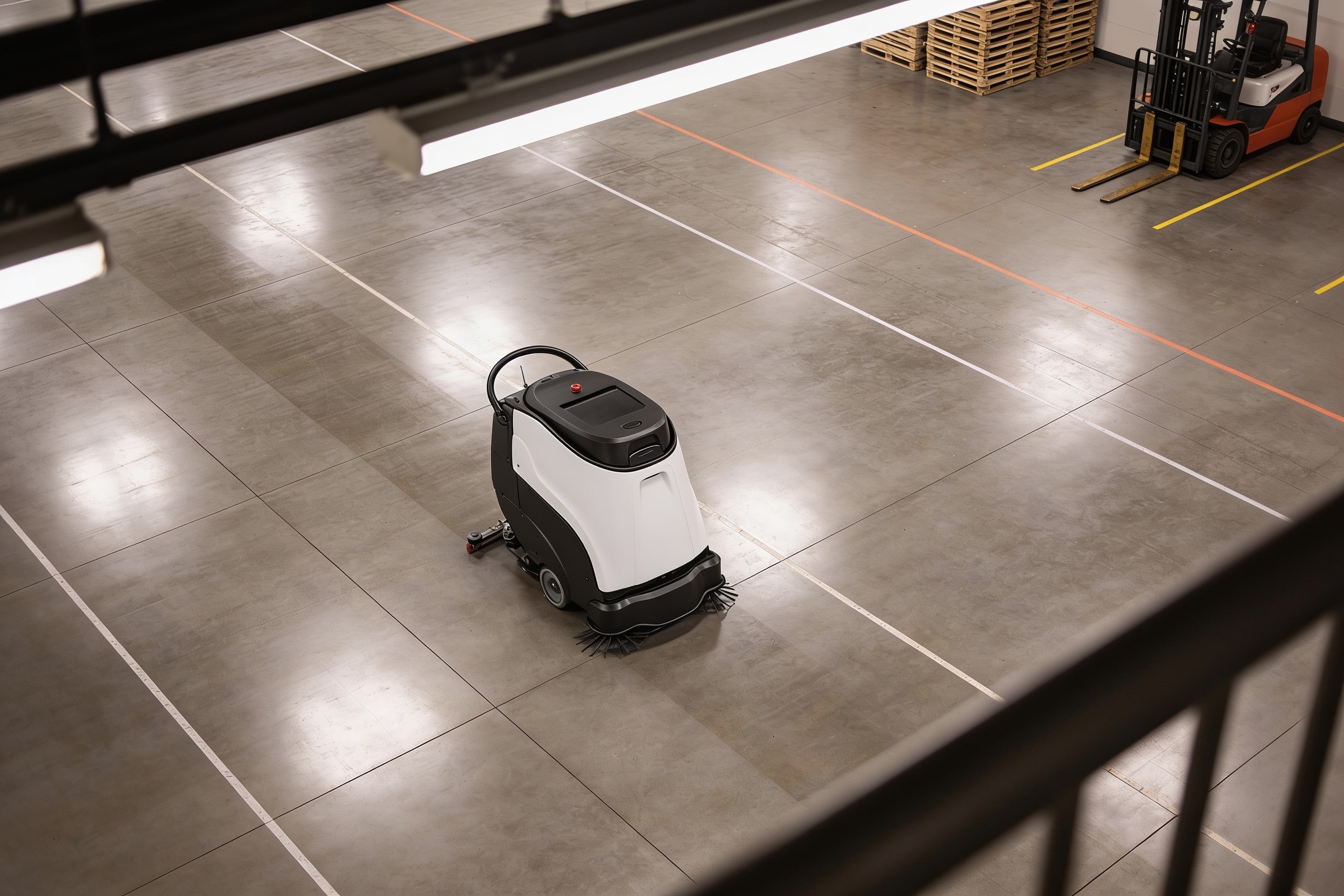
The floor comes first. Area sets how many robots the job needs and how long a full route takes, but the surface matters nearly as much. Polished concrete, sealed epoxy, carpet and tile each change speed, water use and brush setting, and a floor that changes from zone to zone needs configuration for each zone.
Shift windows come next. A robot that runs one short overnight window in a warehouse is a separate planning problem from one that must work around several open shifts, a loading dock and early deliveries. The route, the number of units and the service plan all follow from how many clear hours the building actually gives.
Traffic and layout are harder to see on a drawing. Narrow aisles, pallet racks, a busy lobby or fixed equipment on a shop floor all add mapping time and route limits. Mapping is a one-time effort for each layout, but every change, such as moved racking or a new partition, can bring part of it back.
Units and service coverage round out the picture. A single unit on one floor is a much smaller commitment than a fleet across several buildings. How quickly a failed unit must return to service depends on whether a technician can reach the site the same day, and that expectation is written into the quote rather than treated as an add on.
Which Los Angeles businesses run cleaning robots?
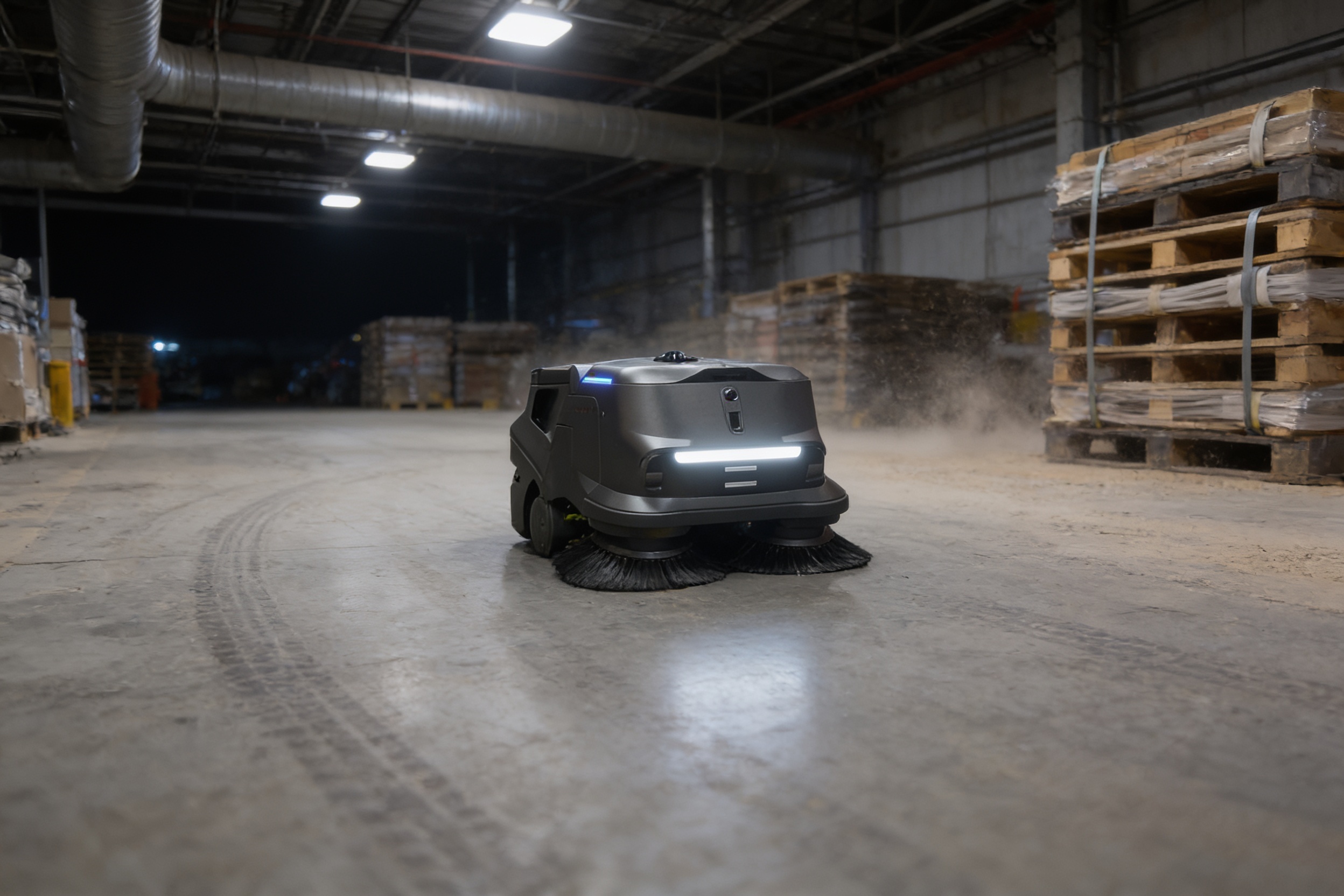
The sites that run these robots tend to share a few features: a large hard floor, a cleaning schedule, and a predictable window when the floor is empty. Warehouses and distribution centers are the clearest case. The Transwestern Q4 2025 Los Angeles industrial factsheet, sourced from CoStar, put industrial inventory in the Los Angeles metro at 869.2 million square feet, which is a large amount of floor to keep clean on a schedule.
Retail stores, grocery stores, gyms and fitness centers, and airport terminals fit the same pattern. Each has an operating window that crews already plan around, and each shows floor wear quickly when a scheduled pass is missed. Hospitality venues and event spaces follow a similar cycle, with heavy use followed by a turnaround before the next event.
Building stock and operating hours vary from site to site, so the same business type can produce very different routes. A two-level retail box with a single back corridor is not the same job as a sprawling single-level floor with racking. A site visit is the most reliable way to tell them apart.
How many hours of cleaning labor does a robot take over?
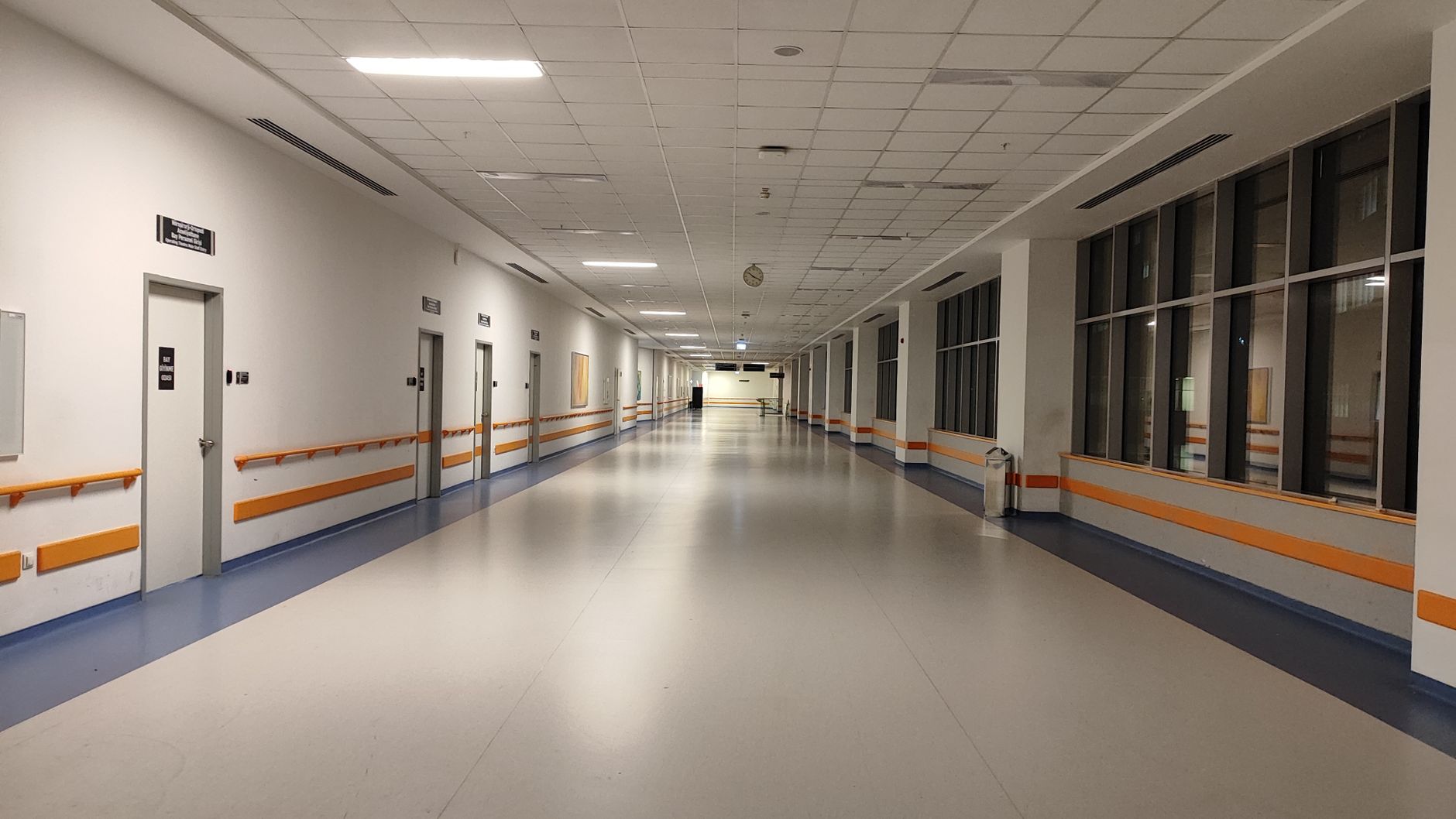
Hour math is where most sites go wrong, because the figures people quote are rarely measured on their own floor. We did not verify typical nightly cleaning hours for a Los Angeles building, so the right number has to come from your own shift log. Time each pass, note who does it and when, and record how often the crew stops for spills, missing equipment or a blocked aisle.
Injury data is one reason the labor deserves careful thought. The Bureau of Labor Statistics injury snapshot for janitors and cleaners recorded 21,100 nonfatal cases with days away from work in private industry in 2020, and an incidence rate of 157.4 per 10,000 full-time equivalent workers in 2019. The California Department of Industrial Relations table lists 4,160 days-away-from-work cases for janitors and cleaners in local government for 2023 to 2024. These figures use separate scopes and measures, so they should not be added together or compared directly.
A robot does not remove the crew. It takes over the repeated floor passes that are most tiring and most likely to be skipped when a shift runs short. That leaves people free for spot cleaning, restroom work and anything that needs a judgment call.
How does leasing through financing work, and what does the quote include?
We lease the robot through financing. The lease carries a fixed lease payment over the term, which makes the cost easier to fit into a labor or facilities budget than a large outlay at the start. Robots are leased only, and the payment appears in the quote after the free site assessment.
A quote includes the leased robot, site mapping and integration, deployment and go live support, staff training, and the service plan with on-site dispatch and remote triage. It also states the term and the coverage for a spare or backup unit when one is out of service. Read the exclusions as carefully as the inclusions.
Lease options vary by term and by how much coverage the site wants. Many sites begin with one leased unit in one area, then add units once the first one has proven its place on the schedule. A phased start keeps the decision tied to the floor you have, rather than to a figure that assumes a different building.
What can a cleaning robot not do?
A cleaning robot covers floors along a route. It does not restock dispensers, empty every bin, wipe touch points or clean restrooms, and it cannot judge a spill, a hazard or a blocked exit. Staff keep that work, so the shift has to be planned with time for it.
Floor conditions limit it too. Thresholds, loose cords, wet patches that have not been cleared and some kinds of debris can stop a run. A site with narrow aisles, heavy traffic at fixed hours or frequent layout changes needs a more careful map and a schedule that works around those hours.
Stairs and multi-level routes are outside the scope of a floor scrubber. The assessment team should confirm the route, surfaces and zones on each level before anyone assumes the whole building can be covered.
How do I get a quote for a cleaning robot in Los Angeles?
Start with a free site assessment. Bring a floor plan if one exists, a rough list of zones and surfaces, your shift times, and notes on the layout or any systems the site uses. The visit confirms the route, the mapping effort and whether one unit or several is the right starting point.
The quote follows the visit and should match what the floor needs. It should show the fixed lease payment through financing, the term, the service plan and a written list of exclusions. If anything is unclear, ask for it in writing before you commit.
Many Los Angeles sites find that one leased unit in a single area is enough to test the route and the hours. The results from that first unit then decide whether to expand, so the next quote rests on measured results instead of estimates.
Frequently asked questions
Upcoming events in California
No events are listed in Los Angeles yet. These are elsewhere in California.
- ConferenceCASBO CBO Symposium (Executive)Nov 19 to 20, 2026The Langham, Pasadena, CA
- ConferenceHealthcare Project Delivery Conference 2027Feb 10 to 11, 2027Manchester Grand Hyatt, San Diego, CA
- Conference48th Annual Conference on School FacilitiesFeb 23 to 25, 2027SAFE Credit Union Convention Center, Sacramento, CA
Put a robot to work in Los Angeles.
We walk your site, learn the job, and recommend the unit that fits. Then we quote the lease, deploy it, and keep it serviced.
Sources
- BLS OEWS May 2022, janitors and cleaners
- BLS OEWS May 2021, janitors and cleaners
- BLS Occupational Outlook Handbook, janitors and building cleaners
- BLS injury and illness snapshot, janitors and cleaners 2016 to 2020
- California Department of Industrial Relations DART table, local government 2023 to 2024
- AACEM/ISSA autonomous cleaning survey report
- Transwestern Q4 2025 Los Angeles industrial market factsheet
- Janitorial Manager, ways the janitorial industry turnover rate has changed