

The short answer
Cleaning robot ROI in Los Angeles comes from the floor cleaning hours a robot takes over on a schedule, most often overnight or before opening, when the robot runs without a person steering it. The savings range depends on how many of those hours are repeatable floor work, how much of the site one shift can cover, and how the lease cost compares with the labor it offsets. A free site assessment measures those three inputs for your building and turns them into a range you can check.
Key takeaways
- The return comes from floor cleaning hours a robot takes over, net of the staff time that remains.
- Savings are ranges, and the range depends on how much of the floor is open, flat, and clear at run time.
- Rated coverage is a ceiling; plan on a lower effective rate once turns, overlap and charging are counted.
- Recent adoption benchmarks are thin, so a one-zone pilot is the lowest risk way to test the math.
- A lease quote follows a free site assessment, because the floor sets the number.
Run the numbers for your site
Auto-detected from your location - we use the real BLS wage here. Not right? Pick your city or state above.
What do you want to automate?
The robot runs the open floor overnight; your crew keeps detail and edges.
What is cleaning robot ROI in Los Angeles?
Cleaning robot ROI in Los Angeles is the value of floor cleaning hours that a robot takes over, measured against what the robot costs to lease and keep running. For most businesses the return does not arrive as one lump of savings. It shows up as staff hours freed for other work, floors that are clean at the start of the day, and fewer gaps on the schedule when a shift cannot be filled.
The result is a range, not a promise, because every site starts with its own floor. A clean, flat warehouse aisle and a restaurant dining room with chairs, cords and wet tile produce results that look nothing alike. This page explains how the range is built, what moves it up or down, and what a free site assessment has to measure before a lease is quoted.
How much janitorial work is there, and what is the injury record?
The Bureau of Labor Statistics counted about 2,447,700 janitors and building cleaners in 2024, according to its Occupational Outlook Handbook. The same source projects employment in the occupation to grow 2% from 2024 to 2034, which it describes as slower than average. That is slow growth in the number of jobs, not a measure of how hard the roles are to fill, so staffing risk belongs in your own hiring numbers.
In the Los Angeles-Long Beach-Anaheim metro, a secondary aggregator of Bureau of Labor Statistics wage survey data counted about 84,960 janitors and cleaners, excluding maids and housekeeping cleaners, in May 2024. That is a large local labor pool, but it is a regional count and says nothing about the people in your building. The government wage data panel on this page gives the local wage for this job, and the hours on this page are the work that wage pays for.
The injury record is part of the picture. For janitors and cleaners, excluding maids and housekeeping cleaners, the Bureau of Labor Statistics recorded 21,100 nonfatal injury and illness cases involving days away from work in 2020, a rate of 191.6 per 10,000 full-time equivalent workers, up from 157.4 in 2019. That is the most recent occupation-level rate we could verify, so treat it as a 2020 figure and check for newer tables before quoting it externally.
Median hourly wage, Janitors and Building Cleaners
$4,149
Monthly cost of one full-time worker in Los Angeles, CA, at the median wage plus payroll costs (an estimate, not a quote).
Where does the return come from in a Los Angeles building?

The return comes from three places. The first is labor hours. Floor cleaning on a set route, such as open corridors, warehouse aisles, sales floors and lobbies, is repeatable work that a robot can run unattended overnight or before opening. Those hours move off the staff schedule and onto a machine that does not need breaks or a shift change.
The second is coverage. A robot does not clean the whole site in one pass. It covers the floor it can reach on the route it is given, and the savings count only for the share of work it truly takes over. The third is avoided overtime and unfilled shifts. An hour that would otherwise be paid as overtime, or a shift that cannot be staffed, is an hour the robot can cover instead.
We lease the robot through financing, so the cost arrives as a fixed lease payment instead of a large up-front expense. We choose the robot that fits the floor, deploy and integrate it, train the staff who work beside it, and service it nationwide. The lease is quoted only after a site assessment, because both the robot choice and the number depend on the floor.
How does the savings range math work?
The math has three inputs. First is the floor cleaning time the site carries today, taken from the schedule and a walk-through rather than an estimate. Second is the share of that time a robot can realistically take over. Third is the lease cost, set against the staff time that remains. For planning, this page assumes three people do floor cleaning on a typical shift at a site of this kind. No verified source gives a per-site count for Los Angeles, so the assessment replaces that assumption with your own roster.
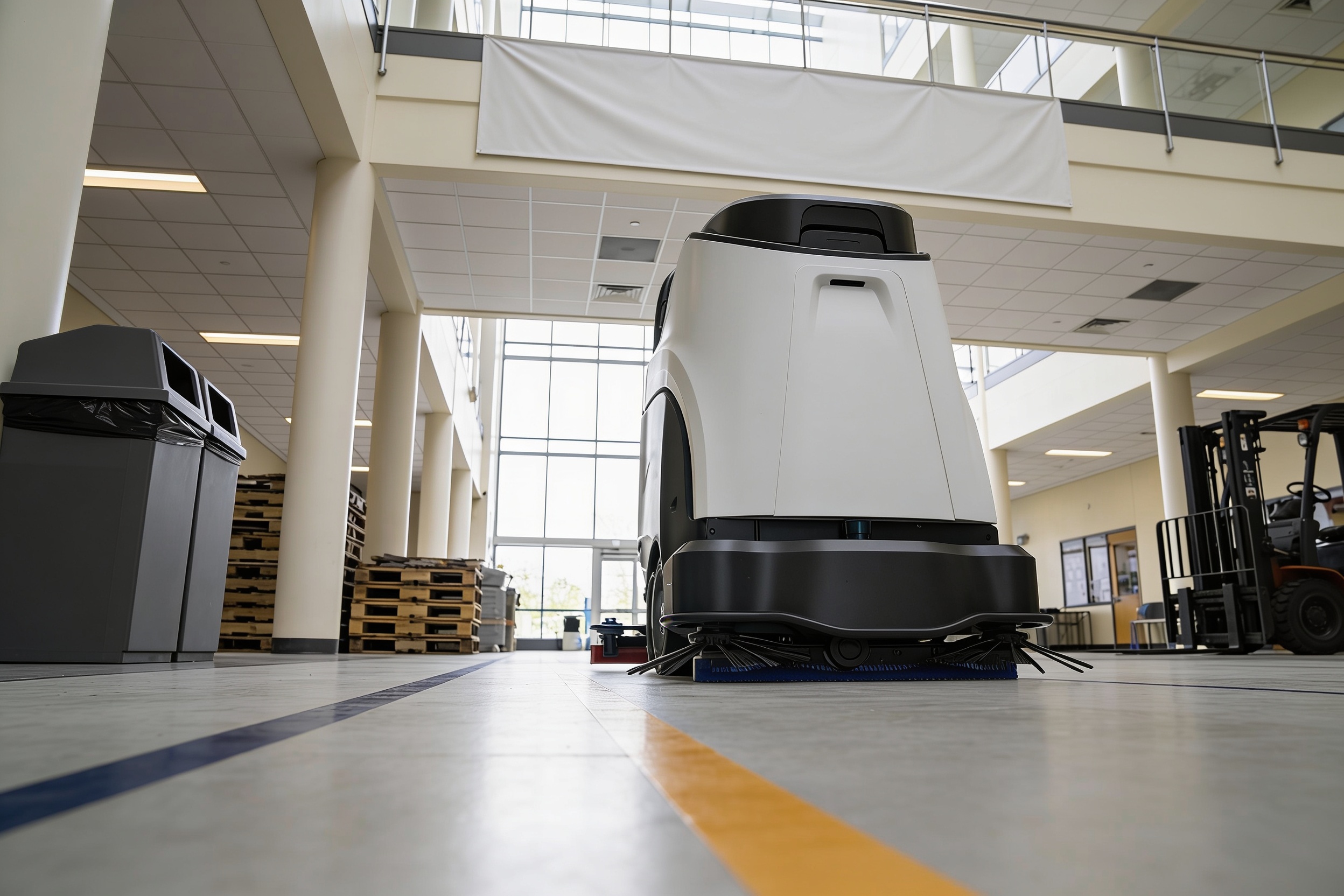
Rated coverage is a ceiling, not a result. A public bid specification for floor scrubbing sets a productivity target of 12,000 square feet per hour. A vendor spec sheet for a robotic floor scrubber lists up to 15,000 square feet per hour as a maximum, and a larger model's published spec sheet lists 28,000 square feet per hour. Those figures assume clean, open floors and steady operation.
Arithmetic shows why the rating matters. On a hypothetical 60,000 square foot floor, a 12,000 square feet per hour target means five hours of machine time for one pass, before turns, overlap, charging and stops are added. Real route time runs longer than the headline, which is why the assessment times the route on your floor rather than trusting the rating.
- Hours offset: floor cleaning hours on the route the robot runs, valued at the local wage for this job from the government wage data panel.
- Share taken: the portion of those hours the robot covers after you remove areas it cannot reach, such as stairs, wet carpet and cluttered back rooms.
- Net offset: hours offset minus setup, checks and exception handling that still need staff, compared with the lease cost quoted after the assessment.
What changes the number up or down?
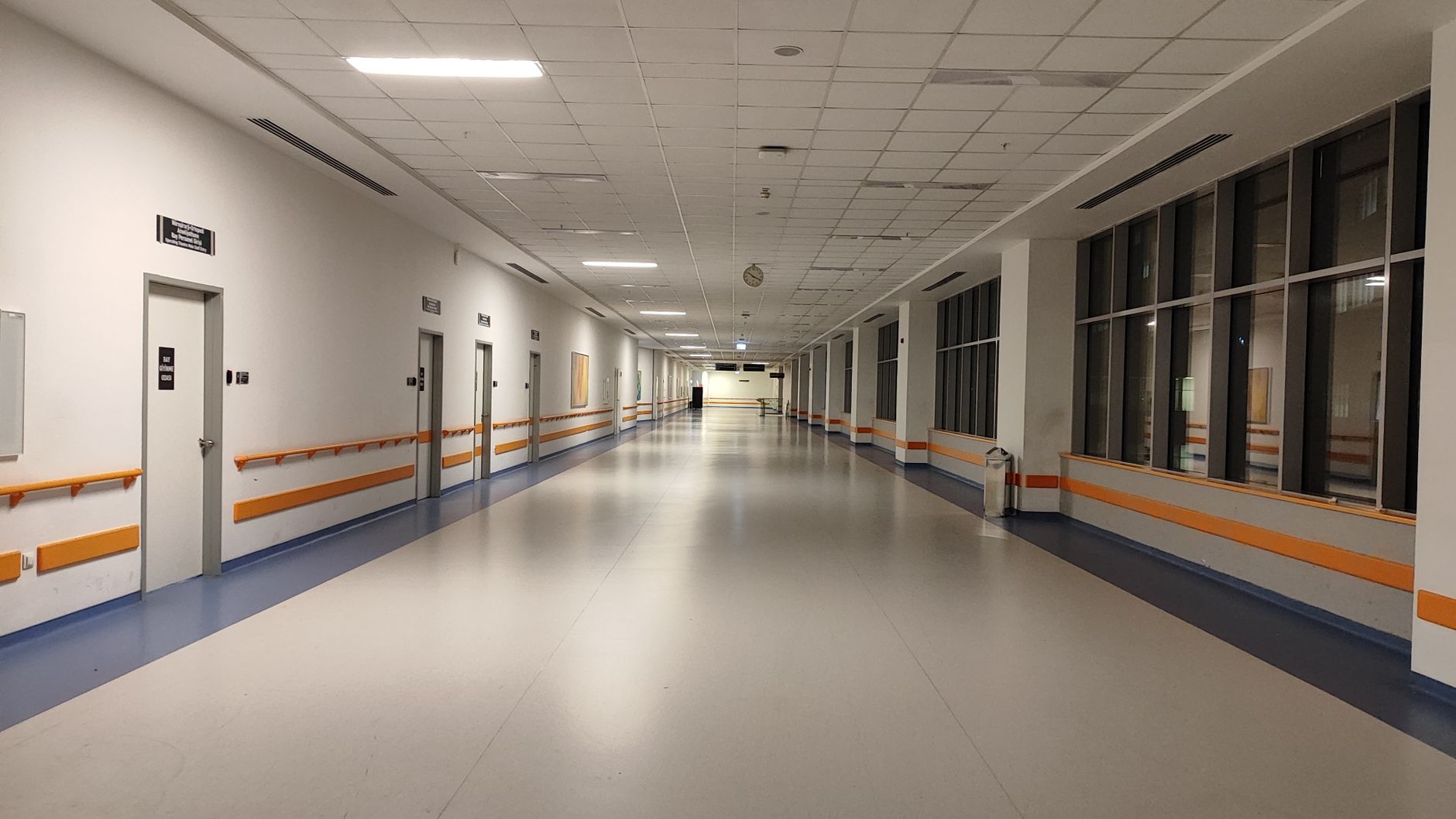
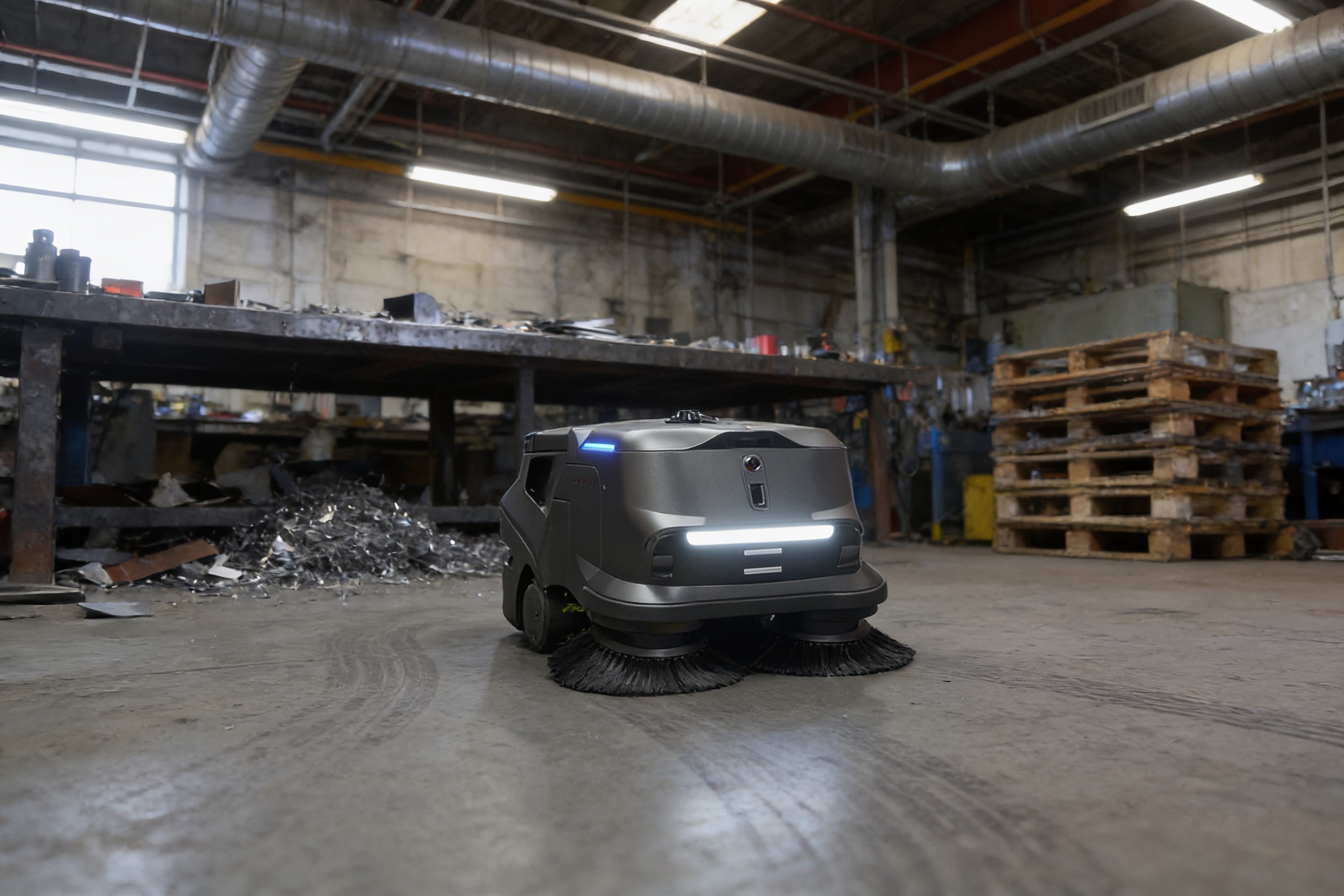
Floor condition is the largest swing factor. A flat, clear, sealed or concrete floor with wide aisles runs far more of the route than a floor with carpet transitions, loose cords, pallets left overnight or uneven thresholds. Path width matters too, because vendor coverage ratings change with the width of the cleaning path.
Run window is the second factor. A site where cleaning can run overnight, when no one else is on the floor, gets more usable time from a robot than a site where cleaning must be scheduled around customers or deliveries. Schedules that allow unattended runs usually show the larger offset.
Staffing is the third. We did not find a verified annual turnover figure for this work, and the industry commentary we reviewed is not consistent enough to quote. Use your own records instead: how often shifts go unfilled, how many hours are paid as overtime, and how much supervision time a vacancy takes.
Which parts of a Los Angeles site can a cleaning robot handle?
Robots do best on open, repeatable floor. The zones below are where a machine most often takes over the work, and each one has limits that staff still cover. Stairs, wet carpet, low furniture and heavy clutter stay with people or need another method, and restrooms are not a robot job.
Los Angeles sites vary a lot. A warehouse may have long, flat aisles with few obstacles, while an office or retail store has furniture, displays and foot traffic that change from day to day. Walk the route with the people who clean the site today, since they know where the trouble spots are and where cords and thresholds need attention.
What are the risks to the return, and how do you avoid them?
The main risk is over-counting. If the savings model assumes the robot covers the whole floor, the return will disappoint in the first weeks. Hold the model to the share of work the route realistically takes, and check it against the first two weeks of run data before expanding the route.
Adoption is still early, so benchmark data is limited. In a 2019 survey by a cleaning trade association, 62 percent of building service contractors had not used autonomous cleaning equipment, along with 68 percent of in-house providers and 69 percent of facility or property managers. About one-third of those who had not adopted expressed some likelihood of adopting within a year. That survey is several years old, so use it as context, not as a forecast.
Other risks are a floor that changes faster than the route, a machine left idle when a sensor or dock fails, and a staff team that treats the robot as someone else's problem. We plan for these with on-site dispatch, remote triage, spare unit coverage where the lease includes it, and training for the staff who clear the route each night.
How long does it take to reach payback?
The timeline for cleaning robot ROI in Los Angeles runs in four stages: the site assessment and mapping, the quote and lease decision, deployment with integration and go-live support, and a stabilization period. A short pilot on one zone before the full route is usually the safest first step, because the first real run shows what the floor actually does.
Payback follows stabilization, not the install date. Early weeks usually go to adjusting the route, fixing spots where the floor changes, and training the staff who clear the route each night. Once the route is stable, the hours it covers are measurable, and the offset can be compared with the lease.
Set the review date before the robot goes live. At that date, compare hours covered, hours still scheduled for staff, exception time and the lease cost, then decide whether to add zones or change the route. A review that includes the remaining staff time is the only honest version of this calculation.
How do you get an exact figure from a free site assessment?
A free site assessment is where the range becomes a number. We map the floor, time the route, record surfaces and obstacles, and review the existing cleaning schedule and staffing. Then we choose the robot that fits the floor, and the lease is quoted from that work rather than from a generic template.
Our service runs from the first look to the running route. We arrange the lease through financing, deploy and integrate the robot, train the staff who work with it, and service it nationwide. Support runs through one partner and one number, with on-site dispatch and remote triage when something stops.
Bring the records you already have: the cleaning schedule, the roster, overtime and vacancy records, and floor plans. The more accurate those are, the tighter the savings range and the more confident the lease decision.
Frequently asked questions
Put a robot to work in Los Angeles.
We walk your site, learn the job, and recommend the unit that fits. Then we quote the lease, deploy it, and keep it serviced.
Sources
- US Bureau of Labor Statistics, Occupational Employment and Wage Statistics (OEWS May 2024)
- BLS Occupational Outlook Handbook, Janitors and Building Cleaners
- BLS injury and illness snapshot, janitors and cleaners 2016 to 2020
- Secondary aggregator of BLS OEWS data, Los Angeles-Long Beach-Anaheim metro
- 2019 AACEM and ISSA autonomous cleaning survey
- Public bid specification, floor scrubbing productivity target
- Vendor spec sheet, robotic floor scrubber, maximum rated coverage
- Vendor spec sheet, larger robotic floor scrubber model