
The short answer
A cleaning robot makes sense in Los Angeles when a building has large, mostly open hard floors on a repeating route, especially where the floor pass can run while the building is empty. It does not replace a janitor for restrooms, trash, spills and detail work, so the realistic plan is a robot plus fewer staff, not a robot instead of a crew. Test the cleaning robot vs janitor in Los Angeles choice on your own floor plan through a site assessment before you commit.
Key takeaways
- A floor robot fits large, open, hard floors on a repeat route, and it does not handle restrooms, trash or spills.
- Plan for a robot plus fewer staff, never zero staff.
- Use the local wage on this page as the labor baseline, then measure the hours the robot takes off the shift.
- Janitorial work carries a higher injury rate than the all-occupation average, according to the Bureau of Labor Statistics.
- The lease payment is quoted after a free site assessment, based on your floors, route and service terms.
Cleaning robot vs janitor in Los Angeles: when the robot makes sense
For most Los Angeles buildings the honest answer is a robot plus fewer staff, not a robot instead of a crew. A cleaning robot makes sense when a site has large, mostly open hard floors, a repeating route, and room to run the floor pass while the building is empty. It does not make sense as a full replacement where floors are cluttered, most of the work is restrooms and trash, or the site needs a person on hand for overnight spills and tenant calls.
The useful question is not whether a robot can scrub. Most commercial floor robots follow a mapped route and stop at obstacles, so the real question is how much of your labor sits on that route, and whether the building gives the robot a clean, predictable floor to run on. Answer that with your own floor plan and shift log, not with a general claim.
What does a janitor actually do in a Los Angeles shift?
A janitor's shift is rarely just floors. The Bureau of Labor Statistics describes the work as keeping buildings clean and in order, and notes that office buildings are often cleaned while empty, so many cleaners work evening hours. In practice the shift mixes restroom restocking and sanitizing, trash and recycling runs, dusting, glass spot cleaning, spill response, and scheduled floor care such as sweeping, mopping and scrubbing corridors.
Much of the physical work is repetitive and done on foot, moving through the same building again and again. That repetition is what makes the floor pass a good candidate for a machine, and it is also where physical strain builds up. The rest of the round, with its bending, reaching and carrying, stays with people, and it deserves the closest look when you plan staffing.
Median hourly wage, Janitors and Building Cleaners
$4,149
Monthly cost of one full-time worker in Los Angeles, CA, at the median wage plus payroll costs (an estimate, not a quote).
- Floor pass on a repeat route
Cleaning Robot
Runs a mapped route the same way each time
Janitor
Adapts when the route is blocked or the floor is messy
- Night coverage
Cleaning Robot
Can run while the building is empty, with no one on the floor
Janitor
Stays reachable for spills, calls and repairs
- Restrooms and trash
Cleaning Robot
Not handled
Janitor
Handles the full round
- Unexpected spill
Cleaning Robot
Can stop and alert, but does not clean an unplanned mess
Janitor
Responds on site with the right supplies
- Physical strain on the crew
Cleaning Robot
Takes the repetitive floor pass off the crew
Janitor
Still carries the bending, reaching and carrying of the rest of the round
- Sick days and turnover
Cleaning Robot
Keeps the floor pass going when a crew member is out
Janitor
Needs cover when a worker is out or leaves
Which parts of the job can a cleaning robot take, and which can it not?
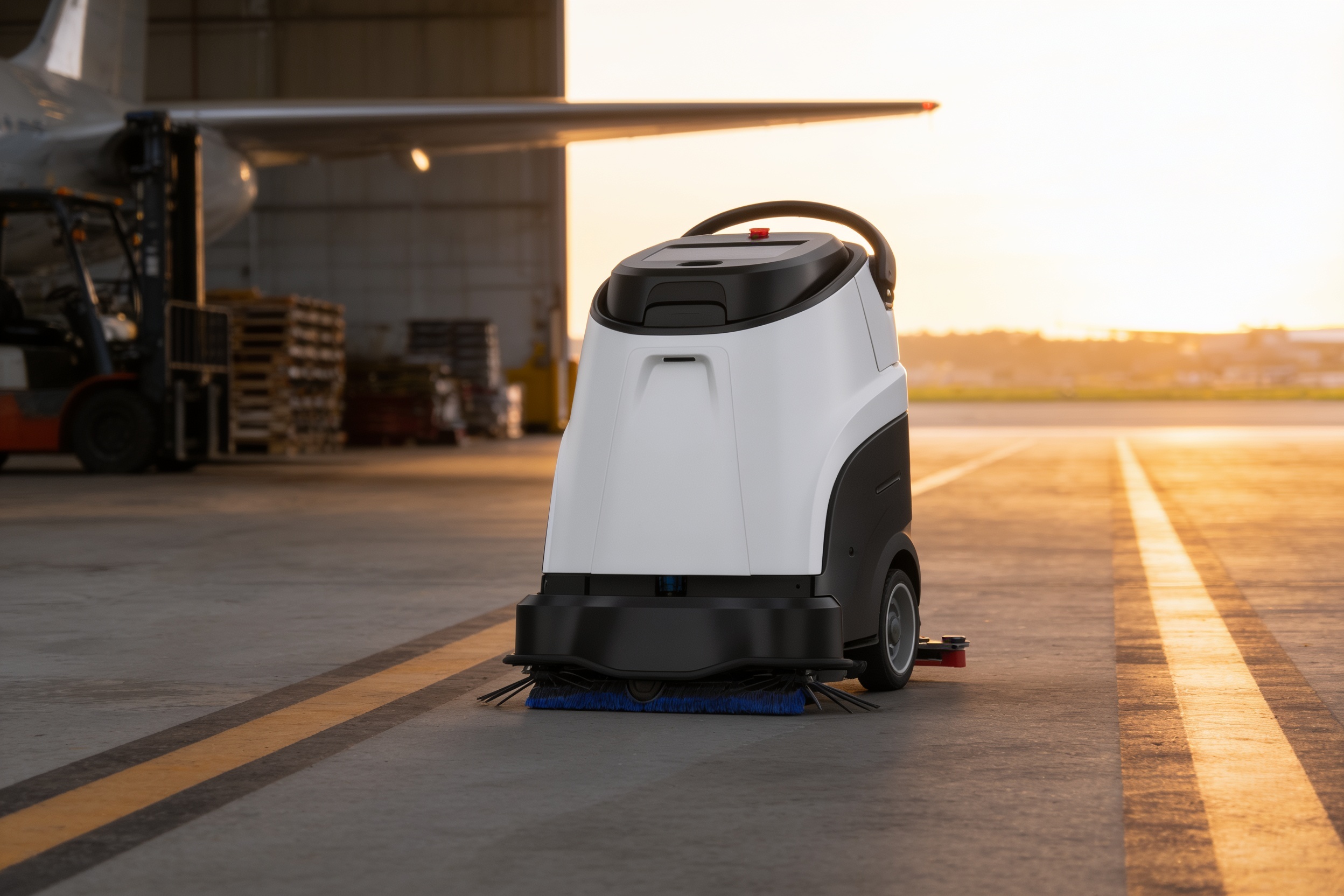
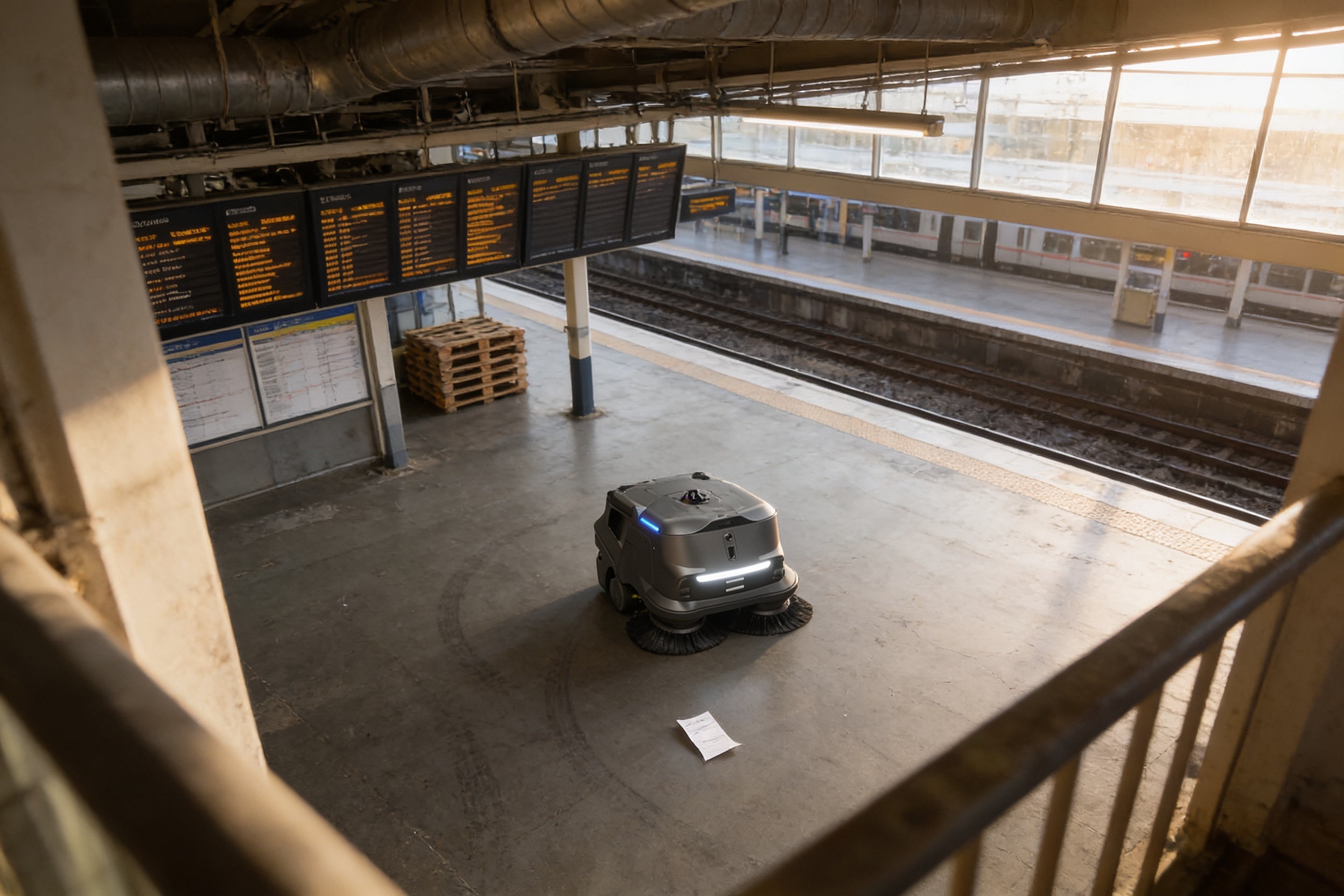
A floor robot is good at the large, flat, repeated part of the work. Scrubbing and sweeping long corridors, open lobbies, warehouse aisles and large retail or office floors are the usual fit. It runs a mapped route the same way each time, and it can run while the building is empty, so the floor pass no longer waits for a person's shift.
It cannot take most of the rest on its own. Restrooms, trash collection, reaching corners, moving furniture, handling a spill that needs a person, cleaning glass and reporting a broken fixture still need a human. In many buildings those tasks take up a large part of the shift, so a robot that scrubs floors does not remove the janitor's whole job, and the staffing plan has to say so.
How many hours does the work take, and what does the labor picture look like?
Nationally, the Bureau of Labor Statistics reports about 2.4 million jobs for janitors and building cleaners in 2024, and projects 2 percent growth from 2024 to 2034, slower than the average for all occupations. Los Angeles is one of the largest metro areas for this work. The BLS May 2023 table lists about 89,630 people employed as janitors and cleaners in the Los Angeles-Long Beach-Anaheim metro, and that is the metro count this page relies on.
The government wage data on this page gives the local wage for this job, and that is the number to set against the labor side of any robot plan. Hours are a different question. The hours a robot takes off your shift depend on floor area, route length and how much of the shift is open floor versus restroom and trash work, so time your own shift before deciding.
Thin night staffing is where the trade-off changes most. If a crew is short on nights, a floor pass that runs unattended can cover a gap that otherwise falls to a second shift or a longer evening. If the night crew is already fully staffed, the gain is smaller and the case rests on floor quality and consistency instead.
How do turnover, injuries and night shifts change the decision?
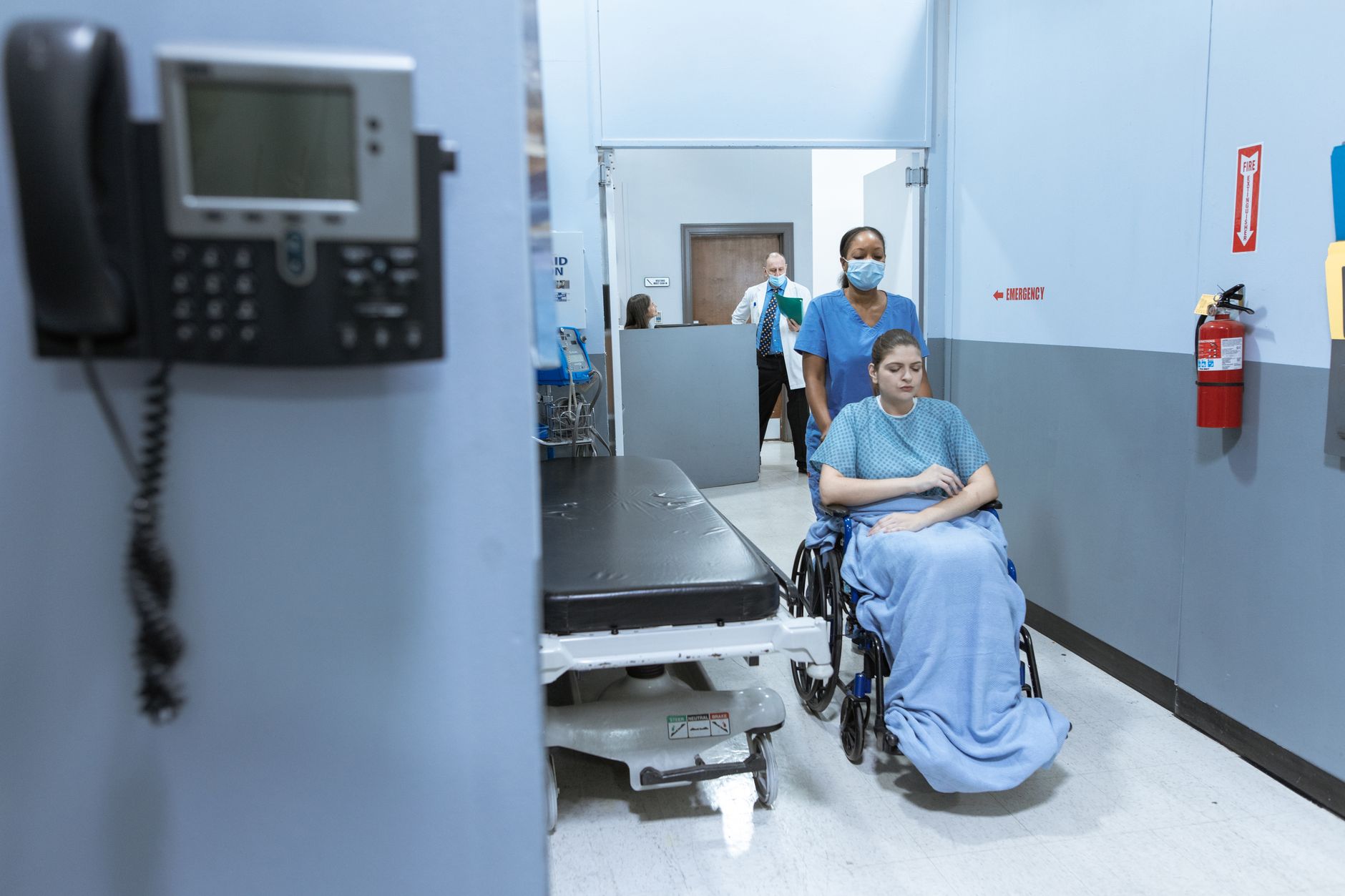
Janitorial work carries a high injury rate. The BLS injury and illness snapshot reports 157.4 cases per 10,000 full-time-equivalent janitors and cleaners, except maids and housekeeping cleaners, in 2019, nearly twice the 86.9 rate for all occupations. A figure of 191.6 for 2020 appears in the same snapshot. The repetitive floor pass is a real source of that load, and it is a fair reason to ask which passes a person needs to make.
Turnover is the other pressure. The BLS handbook says the occupation has few entry requirements and little training. An older BLS edition of the handbook projected about 350,300 openings a year on average, including replacement of workers who leave. Commercial operators often cite very high frontline turnover, but those figures are not tied to BLS, so check your own vendor or payroll records before you plan around them.
Night work adds its own strain. Facilities that run around the clock use night, weekend and holiday shifts, and many cleaners already work evenings. A robot can run the floor pass on a night when the crew is short, but it does not answer an overnight spill call, a tenant complaint or a fixture problem, so someone still has to be reachable.
How does a team work with a cleaning robot?

Keep the people. The working model is always a robot plus fewer staff, never zero staff. The robot takes the floor pass on its route, and people take the restroom round, trash, spills, detail work and the response when something stops or breaks. Plan the change as a shift change over several weeks, not a headcount cut on day one.
Training is part of the work. The person who runs the robot each shift checks the map, clears blocked zones, reads the status report and logs any stop. Make sure a backup is trained as well, so one absence does not leave the route without anyone who knows the building.
Adoption is still early. A 2019 survey run by ISSA and AACEM found that 62 percent of building service contractors, 68 percent of in-house service providers and 69 percent of facility or property managers reported not having used autonomous cleaning equipment. About one-third of those non-adopters said they were somewhat likely to adopt within a year. A 2026 benchmarking survey from CMM reports that robotic or autonomous equipment is the cleaning technology facility managers are most likely to add within a year.
Labor rules are moving too. In November 2025 the Los Angeles County Board of Supervisors approved a motion to develop a Labor Peace Agreement and Worker Retention Policy for janitorial and security contracts at County-operated facilities, citing growing use of contracted janitorial services, according to a local news report. If a contractor runs your building, ask how the contract handles staffing changes and retention before a robot changes the scope of work.
What can a cleaning robot not do?
It cannot handle restrooms, trash, glass or spill response on its own, and it does not add the presence of a person on site. It also needs a clear, predictable floor. Cords, loose chairs, pallets left in an aisle, wet areas and furniture moved each night can stop a route or leave a gap that someone must fix by hand.
Throughput depends on the machine and the floor. Manufacturers publish coverage ratings, but those are their own figures, and no independent head-to-head study of autonomous versus walk-behind scrubbers was found. Measure the route on your own floor, with your own obstacles, before you trust any rating or any estimate from a brochure.
Uptime is a service question. A robot that is down needs dispatch, parts or a replacement, and while it is out the floor pass falls back to people. Ask how fast a failed unit is replaced, what the response looks like after hours, and what coverage looks like during a repair.
How much does a cleaning robot lease cost compared with a janitor, and is it worth it?
The honest comparison is a leased robot plus fewer staff against the current labor plan, measured in hours and shifts rather than in one number. The government wage data on this page gives the local wage for this job, which is the labor figure to set against the lease payment. The lease payment is quoted after a site assessment, because it depends on floor area, route, number of units and service terms.
Payback depends on what the robot takes off the shift. A building with a large open floor and a night pass that a person must cover every night has a different case than a building where most of the work is restrooms and trash. A single unit on one route is often the simplest way to test the numbers before any wider rollout.
Read the lease terms with the same care as the payment. Ask whether maintenance is included, who handles dispatch, what happens to coverage during a repair, and how long the lease runs. Those terms change the real result as much as the payment does.
How do I get started with a cleaning robot lease in Los Angeles?
Start with a free site assessment. We map the floors, measure the route, note obstacles and look at the shift, then quote a fixed lease payment through financing. The quote reflects your floors, hours and service needs, so it is not a generic number, and it arrives after the assessment rather than before.
Run a pilot before any wider rollout. A single unit on one route, with trained staff and a log of stops, runs and cleaned area over several weeks, shows whether the route fits. Keep the janitor on restrooms, trash and spill work from day one, so the pilot tests the robot and not a staffing gap.
We are an integrator, so we choose the robot for your floor, deploy and integrate it, train the staff and service it nationwide. Ask for dispatch, replacement and coverage terms in writing. A plain answer on those points matters more later than any feature list.
Frequently asked questions
Put a robot to work in Los Angeles.
We walk your site, learn the job, and recommend the unit that fits. Then we quote the lease, deploy it, and keep it serviced.
Sources
- US Bureau of Labor Statistics, Occupational Employment and Wage Statistics (OEWS May 2024)
- Bureau of Labor Statistics, Occupational Outlook Handbook: Janitors and Building Cleaners
- Bureau of Labor Statistics, OEWS May 2023 table for janitors and cleaners
- Bureau of Labor Statistics, injury and illness snapshot for janitors and cleaners
- ISSA and AACEM Autonomous Cleaning Survey (2019)
- CMM 2026 benchmarking survey, cleaning robotics trends
- Local news report on the Los Angeles County janitorial labor motion