
The short answer
For most buildings, cleaning robot vs janitor in Knoxville comes down to floor area, route clarity and off-peak hours. A floor robot makes sense when a large, mostly clear floor can be cleaned on a fixed route. A janitor stays on every shift for restrooms, spills and trash, so the practical setup is a robot plus fewer staff, never zero staff.
Key takeaways
- A floor robot fits large, mostly clear floors cleaned on a fixed route, not whole-building janitorial work.
- Restrooms, spills, trash and touch points stay with a person on every shift.
- Published hour rates are test ranges from standards and vendors, not promises for your building.
- Turnover and coverage gaps drive the labor problem more than headline numbers do.
- Start with a site assessment and one route before any wider change.
Cleaning robot vs janitor in Knoxville: when does a robot make sense?
A cleaning robot makes sense in a Knoxville building when most of the work is a large, mostly open floor cleaned on a repeatable route, and when that floor work takes a real share of the shift or falls in hours that are hard to staff. It does not make sense as a full replacement for a janitor in a building with many restrooms, trash points, spills or changing rooms. For most sites the workable answer is a split: the robot takes the floor passes and the person handles everything else.
Three checks sort most buildings quickly. Confirm that the floor is large and clear of fixed obstacles. Confirm that it can be cleaned in an overnight or off-peak window. Confirm that the route can stay clear of loose items while the machine runs. If all three hold, a site assessment is worth the time. If the space is mostly small rooms, constant foot traffic or frequent spills, a janitor remains the core of the job and a robot is at most a helper on open floor.
The government wage data for this job, shown in the panel beside this text, is a reference for the cost of staff time. It does not settle the question alone, because the floor layout and the hours the floor is free decide whether a machine can take real work.
What does a janitor actually do in a shift in Knoxville?
A janitor's shift is rarely one task. The person usually starts with a walk-through to check supplies, trash and reported problems, then works through restrooms, break rooms, offices and corridors in an order set by the building. Restrooms and high-touch surfaces take the most hands-on time, because they need direct cleaning rather than a pass over the floor.
Floor work is one part of the shift, and in a large open space it can take a long stretch. The rest moves around. Bins get emptied, paper and soap get restocked, spills get answered and equipment faults get reported. A janitor walks to a supply closet, opens a room, checks a restroom, handles a spill, then returns to the route at the point where the work stopped.
Because the work is split into many small tasks, a shift is hard to judge from the outside. Ask for the written task list and time one normal night before comparing any option. Use the government wage data in the panel as a reference for staff time, and let your own timed hours decide the question.
Median hourly wage, Janitors and Building Cleaners
$3,313
Monthly cost of one full-time worker in Knoxville, TN, at the median wage plus payroll costs (an estimate, not a quote).
- Repeated floor passes
Cleaning Robot
Runs the same mapped route each time
Janitor
Adjusts the route around pallets, furniture and people
- Restrooms and touch points
Cleaning Robot
Cannot clean these
Janitor
Cleans by hand and checks supplies
- Spills and debris
Cleaning Robot
Pauses and needs a person to confirm the route is safe
Janitor
Judges the spill, cleans it and reports it
- Overnight coverage
Cleaning Robot
Runs unattended on a clear route
Janitor
Needs a staffed schedule, breaks and sick day cover
- Changing conditions
Cleaning Robot
Struggles when the layout changes without a route update
Janitor
Adapts on the spot and notices damage or leaks
- Consistency on a fixed route
Cleaning Robot
Same pass each run
Janitor
Varies with workload and fatigue
Which janitor tasks can a cleaning robot take?
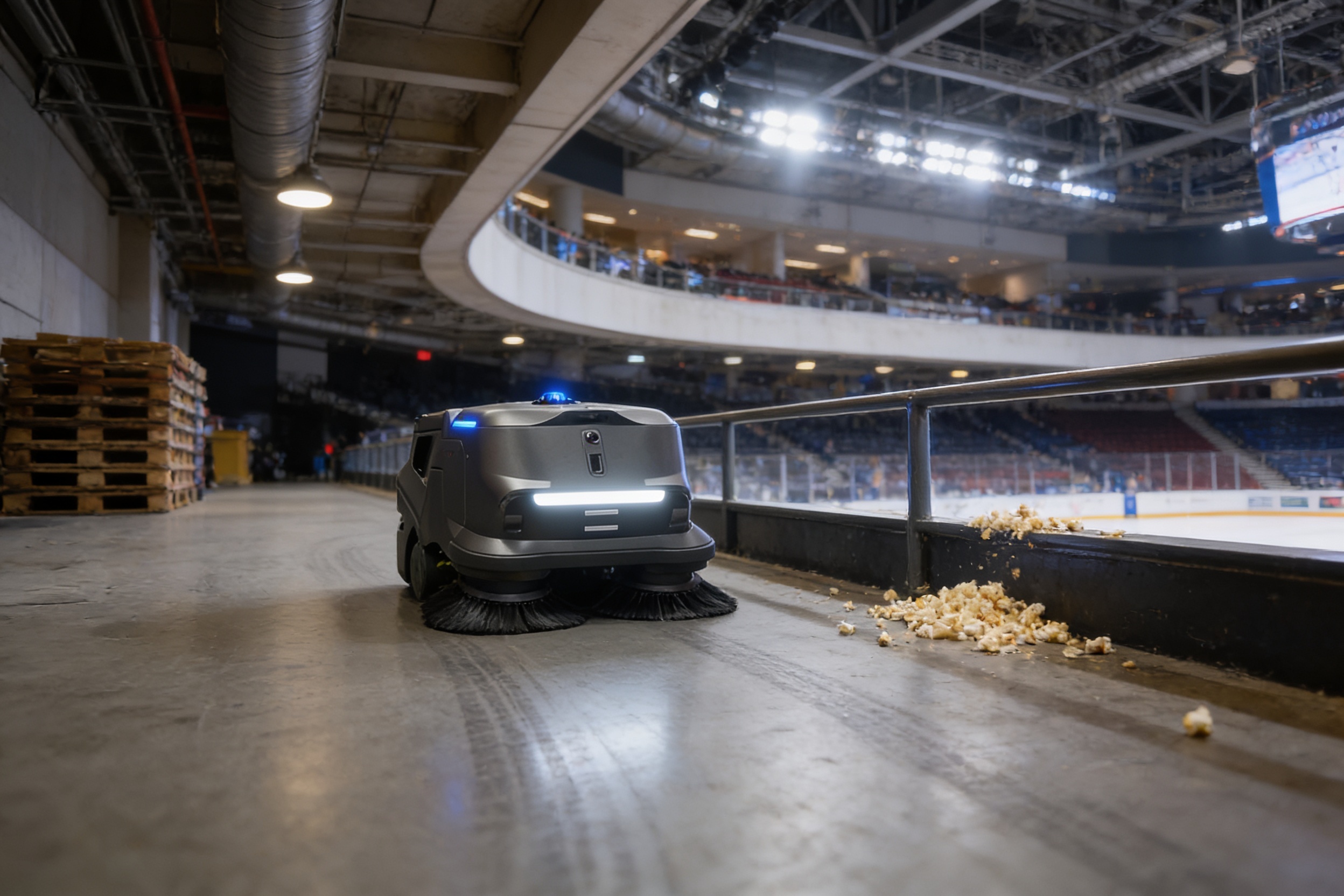
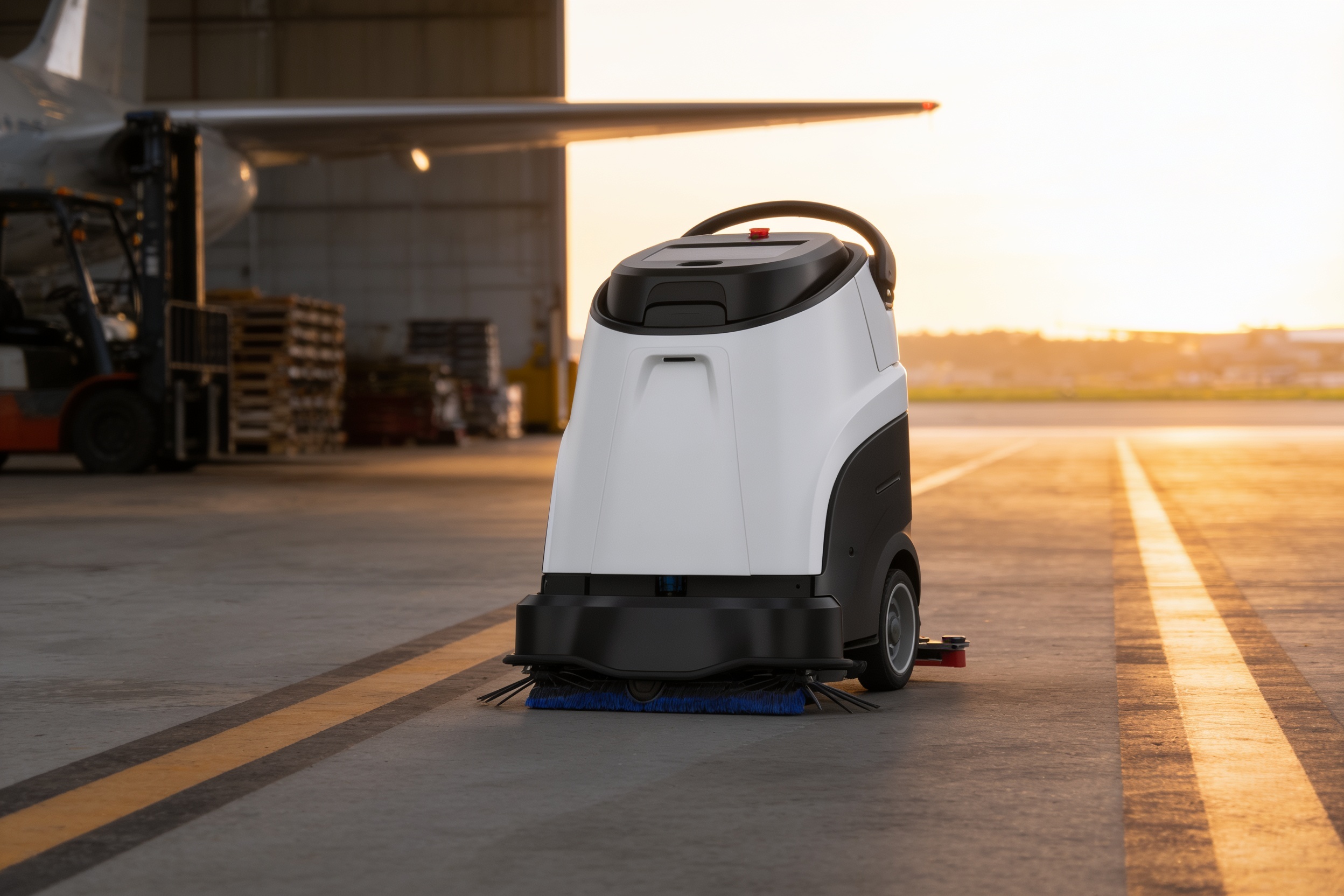
A floor robot takes the repeatable floor passes: sweeping or scrubbing large, mostly flat, open areas on a set route. The strongest candidates are clear corridors, open retail floors, warehouse aisles and lobbies with few fixed obstacles. The route only holds if the floor stays clear of cords, loose boxes and temporary displays, so the site needs a housekeeping habit before any machine runs.
It cannot clean restrooms, wipe high-touch surfaces, empty trash, restock supplies or handle biohazards. It also cannot judge a spill, a broken fixture or a blocked door that appears on its path. Those tasks stay with the person. The split works because the robot takes repeated floor passes and frees the person for work that needs hands and judgment.
Expect the first weeks to reveal weak spots. Carpet edges, glass walls and uneven thresholds often need route adjustments. Our integrator team maps the site and sets the route during the site assessment, so the route you approve matches the floor you actually have.
How many hours does floor cleaning take, and what can a robot save?
Most published hour data for floor machines comes from manufacturers, trade groups or testing standards, so treat it as a range rather than a promise. A reproduction of the ISSA 540 cleaning times report gives about 5,917 square feet an hour for a 17-inch walk-behind scrubber and about 8,357 square feet an hour for a 24-inch model. Those figures come from a 2009 standard and assume manually guided machines, so they describe the machine pass, not a full shift.
A floor care vendor article puts a manual crew at about 2,000 to 3,000 square feet an hour and a properly sized machine at about 10,000 to 40,000 square feet an hour or more. That figure is unsourced and assumes the machine fits the floor, so do not build a plan on it before testing the route. A vendor case study describes a retail site where an autonomous scrubber ran about 2.5 hours a day on average and covered roughly 15,000 to 18,000 square feet per hour. That is one site, reported by the vendor, not a survey.
To estimate your own hours, divide the floor area the robot can take by a rate from the range, then add time for setup, route checks, and the restroom and spill work that stays with staff. The result is an estimate to test on site. A machine that stops for a spill adds delay, so the run time you can count on is shorter than the rate suggests.
How do turnover, overtime, night shifts and sick days change the labor picture?

Staffing risk in janitorial work usually shows up as coverage gaps rather than in the headline numbers. When one person is out, floor work slips into the next shift or into overtime for someone else. According to the BLS Occupational Outlook Handbook, about 2,447,700 janitors and building cleaners held jobs in 2024, and employment is projected to grow 2 percent from 2024 to 2034, which is slower than average, or about 47,800 added jobs.
Turnover is harder to pin down. We did not find a BLS janitor turnover rate in this review. One vendor-hosted article cites a turnover range of 200 to 400 percent for the sector, but it traces that figure to a third-party research firm, and we did not verify it. Do not put a turnover percentage into a budget without your own hire and leave records.
The BLS release for the Knoxville metro, covering May 2024 wages, is based on a sample of 3,087 establishments with a 59 percent response rate. It shows the all-occupation wage level for the metro sitting below the national level. That is a useful check on the local labor market, but it is not a janitor-specific headcount. Pull the janitor row from the BLS table for Knoxville before you size a crew.
In a 2019 survey by AACEM and ISSA, with about 23,000 contacts, 27 percent of respondents used autonomous cleaning equipment, and labor savings was the top decision factor for 77 percent. Night shifts and sick days are where a machine helps most on paper, because a scheduled pass does not call out sick. Count how many floor hours go uncovered when someone is out, using your own timesheets, because that gap is the part a floor machine can address.
How does a team work with a cleaning robot?
A robot does not replace the whole crew. The workable model is a robot plus fewer staff, with a person on site for every shift. Most sites that add a machine keep the janitor on the same shift and move the repeated floor passes to the machine, so the person is free for restrooms, spills and reporting.
Staff need a short training path: start a run, check the route, clear obstacles, pause for a spill, and read the fault log. Training usually takes less time than learning the building, because the route is set once and then repeated. Staff who understand why the machine stopped tend to fix the cause rather than work around it.
Plan a fallback before go-live. When a unit is down, its area returns to manual cleaning until service is back, so the staffing plan needs that fallback built in. Service coverage and a spare unit matter more to daily operations than top speed on a spec sheet.
What can a cleaning robot not do?
A floor robot cannot do the full janitorial job. It cannot clean restrooms, wipe touch surfaces, empty trash, restock dispensers or deal with biohazards. Liquid spills, glossy patches and wet surfaces still need a person to confirm the route is safe before the machine goes back to work.
It also struggles with changing floors. A route that works on Monday can fail on Friday after a delivery leaves pallets on the path. Carpet edges, thresholds and temporary signs can stop a run. A site with frequent layout changes needs someone to keep the route clear, or the machine spends its shift waiting.
A robot also does not remove the need for supervision. Someone still checks the machine, answers alarms and decides when the route changes. The honest read is that a robot reduces repeated floor time, not the need for a person on site.

Does a cleaning robot reduce injury risk?
Janitorial work carries real injury exposure, which is one reason operators look at automation. According to the BLS Injuries, Illnesses and Fatalities snapshot, janitors and cleaners had 21,100 nonfatal days-away cases in 2020, and 42 fatalities that year, down from 45 in 2019.
The same snapshot puts the days-away incidence rate for this group at 157.4 cases per 10,000 full-time workers in 2019, compared with 86.9 for all occupations. A secondary summary of federal data reports a total recordable rate of 2.2 per 100 full-time workers across all industries in 2024. Check your own injury log against these figures, paying attention to repeated pushing, bending and wet floor exposure.
A floor robot takes some of the repeated pushing and pass work, but it does not remove hand tasks such as restroom cleaning and chemical handling, so those still need the same controls. Treat the injury data as a reason to review the job, not as proof that a machine cuts claims.
How do you get started, and what should you check first?
Start with a site assessment. Our team maps the floor, measures the clear route and sets the zones the robot would work. The assessment also shows where the route fails, which is often more useful than the hour estimate. The lease quote follows that assessment, so you compare options against your own floor rather than a general example.
Before the assessment, gather a floor plan with square footage by area, one week of cleaning logs or timesheets, and a list of the spills and restroom calls that interrupt floor work. Those three items turn the ranges on this page into an estimate for your building.
Begin with one unit on one route. A pilot shows real pass times, how often the machine stops and how staff respond before any wider change. We deploy, integrate, train staff and service units nationwide, so the team that sets the route also answers the service call.
Frequently asked questions
Put a robot to work in Knoxville.
We walk your site, learn the job, and recommend the unit that fits. Then we quote the lease, deploy it, and keep it serviced.
Sources
- US Bureau of Labor Statistics, Occupational Employment and Wage Statistics (OEWS May 2024)
- BLS Occupational Outlook Handbook, Janitors and Building Cleaners
- BLS Knoxville metro occupational employment and wages release, May 2024
- BLS Injuries, Illnesses and Fatalities snapshot, janitors and cleaners 2016 to 2020
- ISSA and AACEM autonomous cleaning survey, 2019
- ISSA 540 cleaning times report, reproduced sample
- Retail site autonomous scrubber case study (vendor-reported)
- Floor scrubber labor cost article (vendor-reported)
- Secondary summary of BLS 2024 work injury and illness rates