

The short answer
A cleaning robot makes sense in Las Vegas for large, mostly open floors that get the same route every night, especially when night shifts are hard to fill. It does not replace a janitor for restrooms, trash, spills or cluttered back-of-house space, so the usual outcome of a cleaning robot vs janitor in Las Vegas comparison is a robot plus fewer staff, not a robot instead of staff. Start with a site assessment that measures open floor area and route complexity, then compare the lease quote against the local wage for this job shown on this page.
Key takeaways
- A robot fits open, repetitive floor area; a person still handles restrooms, trash and spills.
- Published janitor turnover estimates are wide, so unfilled night shifts are the staffing risk to measure first.
- Hand cleaning benchmarks sit near 625 square feet per hour, while rated scrubber output is far higher and real output runs lower.
- The realistic plan is a robot plus fewer staff, never zero staff.
- Get a site assessment before comparing a lease quote with the local wage.
When does a cleaning robot make sense in Las Vegas?
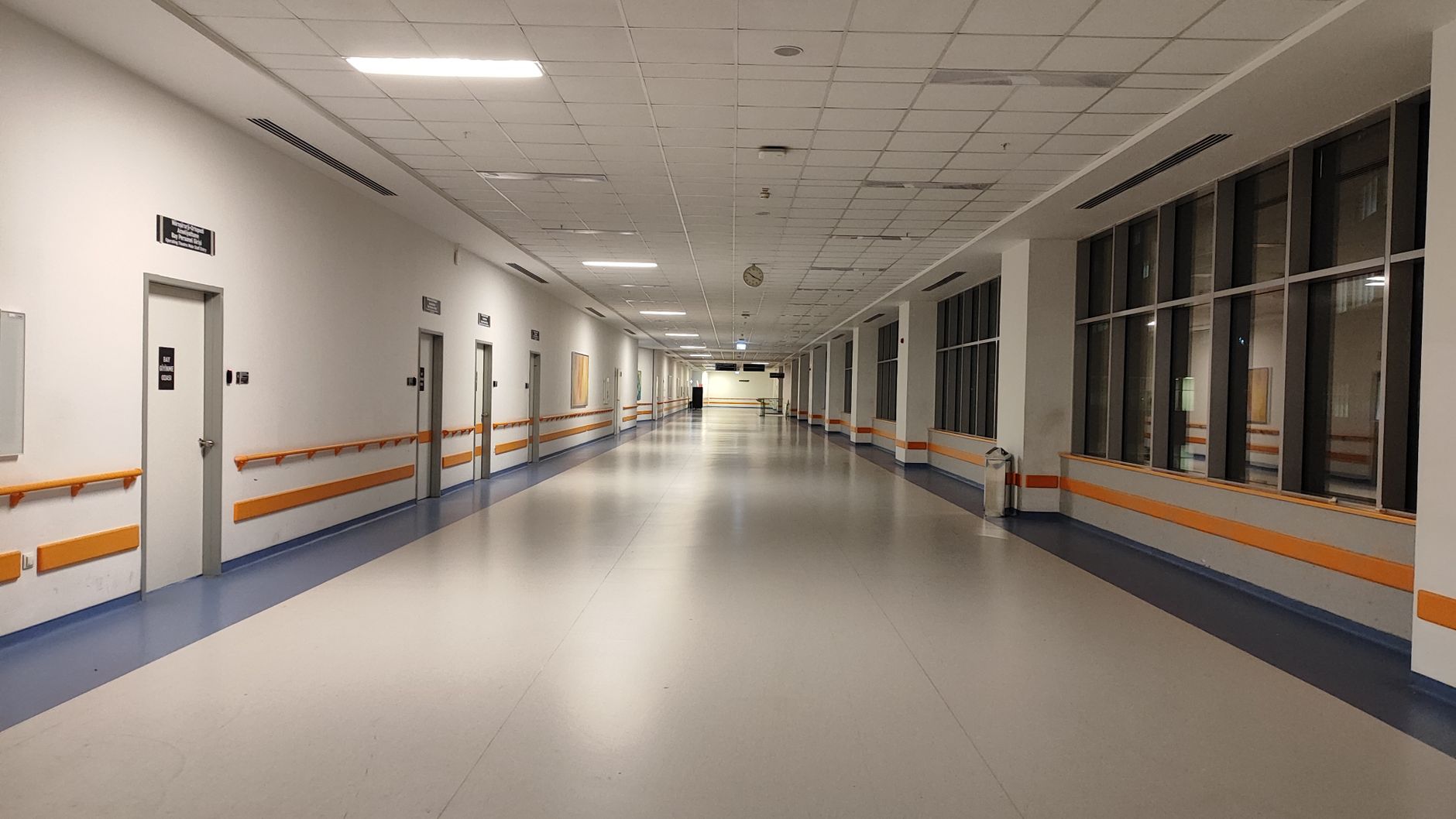
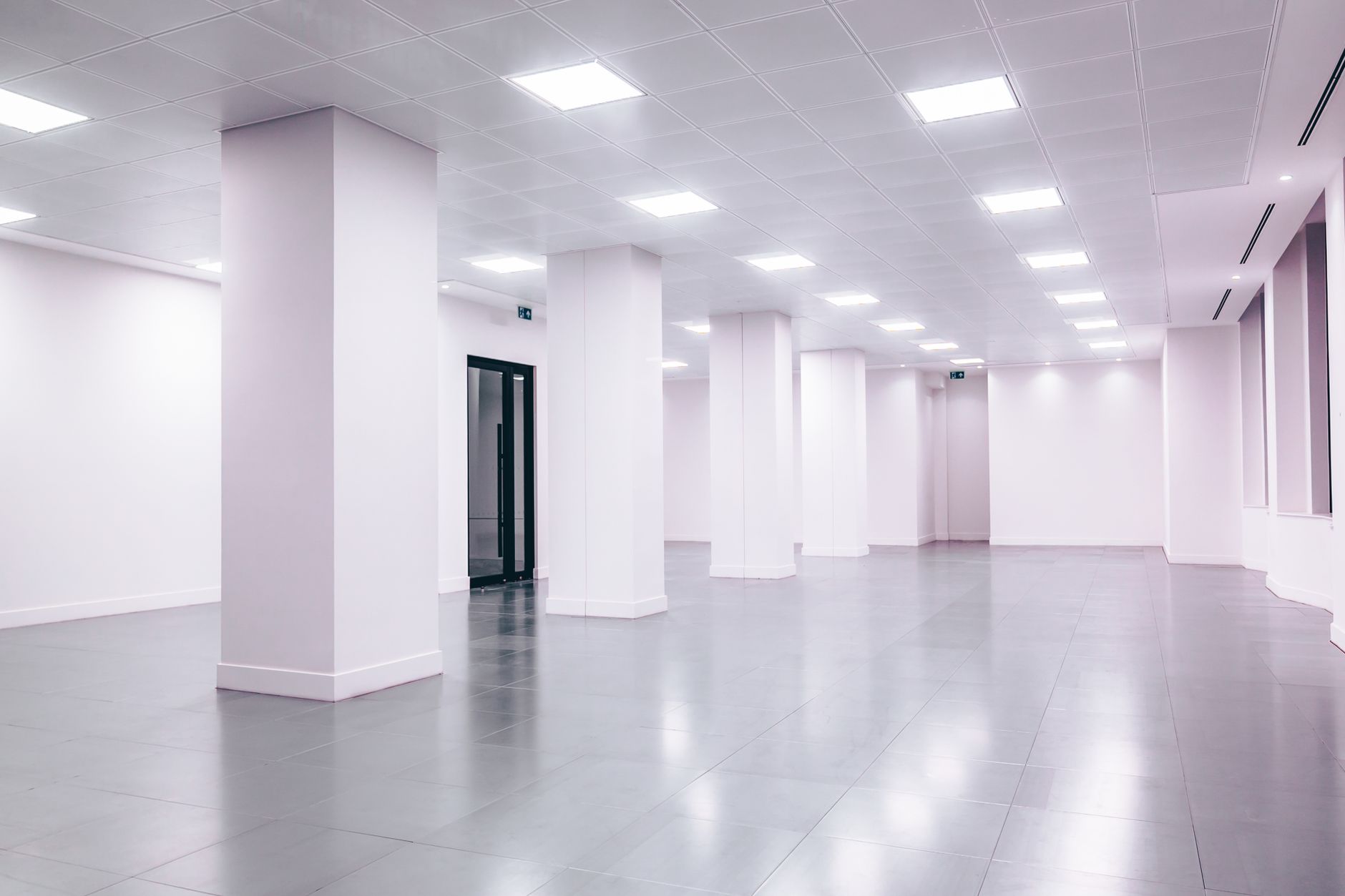
A cleaning robot fits a Las Vegas floor when the area is large, mostly open and cleaned on the same route again and again. Long corridors, open concourses, back-of-house aisles and sales floors are good candidates. The work repeats, the path is predictable, and the cost driver is a person running a machine over ground that needs the same pass every night.
It makes less sense when the building is a patchwork of small rooms, when furniture moves daily, or when most of the janitor's time goes to restrooms, trash, spills and detail work. In those buildings a robot removes only a slice of the shift, and the person still has to come in. A cleaning robot vs janitor in Las Vegas comparison usually turns on one question: how much of the shift is open floor on a fixed route.
Most sites end up with a robot plus fewer staff, not zero staff. The robot takes the repeat floor pass, and people keep the tasks that need hands, judgment and a restroom key.
What does a janitor actually do in a shift?
A janitor's shift is a mix of tasks that do not fit one route. Typical work includes emptying trash, restocking restrooms, cleaning fixtures, wiping high touch points, spot cleaning spills, and scrubbing or sweeping floors. Floor work is usually the largest block, but it is interrupted constantly by calls, spills and doors that need attention.
The best hand-labor benchmark in the research comes from a vendor labor efficiency calculator that cites a consulting study: about 5,000 square feet per janitor per 8 hours, or roughly 625 square feet per hour. The same calculator lists an industry range of 450 to 650 square feet per hour for manual work. Its survey average is about 6,400 square feet per janitor per day, with a median near 4,900, and it notes that productivity falls as occupancy rises.
These figures are benchmarks for a standard job, not a measurement of your building. A site assessment replaces them with the square footage, route and time your own floors actually take.
Median hourly wage, Janitors and Building Cleaners
$4,184
Monthly cost of one full-time worker in Las Vegas, NV, at the median wage plus payroll costs (an estimate, not a quote).
Which parts of the job can a robot take, and which can it not?
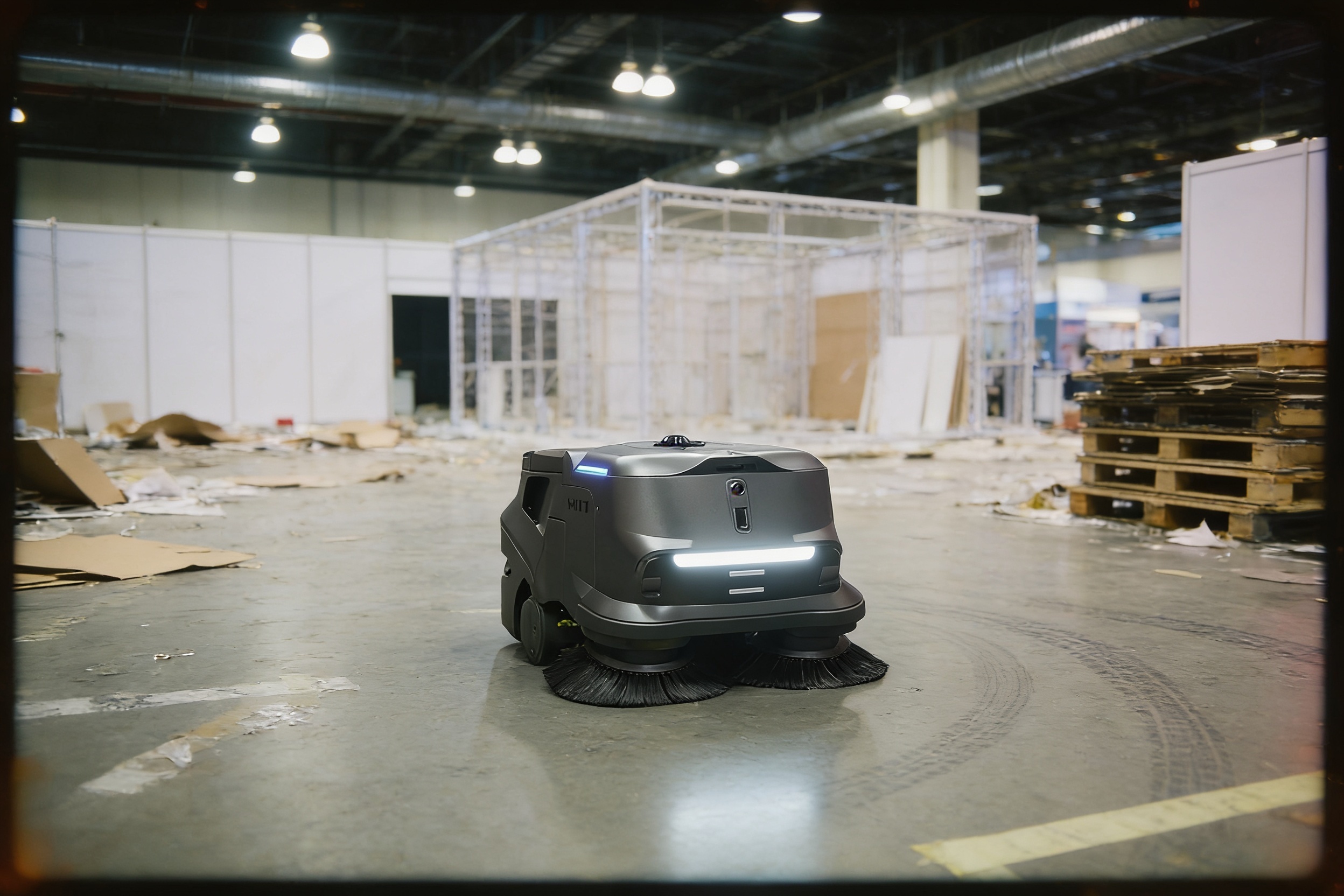
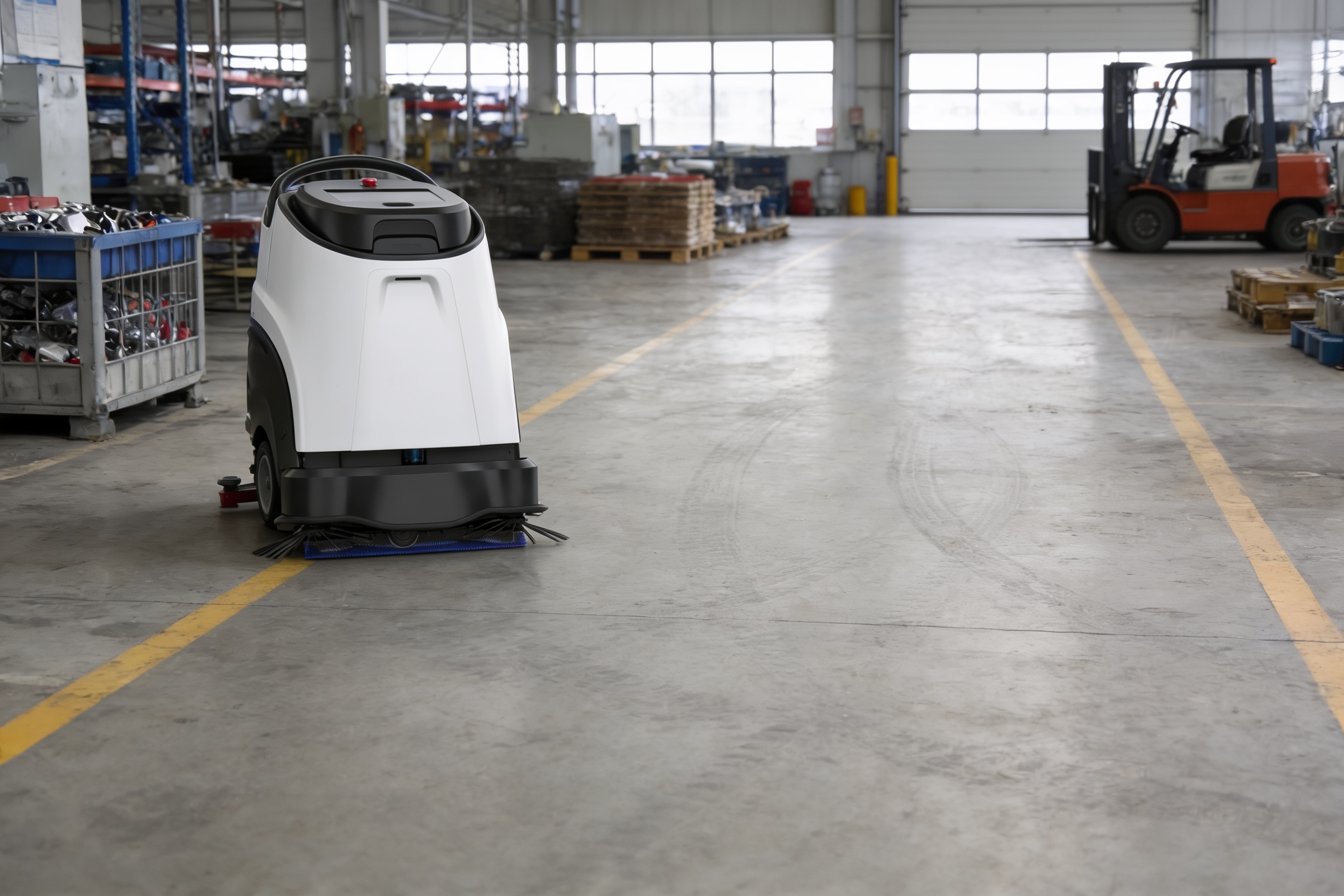
A floor scrubbing robot can take the repeat pass on open floors: scrubbing, sweeping and wet cleaning along a mapped route. Rated output for conventional scrubbers is high. A retailer's floor scrubber guide lists compact walk-behind units at 8,000 to 12,000 square feet per hour, mid-size units at 12,000 to 20,000, and large units at 20,000 to 35,000. The same guide says real-world output runs 70 to 85 percent of rated, so plan on the lower end.
Several parts of the job stay with people. Restrooms, trash removal, fixture cleaning, spill response, stairs, glass, and tasks that move furniture or handle hazards all need hands or judgment. A robot does not notice a new spill that appears after its route has passed, and it cannot decide what to do with an unexpected object in its path.
The split is simple to state and harder to map. The robot gets the open floors that repeat, and the janitor gets everything that changes. The site assessment is where that line is drawn for each zone.
- Open floor on a fixed route
Cleaning Robot
Repeats the same pass with consistent coverage
Janitor
Adapts the route on the fly but tires and varies
- Restrooms and trash
Cleaning Robot
Cannot do this work
Janitor
Does this work
- Spills and surprises
Cleaning Robot
Stops and alerts, but cannot respond to a new spill on its own
Janitor
Sees the spill, decides and responds
- Night coverage
Cleaning Robot
Runs with no one on the floor, though someone must watch alerts
Janitor
Needs a shift filled and paid, and may be hard to find
- Turnover and unfilled shifts
Cleaning Robot
Not affected by departures of individual workers
Janitor
Exposed to high turnover; each departure restarts training
- Cluttered or changing floors
Cleaning Robot
Struggles with clutter, loose furniture and obstacles
Janitor
Works around clutter and changing layouts
How many people do this work, and what does the labor market look like?
Nationally, the Bureau of Labor Statistics counts about 2.4 million janitors and building cleaners in 2024. Its Occupational Outlook Handbook projects 2 percent employment growth from 2024 to 2034, which BLS calls slower than average, and about 351,300 openings a year, mostly from workers leaving and needing replacements. A slow-growing job with heavy replacement demand means the hiring problem is mostly about keeping shifts filled, not finding room for new positions.
The Las Vegas figure is narrower. According to the 2023 Occupational Employment and Wage Statistics table from the Bureau of Labor Statistics, 560 workers were counted in the Building Cleaning Workers, All Other category for the Las Vegas-Henderson-Paradise metro. That category is narrower than janitors and building cleaners, so it is a subset of the local labor pool, not the full count. The wage panel on this page uses the May 2024 release, which is newer than this 2023 count.
The May 2024 Las Vegas janitor employment figure was not confirmed in this research, so check it on the wage data before deciding.
How high is janitor turnover, and why does it matter for staffing?
Turnover drives most of the staffing risk, and the published estimates are wide. A cleaning-industry statistics aggregator attributes a 42 percent annual turnover rate to ISSA survey data from 2023, and says 76 percent of cleaning firms faced labor shortages that year. That attribution was not confirmed against an ISSA publication in this research, so treat it as an indicator, not a measured rate.
A janitorial industry blog says it has seen estimates ranging from 75 to 400 percent a year, and places janitorial turnover above construction, education and retail, with only leisure and hospitality higher. The spread shows how little consistent local data exists. A site can lose a large share of its cleaning crew in a year and still sit inside the range of published estimates.
Every departure restarts training, and every unfilled night shift leaves a floor uncleaned or pushes hours onto someone else. A robot does not remove that churn, but it takes the open-floor pass out of the set of shifts the building must fill.
What about night shifts, overtime, injuries and sick days?
Night work is where the robot case is strongest, because those hours are hardest to staff and the open-floor pass is the easiest part to automate. The research did not find Las Vegas figures for overtime, sick days or the share of janitors on night shifts. Pull those from your own payroll and staffing records, and do not treat any local estimate as fact until it comes from your data.
On injuries, the Bureau of Labor Statistics reported a private industry total recordable case incidence rate of 2.3 cases per 100 full-time equivalent workers in 2024. No 2024 rate for building and grounds cleaning occupations was found in this research, so the industry-wide figure is the only one to cite, and it is not a janitorial rate.
The night run below shows what a shift looks like when a robot takes the open-floor pass. The times are illustrative and not measured at any particular site.
How does a team work with a cleaning robot?
The team works as a robot plus fewer people, and the staffing plan should say exactly who does what. Staff prepare the route, clear aisles and confirm the start. The robot runs the open-floor pass. A person checks the run report at the end and handles restrooms, trash and any alert the machine raises during the run.
A 2019 survey by the AACEM and ISSA on autonomous cleaning found that about one-third of respondents who had not adopted were somewhat likely to adopt autonomous products within a year. That data is dated and is not a current adoption rate. It does suggest that many managers still deciding are open to the idea.
We are a US commercial robot integrator. We pick the unit for the site, lease it through financing, deploy and integrate it, train the staff and service it nationwide. For a cleaning deployment, that means the people on shift learn the route, the alerts and the handover, so the robot is not a new task that nobody owns.
What can a cleaning robot not do?
A cleaning robot cannot clean a restroom, empty a trash can, or handle a spill that appeared after its route passed. It will not reliably handle clutter, cords, loose furniture, unusual floor surfaces or stairs without a plan. Glass and any area the route cannot reach stay with staff.
Layout matters as much as the machine. A map with blocked aisles, frequent new obstacles or heavy foot traffic at the wrong hours will cut output and create stops. The 70 to 85 percent real-world output figure is the honest starting point, and a busy site may land below it.
The robot is also no fix for thin supervision. Someone still has to check alerts, confirm coverage and call the service team when a unit needs attention. If no one owns that job, the robot becomes a machine nobody trusts.
How do you get started with a cleaning robot in Las Vegas?
Start with a free site assessment. The assessment measures open floor area, route layout, obstacles and traffic, then identifies which zones the robot can cover and which stay with staff. A lease quote follows the assessment, so the fixed robot lease payment reflects your actual site rather than a generic estimate.
Pilot one unit in one zone before expanding. The pilot tests the route, the staff handover and the alert process under real conditions. If the route and staffing changes hold up, add units zone by zone, and plan for spare coverage so one failed unit does not leave a floor uncleaned.
Before you sign, ask for the lease terms in writing, the service response plan, and the staffing change expressed in shifts and hours. Compare that against the local wage for this job on this page and against your own overtime and turnover records, which are the figures this research could not supply.
Frequently asked questions
Put a robot to work in Las Vegas.
We walk your site, learn the job, and recommend the unit that fits. Then we quote the lease, deploy it, and keep it serviced.
Sources
- US Bureau of Labor Statistics, Occupational Employment and Wage Statistics (OEWS May 2024)
- Bureau of Labor Statistics, Occupational Outlook Handbook: janitors and building cleaners
- Bureau of Labor Statistics, 2023 OEWS table for Building Cleaning Workers, All Other
- Bureau of Labor Statistics, injury and illness news release
- Cleaning industry statistics aggregator (ISSA 2023 turnover attribution)
- Janitorial industry blog on turnover estimates
- Vendor labor efficiency calculator for janitorial work
- Retailer floor scrubber guide on square feet per hour
- AACEM and ISSA autonomous cleaning survey report