
The short answer
The cobot cost for ice cream plants depends on the work at each packing station and the conditions around it: how many stations and units you need, how cold and wet the packing room is, how carton and lid feeds are set up, how the cell connects to your conveyors and controls, and how much service you want. There is no fixed price on this page, because the figure is a lease quote built after a free site assessment. The largest swings usually come from integration and format changes, not from the arm itself.
Key takeaways
- Unit count and station layout move a cobot cost for ice cream plants more than the arm does.
- Cold, condensation and washdown conditions need a site check before any quote is final.
- Integration with existing conveyors and controls is the hidden cost most often underestimated.
- A cobot takes over repetitive loading at fixed stations, so the hours to plan around are the ones your crew spends at those stations.
- Every lease quote should list deployment, integration, training and service in writing.
What does a cobot cost for ice cream plants depend on?
A cobot cost for ice cream plants is set by the packing work at each station and the room the station sits in, not by a catalog figure. A collaborative robot arm is much the same machine whether it works in a bakery, a metal shop or a freezer-side packing line. What changes the quote is the cell around it: the cartons and lids it handles, the temperature and moisture it works in, and the controls it has to talk to.
Cold packing rooms add conditions that most general factory installs do not face. Low temperatures and condensation affect grippers, cables and sensors, and frequent washdowns mean the cell has to tolerate cleaning. We have not found a published temperature or floor area figure for ice cream packing rooms, so we measure those at the site assessment instead of assuming them.
The lease quote covers the robot, its deployment and integration, operator training and service. We give the figure in writing after the assessment, once the station count, room conditions and integration scope are known.
Which factors move the cost up or down?
The number of units and stations is the first lever. One station loading cartons with a single lid point is a small cell. Several packing lines running in parallel need more arms, more fixtures, more guarding and more controls. A phased start, with one station and a second added after the first runs cleanly, limits early commitment and lets the crew learn the changeover steps before scaling up.
Carton and lid cycles set the design. Repetitive loading at a steady rhythm is the kind of work a cobot suits. What raises the cost is a cycle fast enough to need a more capable arm, many case sizes changed in a week, and grippers that must be swapped with every format.
Other factors that change the number are listed below.
Factors that lower the number are a clear floor, a station that already has fixed fixtures, standard carton and lid formats, and a controller the new cell can share. Floor area matters less than the layout, because the arm needs reach and clear access more than a large footprint.
- Cold and wet conditions that call for rated components and a layout that tolerates washdown
- How many case and lid formats run, and how often they change
- Traffic through the packing room from carts, forklifts and staff walking past the station
- Integration with existing conveyors, controllers and any line data system
- Service needs, including spare grippers, response times and training depth
How big is the ice cream plant sector in the US?
Plant counts are harder to pin down than most people expect. The U.S. Bureau of Labor Statistics reported 562 ice cream and frozen dessert manufacturing establishments in an analysis of 2015 data, published in 2016. Newer counts come from private estimates that disagree widely, with one IBISWorld snapshot listing 1,117 businesses and another listing 495.
Employment is concentrated in a few states. According to a 2025 BLS Economics Daily article using 2024 data, Utah had the highest location quotient for the industry at 2.44, and Connecticut was second at 2.16. A location quotient above 1 means a state has a larger share of this industry than the national average. California, Pennsylvania, Ohio, Florida, Illinois and New York each had more than 1,000 workers in the industry.
That concentration affects a cobot program mainly through the staffing pool and the service territory. Our service covers the country, so a plant outside the dense states can still lease and be serviced, but ask how quickly a technician can reach your site, and get that response time in writing.
How many hours of packing labor can a cobot take over?
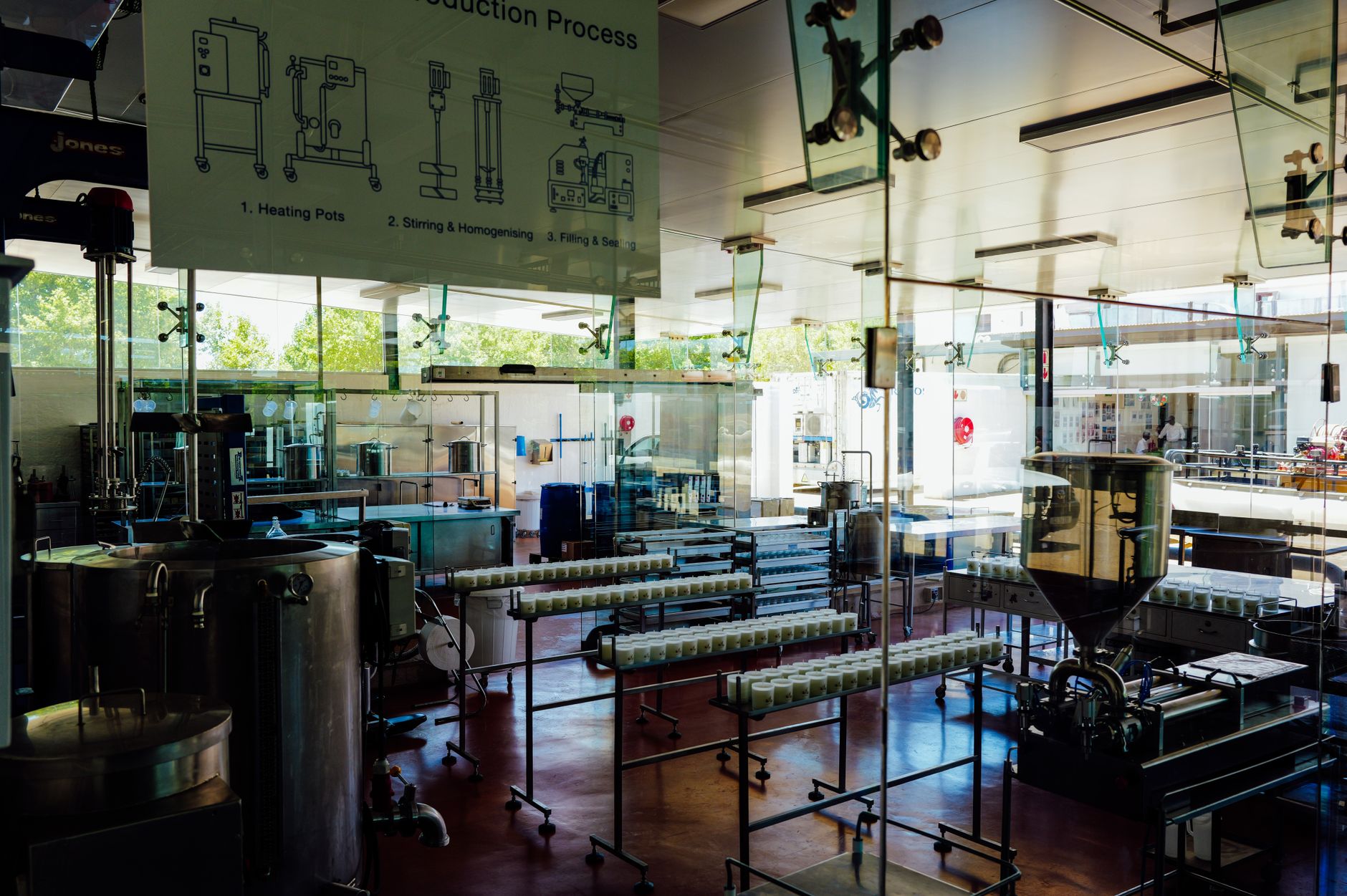
The labor a cobot takes over is repetitive loading at a fixed station, the same motion through a whole shift. The federal occupation the search found for this kind of plant work is food batchmaker. According to WageDex, which draws on BLS survey data for May 2025, Wisconsin had about 18,040 workers in that occupation. That count describes the broader occupation, not packing stations specifically, and we found no published count for packaging machine operators.
We did not find a published turnover or separation rate for these occupations, so we will not give one. Turnover still matters at the station. A cobot cell needs trained staff on every shift to run, clear and restart it, so the training record matters as much as the headcount when someone leaves.
Hours are set by your line speed and shift pattern, so we measure the time a station spends on each step during the site assessment and show it in the quote rather than quoting an average. The table below names the kind of work the robot takes over, without invented hour counts.
| Task | Today | With a robot |
|---|---|---|
| Load cartons at the fixed station | Done by hand at the same spot for the whole shift | Arm loads on the program, staff keep the carton supply full |
| Place lids on filled containers | Repeated hand motion through the shift | Arm places lids, staff clear feed jams |
| Pack filled containers into cases | Hand packing at a steady pace | Arm packs, staff check counts and closing |
| Change between case and lid formats | Staff reset the station by hand | Staff swap grippers and load the matching program |
| Start up the station at the beginning of a shift | Staff set up and check the station | Staff run a short startup check and confirm signals |
No verified cycle time for carton and lid work was found, so no hour counts are shown. Hours are measured at the site assessment from your own line and shift pattern and set out in the quote.
What do injury rates say about repetitive packing work?
Injury data rarely isolates ice cream packing rooms, so the closest published rates cover the whole food sector. According to a secondary summary of BLS data, food manufacturing recorded 3.3 total recordable cases per 100 full-time equivalent workers in 2024, down from 3.6 in 2023 and 4.6 in 2022. Because these are summaries, check the figures against the official BLS table before citing them in a board paper.
The same summaries put all manufacturing at 2.7 in 2024 and private industry at 2.3. The food sector therefore runs above the broad manufacturing average, which is a reasonable reason to look first at fixed stations where people repeat the same lift and reach all shift.
A cobot reduces the repetitive part of the work at a station. It does not remove the need for guarding, lockout steps during cleaning or staff training, and it does not make a cold room less demanding for the people in it.
How fast are food plants adopting cobots and robots?
Adoption is rising across US industry. According to preliminary figures from the International Federation of Robotics, reported by iconnect007, US robot installations rose 11% to 38,000 units in 2025, with automotive leading at 13,500 units.
Food is moving faster in that data. Preliminary IFR figures reported by Assembly Magazine show food industry installations in the US rose 30% in 2025, to about 3,000 units.
Collaborative units are a growing share of new orders. Yahoo Finance data reported by Manufacturing Today puts collaborative robots at 19.6% of robots ordered in North America in 2025, with 7,212 units ordered. That series is not the IFR data and does not break out food, so read it as a sector signal, not a food-specific share. Adoption figures show demand, not whether your station is a fit.
What can a cobot not do in an ice cream packing room?
A cobot is a fixed station tool, not a general worker. It handles repetitive loading and packing at a set point, with a program for each format. It does not sort mixed product by eye, recover a dropped carton from across the room, or decide that a case looks wrong. Those checks stay with staff, and the plant should plan for them from day one.
Cold and condensation affect the cell. Grippers, cables and sensors need components suited to the room, and the cell may need more frequent checks than a dry plant needs. Washdowns are planned stops, not something the arm handles on its own.
Payload and speed set limits. Cases heavier than the arm's rated payload, or lines running faster than a cobot's cycle can match, are not a fit. At the site assessment we test the cycle against your actual line speed, and we say plainly when a cobot is the wrong tool for the station.
How does a lease work and how do I get a quote?
We lease the robot through financing, so the plant does not carry a large upfront payment for the unit. The lease sets a fixed payment on a schedule over a stated term, and the quote shows that term in writing so you can compare offers on the same basis. The lease covers the robot, deployment and integration, training and service, and the items that stay with your plant are listed beside them.
The quote follows a free site assessment. We map the stations, measure room conditions, check the conveyor and control signals, test the cycle against your line speed, and confirm the unit count. The written quote then lists the lease schedule, deployment and integration scope, operator training for each shift, the service plan with response terms, and anything excluded such as utility work or cleaning routines.
Ask any provider for the same list before you compare. A quote that leaves out integration or the service response time is not a complete comparison, however light the lease line looks.
Frequently asked questions
Want a cobot at your ice cream plant?
Tell us about your site. We will recommend the robot, quote the lease, and keep it serviced.
Sources
- U.S. Bureau of Labor Statistics, Economics Daily (2016), ice cream and frozen dessert manufacturing employment
- U.S. Bureau of Labor Statistics, Economics Daily (2025), states with the highest concentration of ice cream manufacturing employment
- WageDex, food batchmakers in Wisconsin (BLS OEWS May 2025)
- IBISWorld, number of ice cream production businesses in the United States
- BLS industry injury and illness data, food manufacturing (secondary summary)
- Assembly Magazine, US robot industry experiences double-digit growth
- iconnect007, US robot industry returns to double-digit growth
- Manufacturing Today, industrial robot orders climb in 2025