

Key takeaways
- Cobots take the repetitive lift of packing and palletizing in cold rooms, so people can cover the exceptions.
- Cobots for ice cream plants work best as a robot plus a smaller team, not as a replacement for the crew.
- Sourced federal data shows 555,500 hand packers and packagers in 2025, with a projected decline to 528,000 by 2035.
- We lease the robot through financing and quote the payment after a free site assessment.
Can cobots for ice cream plants handle packing and palletizing?
Yes, for the repetitive part of the work. Cobots for ice cream plants suit the lift at the end of the packing line, where the same motion repeats all shift: pick a filled carton or case, place it in a pattern, and return for the next one. In cold rooms and at the cold dock, that motion is hard on the body and hard to staff, so it is usually where a cobot earns its place first.
The cobot works beside your people, not in a cage. Your crew still feeds empty cartons, clears jams, checks seals and codes, handles flavor and case changeovers, and deals with anything the pattern did not expect. The robot takes the most repetitive part of the shift, and the people keep the part that needs judgment.
This is a practical fit, not a headcount plan. The rest of this page explains where the robot goes, what it does on a normal shift, how the work splits with your staff, and how we handle the lease and deployment.
What is the labor problem in cold rooms today?
Hand packing work is shrinking as a job category, and the people who remain are harder to keep on the line. According to the U.S. Bureau of Labor Statistics, there were 555,500 hand packers and packagers in 2025, and that count is projected to fall to 528,000 by 2035, a decline of about 5%. The handbook ties that decline in part to warehouse and packaging technology reducing manual tasks for these workers.
Local labor is often the harder problem. A Missouri layoff notice from late October 2026 covers nine plant-side roles at an ice cream facility that stopped production, and the notice gives no reason. A Vermont news report described a creamery where a severe labor shortage, tied to employee detention, left ice cream production running on a limited basis. Most plants will not face either situation, but both show how quickly a missing crew can slow a line with no slack.
The industry itself is small. According to a third-party industry summary of Census County Business Patterns, there were 514 ice cream and frozen dessert manufacturing establishments in 2023, employing 24,435 people. For an operator, every open slot on a cold dock is felt in output, because there are few spare hands to move between tasks.
What are the main benefits of a cobot here?
The first benefit is a steady pattern. A palletizing cobot builds each layer to the same spec at the same pace, shift after shift, without the drift that creeps into a long run when people tire. That consistency matters most at the end of a line, where a bad layer means a damaged pallet, a rejected load or a rework bin. Set the pattern correctly once, and it holds.
The second benefit is labor redeployment. Once the repetitive lift moves to the cobot, the people who were doing it can move to checks, changeovers, sanitation and the rest of the line. Output does not depend on one person standing in one spot for the whole shift, which gives the lead more room to cover absences. A plant with few spare hands gets the most from that flexibility.
The third benefit is ergonomics and retention. Taking the lift off the crew reduces the bending and reaching that makes cold-room packing hard on people. When a job is already difficult to fill, keeping the people you have on work they can sustain matters as much as the output. A job people can keep for years is easier to staff than one they leave after a season.
How does the robot work day to day?
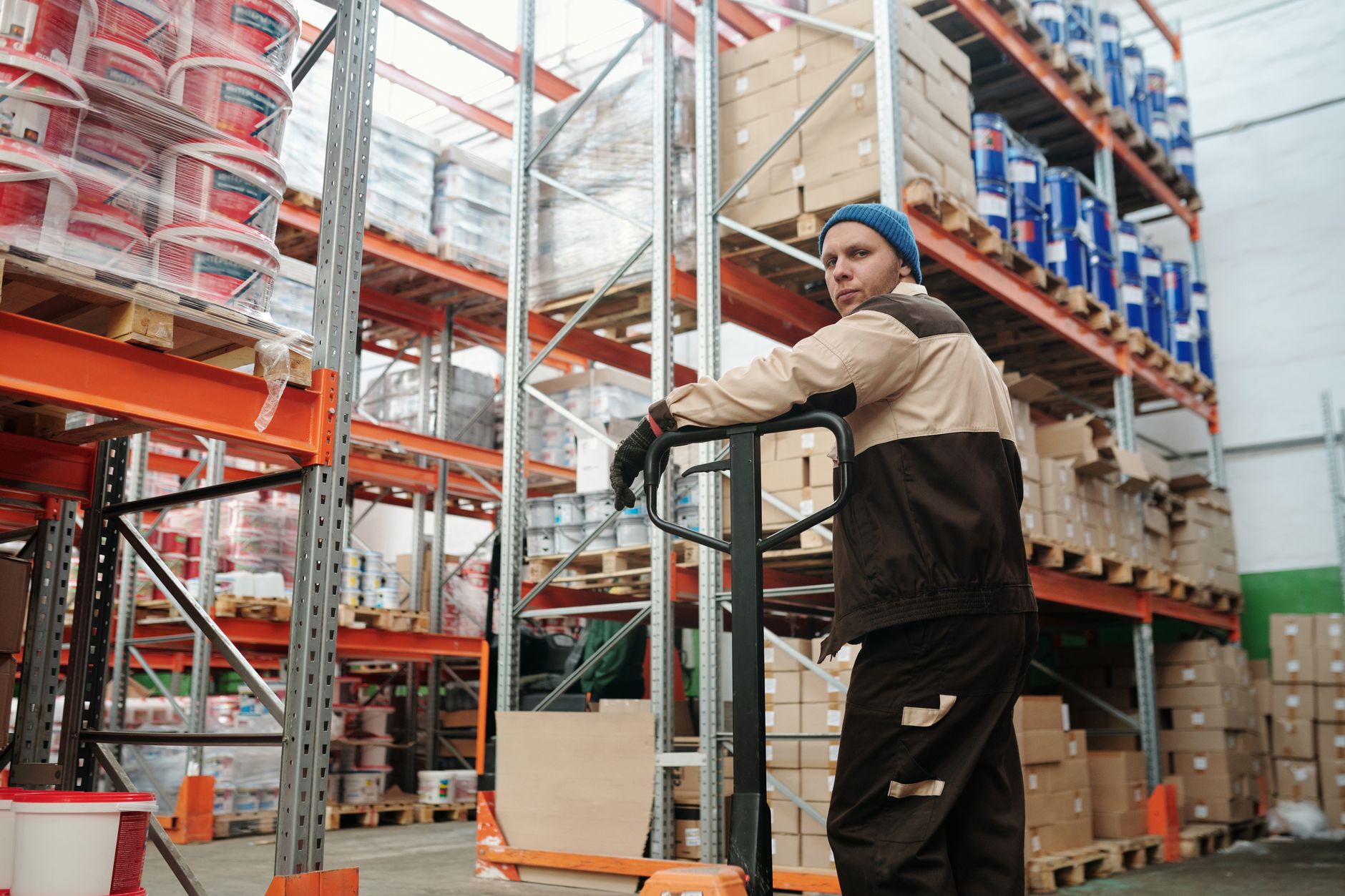
A cobot on an ice cream packing line usually runs as one stage of a longer chain. Product comes off the line in cartons or cases, the cobot picks each one and places it into a pattern on a pallet or onto a takeaway conveyor, and staff keep the flow moving. The cobot is taught its pick and place points, and its safety functions let it slow or stop when a person enters its space, which is why it can share the work area.
The shift has a rhythm. The lead checks the log and stock first, the line runs with the cobot on the repetitive move, and staff handle changeovers and faults through the day. The schedule below walks through a typical shift at this kind of plant, though your start time, changeover count and pallet pattern will set the real timing.
Most of what staff see is the cobot repeating the same motion while the crew handles everything around it. A fault is usually a jam or a misplaced case, cleared by a person, and the robot resumes once the path is clear. Expect more faults in the first weeks, while the feed and the pattern settle.
Which areas of the plant does the robot work in?
The strongest fits are zones where a repeatable move meets a cold, heavy or fixed task. The list below covers the areas we see most often at plants like this. Each zone pairs the robot with a human role, and none of them is a place where people are removed entirely.
Cold rooms need hardware rated for the temperature, moisture and cleaning the area sees, and we confirm that during the site assessment. Layout matters as much as temperature. The cobot needs a fixed base, a clear reach envelope and a route for pallets in and out, so we map those before anything is installed.
Not every line needs all six areas. Start with the one where the lift is heaviest or the shift is hardest to fill, and expand only after the first zone performs well.
How does the robot work alongside existing staff?
The cobot is a teammate on the line, not a replacement for the crew. A robot plus a smaller team is the model that holds up, because people still own the work that changes: changeovers, damaged or mislabeled product, sanitation, and any case that does not match the pattern.
The comparison below shows a typical lift today next to the same job with the robot in place. The main shift is in who does the repetitive move and who does the checking.
Staff roles move toward feeding, checking and judgment, and the lead's job becomes keeping the cobot supplied and clearing faults quickly. Our team trains staff on the pick points, the faults they can clear and the safe way to work near the unit, so people on the line can work with it confidently from the first day.
What drives the savings, and do we publish ranges?
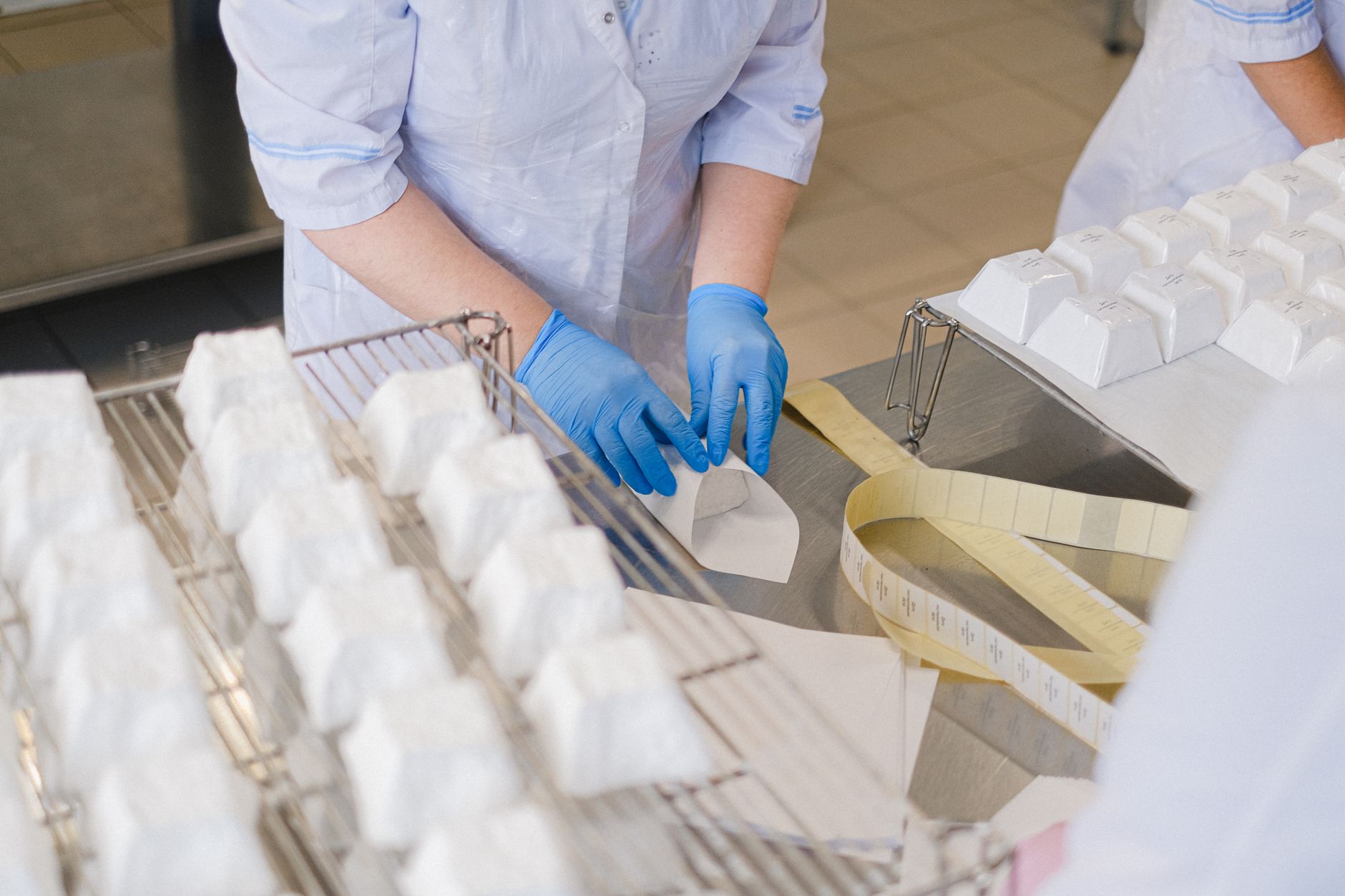
Savings come from three places: crew time spent on the repetitive lift, shifts that go unfilled, and output per shift. Each one depends on your line, so we size them in the site assessment rather than from a national number. The sources we checked do not give labor hours per shift for ice cream plants, so this page does not publish a savings range.
The sourced figures are useful for setting expectations. According to the European Digital Innovation Hubs study, a cobot case packer modeled for the food sector reached up to 480 boxes per hour, against about 400 for operators. That result was validated on a prototype in simulation, not measured on a live line, so treat it as a planning input rather than a result.
Where the savings land depends on how fully the line is staffed today and how often shifts go unfilled. A crew that cannot fill its packing shift has a stronger case than one with full coverage, and the assessment will show which applies to you. The drivers to measure are these.
- Crew size on the packing and dock shifts
- Shifts that go unfilled each week
- Changeover frequency and case pattern complexity
- Output per shift on the packing line
What can a cobot not do?
A cobot is not a high-speed case packer, and it does not replace a full crew. It handles a repeatable move well, but a dedicated high-speed machine will outrun it on a line that runs very fast. The simulation comparison above is against people, not against dedicated equipment.
It cannot make judgment calls. A cobot will not spot a mislabeled lot, decide that a carton is damaged or manage a changeover on its own. Those stay with staff, and a plant that expects the robot to cover them will be disappointed.
It also depends on clean inputs and the right environment. Cartons out of spec, lids that do not seat, and a cold room not set up for the hardware cause faults. We plan for those in the assessment and service the unit nationwide, but the crew still has to keep inputs consistent.
How do we get started?
Start with a free site assessment. We map the cold room, the packing line and the dock, check the layout, and identify the zone where a robot will earn its place. We pick the right robot for the site, and we work across vendors so the choice follows your floor, not a single catalog.
The robot is leased through financing, which is how commercial robot leasing works for most operators. The payment comes in the quote after the free site assessment, so you see the full scope before you commit to anything.
After the quote, we deploy and integrate the cobot, train your staff on the line and provide service nationwide. Many operators start with a single unit on one zone and expand after it performs, which keeps the first step small and the crew in control of the change.
Frequently asked questions
Want a cobot at your ice cream plant?
Tell us about your site. We will recommend the robot, quote the lease, and keep it serviced.
Sources
- U.S. Bureau of Labor Statistics, Occupational Outlook Handbook: Hand Laborers and Material Movers
- European Digital Innovation Hubs, food sector cobot simulation study
- Third-party industry summary of Census County Business Patterns, NAICS 311520
- Missouri WARN notice, plant-side layoffs, October 2026
- Vermont news report on creamery labor shortage