
The short answer
Cobot cost for sporting goods manufacturing shops is set by the cell around the arm: how often the line changes product, how many fixtures and grippers each run needs, how the cell is integrated and kept safe, and how many units share engineering and service. We quote a fixed robot lease payment after a free site assessment, with deployment, training and service listed in writing. One vendor guide puts the arm at 40 to 50 percent of total deployed cost, so the changeover pattern on your own line shapes most of the number.
Key takeaways
- Cobot cost for sporting goods manufacturing shops is set by the cell, not the arm alone.
- Changeover count and fixture variety move the cost more than the choice of arm.
- Integration and safety work are the costs shops most often leave out of a first estimate.
- The lease quote follows a free site assessment and lists the scope in writing.
- Measure your own task hours before setting a target, because the research pass did not verify sector task times.
What does a cobot cost for sporting goods manufacturing shops depend on?
A cobot cost for sporting goods manufacturing shops is not one number. It is the sum of the arm, the tooling that holds the product, the engineering that makes the cell safe to work beside, and the service that keeps it running through a shift. Grabarobot's 2026 integration cost guide, a vendor source, puts the arm at 40 to 50 percent of total deployed cost and integration engineering at 10 to 20 percent. It also notes that grippers, vision and tooling can match or exceed the arm's own cost. That leaves much of the budget in the cell, which is why two shops with the same arm can receive quotes that look nothing alike.
The useful question is therefore not what the arm costs, but what the cell has to do: how many product families it handles, how often the fixtures change, and how many hours of repetitive work it takes off the line each week.
How many sporting goods manufacturers are there in the US?
The most recent full count we could confirm comes from the Census Bureau's 2012 Economic Census advance report, which listed 1,629 sporting and athletic goods manufacturing establishments and 36,968 paid employees. We could not confirm every table line in that report, so treat those figures as indicative. An earlier Census tabulation from 1997, on an older industry basis, reported 2,571 establishments. Because the classification changed, those two counts cannot be read as a trend.
We did not verify a national count for 2024 or 2025, so the 2012 figures are the latest published Census numbers we could confirm, not a total for today. The count also does not show how many of these shops already run robots, so it is a starting point for sizing demand, not a measure of it. For any one shop, the more useful number is the repetitive packing and finishing hours it carries on each line.
What makes one cobot cell cost more than another?
Changeovers come first. A cell that runs one product for a full week needs little tooling work, while a cell that switches between several product families each shift needs more grippers, more fixtures and more programming on every switch. Shops that run small batches should cost the changeover itself, not just the arm, because the changeover count is what makes a cell expensive or inexpensive to keep running.
Part variety and surface finish come next. Trimming, deburring or buffing, and packing into boxes all change with the item. Soft or irregular goods may need vision or more compliant grippers, while harder parts such as metal frames or composite boards may need a stiffer gripper and a cell that keeps dust away from the controller.
The floor and the traffic around the cell matter too. A cell beside a forklift lane or a cart route needs barriers, floor marking and a risk assessment that covers people walking past it. A cell that runs two shifts spreads its fixed cost over more working hours than one that runs a single shift, so the shift pattern changes the cost of each hour of work.
Unit count and service coverage close the picture. Two cells that share one integrator's engineering, one spare unit and one remote triage desk can cost less per cell than two stand-alone deployments, because the fixed work is shared. The service scope also sets how long a stopped cell waits for a fix, and that waiting time is a cost of its own.
Where does a cobot work in a sporting goods shop?
Cobots in these shops usually sit at a fixed station beside a person. The common jobs are loading a finishing fixture, trimming or deburring along a set path, and placing finished goods into cartons or onto a pallet at the end of the line.
A cobot can work near people without the full fixed guarding a large industrial arm needs, but it still needs a documented risk assessment and a defined work envelope. The zones below show the places where a cell typically sits in a shop of this kind, and the site assessment confirms which ones fit your floor.
How many labor hours does a cobot cell take over?
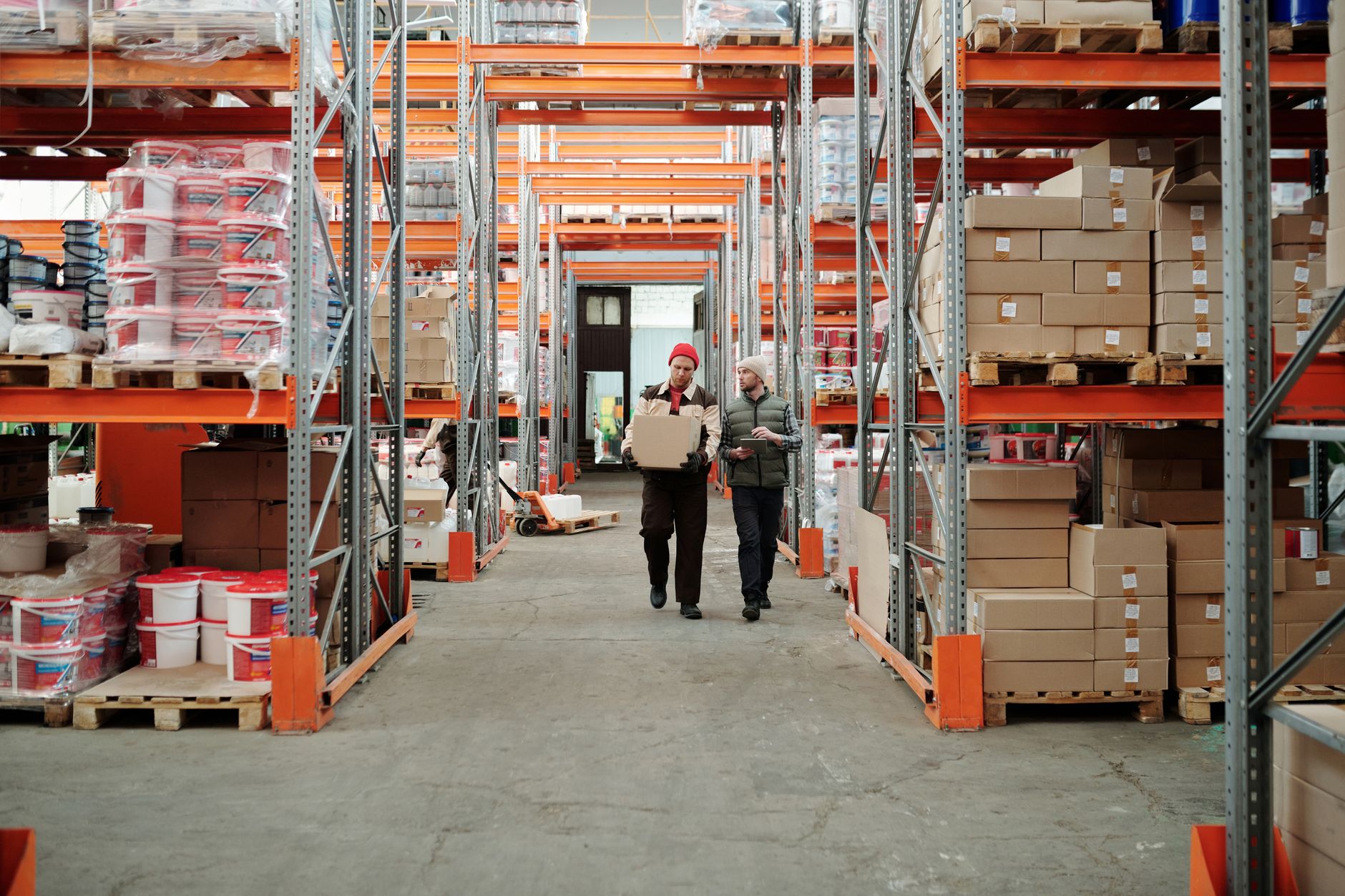
Hand packing is a large occupation. The Bureau of Labor Statistics counted 645,210 packers and packagers, hand, in May 2023, according to its Occupational Employment Statistics tables. That is a national count across all industries, not a count of sporting goods packers, but it shows how much repetitive packing still happens by hand.
We did not verify a turnover rate for this occupation, so we do not quote one. We also did not verify published task-time figures for finishing or packing in this sector, so the hours in the table below are described rather than measured. Measure each step on your own line before setting a target. Record the cycle time of each step across a full shift, count the changeovers, and note the idle minutes between runs.
Injury data is the second reason shops look at these cells. Secondary summaries of 2024 BLS data report 2.7 total recordable cases per 100 full-time workers in manufacturing, against 2.3 for private industry as a whole. The BLS injury chart page is the source to check those figures against. Whether a cell lowers the rate in your shop depends on which motions it takes over, and the site assessment checks that.
How does leasing through financing work, and what does the quote include?
We lease the robot through financing, so the shop makes a fixed robot lease payment over the lease term instead of paying for the equipment up front. The quote follows a free site assessment, because the assessment sets the integration scope. Nothing is quoted from a catalog sheet or a generic web estimate.
A written quote should show the lease term, the fixed robot lease payment, deployment and integration, operator training, the service plan, and what that plan covers for on-site dispatch, remote triage and emergency response. Ask whether spare or loaner units cover downtime, whether maintenance is included in the same document, and whether liability coverage applies to the cell. We list each of these in writing.
Leasing changes the timing of cost more than the total. It spreads the cell across the term, so a shop does not need a large capital outlay before its first product run is automated. The total paid over the term still has to be compared with the hours the cell takes over and the changeover time it removes.
What can a cobot cell not do in a sporting goods shop?
A cobot does not replace the person who decides whether a part is good. It can present a part to a camera or a gauge, but a judgment about a surface flaw or a seam still needs an operator, unless the cell has been designed and validated for that check. Plan for inspection staff even when the cell handles the motion.
Payload and reach set hard limits. Heavy frames, long boards or large cartons may need a larger arm, a second cell or another handling approach, and the site assessment says which. A fixed cell also does not move between buildings or floors. If the work has to travel across a yard or between levels, the question is a mobile robot, not a cobot.
Changeovers stay partly human. The cell shortens them, but a person still swaps fixtures, checks the first part and approves the program load. A plan that promises no changeover staff is not one a shop should sign.
How do I get a quote for a cobot cell at my shop?
Start with a free site assessment. Our team walks the line with your production lead, records the product families, changeover count, shift pattern and floor traffic, and checks where the cell would sit. The output is a written scope that the quote follows, so every line of the number traces back to the work.
Bring the data you already have: the product list, typical run lengths, changeovers in a normal week, the shift schedule, and any ergonomic or injury logs. A quote built from that data is more useful than one built from the arm's specification sheet alone.
After the assessment you receive a written quote with a fixed robot lease payment through financing, the integration scope, operator training and the service plan. If the numbers do not justify a cell on the first line, we say so, and we can propose a pilot with one leased unit before any wider rollout.
Frequently asked questions
Want a cobot at your sporting goods manufacturing shop?
Tell us about your site. We will recommend the robot, quote the lease, and keep it serviced.
Sources
- BLS Occupational Employment Statistics, May 2023, packers and packagers, hand
- BLS Charts, nonfatal injuries and illnesses by industry
- Census Bureau 1997 Economic Census, sporting and athletic goods (archived)
- Census Bureau 2012 Economic Census advance report
- Manufacturing Today, A3 industrial robot orders 2025
- A3 via Business Wire, robot orders 2025
- Robotics 247, A3 robot orders Q4 2025
- Grabarobot, robot integration cost guide 2026 (vendor guide)