
The short answer
Drone cost for water treatment plants depends on how much open basin and tank roof must be covered, the surfaces and airspace limits at the site, how the imagery is mapped and filed, and how many units and service visits you need. Those factors set the lease quote, which we give after a free site assessment rather than from a standard figure. A drone can survey roofs and basins for damage and corrosion without draining the tank or sending staff into confined spaces.
Key takeaways
- Basin and tank roof area, surface type and airspace limits drive most of the cost of drone work at a treatment plant.
- Mapping, integration, spare units and training are the costs people most often leave out of a first comparison.
- According to a 2025 New South Wales analysis, 57% of operators are aged 45 or older, which favors fewer, well planned site visits.
- The lease quote follows a free site assessment, so it reflects your basins, roofs and access rather than a generic estimate.
What does drone cost for water treatment plants depend on?
Drone cost for water treatment plants depends less on the aircraft than on the work around it. The inputs that move a quote are how much open basin and tank roof must be covered, what surfaces and airspace limits apply, how the imagery must be processed and filed, how many units you want in service, and how often you need visits. Two plants using the same aircraft can receive very different quotes because their roofs, access and data needs differ.
The useful way to read a quote is task by task. A drone that flies a roof every month and a drone that flies a basin twice a year need distinct routes, batteries, staff time and reports, so the lease follows the number of sites, the flight frequency and the depth of integration. That is why we begin with an assessment rather than a standard figure.
Drones matter here because open basins and tank roofs are slow to inspect the old way. Checking a roof usually means access equipment, a permit to enter, or a draining schedule. A drone can survey roof and basin surfaces for damage and corrosion without draining the tank or sending staff into confined spaces, although some interior checks still need a person on site.
Which parts of a treatment plant does a drone cover?
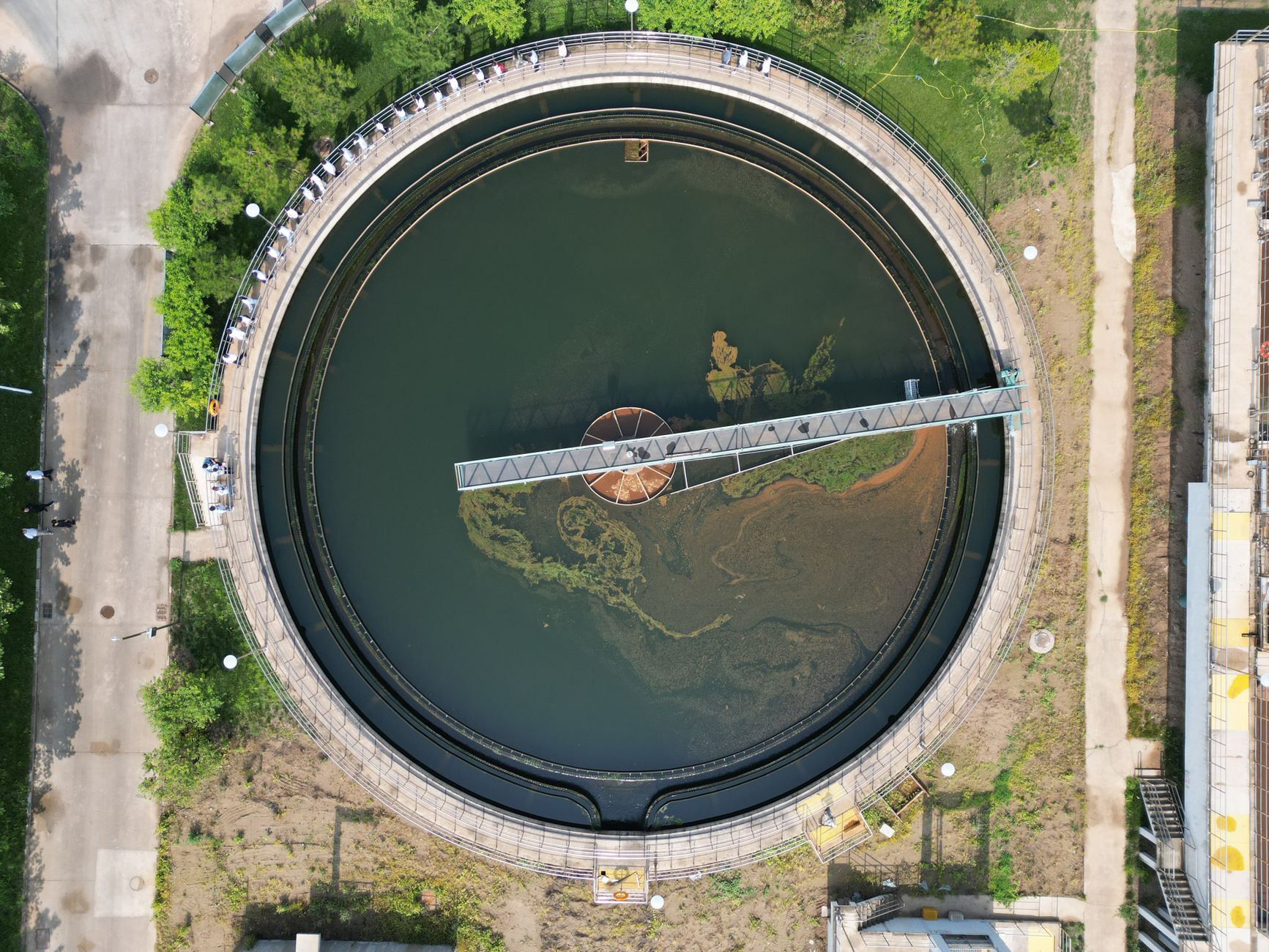
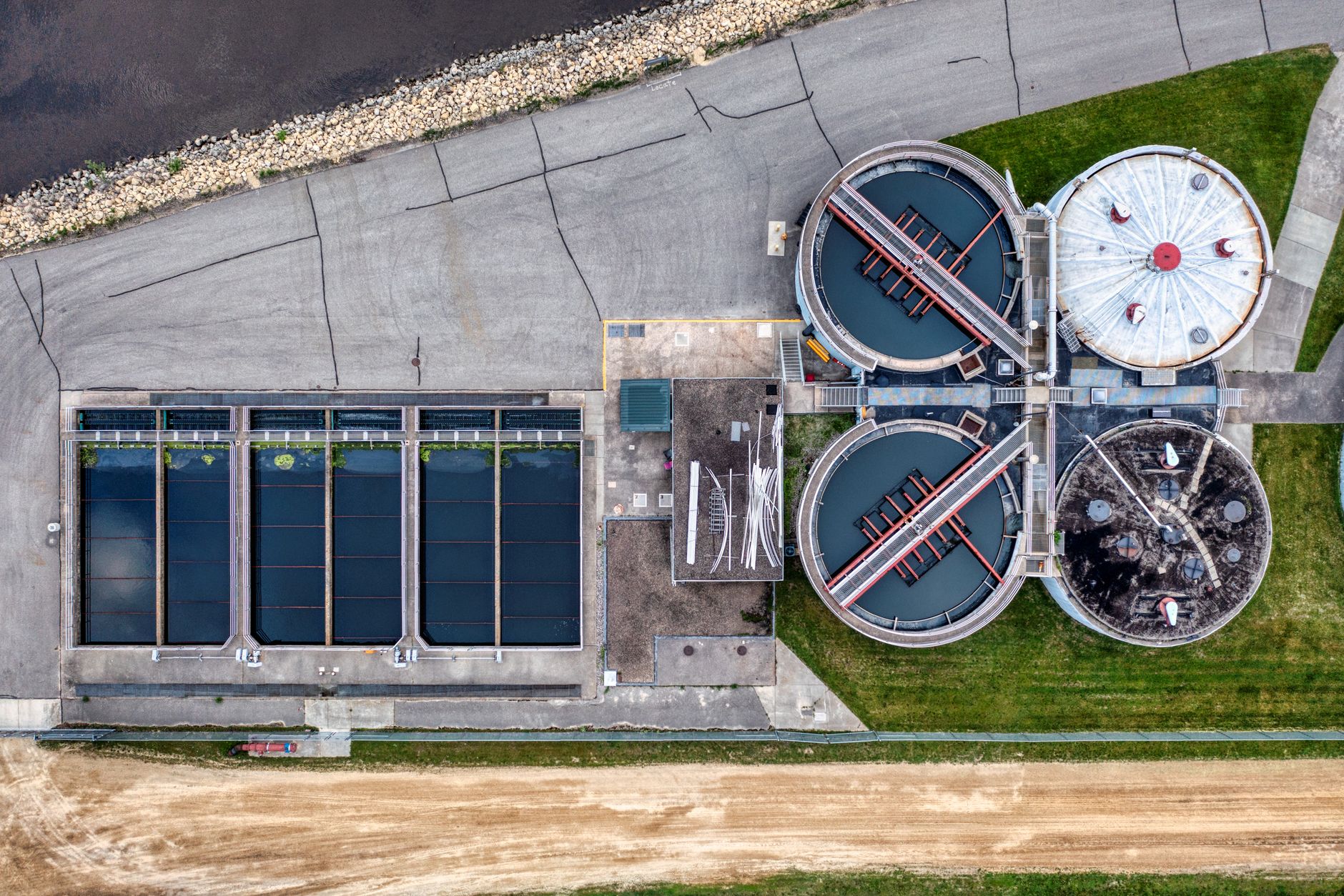
A treatment plant has more outdoor surface than most people expect. The useful targets are the open basins, the covers and roofs over storage and clearwells, the chemical yard and the perimeter. Each zone needs its own flight pattern, altitude and camera setting, so the zone list is one of the first things we confirm during the site assessment.
Open basins are the largest and most variable target. A visual survey can show scum, weir and edge corrosion, and cracks on exposed concrete or metal. Storage tank roofs add hatches, vents, seams and coating failure points, and those details decide whether a roof needs a closer look. Keep the zone list short at first, then widen it once the team trusts the reports.
What raises or lowers the cost at this kind of site?
Area and count are the first drivers. More basins and tank roofs mean longer routes, more battery changes and more imagery to process. A small plant with one storage tank roof sits at the low end of the range, and a large facility with several basins sits at the high end.
Surfaces and access shape each flight. Metal roofs, domed covers and reflective coatings can need their own camera and lighting setup. Overhead wires, nearby air traffic corridors and restricted zones limit where and when the aircraft can fly, and those limits change routing and staffing.
Schedule and weather matter too. Daytime flights are easier to fit around plant operations, but wind, rain and temperature limits can cancel a visit. A plan with a flight window and a backup day costs less over a year than one that assumes every visit happens on the first try.
Mapping, integration and unit count complete the picture. Georeferenced imagery that matches your asset list takes more setup than raw photos, and feeding results into your records adds integration work. Keeping a spare aircraft or a spare set of batteries adds cost, but it keeps inspections on schedule when one unit is out of service.
Why does staffing and confined space risk belong in the math?
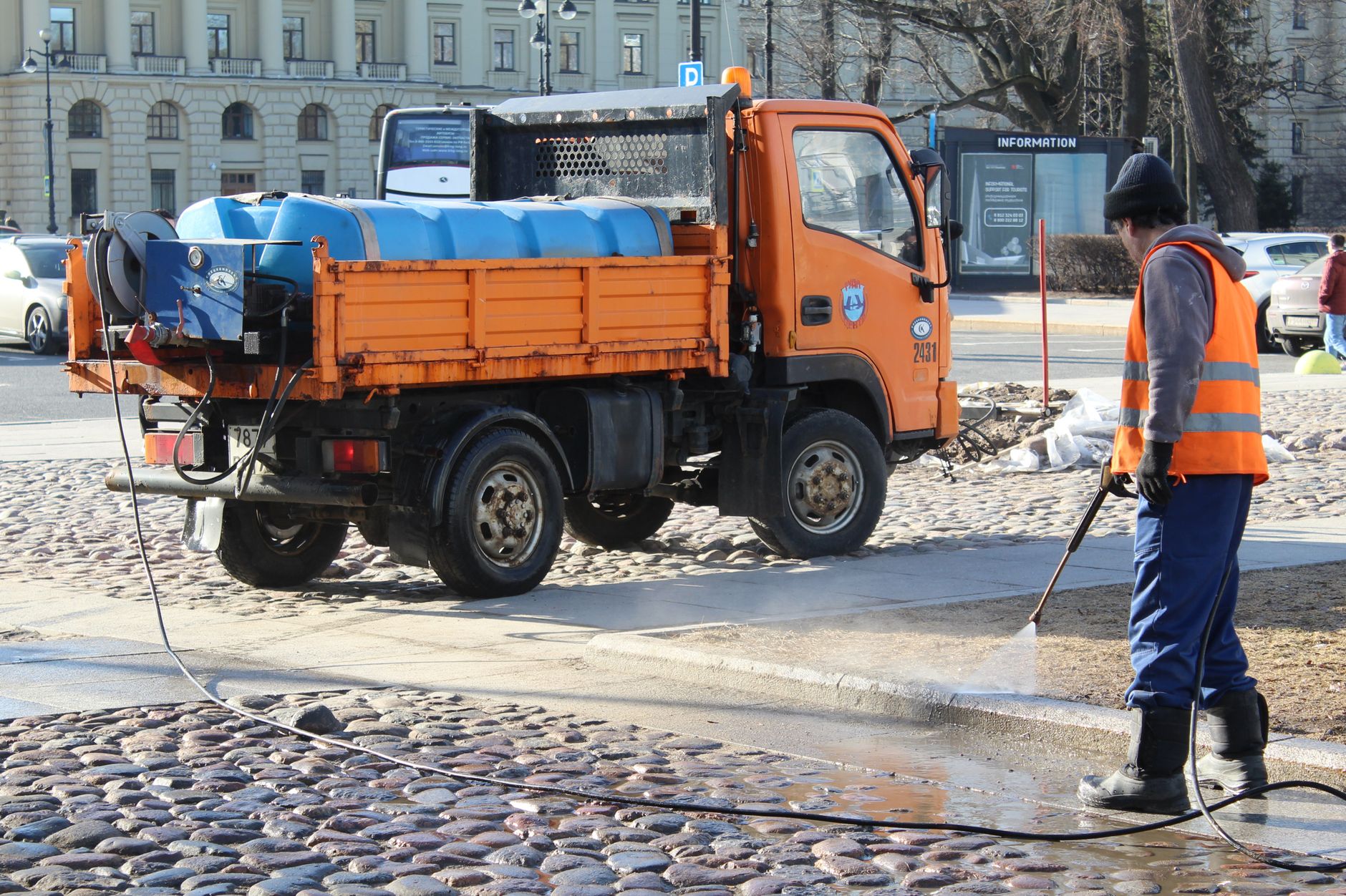
Water utilities already struggle to staff inspection work, which makes manual checks harder to schedule. According to the US Bureau of Labor Statistics Occupational Outlook Handbook, water and wastewater treatment plant and system operators held about 132,400 jobs in 2024, with about 10,700 openings projected each year on average over the decade. Openings at that scale mean a plant often carries tasks it cannot easily staff.
Regional surveys show the same pressure. In the West Virginia Water Workforce Survey of 2023, with 146 responses, 53% of operators and 56% of managers worried that operator numbers were inadequate, and 24% of operators and 26% of managers were eligible for retirement. These are survey-reported figures, so treat them as signals rather than a census.
An AWWA staffing survey from late 2021, covering 416 utilities, found that 40% struggled to hire. Utility-reported turnover nearly doubled to 21% from 11% earlier in 2021. A 2025 New South Wales analysis estimated annual operator turnover at 19%, about 218 operators a year, and found that 57% of operators are aged 45 or older. Those figures come from separate bodies and years, so they show direction rather than a benchmark for your plant.
The safety side is just as real. The BLS fact sheet on fatal occupational injuries involving confined spaces counts 1,030 workers who died from 2011 to 2018, with annual counts running from 88 in 2012 to 166 in 2017. That covers all industries, not water plants alone. A February 17, 2026 OSHA news release described a contractor whose workers were exposed to sewage gas, causing 2 fatalities, with no entry program, training or rescue plan in place. Every roof or basin check done from the outside is one less entry to plan, staff and rescue.
How much work does a drone actually take over?
Reliable hour figures for drone work on potable tanks are hard to find, and the sources we checked do not give a clean number. A sludge container inspection case study shows a drone job finished in a few hours where traditional methods took days. That case covers a container, not a potable tank, so treat it as direction rather than a benchmark for your roofs.
A tank storage inspection vendor says its customers save 50 to 90% of inspection cost, and that figure is vendor-reported. The more dependable change is in who is needed on the ground and for how long. A traditional roof or basin check may need a crew on access equipment, a standby rescuer for any entry, and time for permits and isolation. A drone job needs a pilot, a site walk and a review of the imagery.
The table below lays out the tasks. We confirm actual hours for your plant during the site assessment, when we can see the access routes and the number of roofs and basins.
How does leasing through financing work for this kind of plant?
We lease every robot through financing, so you do not need to commit capital up front. The lease sets a fixed robot lease payment over the term, and that payment appears in the quote after the free site assessment. The quote also states the term, what the payment covers and what happens at the end of the term.
The quote lists what the lease includes, and deployment, integration, training and service are the items to confirm in writing. Service runs nationwide, with on-site dispatch for hardware problems and remote triage for software and sensor issues. If one aircraft goes down, a spare unit can keep the inspection schedule on track.
Compare quotes on the same scope: the number of basins and roofs, the flight frequency, the mapping and integration, the number of units, the spares and the service visits. A quote that leaves out mapping or integration is not the same offer as one that includes them, even when the headline looks similar.
What can a drone not do at a treatment plant?
A drone cannot see inside a sealed tank, measure wall thickness, or confirm that a coating is sound beneath a visible surface. It cannot replace operator judgment on water quality, chemical handling or emergency response. It cannot fly in every weather or airspace condition, and it cannot repair what it finds.
It also does not remove the need for a permit to enter when an entry is required. Visual inspection is useful for finding surface problems early, and those findings can be scheduled for a planned entry rather than used as a reason to skip one. Plan for the drone to show you where to look, and for qualified staff or a contractor to confirm it inside.
How do you get a quote after a free site assessment?
Start by sending us the basic plant layout, the list of basins and tank roofs, and the inspection schedule you run today. We then do a free site assessment to confirm access, airspace, surfaces, mapping needs and the integration points with your records. That assessment is what makes the quote specific to your plant.
The quote sets out the scope, the fixed robot lease payment and term, deployment, training and service. Once you have it, we can run a pilot on one basin or one roof before you commit to a larger program, so you can compare the result against your existing inspection work.
Frequently asked questions
Want a drone at your water treatment plant?
Tell us about your site. We will recommend the robot, quote the lease, and keep it serviced.
Sources
- US Bureau of Labor Statistics, Occupational Outlook Handbook, water and wastewater treatment plant and system operators
- West Virginia Water Workforce Survey, 2023
- Trade press report on the AWWA late 2021 utility staffing survey
- New South Wales water sector operator workforce summary, 2025
- US Bureau of Labor Statistics fact sheet on fatal occupational injuries involving confined spaces, 2011 to 2018
- US Department of Labor, OSHA news release, February 17, 2026
- Tank storage inspection vendor article on drone inspection savings
- Sludge container drone inspection case study