
The short answer
Autonomous forklift ROI for pallet manufacturers comes mainly from taking the repetitive lumber and finished stack moves off the shifts you struggle to staff, so the return depends on how many of those hours the robot can realistically cover and what the lease costs. Pallet plants run fixed routes between saws, nailers and yards, which suits a unit that follows set paths. The savings range on this page is an estimate built from your own hours, not a promise, and a free site assessment turns it into a lease quote for your plant.
Key takeaways
- Most of the return comes from covering hard-to-fill lumber and stack shifts, not from cutting a full crew.
- The savings range is built from hours taken over, the local wage for this job, the share of work the robot can cover and the lease cost.
- Fixed saw-to-nailer-to-yard routes and shift coverage move the number more than the robot's travel speed does.
- Path design matters as much as the math, because people walk these lanes every shift.
- A free site assessment turns the range into a lease quote built on your own routes and shifts.
Run the numbers for your site
Pick your city or state for a real regional number - we use the real BLS wage there. (On the live site this auto-detects from your location.)
What do you want to automate?
The robot takes the repetitive cart and pallet moves off the heaviest motion.
What is autonomous forklift ROI for pallet manufacturers?
Autonomous forklift ROI for pallet manufacturers is the return a plant earns when a leased autonomous forklift takes over part of the lumber and stack moves people now make between saws, nailers and yards. The return is measured in labor hours covered, steadier throughput and fewer open shifts, less the cost of the lease. It is not measured in the robot's top speed.
The industry is large and spread out. IBISWorld counts 2,394 wood pallet and skid manufacturing businesses as of 2026, with 61,615 people employed across the industry. An industry data aggregator citing Census-based NAICS 32192 data, with the reference year not stated, reports 2,767 establishments and 59,688 employees. Dividing those published totals gives roughly 22 to 26 people per location, across all roles.
That is a small crew by factory standards, and small crews have little slack. When one person on a stack shift is out, the moves stop or slide into overtime. That is the gap an autonomous unit is meant to cover, and it is why the return should be judged shift by shift rather than across the whole plant.
Why are lumber and stack shifts hard to fill?
The work in question is freight, stock and material movers, hand work: loading, moving and stacking material across a plant. The Bureau of Labor Statistics Occupational Outlook Handbook counts about 7.0 million jobs in the hand laborers and material movers group in 2024, and 2,988,900 of them in the freight, stock and material movers, hand occupation. The local wage for this job appears in the government wage data panel beside this text, and it is the rate used to value the labor side of the math.
Retention is the harder problem. A vendor blog that sells operator tracking software reports forklift operator turnover of 35 to 45 percent a year. That figure is vendor reported, not from a verified survey, so use it as a planning signal and check your own turnover records. Every departure means training a new person, a gap in the saw-to-nailer flow, and often overtime for the people who stay.
Adoption is still early. A March 2026 GlobeST article reports autonomous mobile robots and automated guided vehicles in roughly 10 to 15 percent of facilities, with full automation in about 3 to 5 percent of warehouses, though it does not clearly name its underlying source. The Logistics Management 2025 Automation Survey found 83 percent of respondents use lift trucks, up from 74 percent the year before, but it does not separate out autonomous units. The data does not show how many pallet plants have run autonomous units, so ask for references from sites like yours.
Median hourly wage, Laborers and Freight, Stock, and Material Movers, Hand
$4,380
Monthly cost of one full-time worker, at the median wage plus payroll costs (an estimate, not a quote).
Where does the return come from in a pallet plant?
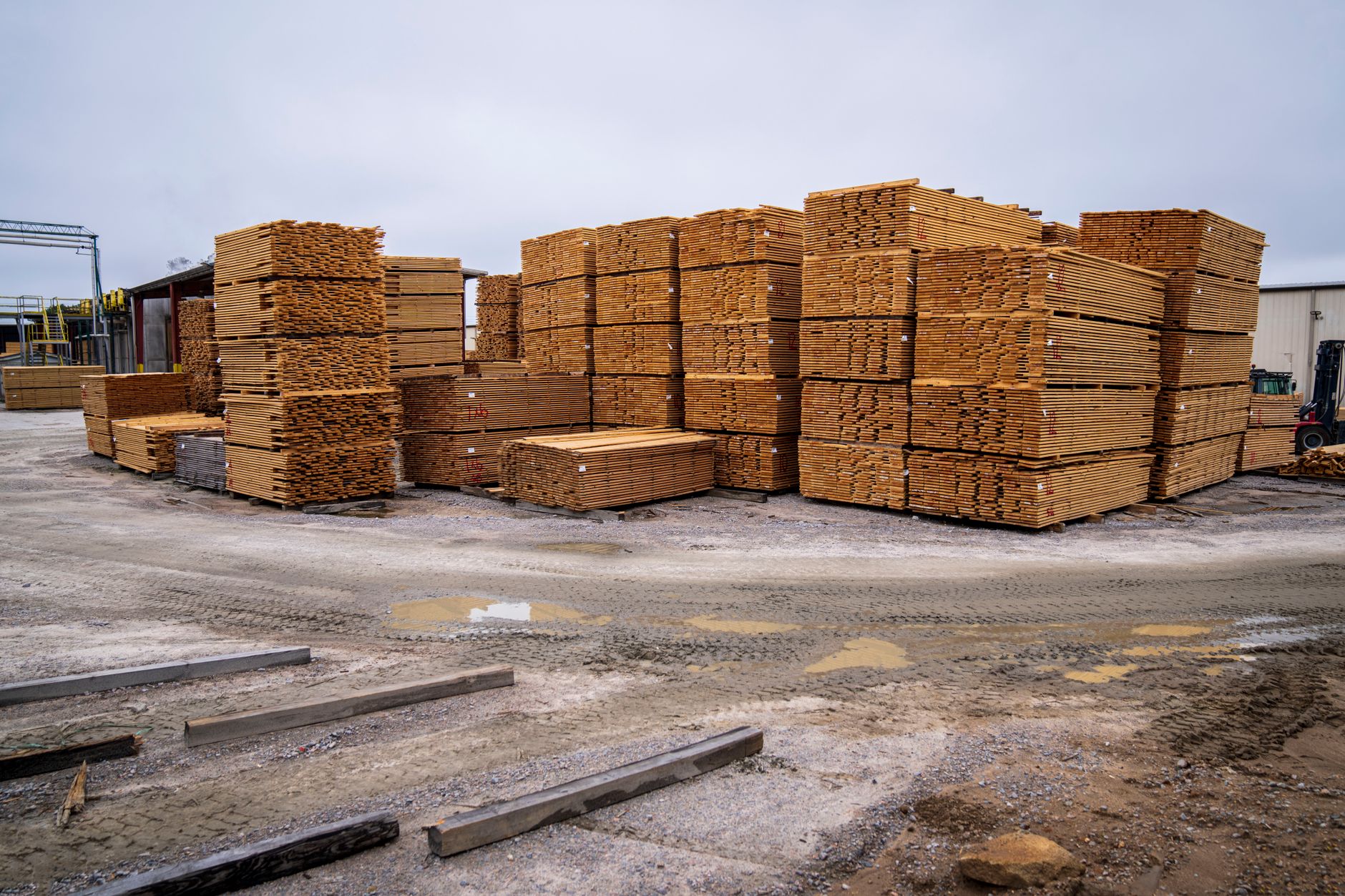
Pallet plants run fixed, repeated moves. Lumber goes from the yard to the saw, cut stock goes to the nailers, and finished pallets and stacks go to the staging yard or the dock. These are the moves an autonomous forklift follows well, because the path rarely changes and the load pattern repeats. The return comes from how many of those hours move onto the robot, not from how fast it travels.
Three sources add up. The first is direct labor hours: the robot takes over repeated legs during shifts you cannot fill or that run on overtime. The second is steadier throughput, since the robot starts at shift start and does not wait on a call-out or a late arrival. The third is lower manual handling on the heaviest stack moves, which can reduce strain injuries, though that benefit is harder to put into a number. Build the math on the first source and treat the others as upside.
Most of the value sits on the shifts that are hard to fill. A robot that covers a full crew already staffed at strength adds less than one that covers the open third shift. Start your review with the shifts that run on overtime or go short.
How does the savings math work?
The calculator on this page multiplies the hours of work the robot realistically takes over by the local wage for that job, then subtracts the lease cost. The four inputs are listed below.
The share input matters most, and it is the one a generic estimate gets wrong. A robot does not take every hour of a route. Staff still load and check bundles, clear blocked lanes, handle damaged stock and restart the unit after a fault. The share is set by the route, the schedule and the floor, which is why the site assessment measures them.
The output is a savings range, not a promise. The low end assumes the robot covers less of the work, runs fewer shifts and meets more interruptions. The high end assumes a clean fixed route, few exceptions and full use of the shifts it is set to cover. Payback comes from setting the lease cost against net savings over time, and the fixed robot lease payment is only firm once the lease quote follows the site assessment.
- Hours of freight, stock and material movers, hand work taken over each week
- The local wage for this job, from the government wage data on this page
- The share of those hours the robot can realistically cover, after stops, charging and exceptions
- The lease cost, quoted through financing after a free site assessment
What changes the number up or down?
Route fixedness is the largest lever. A saw-to-nailer path that runs the same way every shift keeps the robot productive. A yard where stacks move unpredictably, or where forklifts and people mix freely, cuts the share of work the robot can take. Load variety matters too. Lumber lengths, bundle weights and pallet sizes that change through the day need more setup and more exception handling.
Shift coverage is the second lever, and plants often overlook it. Labor that is already paid for and sitting idle does not turn into savings unless the schedule changes. If the robot covers shifts you already staff at strength, the saving is small. If it covers the shifts that go short, the saving shows up as overtime and open shifts that stop.
Floor condition, dust, moisture, ramp grade and charging windows set how many hours a unit can actually work. A plant with level floors and a clear charging plan gets more out of the same lease than one that loses hours to dust and slow charging. The checklist below lists what to confirm before you decide.
Is an autonomous forklift worth it compared with hiring?
The honest answer depends on the mix of work. A person adjusts on the spot, judges a damaged bundle, reroutes around a blocked lane and sorts a mixed load. A robot repeats the same route at the same pace while it is charged and the path is clear. For a plant that cannot fill a shift, the real comparison is the robot against an open shift that runs late or goes undone.
Hiring still wins where the work changes daily. If the plant's moves shift between lumber, finished stacks, returns and yard reorganization, people are the more flexible choice. The robot earns its place on the repeated legs, and people keep the varied work. Many plants find the best result is a mix, with the robot on fixed routes and staff on the exceptions.
- Shift flexibility
Autonomous Forklift
Runs the same route at the same pace while charged and the path is clear
Staff
Adjusts on the spot to blocked lanes, rush orders and mixed loads
- Hard-to-fill shifts
Autonomous Forklift
Available for the shifts you set it to cover
Staff
Hard to hire and keep, and each departure brings a training gap
- Damaged or odd loads
Autonomous Forklift
Needs a person at the handoff or it waits
Staff
Spots a split bundle or a bad board and decides what to do
- Breaks and coverage
Autonomous Forklift
Needs charging within its shift window rather than breaks
Staff
Needs breaks, time off and shift handover
- Work that changes daily
Autonomous Forklift
Best on fixed, repeated legs
Staff
Best on varied tasks and yard reorganization
- Safety near people
Autonomous Forklift
Path and sensors must keep people out of the lane
Staff
Can read a scene, though fatigue and distraction still contribute to incidents
- Cost structure
Autonomous Forklift
Fixed lease payment through financing, quoted after assessment
Staff
Wages, benefits and overtime that rise when shifts go short
What risks could cut the return, and how do you avoid them?
Safety is the first risk, and it shapes the design. An OSHA estimate summarized by a safety training site puts forklift fatalities at about 85 a year, serious injuries at 34,900 and non-serious injuries at 61,800. These are older estimates. For 2020, the same summary reports 78 work-related deaths and 7,290 nonfatal injuries with days away from work involving forklifts. The same summary names pedestrians being struck as the leading fatal event, so the robot's path has to keep people out of the lane, not just move the load.
Downtime and low utilization are the second risk. A unit that sits idle keeps costing the lease while the hours saved do not arrive. Plan a backup for the busiest shifts, and run route changes through the same review as any other process change, with a re-mapping step before a new route goes live. Track utilization from the first week.
Scope creep is the third risk. A plant that adds routes, lumber sizes and yard zones after installation can outgrow the original path and the share of hours it covers. Write the covered routes into the lease scope, and review them regularly.
What is a realistic timeline from assessment to payback?
The work runs in phases. Assessment and mapping come first, when the site is measured, routes are recorded and load types are catalogued. Next come the lease quote and financing approval. Then deployment and integration with your scheduling and staff, training, and a go live period in which the robot runs a limited set of routes before full coverage. Payback begins to count once the robot covers hours at its steady rate, not on the day it arrives.
No single calendar length fits every plant. Timing depends on financing approval, any floor or charging work, and how many routes you start with. Many plants begin with one unit on one route and add routes after the hours hold up against the forecast. That keeps the first commitment small and gives you real operating data before a second unit.
How do you get a precise figure from a free site assessment?
We pick the robot for the site, lease it through financing, deploy and integrate it, train your staff and service it nationwide. The free site assessment is where the range becomes a number for your plant. Bring your shift schedule, the route list from saw to nailer to yard, a sample of lumber and stack sizes, load weights, overtime and open-shift records, and a floor plan with ramps and charging points.
With those inputs we set the share of hours the robot can take, check the floor and the routes, and return a lease quote through financing. The quote replaces the wide range on this page with a figure built on your plant. Ask for the low case as well as the high one, and ask what would move the number. A good quote explains its assumptions in plain terms, and that is the one to put in front of the person who signs off.
Frequently asked questions
Want an autonomous forklift at your pallet manufacturer?
Tell us about your site. We will recommend the robot, quote the lease, and keep it serviced.
Sources
- US Bureau of Labor Statistics, Occupational Employment and Wage Statistics (OEWS May 2024)
- IBISWorld, Wood Pallet and Skid Manufacturing number of businesses
- IBISWorld, Wood Pallet and Skid Manufacturing employment
- Mewayz industry data, NAICS 32192
- BLS Occupational Outlook Handbook, Hand Laborers and Material Movers
- FleetRabbit, reducing forklift operator turnover
- GlobeST, warehouse automation article, March 2026
- Logistics Management 2025 Automation Survey
- Safety training summary of OSHA forklift statistics