
The short answer
Autonomous forklift ROI for cosmetics distributors comes mainly from fewer handling incidents on high-value stock and from labor hours moved onto robots for repetitive pallet runs on fixed aisle paths. The savings range on this page is a computed estimate, not a promise, and it depends on how much of your pallet movement follows set paths. The lease is quoted after a free site assessment as a fixed robot lease payment.
Key takeaways
- The return comes from fewer aisle incidents on fragile, high-value stock and from labor hours moved to robots.
- The share of pallet moves that follow fixed, repeatable paths sets most of the savings range.
- Savings are a computed range, never a guaranteed figure.
- Damage and pick accuracy gains need a measured baseline from your own claims and incident logs.
- A free site assessment turns the range into a quote with a fixed robot lease payment.
Run the numbers for your site
Pick your city or state for a real regional number - we use the real BLS wage there. (On the live site this auto-detects from your location.)
What do you want to automate?
The robot takes the repetitive cart and pallet moves off the heaviest motion.
What is autonomous forklift ROI for cosmetics distributors?
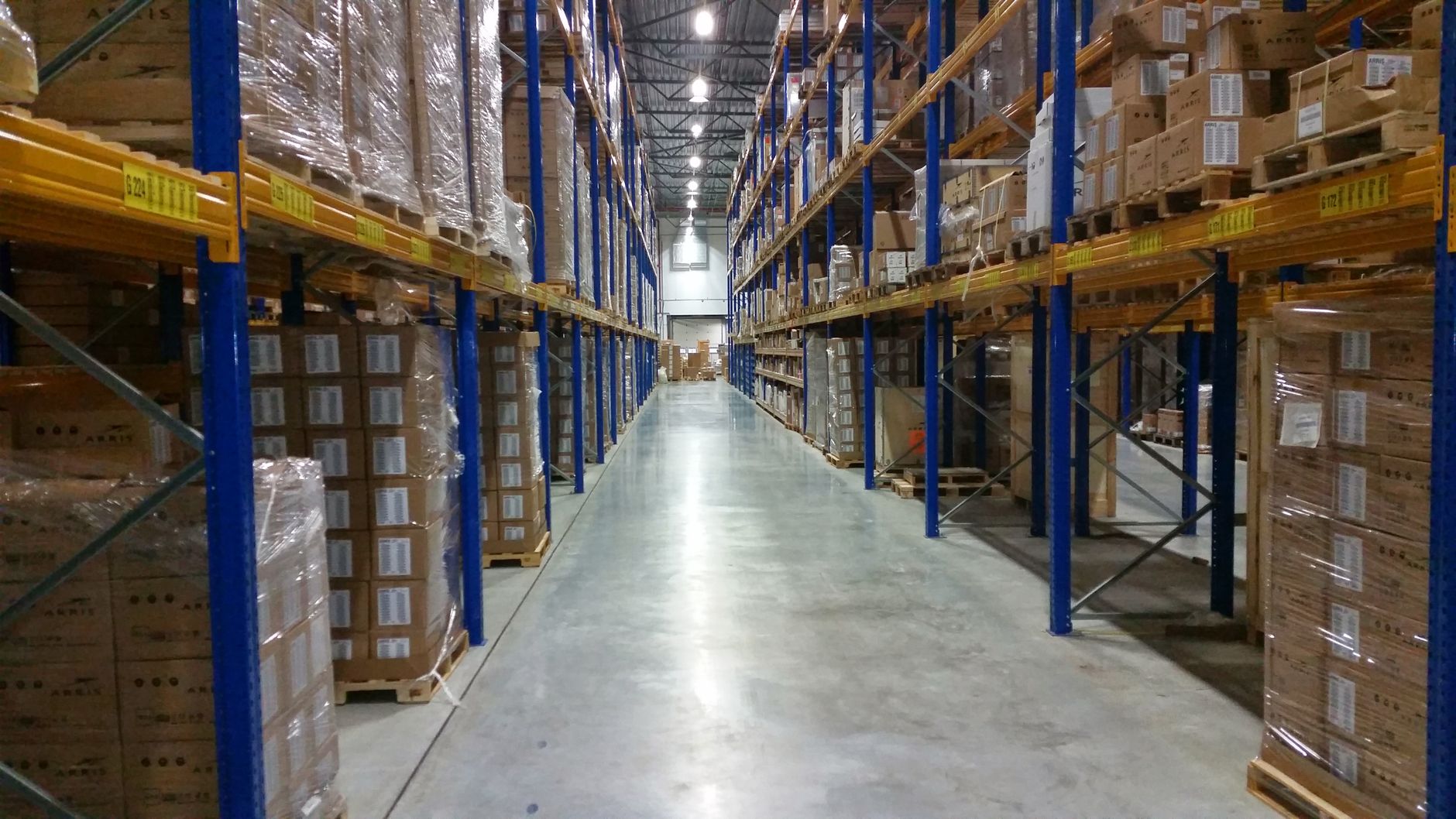
Autonomous forklift ROI for cosmetics distributors is the return from moving pallets with a robot that follows set paths, measured against the labor hours and handling losses it takes over. Cosmetics stock is fragile, high value and often stacked in tight aisles with heavy foot and cart traffic, so each handling incident costs more than the pallet itself. That combination is where the return usually starts.
Adoption is rising in the wider warehouse market. A warehouse automation survey reported by a supply chain trade publication found that more than 70 percent of respondents have adopted or plan to adopt autonomous mobile robots or automated guided vehicles, and 21 percent were using self-driving forklifts. A third-party industry count puts US drug, cosmetic and toiletry wholesaling businesses at 9,419 in 2025, down 0.8 percent that year, which shows a large group of separate businesses, each with its own floor.
Facilities are large. A project listing for a cosmetics distribution center gives its floor area as 513,947 square feet, and a project listing for a cosmetics warehouse acquisition near Savannah, Georgia gives 708,990 square feet. Long floors mean long pallet runs, and those runs are where a robot's path discipline pays off most.
Our figure for a typical site is a planning assumption, not a published statistic. None of the public sources reviewed gave a headcount for cosmetics distribution, so the calculator uses 6 people as the typical number doing this kind of work at one site until the site assessment replaces it with your actual roster.
Where does the return come from in a cosmetics distribution center?
The return comes from three main places: fewer handling incidents, fewer product damage claims on high-value stock, and labor hours moved from repetitive pallet runs to a robot. Pick accuracy is a fourth benefit that can improve, because a robot on a fixed route puts pallets where the system directs them rather than where a tired operator decides to put them.
The incident baseline is worth checking first. According to the Bureau of Labor Statistics, the 2024 total recordable case rate for warehousing and storage was 4.8 per 100 full-time workers, with 4.1 for cases involving days away, job restriction or transfer, and 1.5 for cases with days away only. The same BLS page flags a series break from 2023 data after a classification revision, so compare your own log with older figures carefully.
Forklifts are a specific hazard inside that group. The National Safety Council, summarizing BLS data, counts 84 forklift-related work deaths in 2024. It also reports 25,110 DART cases for 2023 and 2024 combined, of which 15,460 were days away from work cases, so that figure covers two years and should not be read as one year. Fewer close calls in aisles is the part of the return that is easiest to justify internally.
Damage claims are harder to model because they depend on your own history. Pull three years of claims, note which SKUs and pallet configurations produced them, and check whether those losses happened on the long, repeated runs a robot would take over or on the short, mixed moves a person handles best.
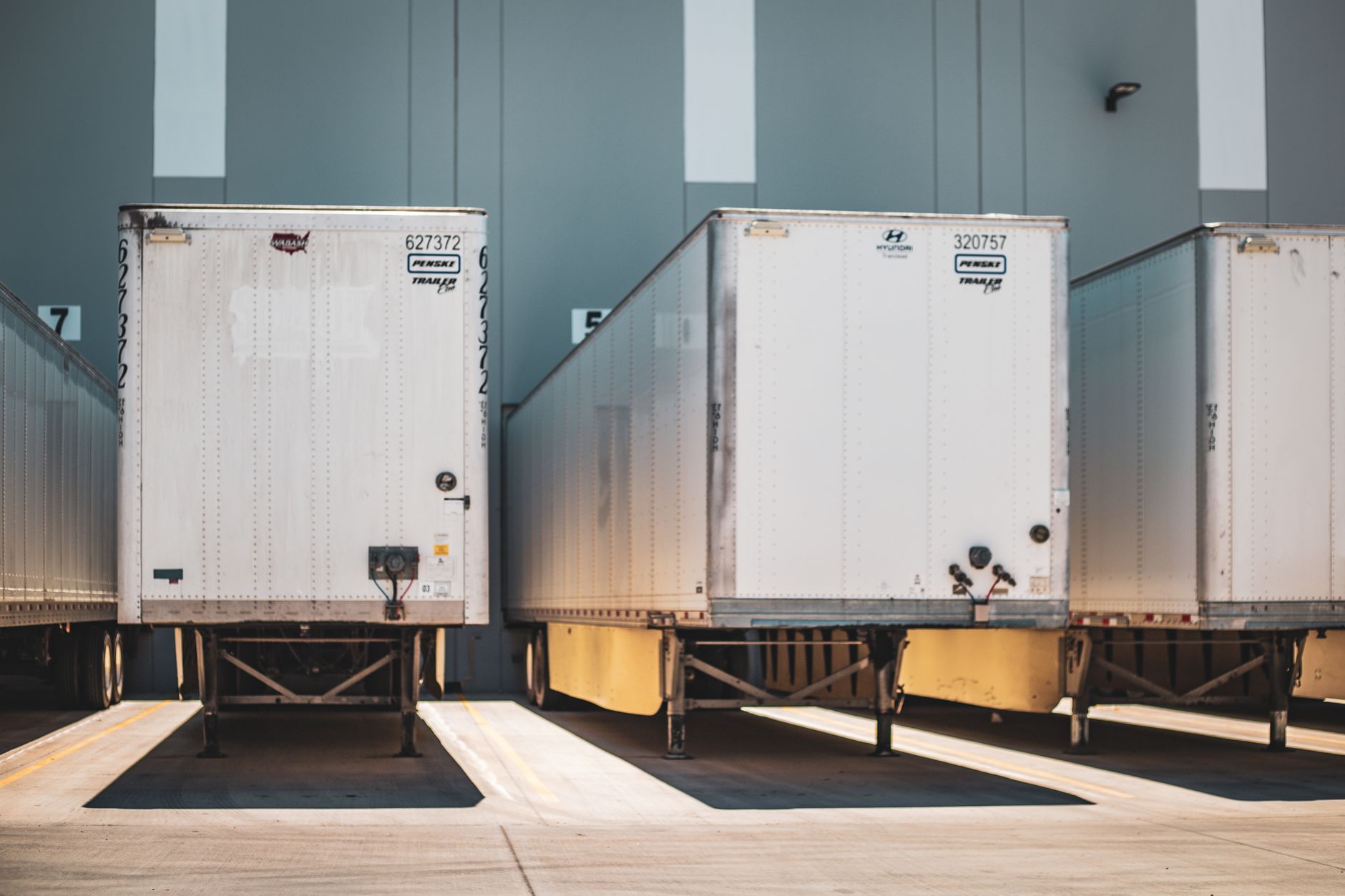
Median hourly wage, Laborers and Freight, Stock, and Material Movers, Hand
$4,380
Monthly cost of one full-time worker, at the median wage plus payroll costs (an estimate, not a quote).
How does the savings math work?
The calculator works in three steps. First it takes the hours of laborers and freight, stock, and material movers, hand work that the robot can take over, meaning the moving of freight along a route. Second it prices those hours at the local wage for this job from the government wage data on this page, then applies the share of that work the robot realistically takes. Third it subtracts the fixed robot lease payment and adds an estimate of avoided handling losses.
Two inputs matter more than the rest. The share of work a robot takes is usually well below the total hours in the aisle, because exceptions, mixed loads, damaged pallets and unplanned moves stay with people. The lease cost is fixed, while labor hours follow volume, so the offset is larger in peak months when the robot runs more hours and smaller in slow months when it runs fewer.
The output is a range, not a promise. The range widens when inputs are uncertain and narrows once the site assessment has measured real hours and claims history. Do not compare it with another provider's range unless both use the same inputs, because the share of work taken is one of the largest inputs and small differences in it change the result a great deal.
How many labor hours can an autonomous forklift take over?
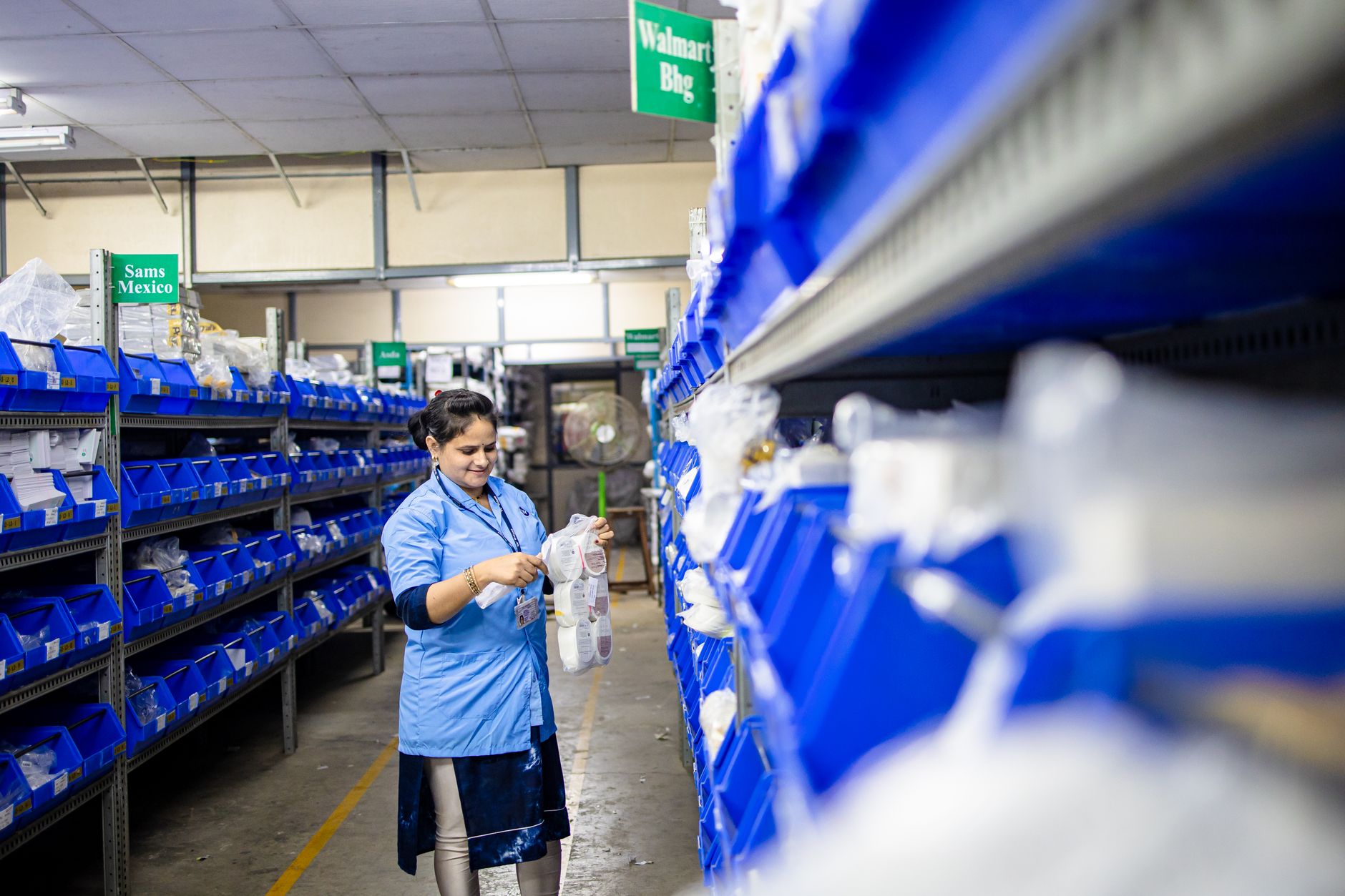
The labor pool is large and steady. The Bureau of Labor Statistics Occupational Outlook Handbook reports 2,988,900 jobs in 2024 for laborers and freight, stock, and material movers, hand, the detailed occupation this calculator prices. The broader hand laborers and material movers group held about 7.0 million jobs in 2024, and the BLS projects 4 percent growth for that group from 2024 to 2034, adding 258,400 jobs.
A secondary turnover summary, citing BLS JOLTS data, puts annual warehouse and fulfillment turnover between 35 and 49 percent. That churn matters because each new hire needs training before handling high-value stock, and a robot that takes the repetitive runs reduces how many people must be trained on those routes. This source is secondary and should be checked against primary data during the assessment.
Hour figures for cosmetics distribution aisles were not published in any source reviewed for this page. Hours depend on order profile, slotting, shift pattern and how much of the day goes to travel rather than lifting. The table below lists the kinds of work a robot takes over, with the hour column filled in by a time study during the site assessment rather than by a national average.
Measure in a normal week and in a peak week. A robot pays off on the repetitive share of the work, so a site with steady daily pallet moves on fixed routes will show a cleaner number than one whose volume swings with every promotion.
What changes the number up or down?
Some inputs move the range more than others. The share of moves on fixed paths is the largest, because a route that changes every few weeks needs re-mapping and keeps the robot idle while it happens. Aisle width, floor flatness and the mix of foot traffic, carts and forklifts decide whether a robot can run at speed without stopping. Load consistency matters too, since uniform pallets built to the same standard are easier to handle without exception stops.
Volume and seasonality cut both ways. A distributor that ships heavily in one quarter gets more value from robot hours in that quarter but must plan for lower utilization in slow months. Your claims history sets the damage baseline, so a site with frequent claims on long runs will show a larger offset than one whose claims come mainly from receiving errors, which a robot does not fix.
On the cost side, the lease is a fixed robot lease payment arranged through financing. Under that structure the lease cost stays the same through a busy quarter and a slow one, so the offset rises and falls with the hours the robot actually runs. The quote states the lease term, so the payback math can be checked against it.
How does a robot forklift compare with a person on the same aisles?
A robot and a person are good at distinct things, and a sound decision uses both. The robot is consistent. It follows the same path at the same speed on every shift, does not tire and keeps to a fixed route, which lowers the chance of a rushed turn in a crowded aisle. A person is better at judgment: sorting a damaged pallet, resolving a mislabeled load or rerouting on the spot when an aisle is blocked.
Night coverage is where the robot's steady pattern is most useful, but staff still need to be reachable for exceptions. Where a person clearly wins, the robot should not be assigned the work. The table compares the two on the points that matter most to the return.
- Consistency on a fixed route
Autonomous Forklift
Same path and speed on every shift
Staff
Varies with fatigue and pace
- Exception handling
Autonomous Forklift
Stops or calls for help on unplanned moves
Staff
Sorts damaged pallets and resolves mislabeled loads
- Shift coverage
Autonomous Forklift
Can run overnight with staff on call for exceptions
Staff
Needs scheduling, breaks and sign-in
- Cost pattern
Autonomous Forklift
Fixed robot lease payment, plus setup and integration
Staff
Paid hours that rise with volume, plus turnover and training
- Judgment in crowded aisles
Autonomous Forklift
Follows rules but may pause in heavy traffic
Staff
Adjusts quickly to a blocked aisle or a spill
What are the risks to the return, and how do you avoid them?
The biggest risk is a route that does not stay fixed. If the layout changes every few weeks, the robot needs re-mapping, and each change erodes the hours it was meant to take. Avoid this by freezing the high-volume lanes before deployment and scheduling layout changes in a set window.
The second risk is over-scoping. A robot assigned to mixed, low-volume or one-off moves sits idle and drags the offset down. Start with the repetitive lanes that the time study confirmed, because adding scope later is easier than explaining a first year of idle hours.
The third risk is the people side. Staff who see the robot as a threat will work around it, and a robot that is routinely blocked will not hit its hours. Involve shift leads in the route design, train them on stop and recovery procedures, and report the hours back to the team.
The fourth risk is measuring the wrong thing. If claims do not fall after go live, check load stability and route speed before concluding the robot failed. The offset is an estimate until it is measured on your floor, and the review schedule should say so.
What is the realistic timeline from assessment to payback?
A realistic timeline has five phases. The site assessment comes first and covers the hours measurement, the claims review and the floor survey. Mapping and robot selection for the site follow, then a lease quote built on a fixed robot lease payment. Deployment and integration come next, with the robot tied into the warehouse flow and staff trained on stop and recovery. Go live support runs through the first stable weeks of volume.
Payback is the last phase and the least predictable, because it depends on how steady the robot's share of the work turns out to be. The return usually becomes clear once the robot has run through a full seasonal cycle, since that shows both the slow months and the peak. Review the numbers at the end of the first peak and again after a full year, and compare measured hours with the calculator's assumptions each time.
Do not expect the full return on day one. Early months carry mapping, tuning and training, so the first review should judge process fit and staff adoption rather than the final offset. Set those checkpoints in the quote so both sides know when the numbers will be tested.
How do you get a precise figure from a free site assessment?
A precise figure needs measured inputs, and the free site assessment is where they come from. We map the floor, time the moves on the repetitive lanes, review claims and incident logs with you, and check floor condition and traffic. We then match the robot to the site and set out lease options through financing.
The quote follows the assessment. It lists the fixed robot lease payment, the lease term, deployment and integration, staff training and nationwide service coverage, along with how emergency response and backup units are handled. Ask for the assumptions behind the savings range and check each one against your own logs before you sign off.
We are a US commercial robot integrator. We pick the right robot for the site, lease it through financing, deploy and integrate it, train the staff and service it nationwide, so one partner answers for the whole project. Bring three years of claims, a recent count of pallet moves and your aisle drawings, and the assessment will turn the calculator's range into a site-specific figure.
Frequently asked questions
Want an autonomous forklift at your cosmetics distributor?
Tell us about your site. We will recommend the robot, quote the lease, and keep it serviced.
Sources
- US Bureau of Labor Statistics, Occupational Employment and Wage Statistics (OEWS May 2024)
- Bureau of Labor Statistics Occupational Outlook Handbook, hand laborers and material movers
- Bureau of Labor Statistics, Warehousing and Storage industry page
- National Safety Council, forklift injury facts from BLS data
- Warehouse automation survey reported in a supply chain trade publication
- Third-party industry count, drug, cosmetic and toiletry wholesaling
- Project listing for a cosmetics distribution center
- Project listing for a cosmetics warehouse acquisition near Savannah, Georgia
- Secondary turnover summary citing BLS JOLTS data