

The short answer
For a paper product distributor, autonomous forklift ROI comes from pallet moves between receiving, storage and dock lanes that would otherwise wait on scarce trained operators. The savings range on our calculator is built from the labor hours the robot takes over, the share of those moves it realistically handles on fixed routes, and the lease cost, and it stays a range until a free site assessment measures your move counts. Expect the largest gains where a site has steady, repetitive moves and forklift shifts that are hard to fill.
Key takeaways
- The return comes from repetitive pallet moves on fixed routes, not from replacing a whole crew.
- The savings range is built from measured move counts, the share a robot realistically takes and the lease cost.
- Hard-to-fill forklift shifts raise the value, and 52 percent of surveyed managers ranked reliable labor as their top challenge.
- Exceptions like damaged or mixed pallets stay with people, and they set how large the share can be.
- A free site assessment turns the range into a lease quote built on your own numbers.
Run the numbers for your site
Pick your city or state for a real regional number - we use the real BLS wage there. (On the live site this auto-detects from your location.)
What do you want to automate?
The robot takes the repetitive cart and pallet moves off the heaviest motion.
What is autonomous forklift ROI for paper product distributors?
Autonomous forklift ROI for paper product distributors is the return from moving pallets with a driverless truck instead of a trained operator on the same route. Paper pallets are heavy, the layouts tend to stay fixed, and the moves repeat through the shift: receiving to reserve storage, storage to pick staging, staging to outbound dock lanes. That repetition is what makes a fixed route worth running.
The return is a range, not a single number. It depends on how many pallet moves a site makes, how many of those moves follow a route a robot can run reliably, the lease cost quoted after assessment, and how much of a forklift operator's time the robot takes off the schedule. Each of those inputs has to be measured on your floor rather than assumed from a general figure.
Pallet quality matters as much as route quality. Pallets built to a consistent footprint are easier for a robot to pick up and set down, while damaged, overhanging or mixed pallets still need a person to judge them. Check your pallet condition early, because it sets the share of moves a robot can realistically take.
Where does the return come from in a paper distribution warehouse?
Most paper distributors run the same loop every shift. Inbound trucks unload at the receiving dock, pallets are checked and moved into reserve racking, then pulled to pick staging and finally moved to outbound dock lanes. Each leg is a forklift trip, and each trip ties up an operator who could be handling the work that needs judgment.
A robot does its best work on the legs that are repetitive and mapped, which usually means dock to reserve, reserve to staging and staging to outbound lanes. Those legs hold the bulk of the repeated hours, and they are where a fixed route pays off, because the same path is driven again and again across the shift.
The sector is large and spread across many sites. The Census Bureau counted 11,500 establishments of paper and paper product merchant wholesalers in the US in 2008, according to Statista citing Census. That is the only official count we found, and it dates from 2008, so read it as a sign of how many sites exist rather than a today's total.
Median hourly wage, Laborers and Freight, Stock, and Material Movers, Hand
$4,380
Monthly cost of one full-time worker, at the median wage plus payroll costs (an estimate, not a quote).
How does the labor math work for pallet moves?
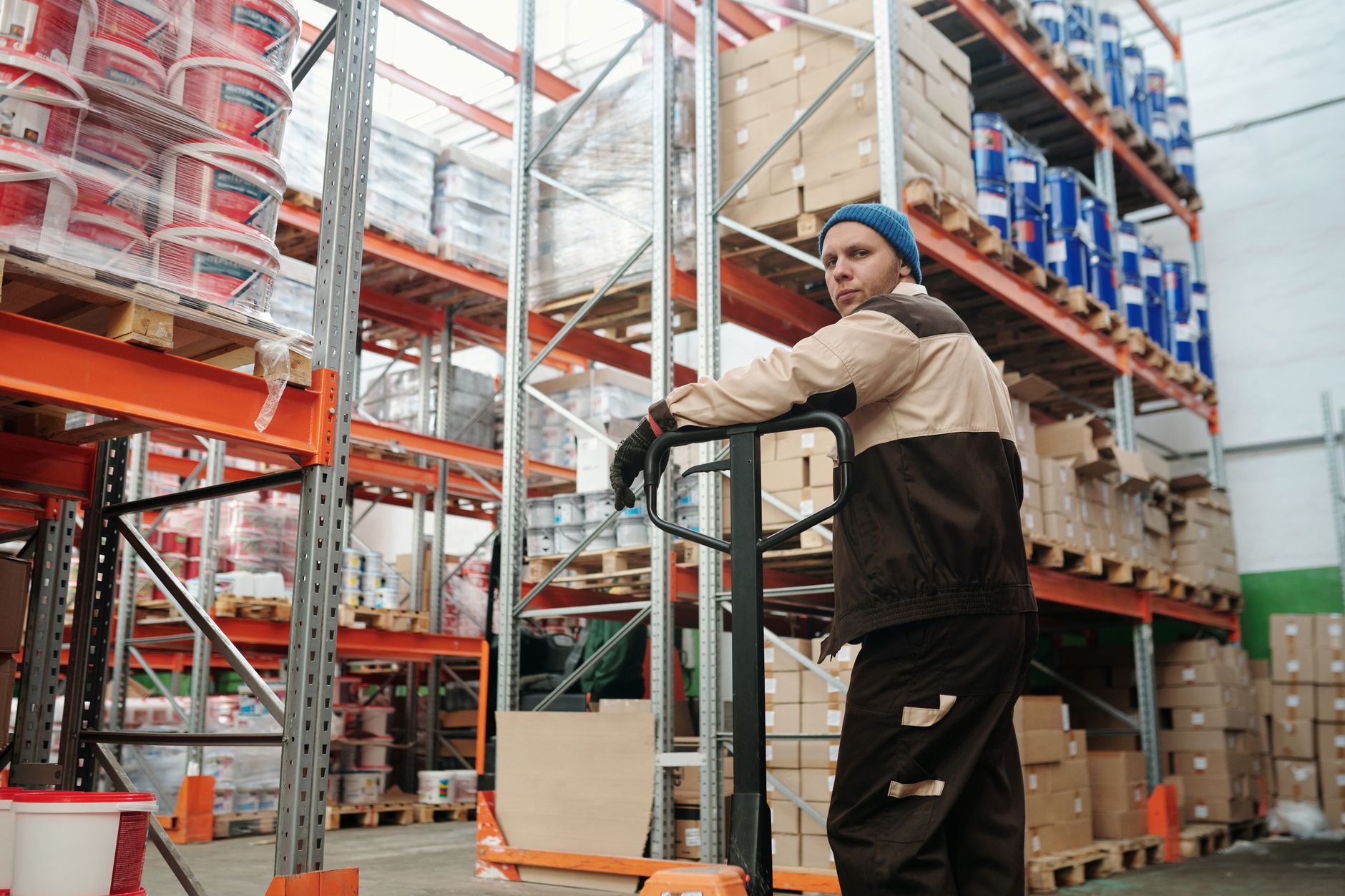
The labor side is priced on the wage of Laborers and Freight, Stock, and Material Movers, Hand. The government wage data on this page gives the local figure for that job. The hours a robot takes over are hours of that kind of work, so the first step is counting how many hours your forklift staff spend on the repetitive legs each shift and each week.
The Bureau of Labor Statistics Occupational Outlook Handbook puts hand laborers and material movers at about 7.0 million jobs in 2024. The detailed occupation Laborers and Freight, Stock, and Material Movers, Hand accounts for 2,988,900 of those jobs, and its workers handle freight and stock in storage areas, production areas and loading docks, the same ground pallet moves cover.
The calculator works in three steps. It takes the operator hours offset by the legs the robot can run, applies the share of work the robot realistically takes, then sets that against the lease cost quoted after assessment. We could not find a published headcount or shift-hour figure for paper distributors, so the people count on this page is a planning estimate to replace with your own roster.
How much of the work does a robot realistically take?
This is where most overestimates happen. A robot does not take every move. It takes the moves that run on a fixed route, within the load limits it was set up for, in aisles that stay clear. Damaged pallets, mixed loads that need sorting and blocked aisles still go to a person, and those exceptions are part of the share.
Our estimate of the share comes from the site assessment, where routes are mapped, today's moves are timed and exceptions are logged. Start with a conservative share and beat it, rather than promising a high share and missing it. Ask any provider which share they assume and how they measured it.
Safety is part of the picture. OSHA's directive on powered industrial trucks states roughly 85 forklift fatalities and 34,900 serious injuries per year, and says 42 percent of forklift fatalities involve an operator crushed by a tipping vehicle. That directive is older and its excerpt gives no year, so use it for scale. A compilation of BLS data reports 1,004 fatal work injuries in the forklift category in 2021 and 998 in 2022, though we did not confirm those against the BLS release itself.
What changes the number up or down?
Four inputs move the savings range most: the volume of repetitive pallet moves, the share of those moves on mapped routes, the operator hours they absorb, and the lease cost quoted after the assessment. A site with steady inbound and outbound loads and a clear layout sits higher in the range. A site with frequent re-slotting and irregular pallet sizes sits lower.
Turnover affects the hours side, but the sources disagree on how much. A vendor blog puts typical forklift operator turnover at 35 to 45 percent annually. Instawork's 2025 State of Warehouse Labor report, which surveyed 600 fulfillment-center managers, found most respondents reported turnover under 10 percent, while a notable minority cited 20 percent or more. Use your own turnover records, since the replacement and training cost of each departure is real either way.
Hard-to-fill shifts raise the value of automation more than turnover alone does. The same Instawork report names forklift operators among the hardest roles to fill, and 52 percent of managers ranked finding reliable, quality labor as their top challenge.
What are the risks to the return and how do you avoid them?
The biggest risk is a route that does not fit the floor. If aisles narrow with seasonal stock or racking changes every quarter, the robot waits or re-routes, and the hours it was meant to replace come back. Map the site before committing to a route set, and keep the first route set small enough to change quickly.
The second risk is over-counting the share. Teams often assume the robot takes every move on a leg, when exceptions lower the realistic share. Build the estimate from counted moves, review the share once the first weeks of operation are logged, and adjust the route set to match what the data shows.
The third risk is leaving staff out. People who do not trust the robot route work around it, which cuts the share and puts pressure back on the operators. Train the dock and storage crews on stop points and exception handling before go-live, not after. Keep trained staff on every leg that stays manual, since the OSHA excerpt ties many forklift fatalities to tipping and crushing events.
Robot or person: where does each one win?
A robot is consistent and does not tire, but it works only on the routes it is set up for. A person adapts to a new layout, reads a damaged pallet and handles the one-off move nobody planned for. The honest answer is that the two work best together, with the robot on the repetitive legs and staff on the exceptions.
Adoption is rising across warehouse automation. A BlueBiotics-sponsored survey, which is vendor-sponsored and whose date is not shown, found more than 70 percent of respondents have adopted or plan to adopt autonomous mobile robots or AGVs, and more than 70 percent plan to extend their fleets within two years. That category is broader than forklifts, so read it as direction, not as a forklift adoption rate.
Interact Analysis's Voice of Market research, dated May 2026, found 26.3 percent of respondents cited forklifts as their top problem technology. Throughput ranked as the top goal for 2026. Moves per hour is the same measure the savings range uses, so that is the number to track after go-live.
- Repetitive fixed routes
Autonomous Forklift
Runs the mapped route the same way on every pass
Staff
Runs the same route, but gets tired and needs breaks and cover
- Exceptions
Autonomous Forklift
Stops or re-routes for blocked aisles and needs a person for damaged loads
Staff
Judges damaged, mixed or unusual loads on the spot
- Layout changes
Autonomous Forklift
Needs remapping before a new route is safe
Staff
Adapts to a new layout within the same shift
- Hiring and turnover
Autonomous Forklift
Set up once, then serviced on a service plan
Staff
Needs recruiting, training and backfill when people leave
- Shift coverage
Autonomous Forklift
Runs scheduled routes without depending on who shows up
Staff
Covers the shift only when the shift is staffed
- Cost basis
Autonomous Forklift
Priced through the lease quote after assessment
Staff
Priced on the local wage for the job plus overhead
What is a realistic timeline from assessment to payback?
A typical path starts with a free site assessment, where we map routes, time moves and log exceptions. From those measurements we quote the lease, select the robot for the site, and plan the integration with your dock and storage schedule. Go-live support follows, and the share is checked against the numbers measured on day one.
We do not promise a payback date before we have measured. Payback depends on the lease term, the share achieved and the operator hours offset, so the timeline is set by the assessment and the first weeks of operation. Treat the first route set as a test, and expand only after the share holds up in practice.
A phased start lowers risk. Begin with one route, one leased unit and a clear measure of moves per hour, then add routes as the share holds. Plan the dock for the possibility that any single unit is down, and ask how nationwide service would respond during the assessment.
How do you get a precise figure from a free site assessment?
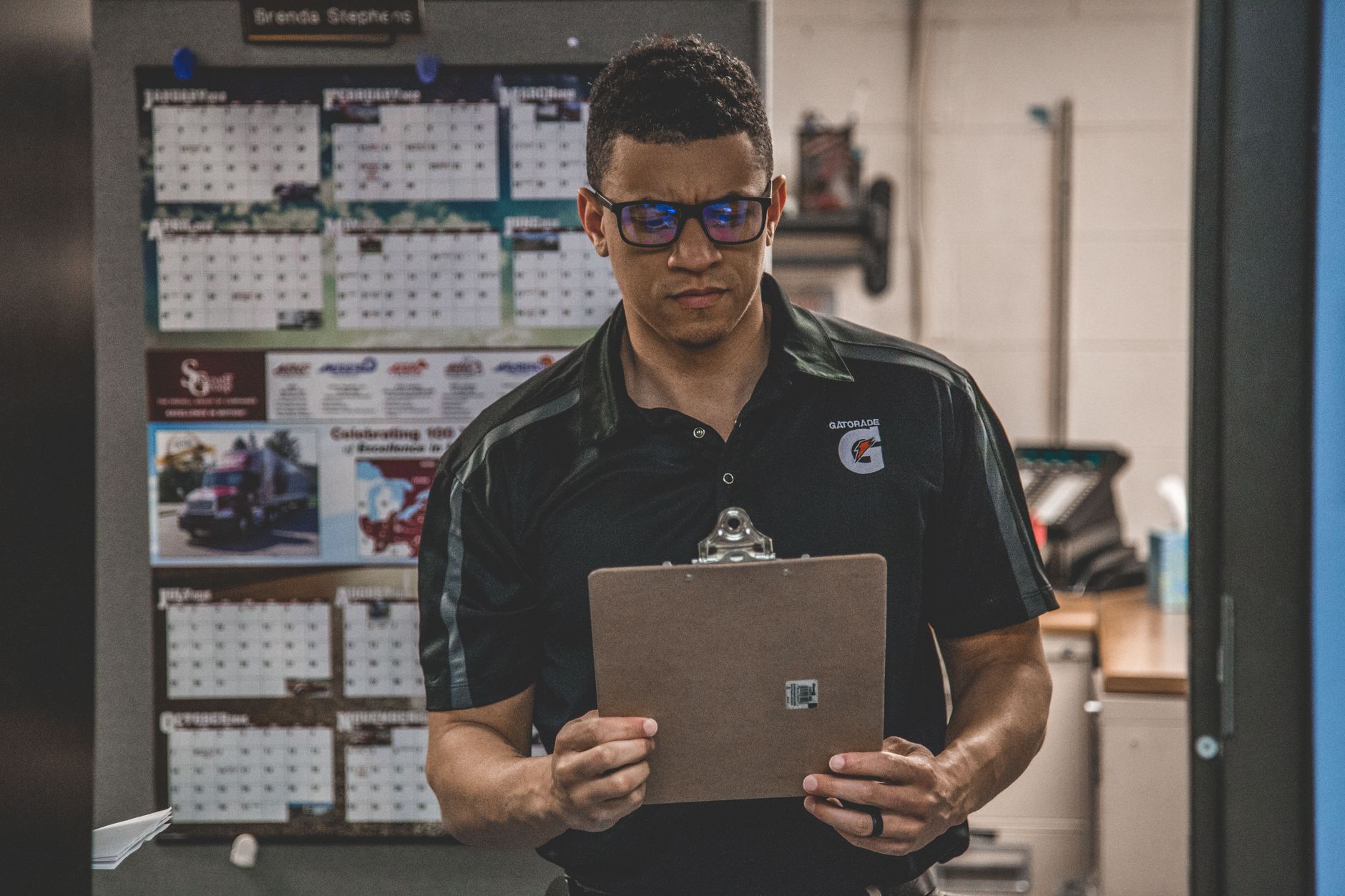
The calculator gives a range you can start with, but a precise figure needs your move counts, route map, operator hours and lease term. We collect those during the free site assessment, and the lease payment is quoted after it, never before.
Bring what you already have: pallet move logs or dock schedules, the roster for forklift work, a year of turnover and open-shift records, and a list of the aisles that change most. The more data you bring, the narrower the range becomes, and the easier it is to check each input against your own experience.
After the assessment you receive a lease quote and a savings range built on measured inputs. Compare the local labor cost against the government wage data on this page, and ask how the share was measured. A good quote explains every input it uses, and you should be able to challenge any of them.
Frequently asked questions
Want an autonomous forklift at your paper product distributor?
Tell us about your site. We will recommend the robot, quote the lease, and keep it serviced.
Sources
- US Bureau of Labor Statistics, Occupational Employment and Wage Statistics (OEWS May 2024)
- Statista citing US Census Bureau: establishments of merchant wholesalers
- OSHA directive on powered industrial trucks
- Instawork 2025 State of Warehouse Labor Report
- FleetRabbit: reducing forklift operator turnover
- BLS Occupational Outlook Handbook: Hand Laborers and Material Movers
- SDCExec: BlueBiotics survey on warehouse automation adoption
- Interact Analysis: market sentiment for forklift buyers, May 2026
- Markel compilation of BLS forklift statistics