
The short answer
Autonomous forklift ROI in Grand Rapids comes from the hours of Laborers and Freight, Stock, and Material Movers, Hand work a robot takes over, valued at the local wage shown on this page, minus the fixed lease payment quoted after a free site assessment. The savings range is a calculator estimate, not a promise, and it moves mostly with how repeatable the pallet moves are and how many shifts the robot covers. Sites with steady, route-based moves across several shifts usually land at the upper end of the range, while irregular freight and frequent exceptions push it lower.
Key takeaways
- The return comes from repeatable moves, not from the robot's top speed.
- The local wage for this job is one input, and the hours it applies to are the real lever.
- Forklift safety belongs in the case, because injuries and deaths remain a steady national concern.
- A savings range stays an estimate until a site assessment measures your actual routes.
- Payback depends on shift coverage, lease terms and how much exception work stays with staff.
Run the numbers for your site
Auto-detected from your location - we use the real BLS wage here. Not right? Pick your city or state above.
What do you want to automate?
The robot takes the repetitive cart and pallet moves off the heaviest motion.
What is autonomous forklift ROI in Grand Rapids, MI?
Autonomous forklift ROI in Grand Rapids is the return a business gets when a driverless material handling vehicle takes over repeatable moves that people now make by hand or on a manned truck. The return shows up as labor hours redirected or avoided, set against the cost of leasing the robot. It is not one number. It depends on how much of the work is predictable, how many shifts the robot covers, and how much supervision the site still needs.
On this page, the labor side is priced on the wage for Laborers and Freight, Stock, and Material Movers, Hand, using the government wage data shown in the panel beside the text. That is the job the robot does most directly: moving loads between dock, staging, racks and production lines. If your site calls the people who drive those moves by another title, the calculator still prices the work itself, not the title.
The savings range comes from our calculator, prefilled for Grand Rapids. It is a range because every site moves a different share of its freight in predictable ways, and that share is the number most likely to change once it is measured.
How many people do this work in the Grand Rapids area?
The Grand Rapids metro has a sizable transportation and warehousing base. According to FRED, transportation, warehousing and utilities employment in the Grand Rapids-Wyoming-Kentwood metro was 19.9 thousand in December 2025, a preliminary figure. Annual values were 19.8 thousand in 2022, 19.4 thousand in 2023 and 19.2 thousand in 2024. These totals cover the whole sector, so they show the size of the labor pool rather than a count of material movers.
The Greater Grand Rapids State of the Region 2025 report lists transportation and warehousing at 19,113 jobs in 2025, up from 17,200 in 2019. That report only had data through August, so treat the 2025 figure as partial. The direction is clear: the sector has grown, which generally means more freight moving through local sites.
Nationally, the Bureau of Labor Statistics Occupational Outlook Handbook puts about 6.9 million jobs in the hand laborers and material movers group in 2025. According to the same page, the detailed Laborers and Freight, Stock, and Material Movers, Hand occupation accounts for about 2.94 million of those jobs. That is the work this robot takes off the floor, and the local wage for this job appears in the panel on this page.
Large sites form a meaningful segment. A 2016 Census County Business Patterns count, as reported by a news site, found 362 US warehousing and storage businesses with 500 or more employees. That is an older figure, but it points to where repeat material handling tends to concentrate.
Turnover is harder to pin down. A policy brief from the National Employment Law Project estimated annual worker turnover at about 124 percent at one New Jersey warehouse, using 2020 data. That is a single facility, not a regional rate, so use it to understand how churn drives training cost, not as a Grand Rapids benchmark.
Median hourly wage, Laborers and Freight, Stock, and Material Movers, Hand
$4,448
Monthly cost of one full-time worker in Grand Rapids, MI, at the median wage plus payroll costs (an estimate, not a quote).
Why does forklift safety belong in the ROI?
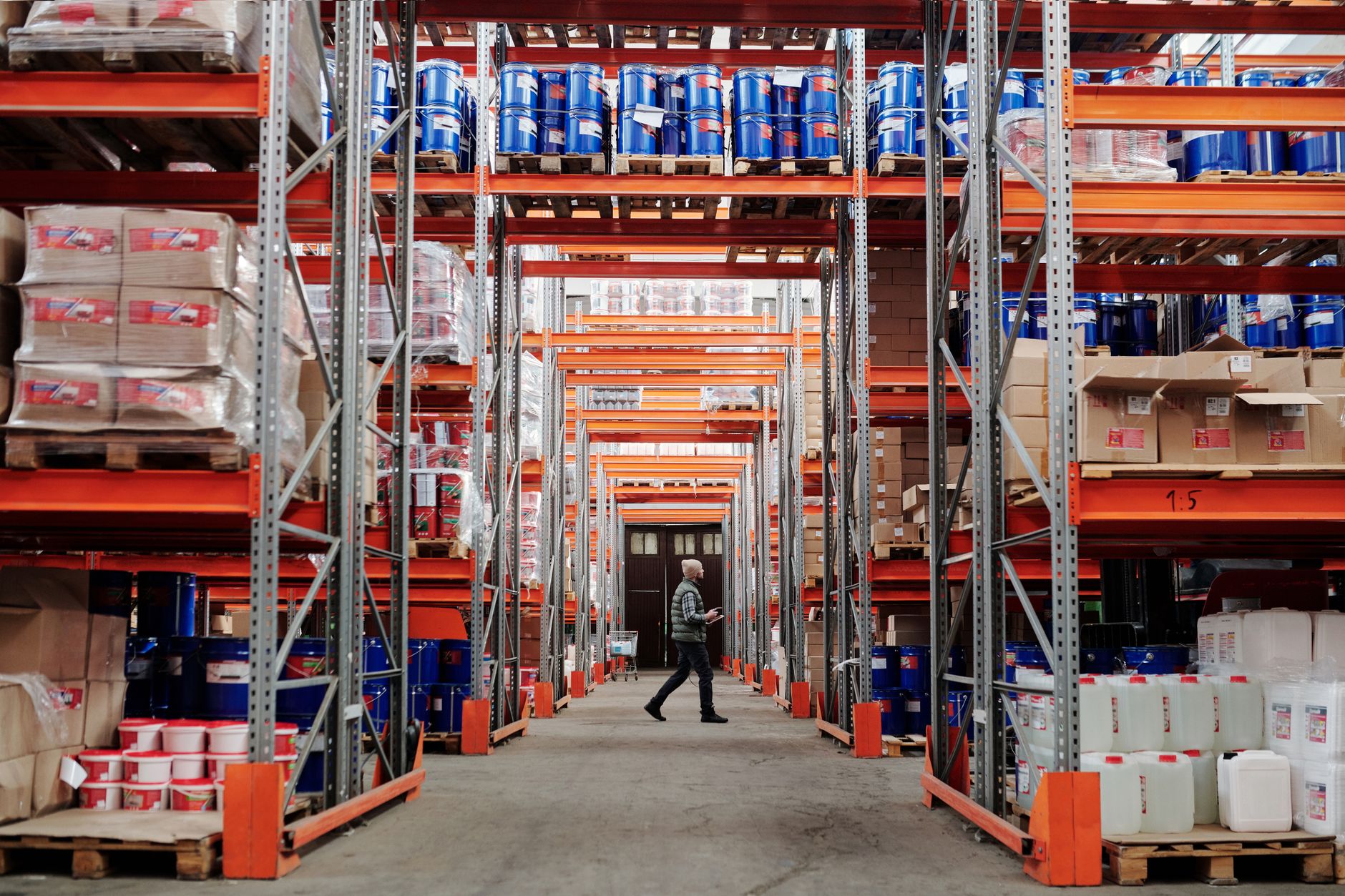
Safety is part of the financial case. According to a secondary summary of OSHA data, OSHA estimates that about 1.5 million US workers operate more than 855,900 powered industrial trucks. The same summary cites 78 work-related deaths and 7,290 nonfatal injuries with days away from work attributed to forklifts in 2020, the most recent year it covers.
The summary also cites Bureau of Labor Statistics data showing 75 to 94 workers killed per year in forklift mishaps from 2011 to 2017. It notes that tip-overs leading to operator crush were the most common fatal cause, at 42 percent in an older breakdown the summary itself marks as dated. Treat that cause split as directional. The yearly totals are the stronger signal, and the summary notes that figures conflict across sources and years.
A robot does not remove every risk, and it does not remove the need for trained people around the floor. What it can do is take repeat travel legs out of mixed traffic and run the same route every shift. Ask your insurer and safety manager how they would score that change before you sign, because it can affect your training plan and coverage.
Where does the return come from on a Grand Rapids site?
The return comes from three places. The first is labor hours offset: the hours of Laborers and Freight, Stock, and Material Movers, Hand work the robot takes over, valued at the local wage in the panel. The second is coverage: a robot can run a planned route on a shift that would otherwise be short staffed or left open. The third is stability, meaning fewer open shifts and less retraining when people leave.
The math has a simple shape. Start with the weekly hours of repeatable moves. Multiply those hours by the share the robot can realistically take over, then by the local wage for this job. Subtract the fixed lease payment for the same period, plus any added supervision or exception handling that staff still do. What remains over the lease term is the savings range. The calculator shows a range because the share and the hours are estimates until they are measured.
Our company picks the robot for the site, leases it through financing, deploys and integrates it, trains your staff, and services it nationwide. The payment is a fixed robot lease payment quoted after a free site assessment, so the savings range on this page is a starting estimate, not a quote.
Our planning assumption for the typical crew at one site of this kind is six people doing this work at one location. That figure is not taken from a published source. The site assessment replaces it with your actual roster, and the calculator should use your count once you have it.
How do you work out the hours a robot can take over?
Hours are the core input, and they are the one most sites guess at. Start with a time study of one full week of moves. Count the trips, the average time per trip and the shifts they fall in. Separate travel from loading and unloading, because a robot takes travel and staging moves well before it takes anything that needs hands on a load.
The table below names the kinds of work we measure. The hour amounts are set by the site assessment, not by a published figure, so use the rows as a measuring list for your own week of trip logs.
Once you have hours by task, apply the share a robot realistically takes over. That share is lower than the share of all material handling, because exceptions, odd loads and dock coordination stay with people. An overstated share is an easy way to overstate the return, so set it conservatively and revisit it after the first month of operation.
How does a robot compare with a person on the floor?
A robot and a person are not interchangeable across the whole job, and a fair comparison helps the decision more than a sales pitch. The robot is consistent: same route, same speed rules, no fatigue on a late shift. The person is adaptable. They handle an odd load, a blocked aisle, a damaged pallet or a changed dock schedule without waiting for a remap.
Most sites keep people on exception handling and on loading, while the robot takes repeat legs. That split is what the calculator assumes, and it is why the share of work matters more than top speed. The side-by-side table below compares them point by point, including where the person wins.
According to Global Market Insights, a Q2 2025 study of 68 warehouse automation managers across eight Asia Pacific economies found that 57 percent had completed or planned a move from semi-autonomous to fully autonomous intralogistics within three years. The sample is small and regional. This page has no credible US adoption share for autonomous forklifts, so treat the figure above as directional only.
- Repeat travel on a fixed route
Autonomous Forklift
Runs the same route each shift without tiring
Staff
Slower on long repeat runs and tires across a shift
- Late or overnight coverage
Autonomous Forklift
Runs when the site plan allows it and staffing is short
Staff
Needs a crew, a shift premium and supervision
- Odd loads and exceptions
Autonomous Forklift
Needs a remap or a staff member for unusual loads
Staff
Adapts on the spot to damaged pallets and odd sizes
- Changing layout
Autonomous Forklift
Needs remapping when racks or aisles move
Staff
Learns a changed layout quickly on a walk through
- Judgment in mixed traffic
Autonomous Forklift
Follows its programmed stops and zones
Staff
Reads people and situations the robot cannot see
- Onboarding
Autonomous Forklift
Mapped to the site route, with staff trained to supervise it
Staff
Trained over time, with ongoing turnover to absorb
What changes the savings number up or down?
Four factors move the range most. Repeatable volume pushes it up. Irregular freight and frequent exceptions push it down. Shift coverage matters because a robot that covers a shift that would otherwise sit empty adds more value than one that doubles up a shift already well staffed.
Lease length and what the quote covers change the cost side. A longer term spreads the fixed payment over more periods but commits you longer, so match the term to the planned life of the route. Check whether the quote covers service, spares and on-site dispatch. Layout changes add remapping work, which should be scheduled and costed.
Wage is the multiplier, not the driver. The local wage for this job is in the panel on this page, and a higher wage raises the value of each hour the robot takes over. A high wage does not rescue a site with few repeatable moves, so measure hours first and treat wage as the multiplier on what you measured.
What are the risks to the return and how do you avoid them?
The most common risk is overstating the share of work the robot takes. Avoid it by timing one full week of actual trips, then removing exception and dock work from the share. A conservative share protects the return if volume dips during a slow quarter.
A second risk is layout drift. Racks, aisles and staging areas change, and a route that was clean at assessment can become a stop and wait route. Set a remapping process before go live, and name one owner for it.
A third risk is staff adoption. If the crew sees the robot as an obstacle, they route around it and the hours never shift. Include training for the people who work beside it, and set expectations for supervision early.
- Overstated work share: time one full week of trips before setting the share, and remove dock and exception work from it.
- Layout drift: schedule remapping, name an owner, and include the cost in the quote discussion.
- Lease term mismatch: match the term to the planned life of the route, not to the lowest visible payment.
- Downtime: confirm on-site dispatch, remote triage and spare unit coverage in writing before you sign.
- Exception load: track how often staff intervene each week, and subtract that time from the labor offset.
What is a realistic timeline from assessment to payback?
The sequence runs in phases. First, a free site assessment maps the floor, times the moves and sets the share of work the robot can take. Second, the quote is prepared, including the fixed lease payment and a clear list of what service it covers. Third, the robot is deployed and integrated, staff are trained, and go live support covers the first shifts. The length of each phase depends on the site and is set in the quote.
After go live, the return is measured against a baseline taken before deployment. Payback arrives when cumulative labor hours offset, net of the lease, cross zero. That point depends on the share of work, the shifts and the exception load, so it tends to come sooner on a steady, multi-shift route and later on a variable one. The calculator gives a planning range for the first estimate, not a fixed date.
A useful next step is a site assessment. It gives you a counted hour baseline, a savings range for your floor and a lease quote. Bring your last month of trip logs, shift schedules and a floor plan, since those three inputs tighten the range far more than any general estimate, including the one on this page. Ask that the quote list every fee so you can compare it with the savings range for autonomous forklift ROI in Grand Rapids.
Frequently asked questions
Put a robot to work in Grand Rapids.
We walk your site, learn the job, and recommend the unit that fits. Then we quote the lease, deploy it, and keep it serviced.
Sources
- US Bureau of Labor Statistics, Occupational Employment and Wage Statistics (OEWS May 2024)
- Secondary summary of OSHA powered industrial truck data
- FRED, Grand Rapids-Wyoming-Kentwood transportation, warehousing and utilities employment
- Greater Grand Rapids State of the Region 2025
- BLS Occupational Outlook Handbook, Hand laborers and material movers
- National Employment Law Project, Amazon New Jersey turnover data brief
- Global Market Insights, Asia Pacific autonomous forklift market
- News report on 2016 Census County Business Patterns, warehousing and storage businesses