
The short answer
Autonomous mobile robot ROI in Grand Rapids, MI comes from taking over hours of laborers and freight, stock, and material movers, hand work that staff would otherwise do, net of the fixed robot lease payment and service. The size of that return depends on how many of those hours the robot can realistically take at your site, the local wage for the job, and how many shifts it runs. Our calculator on this page gives a savings range rather than a promise, and a precise lease quote follows a free site assessment.
Key takeaways
- Labor hours taken off repeat transport work are where the return comes from.
- The share of work a robot can realistically take matters more than total hours.
- Long repeat routes and multiple shifts move the number up the most.
- Downtime without a coverage plan erodes the return quickly.
- A free site assessment replaces assumptions with measured hours and a quoted range.
Run the numbers for your site
Auto-detected from your location - we use the real BLS wage here. Not right? Pick your city or state above.
What do you want to automate?
The robot takes the repetitive cart and pallet moves off the heaviest motion.
Autonomous mobile robot ROI in Grand Rapids: what the return looks like
Expect the return to show up as labor hours taken off the floor, not as one headline figure. An autonomous mobile robot runs repeat routes carrying carts, totes and pallets, so the return depends on how many hours of that work a site already pays people to do, how much of it the robot can realistically take, and what the fixed robot lease payment and service cost against those hours. Our calculator on this page is pre-filled for Grand Rapids and produces a savings range from those inputs. Treat the range as a planning tool, not a promise.
The local employment mix shows where this work is most likely to sit. According to the Bureau of Labor Statistics Midwest Information Office, production occupations were 13.6 percent of employment in the Grand Rapids-Wyoming-Kentwood area in May 2024, while office and administrative support was 11.1 percent. The same release lists production at 76,220 jobs. Production sites often generate the steady, repeated transport that a robot can take over, so most of the return modeled on this page comes from that kind of work. The government wage data panel beside this text shows the local wage for the job the robot takes over.
Which work does the robot take off staff?
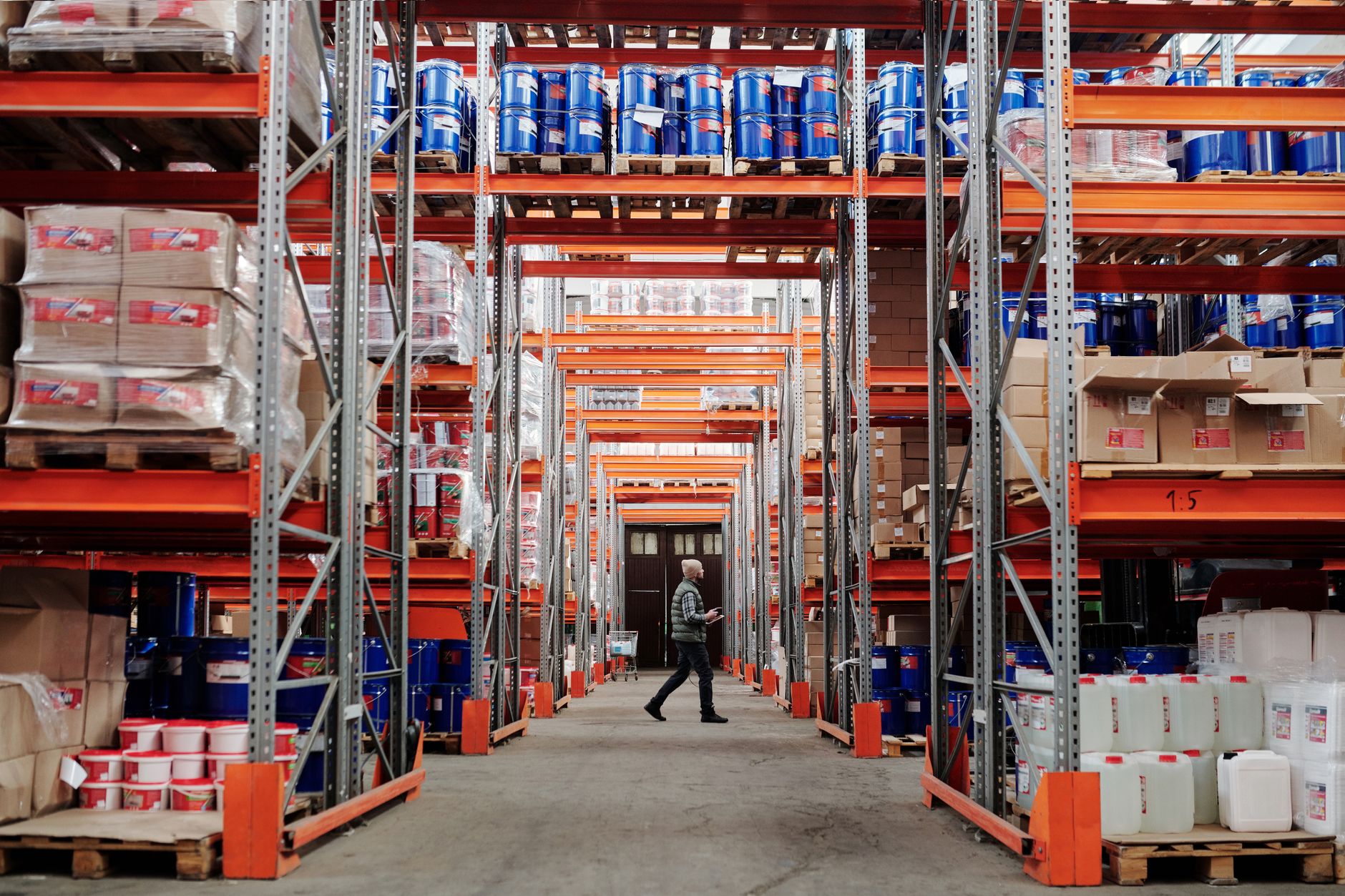
The job that matters here is laborers and freight, stock, and material movers, hand. According to the Bureau of Labor Statistics Occupational Outlook Handbook, it is one of the largest occupations in the United States. The work is moving goods from one point to another: receiving to staging, staging to a line, line to storage, and storage to the shipping dock.
A robot takes the repeat, predictable legs of that work. It does not take over unusual loads, tasks that need hands on equipment, or exceptions such as a damaged pallet or a blocked aisle that a person has to clear. Keep those tasks with staff, and count only the transport hours that repeat on a fixed route when you estimate the return.
The hours are easy to undercount because transport rarely appears as its own line in a schedule. Walking, waiting at a dock and rerouting around traffic often sit inside other tasks. In some layouts a robot can take those legs too, which is why the assessment times the work on the floor instead of estimating it from job titles.
Median hourly wage, Laborers and Freight, Stock, and Material Movers, Hand
$4,448
Monthly cost of one full-time worker in Grand Rapids, MI, at the median wage plus payroll costs (an estimate, not a quote).
How does the ROI math work for a lease?
The math has four parts. First, take the weekly hours of repeat transport work measured on your floor. Second, multiply those hours by the local wage for the job shown in the panel to get the gross labor value. Third, reduce that value by the share of the work the robot can realistically take, since exceptions and supervision stay with staff. Fourth, subtract the fixed robot lease payment, service, and any staff time spent loading, charging and clearing faults.
Payback is the point where cumulative net value covers the cost of starting the program. Leasing through financing avoids a large upfront outlay, so the test is how quickly net hours cover the lease and setup. Because the lease payment is fixed, the result is easiest to plan when the hours and share are measured carefully.
Small errors compound. A robot that takes most of a route produces a very different return from one that takes half of it, and a shift count that is off by one changes the hours a great deal. The hours table below lists the kinds of work to time before you accept any figure.
| Task | Today | With a robot |
|---|---|---|
| Carry pallets from receiving to staging | Logged per shift during the site assessment | Share the robot takes, set after mapping |
| Move totes from storage to a production line | Timed on repeat routes during the assessment | Repeat legs taken by the robot, exceptions kept by staff |
| Return empty carts and pallets | Counted from the trip log | Taken on a fixed route where the layout allows |
| Multi-floor moves by freight elevator | Timed, including wait time | Included only where the site allows elevator integration |
Our research did not find verified hour figures for this setting, so no hour values are printed here. Each figure comes from timing the work on your floor during the free site assessment.
Where does the return come from in a Grand Rapids setting?
Three sources matter most. The first is hours that would otherwise go unfilled. In the 2025 U.S. Turnover Survey, which covered 2,617 organizations, average voluntary turnover was 13.0 percent across all industries and 26.7 percent in retail and wholesale, as reported in a staffing industry article. Each departure starts a hiring and training cycle, and a robot that holds a route steady through staffing gaps takes some of that churn off the schedule.
The second is coverage on later shifts. A route a robot can run without a person keeps material moving when staff are thin on second or third shift. The third is safety exposure. According to the Bureau of Labor Statistics, warehousing and storage recorded 4.8 total recordable cases per 100 full-time workers in 2024, with 28 fatalities in 2023 and 32 in 2024. Fewer repeated manual moves is a real secondary benefit, although the rate does not show how many cases involved transport work.
Count the first two sources only where your own data supports them. Safety is worth recording, but it is hard to value and should not be the foundation of the return.
What changes the number up or down?
Most of the variance comes from a few site facts. Route length and how often a route repeats matter more than total floor area. A long repeat route with a clear path gives a robot more hours to take, while frequent interruptions, mixed traffic and tight turns cut the share it can realistically handle.
Shift count is the other large lever. The same robot on a single day shift and on a three shift operation produces very different hours. Load type and volume also matter, along with how much staff time goes to supervision and exception clearing.
The local wage is fixed by the government data panel, so the variables you control are routes, shifts and share. Lease terms and included service then decide how much of the gross value stays as net return.
What are the risks to the return, and how do you avoid them?
The most common risk is overestimating the share. A site that assumes a robot will take all of a route usually finds that exceptions, cross traffic and loads outside the design take a bigger part of the day than planned. Measure the share on the floor, and start with the routes that repeat most.
Downtime is the second risk. A robot out of service returns the work to people on the same schedule, so the return depends on a coverage plan. A spare unit, remote triage and on-site dispatch keep one fault from erasing the gain for the week, and a lease with service included keeps repair costs predictable.
Adoption is still early for most buildings. According to GlobeST in March 2026, AMRs and AGVs were found in roughly 10 to 15 percent of facilities. A 2025 MHI survey, as summarized by trade press, put robotics adoption at 48 percent, but that figure covers robotics generally and not AMRs alone.
How long does it take from assessment to payback?
The timeline runs in clear phases. It starts with a free site assessment that maps the floor, times the transport work and identifies the routes that repeat. The assessment produces the robot choice, the layout plan and the lease quote, and together they set the savings range for your site.
Next comes deployment and integration. The robot is set up on the mapped routes, staff are trained, and go-live support covers the first shifts, when exceptions are most common. Payback starts once the robot runs the planned share of routes reliably, not on the first day. Measure hours and exceptions over the first several shifts before judging the return.
No single payback date applies to every site. It depends on the lease terms, the hours taken and the share. Ask for the assumptions behind the quote, then check them against the first measured period of operation.
How do I get an exact figure from a free site assessment?
Our team picks the right robot for the site, places it under a lease through financing, deploys and integrates it, trains the staff, and services it nationwide, with on-site dispatch and remote triage behind every unit. The assessment starts with site assessment mapping, then measures the transport hours on your floor and the share the robot can take.
The output is a savings range built from your numbers, a fixed robot lease payment quoted after the assessment, and a list of the assumptions behind both. Ask for the hour logs, the share estimate and the coverage plan for downtime. A useful assessment shows where each number came from and what would change it.
Be cautious with any range that does not state its inputs. The calculator on this page gives an estimate using placeholder values, and the assessment replaces those placeholders with measured ones.
How should I read the savings range on this page?
The range shows what the robot could return if the hours, share and shift count fall within the bounds the calculator uses. It is not a forecast for a particular year, and it does not account for changes in wages, volume or layout after the assessment.
Read it as a sensitivity check. Lower the share and see how much of the return disappears, then lower the shift count and see the same effect. If the return only works at the top of the range, the case is weaker than it looks.
The typical headcount on this page, 4 people doing this kind of transport work at one site, is a planning default and not a verified local count. Our research did not find a published count for Grand Rapids sites, so replace it with your own number during the assessment.
Frequently asked questions
Put a robot to work in Grand Rapids.
We walk your site, learn the job, and recommend the unit that fits. Then we quote the lease, deploy it, and keep it serviced.
Sources
- US Bureau of Labor Statistics, Occupational Employment and Wage Statistics (OEWS May 2024)
- BLS Midwest Information Office, Grand Rapids employment and wages (May 2024)
- BLS Occupational Outlook Handbook, Laborers and Freight, Stock, and Material Movers, Hand
- BLS Industry at a Glance, Warehousing and Storage (NAICS 493)
- Staffing industry article on warehouse turnover statistics
- GlobeST, warehouse automation report, March 2026
- Trade press summary of MHI 2025 survey