

The short answer
Autonomous mobile robot ROI for paper mills comes mainly from moving reels and rolls between machines, storage and shipping on fixed routes, where each repeat trip is labor hours that can shift to the robot. The return depends on the share of those moves a robot can realistically take, the local wage for material handling work, and the lease cost quoted after a site assessment. Savings are ranges, and the exact figure comes from measuring your own reel and roll flow.
Key takeaways
- Reel and roll moves on fixed routes are among the most repeatable work in a paper mill.
- The savings math starts with the hours of material handling the robot takes over, not the total headcount on the floor.
- The share of moves a robot can realistically take sets the range, and it is rarely all of them.
- The lease quote comes after a free site assessment, so the payback is only as sound as that measurement.
- Damage, aisle conflicts and downtime are manageable risks when they are scoped before deployment.
Run the numbers for your site
Pick your city or state for a real regional number - we use the real BLS wage there. (On the live site this auto-detects from your location.)
What do you want to automate?
The robot takes the repetitive cart and pallet moves off the heaviest motion.
Autonomous mobile robot ROI for paper mills: where the return comes from
A paper mill moves heavy material along the same few routes every shift. Finished reels travel from the winders to storage, rolls move from storage to converting lines, and empty cores and pallets return to the machines. Each trip takes a person and a powered vehicle, and each route repeats many times a day. That repetition is what makes autonomous mobile robot ROI for paper mills a workable question.
The return comes from three places. First, labor hours that material handlers spend on repeat transport can shift to the robot. Second, fewer damaged reels and rolls reduce scrap and rework, though that benefit has to be measured against your own records. Third, a fleet can run on shifts the crew does not fully cover. Only the first is valued directly in the savings range on this page, so treat the other two as upside to test rather than as guaranteed gains.
Why reel and roll moves suit an autonomous mobile robot
The work is large and steady. According to the Bureau of Labor Statistics, total employment in paper manufacturing (NAICS 322) was 354.8 thousand in April 2025, a preliminary figure, and production and nonsupervisory employment ran at about 264 thousand over the same months. IBISWorld estimated 38,621 people employed in US paper mills in 2025, but that is a private estimate, not government data.
Counting mills is harder. The research found no current official count of paper mills. An industry directory's 2000 Census based table lists 549 pulp, paper and paperboard mill establishments, while What They Think, analyzing County Business Patterns, found 716 establishments in converted paper products (NAICS 32222) in 2021. That is a related but separate segment, and its count has declined slowly since 2013. Use site counts as a range to verify locally, not as a national base for projections.
For a rough sense of scale per mill, dividing IBISWorld's 38,621 by the 549 establishments gives about 70 people per mill. Mixing a 2025 estimate with an older count is rough, so use that number only for scale. It is total mill employment, not the reel and roll crew, so the material handling count has to come from your own roster.
Adoption is also growing. According to Manufacturing Dive, citing preliminary 2025 data from the International Federation of Robotics, US industrial robot installations rose 11 percent to 38,000 units, and density reached 307 units per 10,000 manufacturing workers. The same report tied part of that growth to materials handling and mobile robots in warehousing and logistics, which is the same kind of repeat transport mills run.
Reel handling fits a robot because the moves are long, heavy and repeatable. Trade press reported that one UK paper mill added 10 automated guided vehicles to move reels in its warehouse, where it ships roughly 2,200 to 2,400 tonnes a day. A flow that size turns occasional moves into a steady stream, and that steady stream is what makes the labor hours add up.
Median hourly wage, Laborers and Freight, Stock, and Material Movers, Hand
$4,380
Monthly cost of one full-time worker, at the median wage plus payroll costs (an estimate, not a quote).
How does the ROI calculation work for a paper mill?
The calculation starts with hours, not headcount. Count the hours each week that people spend on reel, roll, core and pallet moves between production, storage and dispatch. Then estimate the share of those moves a robot can realistically take. That share is almost never all of them, because staging, exceptions and manual loading still need people on the floor. The product of those two figures is the labor hours offset.
The labor side is valued at the local wage for laborers and freight, stock, and material movers, hand work, using the government wage data shown on this page. The robot takes that type of work off the crew's plate, so the offset is measured in those hours. Operators who run winders and converting machines do a different job, and their time counts only if the robot actually reduces it. Keep those two groups separate in your model.
The cost side is the lease. Robots are leased through financing, and the fixed robot lease payment is quoted after a site assessment that measures your real routes, loads and charging needs. The savings range is the labor offset minus that payment, plus any verified reduction in damage. A range is the honest output, because route length and the share of repeatable moves vary from mill to mill.
Test the math with one question: if the robot ran every repeatable move on a route, how many hours would it cover, and how many would still need a person? Those two answers bracket the range. The hour counts in the table below are placeholders to replace with your own time study.
Which parts of a paper mill does the robot cover?
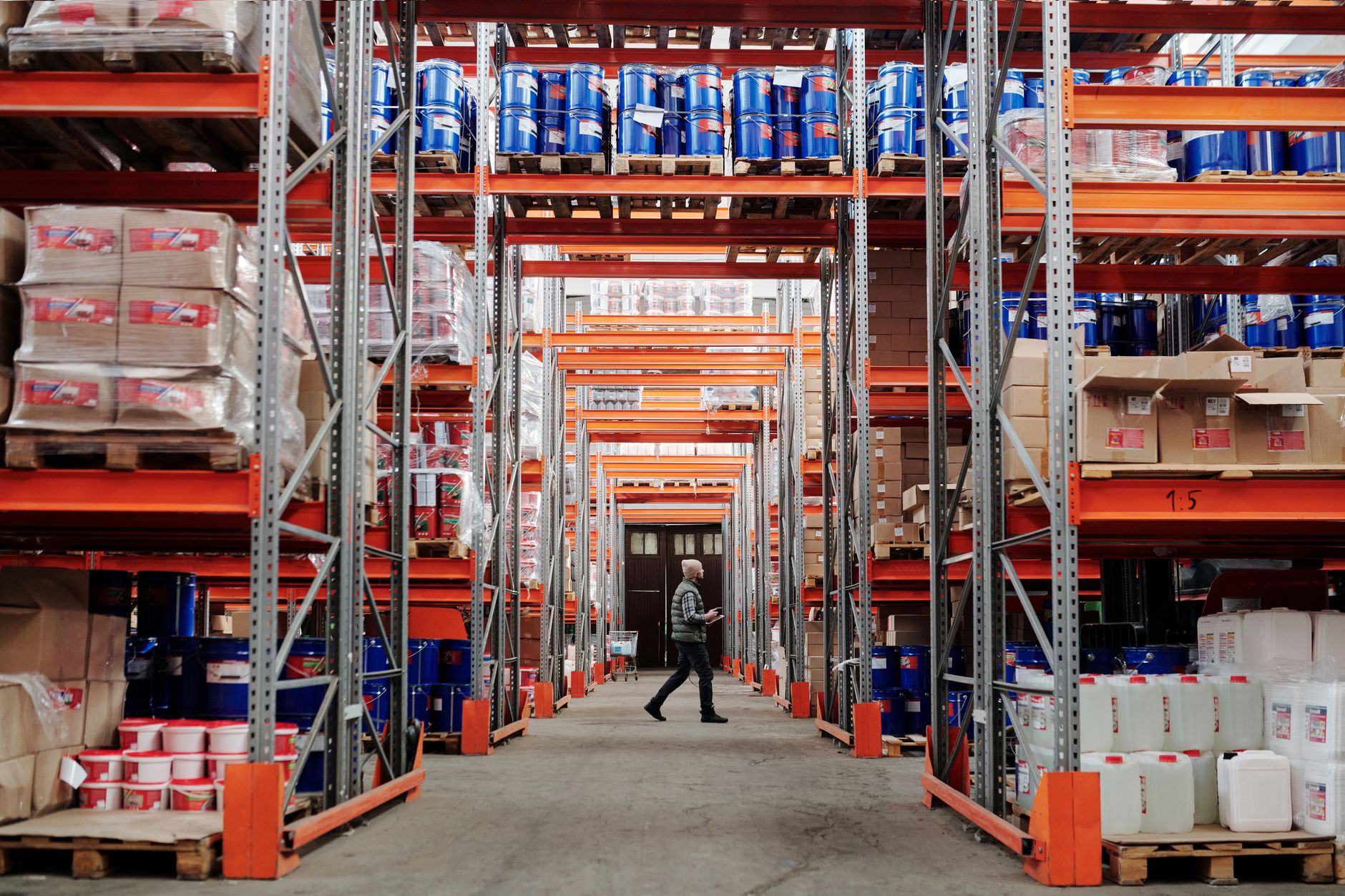
The robot works in the lanes between production and storage, not on the machines themselves. Most of the value sits in the reel warehouse, the roll staging area near the converting lines, the dispatch dock and the corridors connecting them. Each area has its own load pattern and damage risk, so measure each one separately rather than using a single average.
Reels are heavy and easy to damage. A supplier description of a port paper reel warehouse said vision-guided grippers replaced clamps to reduce that risk, a design choice the site assessment should check against your reel sizes and grip points. A 2012 study of clamp vehicles at a newspaper facility, which is not a paper mill, reported less paper damage, lower labor costs and better safety when moving reels from receiving to storage to the press. That is useful evidence about the kind of work, but it is not a paper mill result.
Safety is the other side of the same work. According to the Bureau of Labor Statistics, paper manufacturing (NAICS 322) recorded 2.4 total recordable cases per 100 full-time workers in 2024. Of those, 1.6 involved days away from work, job restriction or transfer, and 0.9 involved days away from work alone. Fewer manual moves of heavy material is a safety benefit as well as a cost benefit, though the injury series should be read against the BLS note that it changed at the 2023 data.
What changes the number up or down?
The biggest driver is route length and frequency. Long, repeated trips between a winder and a warehouse give a robot more hours to take over. Short moves with frequent stops and staging spend more time in transfers, which shrinks the share of work a robot can take.
Floor condition and layout come next. Level floors and wide aisles let vehicles keep pace. Tight corners, uneven concrete and aisles blocked by staged material cut uptime, and those losses come straight out of the offset.
Load variety matters too. The more reel sizes, weights and core types a mill runs, the more exceptions a crew handles by hand and the less the fleet takes over. A single standard reel size is a much cleaner case than a mill running many grades.
Shift coverage can push the number either way. The robot adds value on hours the crew does not cover, and adds less when it only replaces daytime work that is already fully staffed. Sites that gain the most usually deploy the robot on the shift where material handling is hardest to fill.
Robot or person: which handles reel moves better?
Each does part of the work better. The robot wins on repeatable route moves, where it runs the same path without fatigue and can keep going on shifts the crew does not cover. A person wins where the work varies, such as judging a damaged reel, deciding reroutes and handling varied fastening on cores and clamps. The useful model keeps both in one flow, with the robot on repeat moves and the crew on exceptions.
Turnover matters too. According to Apollo Technical, which analyzed JOLTS data, the manufacturing-wide quits rate in 2025 was 1.4 percent and the separations rate was 2.4 percent. A robot does not quit, but the crew does, and each departure from a material handling team means retraining on exceptions. The robot does not remove that cost, so keep it visible in the model.
- Repeatable route moves
Autonomous Mobile Robot
Runs the same path every cycle without fatigue
Staff
Adapts quickly, but repeat trips use labor time the crew could spend elsewhere
- Exceptions and damaged loads
Autonomous Mobile Robot
Needs a person to intervene and decide
Staff
Judges a damaged reel and reroutes the load
- Off-shift coverage
Autonomous Mobile Robot
Can run on shifts the crew does not cover
Staff
Limited to scheduled shifts and breaks
- Varied fastening on cores and clamps
Autonomous Mobile Robot
Limited to standardized, staged loads
Staff
Handles varied fastening and unusual loads
- Setup and training
Autonomous Mobile Robot
Needs route mapping and integration before go live
Staff
Needs training on mill rules and safety, which takes time for new hires
- Turnover
Autonomous Mobile Robot
Does not quit
Staff
Subject to turnover; the 2025 manufacturing quits rate was 1.4 percent
What are the risks to the return and how do you avoid them?
The main risk is overestimating the share of moves. A fleet that takes most of a route is a different business case from one that takes a small part of it. Measure a representative week of actual movements before setting the range, and include the shifts that run short-staffed as well as full shifts.
The second risk is damage. Reels are costly to replace and easy to mishandle, so any claim of reduced damage should be checked against a baseline from your own records before it counts toward the return.
The third risk is labor transition. If the robot takes the repeat moves, the people who did them need reassigned work, not a reduction that strips the crew of its knowledge of exceptions. Build that into the deployment plan from the start.
The fourth risk is downtime. A single fleet with no backup can stop a route. Ask about spare unit coverage in the lease terms, and define manual fallback routes before go live so the mill can keep running when a vehicle is out of service.
What is the realistic timeline from assessment to payback?
The timeline runs in phases. The first step is a free site assessment, which maps routes, load types, floor conditions and shift coverage. That assessment produces the lease quote and the savings range, which is the basis for the decision. Allow time for it, because every later step depends on its measurements.
After sign-off come route mapping, integration with mill systems where needed, and staff training. A phased start is common, beginning with one route or one shift, so measured results can be checked before the fleet grows. Go live support covers the first weeks, while routes and exception handling settle.
Payback depends on how quickly the measured hours offset the lease payment, and that becomes clear only after the first measured period. Use a pilot period to confirm the offset before committing to a wider rollout. Schedule the review once route data is stable, not on day one.
How do you get a precise figure from a free site assessment?
The precise figure comes from measurement, not estimation. Bring reel and roll move counts per shift, the routes and distances, reel sizes and weights, damage records, and the shift schedule. Those inputs let the assessment compute the labor hours offset and test how many of the moves are truly repeatable.
We are a US commercial robot integrator. We pick the right robot for the site, lease it through financing, deploy and integrate it, train the staff and service it nationwide. For a paper mill, that means checking routes, reel grip points and aisle conditions before a lease quote is issued, and building a backup plan for downtime.
Once the assessment is done, you receive a lease quote and a savings range built from your own numbers. Use that range to decide, then revisit it after the first measured period so the figure reflects actual operation.
Frequently asked questions
Want a warehouse robot at your paper mill?
Tell us about your site. We will recommend the robot, quote the lease, and keep it serviced.
Sources
- US Bureau of Labor Statistics, Occupational Employment and Wage Statistics (OEWS May 2024)
- BLS Industry at a Glance, NAICS 322 Paper Manufacturing
- Manufacturing Dive, US robotics and IFR 2025 preliminary data
- PrintWeek, UK paper mill AGV report
- What They Think, County Business Patterns analysis
- IBISWorld, paper mills employment
- Apollo Technical, JOLTS analysis
- MHI, AGVs at a newspaper facility case study
- Industry directory, paper mill establishment counts