

The short answer
Autonomous mobile robot ROI for pharmaceutical manufacturing plants comes mostly from repeat material moves between production areas that now pull operators away from output. The return depends on how many of those hours a robot can realistically take over, priced at the local wage for laborers and freight, stock, and material movers, hand work and measured against the lease cost. A free site assessment turns those inputs into a savings range for one building, not a promise.
Key takeaways
- The return comes from repeat material moves on fixed routes, not from a general cut in staff.
- Measure the walk on your own floor, then set the share of trips a robot can realistically take.
- The lease is quoted after a free site assessment, so the savings range stays tied to your building.
- Start with one route, measure the real hours, then decide whether to add routes.
- Controlled material and validated rooms lower the share, so plan them into the math from the start.
Run the numbers for your site
Pick your city or state for a real regional number - we use the real BLS wage there. (On the live site this auto-detects from your location.)
What do you want to automate?
The robot takes the repetitive cart and pallet moves off the heaviest motion.
What is autonomous mobile robot ROI for pharmaceutical manufacturing plants?
Autonomous mobile robot ROI for pharmaceutical manufacturing plants is the return from having a robot take over the repeat material moves that now pull operators away from production. In a plant, many of these moves are fixed: raw materials travel from staging to dispensing or compounding, components travel to line feeders, and empty containers and waste come back to staging. Each trip is short, but on a line that runs all shift they add up to hours of skilled attention lost.
The return is not a fixed number. It depends on how much of the material movement follows a repeatable route, how much of that work the robot can take without a person, and how the lease cost compares with the labor hours it offsets. This page explains each part, what moves the result up or down, and how a free site assessment turns those inputs into a savings range for one building.
We are a commercial robot integrator. We pick the robot for the site, lease it through financing, deploy and integrate it, train the staff and service it nationwide. We have not verified a typical headcount for this job at one plant, so the site assessment counts the people who run these routes on your floor.
How many pharmaceutical manufacturing plants and workers are there in the US?
The federal count is the cleanest starting point. According to BLS projections as reported by Pharma Manufacturing, pharmaceutical and medicine manufacturing (NAICS 3254) employed 350,500 people in 2024 and is projected to reach 369,500 by 2034, about 5.4% growth. BioSpace reports the same projection as about 19,000 added jobs through 2034.
Establishment counts are less settled. NAICS.com lists about 13,120 businesses under NAICS 3254, with 1,389 under 325411 and 9,751 under 325412, but does not state where its count comes from. Mewayz, an aggregator that does not state its data year, gives 2,882 establishments and 314,242 employees for the same code. That is not a Census table, so treat it as directional. The Census County Business Patterns tool at data.census.gov is the official place to pull an establishment count.
For a plant owner, the number that matters is not how many plants exist but how much repeat material movement each plant carries. Census totals do not answer that question, which is why the ROI starts with a walk of your own routes.

Median hourly wage, Laborers and Freight, Stock, and Material Movers, Hand
$4,380
Monthly cost of one full-time worker, at the median wage plus payroll costs (an estimate, not a quote).
Where does the return come from in a pharma plant?
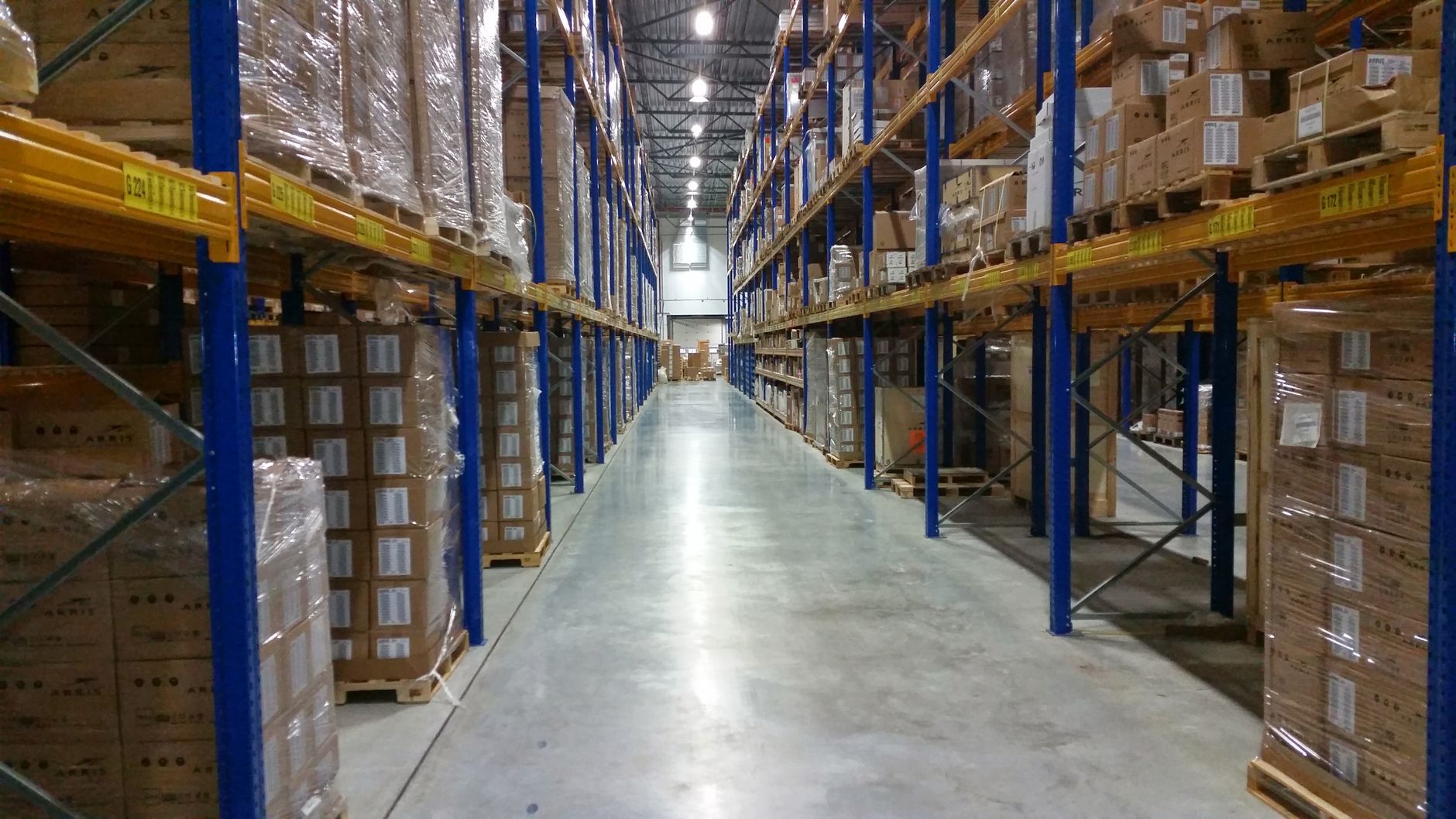
The return comes from labor hours spent on material movement between production areas. That work is the laborers and freight, stock, and material movers, hand type of work, and the government wage data on this page prices those hours. When a person stops pushing a cart to a line, that person's time goes back to the work only they do, such as in-process checks, line setup and batch documentation.
The return is strongest where the route is fixed. A robot runs a known path between stations on a schedule and does not need the building rearranged. In pharma plants, the usual candidates are staging to line, line to line and line to dock runs. These moves can be automated without changing the process inside controlled rooms, which still needs its own validation.
A plant does not have to automate every move to see a return. One route that runs every shift can justify a pilot, and the pilot produces measured hour figures before any wider decision is made.
How does the ROI math work for autonomous mobile robot leasing?
The calculation has four inputs: the labor hours the robot's routes replace, the share of those hours the robot realistically takes over, the lease cost, and the time that stays with people. The savings range is the value of the offset hours, less the lease and the remaining labor, measured over the lease term. The autonomous mobile robot ROI for pharmaceutical manufacturing plants is only as good as the hour count behind it.
The first input is the hour count, and it has to come from your floor. Count every trip on the route over several shifts, note how long each trip takes, and separate the trips that are truly repeatable from those that need judgment. A route that starts fixed but is interrupted by line stops should be recorded as a partial route, not a full one.
The second input is the share. A robot rarely takes every trip. Some moves involve controlled material that a trained person must handle, some involve doors or lifts the robot cannot use, and some happen only when a line goes down. The realistic share comes from the walk, not from the robot's top speed.
The third input is the lease cost. It is a fixed payment through lease financing, quoted after a free site assessment, so it is predictable in a way that shift schedules are not. The fourth input is what stays with people. Someone still responds to alarms, clears blocked paths and handles controlled items, and that time is subtracted from the savings.
What changes the autonomous mobile robot ROI up or down?
Route length and repetition move the number most. A longer route with many stops and steady traffic gives the robot more repeatable hours. A short route with frequent changes gives fewer. Layout matters too: a straight run between rooms with clear floors beats a route that crosses shared corridors where other carts and people are moving.
Shift coverage matters. A route that runs on two shifts covers twice the hours of one that runs once, while a single afternoon run is hard to justify on labor alone. The local wage for this job also sets the value of each offset hour. The government wage data on this page lets you check that value against your own labor cost.
Controlled material and documentation pull the number down. If each move requires a person to scan, sign and log a controlled item, the robot offsets less of the work. Some of that steps can be built into the robot's workflow and some cannot, so the answer changes the savings range.
- Repeat timing
Autonomous Mobile Robot
Runs the same path at the scheduled time every shift
Staff
Starts late or skips a run when the line is busy
- Exceptions
Autonomous Mobile Robot
Stops and alerts when blocked, and a person must clear the path
Staff
Sees the problem, moves around it and keeps the load moving
- Controlled material
Autonomous Mobile Robot
Limited to moves the workflow approves
Staff
Handles, scans and signs items as trained
- Coverage hours
Autonomous Mobile Robot
Runs on the shifts the route is set for
Staff
Limited by shift length, breaks and staffing
- Judgment on the line
Autonomous Mobile Robot
Has no judgment about line conditions
Staff
Notices line conditions and changes the job to suit
What are the risks to the return, and how do you avoid them?
The largest risk is overestimating the share. Plans built on the robot's top speed rather than the real walk tend to miss. Measure the actual route, include the exceptions, and agree on the share with the plant team before any lease is signed.
Validation and change control are the second risk. Anything that changes a process inside a controlled area needs its own review. Keep robot routes outside process rooms where possible, and plan the change record before deployment rather than after it.
Adoption is a third consideration. A 2021 reader poll of 239 respondents, reported by Pharmaceutical Technology, found most robots in pharma limited to dispensing, sorting, kit assembly, light machine-tending and packaging. Material transport was not on that list, so a plant trying it is working outside the most common pattern in that poll. That is a reason to pilot first.
Cost is the fourth risk. Packworld reports that market analysis treats initial capital and integration costs as the main barrier to adoption, especially for smaller facilities. A lease spreads the equipment cost over the term, but integration work still has to be planned and itemized in the quote.
Are pharma plants safer when a robot handles material moves?
Material movement is a known source of injury in manufacturing. According to a secondary source citing BLS, manufacturing overall had a total recordable case rate of 2.7 per 100 full-time equivalent workers in 2024, above the 2024 national average of 2.3. The same source reports 332.6 thousand cases in private industry manufacturing that year.
Those figures cover manufacturing overall, not pharmaceutical manufacturing. The research did not find a 2024 BLS rate for pharma or for material handling within it. So this page does not claim a safety return. Fewer loaded carts crossing a busy floor is a reasonable expectation to test, not a guaranteed result.
Track your own incident data before and after deployment, broken out by route and by shift. That record is the only reliable way to show a safety effect at your plant.
How long does it take to go from assessment to payback?
The timeline runs in phases rather than on one date. First is the site assessment, where we map the floor, walk the routes, count trips and note the controlled areas and exceptions. The output is a savings range and a lease quote for that building.
Second is a pilot on one route, chosen for the most repeatable hours and the clearest path. Its job is to replace estimated hours with measured ones. Once the pilot shows the real share, the plant decides whether to add routes.
Third is deployment and integration across the approved routes, with staff training and go-live support. Payback then depends on how quickly the approved routes reach their measured share, which is why pilot results count for more than the first estimate. Maintenance is part of the plan from the start, and we service robots nationwide. For routes where a stopped robot would stop a line, the assessment can cover backup coverage.
How do I get a precise figure from a free site assessment?
A free site assessment is the way to get a precise figure for your plant. Bring the layout, the list of material routes, the shift pattern, and the rooms that need validation or gowning. We walk the routes with your team, measure the trips and set the share of work a robot can take.
We pick the robot for the site, lease it through financing, deploy and integrate it, train the staff and service it nationwide. The lease is quoted after the assessment, so the payment reflects your floor and your routes rather than a generic estimate. Ask for the hours and share assumptions behind the savings range, so you can check each input yourself.
Bring the questions your team needs answered: which routes are repeatable, which moves need a person, and what a pilot would need to prove. The answers turn an autonomous mobile robot leasing estimate into a decision your plant can defend.
Frequently asked questions
Want a warehouse robot at your pharmaceutical manufacturing plant?
Tell us about your site. We will recommend the robot, quote the lease, and keep it serviced.
Sources
- US Bureau of Labor Statistics, Occupational Employment and Wage Statistics (OEWS May 2024)
- Pharma Manufacturing, citing BLS projections
- BioSpace, BLS projection
- Mewayz, NAICS 3254 data
- NAICS.com, NAICS 3254
- Manufacturing Lead Generation, citing BLS
- Pharmaceutical Technology, 2021 reader poll
- Packworld, pharmaceutical robot market analysis