
The short answer
Autonomous mobile robot ROI in Denver comes from the repetitive material movement hours a robot takes off the shift, offset against the cost of a lease over the same term. The savings range on this page is built from your own hours, the share of work that fits a fixed route and the government wage data for Laborers and Freight, Stock, and Material Movers, Hand, so it is a range to test, not a promise.
Key takeaways
- The return comes from Laborers and Freight, Stock, and Material Movers, Hand hours a robot takes off the shift, not from headcount cuts.
- Savings are a range set by your own hours, route share, coverage and lease cost, never a fixed promise.
- Injury and turnover pressure on this work is real, and a robot does not remove people from lifting and exception tasks.
- Payback depends on the share of hours a robot realistically takes, so measure that before you decide.
- A free site assessment turns the range into a quoted fixed lease payment for your floor.
Run the numbers for your site
Auto-detected from your location - we use the real BLS wage here. Not right? Pick your city or state above.
What do you want to automate?
The robot takes the repetitive cart and pallet moves off the heaviest motion.
What is autonomous mobile robot ROI in Denver likely to look like?
Autonomous mobile robot ROI in Denver is the value of the material movement hours a robot takes over, set against what the lease costs across the same period. For most warehouse and distribution operators the return shows up as hours that stop being scheduled, overtime that stops appearing, and routes that stay covered when a position goes unfilled. It rarely shows up as a headcount cut.
Cost is a fixed lease payment through financing. The calculator on this page is pre-filled for Denver and shows a savings range from the inputs you give it. The range is a planning tool, and the lease quote after a free site assessment is what finalizes the math for your floor.
Demand for this work is not shrinking. According to the Jefferson County 2025 sector profile, transport and warehousing job growth across the Tri-County area is projected at 4 percent through 2029. Automation spending is rising too: according to A3 trade coverage, North American orders for industrial robot arms reached 36,766 units in 2025, up 6.6 percent on 2024. That report covers arms, not mobile robots, and no AMR unit count was found, so read it as general automation momentum.
Where does the return come from at a Denver site?
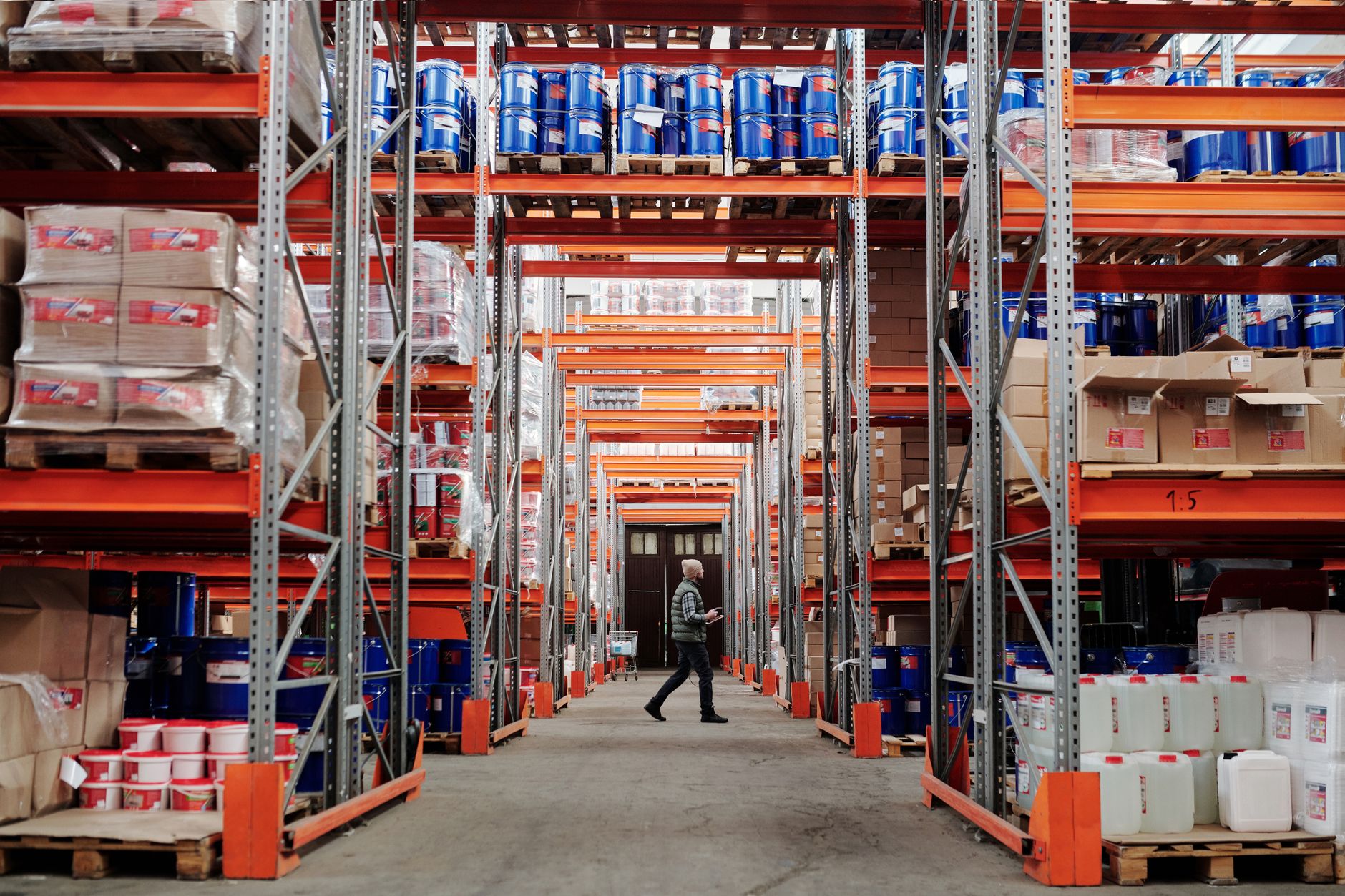
The return comes from repetitive movement: pallets and totes moving between receiving, storage and staging, restocking of pick faces, and material running from dock to line. This is the work of Laborers and Freight, Stock, and Material Movers, Hand. The government wage data on this page covers that job, and the calculator prices only those hours.
Route regularity matters more than floor size. A robot earns its hours on fixed, repeatable routes with predictable obstacles and a steady dock schedule. Exception handling, damaged freight and trailer loading with irregular freight stay with people, so those hours are excluded from what the robot can take.
Where supervisors, receiving leads or inventory staff are on site, the robot takes the Laborers and Freight, Stock, and Material Movers, Hand type of work off their plate. Their own time is never priced into the savings range.
Median hourly wage, Laborers and Freight, Stock, and Material Movers, Hand
$5,141
Monthly cost of one full-time worker in Denver, CO, at the median wage plus payroll costs (an estimate, not a quote).
How does the savings math work?
The math has four inputs: the hours of material movement work per shift that are repetitive enough to automate, the share of those hours a robot realistically takes, the local labor cost of that work from the wage data on this page, and the lease cost over the term. The savings range is the labor value of the hours taken, net of the lease cost, shown across a low case and a high case.
The share is the number most often overstated. A robot can run long stretches, but it does not take every move. Start from the portion of each route that fits a fixed path, then subtract time for dispatch, charging and exceptions. Count hours from your own shift logs and a route walk, not from floor area. For planning, use four people as the headcount for this kind of site. That is a placeholder estimate, because no verified count for this job at one site was found in this research, so replace it with your roster.
Coverage scales differently from labor. One leased unit covers a fixed route through a shift, and a second unit adds a parallel route. The hours offset grows with the number of routes assigned, up to the point where the dock schedule or aisle layout limits them.
What changes the number up or down?
Five or six factors move the range most. Route regularity, shift length, the share of work that fits a fixed path, lease term, floor readiness and staffing for exceptions all shift it. Each one can be measured on your floor before you commit.
Upward pressure comes from long shifts with steady moves, repeated routes, a consistent dock schedule and open aisles. Downward pressure comes from frequent layout changes, heavy or irregular freight, unstable staffing that leaves units waiting, and a floor that takes a long time to get ready.
The checklist below lists the checks to make before you decide.
What is a robot's shift like, and where do people still win?
A robot runs a route on schedule, with no fatigue, and can cover overnight or early shifts when staffing is thin. It logs its work and does not take breaks. It does not handle irregular freight, read a damaged label or make a judgment call when an aisle is blocked.
People win on flexibility and exceptions. A person can reroute around an unexpected pallet, lift an awkward item and decide what to do when the schedule changes mid shift. The robot frees those people for that work. It should not be expected to replace the judgment.
The comparison below is meant to be direct about where each one fits.
- Night and early coverage
Autonomous Mobile Robot
Runs the scheduled route without a break
Staff
Available, but fatigue and staffing limit it
- Repeat route consistency
Autonomous Mobile Robot
Same path every shift, logged
Staff
Varies with the person and the day
- Irregular or heavy freight
Autonomous Mobile Robot
Limited to standard loads on its route
Staff
Handles awkward and heavy items
- Exception handling
Autonomous Mobile Robot
Stops and needs staff for blocked routes
Staff
Reroutes and makes the call
- Layout change
Autonomous Mobile Robot
Needs remapping before it runs the new layout
Staff
Adapts within the same shift
- Cost predictability
Autonomous Mobile Robot
Fixed lease payment set in the quote
Staff
Hourly labor that moves with overtime and turnover
What does the Denver labor market tell you about this work?
The national occupation picture shows scale. According to the Bureau of Labor Statistics Occupational Outlook Handbook, hand laborers and material movers held about 7.1 million jobs in 2023, and employment is projected to grow 4 percent from 2023 to 2033, described there as as fast as average. Most positions need no formal education and under 1 month of on-the-job training, which keeps training time short for each new hire.
Turnover is a second cost. According to a warehouse turnover summary that quotes BLS data, the quits rate in transportation, warehousing and utilities averaged 2.2 percent a month in 2025, against 2.0 percent for total nonfarm. A 2025 national survey summary puts average voluntary turnover across all industries at 13.0 percent.
The local wage for this job is in the panel next to this text, from the government wage data for Laborers and Freight, Stock, and Material Movers, Hand in the Denver-Aurora-Lakewood metro. Use that figure with the hours you measure, and check it against your own pay records.
What are the risks to the return, and how do you avoid them?
The biggest risk is overcounting hours. A plan that assumes a robot takes every move will miss its range within the first months. Set the share from route data, then test it with a pilot on one route before the full floor.
The second risk is downtime. A blocked aisle, a worn threshold or an unmapped layout change will stall a unit. Plan spare or backup coverage for critical shifts, and agree on response times for dispatch before the first day.
The third risk is injury exposure that does not go away. A GAO-based summary reported that transportation and warehousing had the highest serious injury and illness rate of 19 sectors in 2022, at 3.8 per 100 workers. A vendor-published safety compilation puts laborers, freight handlers, stock clerks and material movers at 9.6 percent of workplace injury incidents. Robots do not remove people from lifting and exception work, so keep those tasks with trained staff and check injury data for your own site.
How long from assessment to payback, and how do you get a precise figure?
A realistic timeline has four stages: a free site assessment with route mapping, a quoted lease after that review, deployment and integration with staff training, and then a measured period against your baseline hours. Payback is judged on measured hours over a full run of shifts, not on the first week, because the early weeks include learning the route and clearing exceptions.
We pick the robot that fits your floor, lease it through financing, deploy and integrate it, train your staff and service it nationwide. Our team handles dispatch, remote triage and repair so a unit is not left idle on a dock. Ask for coverage, warranty and response times in writing as part of the lease quote.
For a precise figure, bring shift logs, route lists, dock schedules, a floor plan and recent turnover data to the free site assessment. The assessment measures the share of moves that fit a fixed route and converts the savings range into a quoted fixed lease payment for your floor, term and coverage.
Frequently asked questions
Put a robot to work in Denver.
We walk your site, learn the job, and recommend the unit that fits. Then we quote the lease, deploy it, and keep it serviced.
Sources
- US Bureau of Labor Statistics, Occupational Employment and Wage Statistics (OEWS May 2024)
- Bureau of Labor Statistics, Occupational Outlook Handbook: Hand Laborers and Material Movers
- A3 North American robot orders 2025, trade coverage
- Warehouse and storage injury statistics (vendor-published)
- GAO-based workplace injury summary (via PublicNow)
- Manual lifting injury statistics (vendor-published)
- Warehouse turnover rate summary, quoting BLS quits data
- Employee turnover rate statistics summary, 2025 national survey
- Jefferson County 2025 sector profile: transport and warehousing