
The short answer
A business in Dallas can expect a return that depends on three things: how many hours of laborers and freight, stock, and material movers, hand work the robot takes over, how much of that work it can realistically handle on your floor, and how the lease cost compares with those hours. The government wage data on this page values each of those hours, and the calculator shows a savings range built from your inputs rather than a fixed payback. A free site assessment turns that range into a figure for your building.
Key takeaways
- The return comes from laborers and freight, stock, and material movers, hand hours the robot takes over, not from its top speed.
- Dallas has a large local pool of workers in this occupation, so vacancies and training time both feed the math.
- Savings are ranges, and the share of work a robot realistically takes is the input most likely to move the result.
- Lease quotes come after a free site assessment that measures floor area, route length and shift hours.
- Start with one leased unit on the highest-hour route, then add units once measured results match the range.
Run the numbers for your site
Auto-detected from your location - we use the real BLS wage here. Not right? Pick your city or state above.
What do you want to automate?
The robot takes the repetitive cart and pallet moves off the heaviest motion.
What is autonomous mobile robot ROI in Dallas, TX?
Autonomous mobile robot ROI in Dallas is the return a business gets from a robot that moves material or cleans floors without an operator, measured against the cost of leasing it. The return shows up as labor hours that no longer need to be scheduled, filled or covered on overnight and weekend shifts. It does not come from a robot's top speed, so the math starts with the hours of repetitive work on your floor.
Adoption is rising across industry. According to the International Federation of Robotics, as reported in a 2025 year-end industrial robotics review, US industrial robot installations rose 11 percent year on year to 38,000 units in 2025. Those figures cover industrial robots in general, not autonomous mobile robots, so treat the trend as context rather than a measure of this specific return.
Dallas makes the question concrete because the local labor pool and the local wage both feed the math. The government wage data panel next to this text gives the local wage for the job, and the calculator uses it to value each hour the robot takes over.
How many people do this work in the Dallas area?
The Bureau of Labor Statistics May 2023 occupational table lists 81,110 workers in Laborers and Freight, Stock, and Material Movers, Hand across the Dallas-Fort Worth-Arlington metro. That count describes the whole metro, not one building, so it tells you how deep the hiring pool is rather than how many people your site needs. The wage panel on this page uses the newer May 2024 survey, and the calculator values hours from that wage.
Crew size depends on floor area, shift count and the mix of cleaning and transport work. Those are the inputs the site assessment measures, so this page does not estimate a crew size for your site. Pull your own staffing roster and shift plan before you compare hours, because the roster shows how much scheduled time the work really takes.
Median hourly wage, Laborers and Freight, Stock, and Material Movers, Hand
$4,308
Monthly cost of one full-time worker in Dallas, TX, at the median wage plus payroll costs (an estimate, not a quote).
What work does the robot take off the crew?
The robot takes repetitive, route-based work: scrubbing or sweeping aisles, moving totes or pallets between fixed points, and running the same loop at the same time each night. These tasks are the hours of laborers and freight, stock, and material movers, hand work that the calculator values. Tasks that need judgment, hand loading, damage checks or contact with customers stay with people.
Throughput is where specification sheets look generous. Vendor-reported ratings for autonomous floor scrubbers run from about 1,980 square meters per hour to about 3,000 square meters per hour, depending on brush width and whether the floor is open or cluttered. Those ratings are not independent tests, so the site assessment measures real coverage on your floor and the calculator works from that measured rate.
Which parts of a Dallas site does the robot cover?
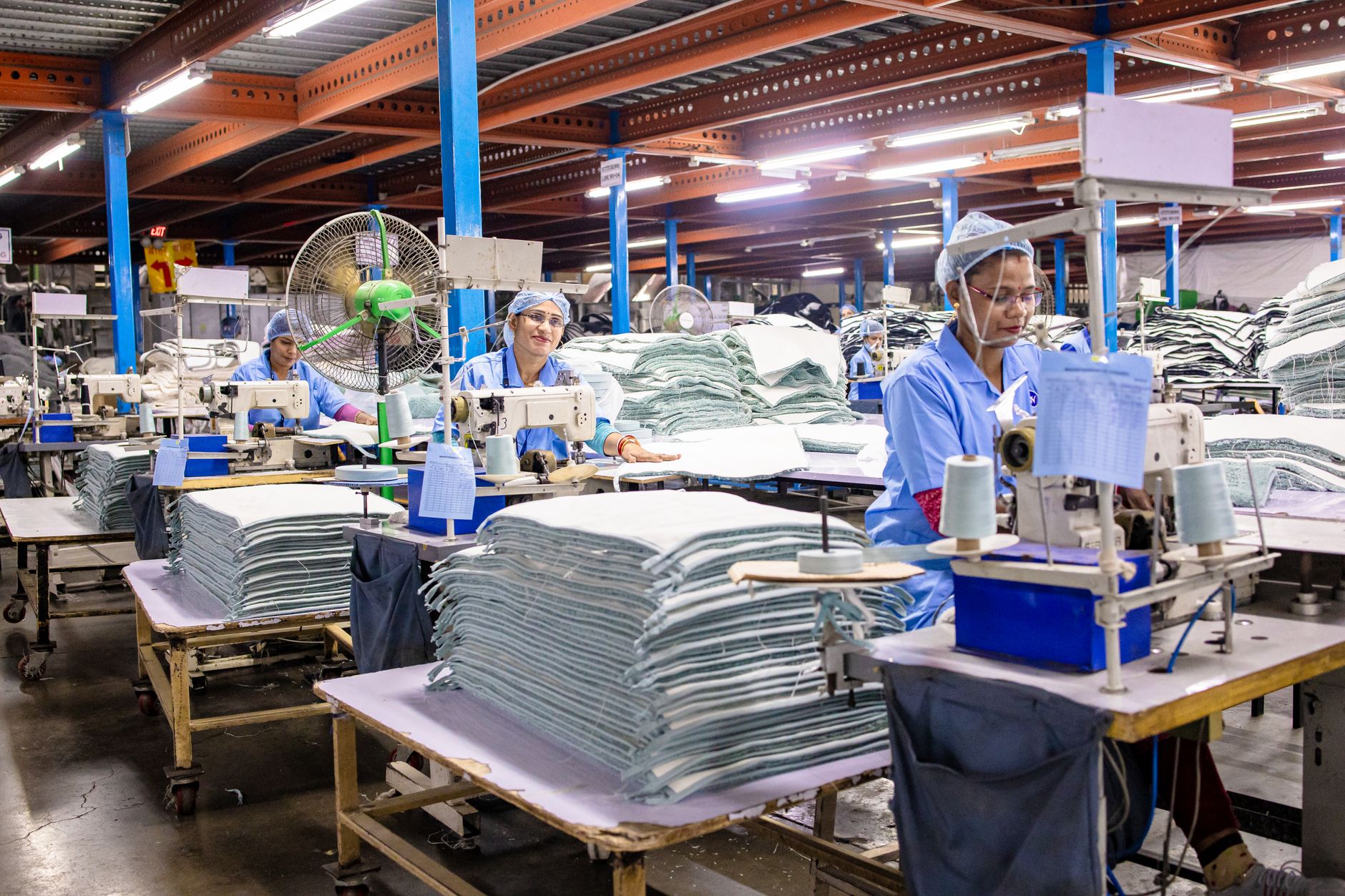
Most Dallas-area facilities are large, single-level buildings, and the floor area that counts is the square footage on routes the robot can actually run. The University of Texas at Dallas Economic Engine reports about 1.03 billion square feet of industrial inventory in Dallas-Fort Worth in 2025, with vacancy at 8.8 percent. A stock that size means a lot of floor to clean and move through, and the work scales with that area.
A Q3 2026 Dallas-Fort Worth industrial market report puts vacancy near 8.0 percent and about 50.1 million square feet under construction at quarter end. New construction adds route length, and route length adds hours of repetitive work, but only if the routes are mapped early in the build. The zones below show the areas where this work most often sits.
How does the savings math work?
Start with the hours of laborers and freight, stock, and material movers, hand work the robot can take over each week, measured from your shift plan. Multiply those hours by the local wage for the job from the government wage data on this page. Then subtract the staff time the robot still needs for checks, charging and exceptions, because that time stays on payroll.
Next apply the share of that work the robot realistically takes, which is usually less than all of it. The result is the value of the hours taken over. Subtract the lease terms, which come in the quote after the site assessment, and what remains is the savings range. Payback is the point where cumulative savings cover the lease and any integration costs.
What changes the number up or down?
The biggest swing comes from the share of work the robot takes over. A route that runs the same way every night takes more of the work than an area with frequent obstacles, pallets left in lanes or uneven floors. Shift length matters too, because a robot that runs overnight covers hours that would otherwise need a second crew.
Turnover pushes the number up when vacancies are frequent and each new hire needs training. It pushes the number down when staff are stable and the work is already covered without gaps. The checklist below covers the items to check before you compare a lease quote with your labor plan.
How do turnover and injury risk affect the return?
A 2025 US turnover survey, as summarized in a 2025 State of Warehouse Labor report, puts average voluntary turnover at 13.0 percent for all industries and 26.7 percent for retail and wholesale. Those are not warehouse-specific figures, so use them as a range and check your own separation records. A National Employment Law Project brief estimated about 124 percent annual turnover at New Jersey Amazon warehouses using 2020 data, which shows how high turnover can run in one large setting.
Injury data points the same way. The Census of Fatal Occupational Injuries reports 1,391 fatalities in transportation and material moving in 2024, down 7.5 percent from 2023, with a fatality rate of 12.5 per 100,000 full-time equivalent workers, down from 13.6. Transportation incidents were the leading event type. The National Safety Council summary of Bureau of Labor Statistics survey data reports 468,830 days-away-from-work cases for 2023 and 2024 combined in this group, which it gives as 26 percent of the total for the group.
Robots take route-based movement off people, but they bring their own safety needs, including clear travel lanes and marked zones where staff walk. Those needs belong in the site assessment, not in an afterthought after go live.
- Overnight coverage
Autonomous Mobile Robot
Runs scheduled routes with no operator, if the site allows charging and access.
Staff
Needs scheduling, supervision and breaks for every shift worked.
- Hiring and turnover
Autonomous Mobile Robot
Adds no hiring for its routes, but staff still need training on checks and exceptions.
Staff
Every vacancy needs recruiting and onboarding time before the work is covered.
- Judgment and exceptions
Autonomous Mobile Robot
Stops or reroutes at an obstacle it cannot classify, then waits for staff.
Staff
Decides on spills, damage and unusual items on the spot.
- Flexibility
Autonomous Mobile Robot
Repeats fixed routes well and changes them only after remapping.
Staff
Switches tasks across the site within the same shift.
- Hand work
Autonomous Mobile Robot
Cannot load, unload or handle fragile items.
Staff
Does all hand work, lifting and fine handling.
- Consistency
Autonomous Mobile Robot
Runs the same route and pass on every run, with a log of each run.
Staff
Varies by crew member, shift and fatigue.
What are the risks to the return and how do you avoid them?
The main risks are a poorly mapped floor, a route too cluttered for the robot to finish, and a lease sized for hours the site does not have. Each one cuts the share of work the robot takes, which narrows the savings range. A site assessment maps the floor and times a test run before any quote is written.
Uptime is the other risk. A robot that is down sends the work back to staff, so the lease should include service, remote triage and a plan for backup coverage. We are a commercial robot integrator. We pick the robot for the site, lease it through financing, deploy and integrate it, train staff and service it nationwide, so one partner handles the full cycle.
How long until payback, and how do I get a precise figure?
A typical path runs from a free site assessment to a lease quote, then deployment and go live support, then a measured period before the savings range is confirmed. The timeline depends on floor mapping, how the robot integrates with doors and lifts, and how quickly staff are trained. No outside page can give a fixed payback date, so the first step is the assessment.
The free site assessment measures floor area, route length, shift hours, obstacle density and the labor hours you already schedule. It then produces a lease quote with service terms and a clear view of what the savings range assumes. Start with one leased unit on the highest-hour route, then add units once measured results match the range.
Frequently asked questions
Put a robot to work in Dallas.
We walk your site, learn the job, and recommend the unit that fits. Then we quote the lease, deploy it, and keep it serviced.
Sources
- US Bureau of Labor Statistics, Occupational Employment and Wage Statistics (OEWS May 2024)
- Bureau of Labor Statistics, Occupational Employment and Wage Statistics, May 2023 metro table
- Bureau of Labor Statistics, Census of Fatal Occupational Injuries, 2024
- National Safety Council summary of BLS Survey of Occupational Injuries and Illnesses
- University of Texas at Dallas Economic Engine, The Connection
- Dallas-Fort Worth industrial market report, Q3 2026
- National Employment Law Project, Amazon New Jersey turnover data brief
- 2025 State of Warehouse Labor report
- International Federation of Robotics figures, as reported in a 2025 year-end industrial robotics review