
The short answer
For an autonomous mobile robot vs material handler in Dallas, the robot makes sense when a site repeats the same moves on fixed routes, such as carrying totes and pallets between docks, staging areas, and production lines, and those moves fill enough of a shift to keep one unit busy. A material handler still does better with irregular freight, unusual or damaged loads, mixed-rack picking, and routes that change most days. Check your own route data against the local labor picture before deciding, because regional counts show the size of the market but not the work on your floor.
Key takeaways
- A robot fits repeated moves on fixed routes, while a material handler fits irregular freight and changing layouts.
- Dallas-Fort Worth-Arlington transportation, warehousing, and utilities employment was 272.2 thousand in December 2025, according to FRED.
- Transportation and material moving had the most fatal work injuries of any major occupational group in 2024, according to BLS.
- A robot works best alongside fewer staff, never in place of all staff.
- Your own shift logs, not metro totals, should settle the decision.
Is an autonomous mobile robot vs material handler in Dallas the right choice?
The honest answer is that the robot fits one part of the work and a material handler still fits the rest. A robot makes sense when moves repeat on the same mapped paths all shift, the loads are standard enough for the robot's carrier, and the layout stays steady for months. It does not fit well where freight arrives in mixed sizes, where a person must judge weight or damage, or where the route changes most days.
Dallas offers a large labor base for either choice. According to FRED, transportation, warehousing, and utilities employment in the Dallas-Fort Worth-Arlington metro was 272.2 thousand in December 2025, up from 270.8 thousand in November 2025. That series combines three industries, so it shows the size of the labor pool, not warehouse staffing alone.
The decision therefore starts on your floor. A robot does not change what your site does. It changes which people do the repeated moves, and your route data can answer that question.
What does a material handler actually do in a shift in Dallas?
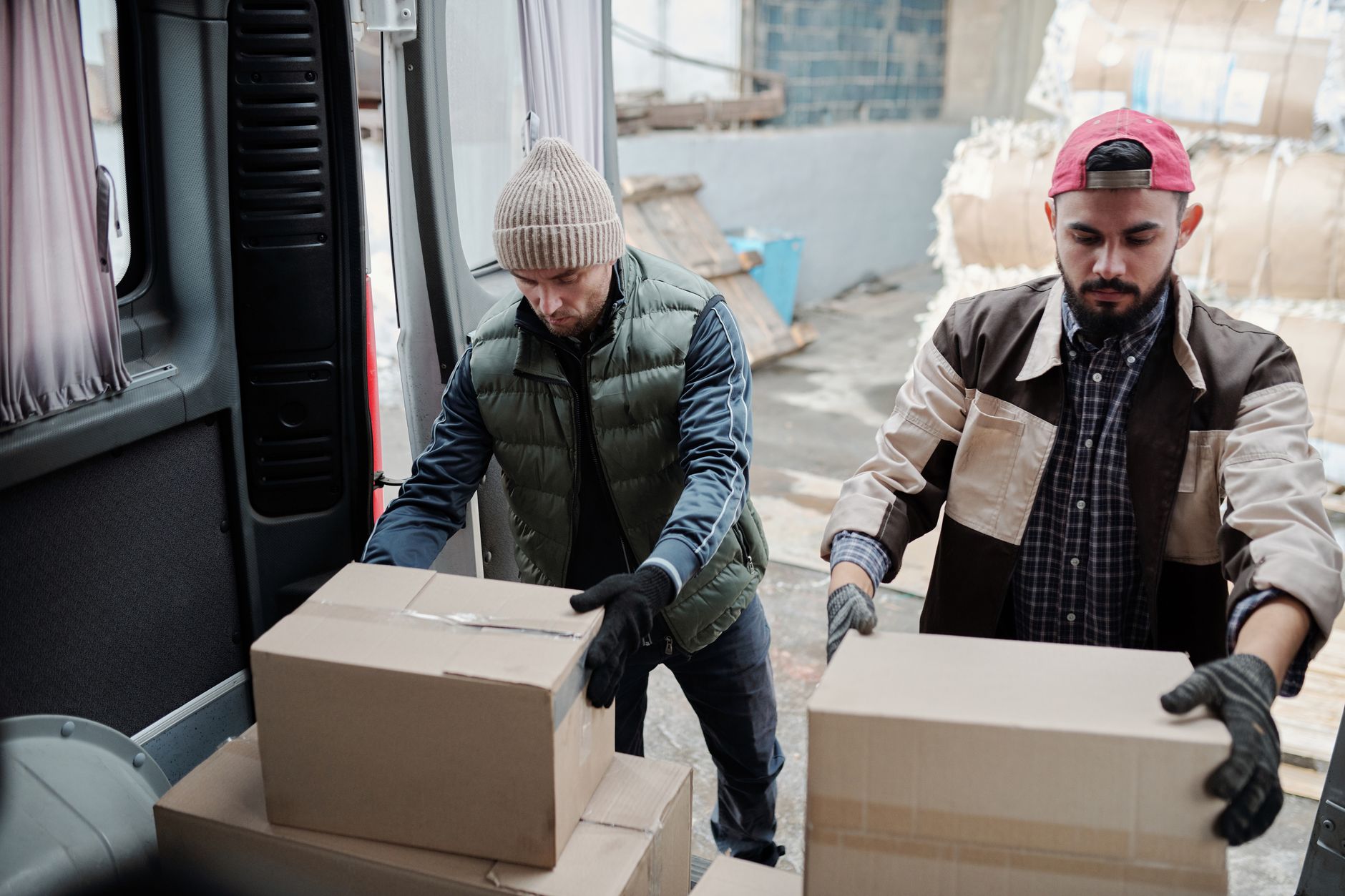
A material handler in a Dallas distribution or manufacturing site usually covers several jobs in one shift. The work includes unloading or staging inbound freight, moving totes and pallets from receiving to storage or to a line, replenishing pick faces, and staging outbound loads. Much of it is short moves along the same few aisles, interrupted by requests from dock and line supervisors.
The role also includes checks a robot cannot make. A handler compares cartons against a receiving document, notices a torn pallet, sets aside a load with damaged wrap, and re-stacks a load that has shifted. These checks happen in the middle of routine moves, so the same person rarely does one task at a time.
Staffing in this area is sizable. A third-party wage site that reproduces BLS OEWS May 2025 counts about 29,670 shipping, receiving, and inventory clerks in the Dallas-Fort Worth-Arlington metro. Those clerks often work near material handlers at the dock, so the two roles overlap in the receiving area. The government wage data on this page gives the local wage for this job.
Median hourly wage, Laborers and Freight, Stock, and Material Movers, Hand
$4,308
Monthly cost of one full-time worker in Dallas, TX, at the median wage plus payroll costs (an estimate, not a quote).
Which parts of the job can an autonomous mobile robot take, and which can it not?
An autonomous mobile robot takes repeated point-to-point moves along a mapped route. In practice that covers four kinds of work.
It cannot reliably take work that needs hands or judgment. It does not unload a trailer with mixed freight, pick loose items from varied shelves, reach into racking, or handle a load over its rated capacity. It also needs clear, predictable aisles, because a blocked route stops the unit until someone clears it.
Most sites live in the middle. Loads are standard most of the time but occasionally oversize, and routes mostly repeat but change with a new product or customer. That middle is where the decision gets made, and where we would suggest testing one unit on one route before committing to more.
- Carrying standard totes or pallets from receiving to a staging point
- Returning empty carriers from a line to a dock on a fixed loop
- Moving materials between two lines or cells on a set schedule
- Running the same supply route every cycle through the shift
How does the Dallas labor picture affect the robot decision?
Labor in this market is large and moving. According to FRED, Texas warehousing and storage payroll employment rose about 0.4 percent in 2025 on an annual-average basis, while the same series showed a larger December-to-December change. Check the series definitions before quoting a trend in an internal memo.
Turnover for this job is harder to verify. We did not find a verified local turnover rate for material handlers in Dallas. A figure of about 49 percent for warehouse turnover is widely repeated, but it traces to secondary sites rather than a primary survey, so it should not go into your planning.
Ask your payroll team for three numbers: open shifts filled by overtime in the last year, separations in the handler role, and days lost to absence. Those figures show how much of the work is a staffing problem at your site, which regional averages cannot show.
- Pace on a fixed route
Autonomous Mobile Robot
Same path and pace on every trip
Material Handler
Pace shifts with workload and fatigue
- Oversize or mixed loads
Autonomous Mobile Robot
Limited to its rated load and standard carriers
Material Handler
Adjusts, lifts, and judges odd loads
- Night coverage
Autonomous Mobile Robot
Runs the route without a night shift premium
Material Handler
Needs night staffing and a premium to fill the shift
- Sick days and absence
Autonomous Mobile Robot
No sick days, but needs planned charging and fault response
Material Handler
Sick days and call-outs leave the shift short
- Damage and judgment
Autonomous Mobile Robot
Cannot assess damaged freight
Material Handler
Notices torn wrap, bad pallets, and mismatched counts
- Layout change
Autonomous Mobile Robot
Needs the map updated when aisles change
Material Handler
Adapts to a new layout the same day
- Training needs
Autonomous Mobile Robot
Staff learn pausing, recovery, and fault handling
Material Handler
Staff learn the full job, including the judgment calls, on the floor
What do injury rates and hours mean for a material handler?
Material moving is one of the riskier occupational groups. According to the BLS Census of Fatal Occupational Injuries, released February 2026, transportation and material moving occupations recorded 1,391 fatal work injuries in 2024, the most of any major occupational group. The fatality rate for that group was 12.5 per 100,000 FTE workers in 2024, down from 13.6 in 2023.
Nonfatal volume is also high. A trade news summary of BLS data reported 265,700 nonfatal injury and illness cases in transportation and warehousing in 2023, down from 276,300 in 2022. That is a secondary report, so confirm it against the BLS Survey of Occupational Injuries and Illnesses before it goes into a board deck. We did not find a verified national 2024 nonfatal rate for this group.
Hours are where a robot changes the math most, and they vary by site. We did not verify a typical hours figure for a Dallas handler for this page, so measure the moves on your own shift log. Count each trip, the minutes per trip, and the trips a shift needs. Those three numbers drive the route plan.
What about night shifts, overtime, and sick days?
These are the parts of the decision owners ask about most, and where public data is thinnest for this job. We did not verify local figures for overtime rates, night-shift staffing, or sick-day absence for material handlers in Dallas, so this page does not state them.
The qualitative picture still matters. A robot does not call out sick, does not need a night shift premium, and runs the same route late in a shift as early in it. It does need planned charging, route updates, and a trained person on call for alarms, and that work falls to your team or ours depending on the service plan.
Before deciding, list the shifts that run short and how often they do. A site that runs short most nights faces another case than one that runs full with occasional absences.
How does a team work with a robot?
The working model is a robot plus fewer staff, never zero staff. The robot takes the repeated route moves, and people move to dock checks, exception handling, unusual loads, and supervision of the routes. A sound plan keeps at least one trained person on every shift who can recover a stopped unit and clear an aisle.
Training matters as much as the hardware. Staff need to know how to pause a unit, clear a blocked route, recognize a fault status, and report a near miss. We train the staff on site and service the robot nationwide after go-live, so the people working the floor know what the machine will and will not do.
Plan the handoff in writing. Decide which tasks move to the robot, which people take on the freed time, and who responds when the robot is down. Ask about spare units for critical routes so one fault does not stop the whole flow.
What can a robot not do, and what are the common worries?
A robot does not judge damage, weigh a load by eye, or handle an emergency on its own. When it meets an obstacle it cannot classify, it stops, which protects people but holds the route until someone clears it. Plan for those holds in the route math.
Common worries deserve direct answers. Will it replace the whole team? Not on a sound plan. Will it work in our building? Only if aisles, doors, and dock approaches are clear and can be mapped, which the site assessment checks. Will it be safe near people? Units are designed to stop for obstacles, and staff still need training on route boundaries.
A robot also cannot fix a bad layout. If aisles are crowded or staging is disorganized, the same moves will be slow for a robot and for a person, and the robot will only make the problem visible sooner.
How is adoption moving in the US?
Adoption is widening across logistics. According to the International Federation of Robotics, as reported in trade press on World Robotics 2025 Service Robots, transportation and logistics accounted for 52 percent of professional service robots in use. The same coverage put global professional service robot sales for transport and logistics up 21 percent, to 117,500 units in 2025.
For installations in the United States, IFR's World Robotics 2026, as covered by Manufacturing Digital, reported 38,400 robot installations in 2025, with food, warehousing, and logistics among the drivers. Global installations rose 11 percent to 603,000.
The A3 association reported that North American companies ordered 36,766 robots in 2025, up 6.6 percent in units and 10.1 percent in revenue over 2024. Non-automotive orders surpassed automotive orders for the first time. A3 did not break out mobile robots or logistics in the coverage we reviewed, so these figures describe the broader market, not a logistics-only trend.
How do you get started with a leased robot in Dallas?
Start with a site assessment. We map the floor, measure routes and aisles, and identify which moves are the strongest candidates. From that we recommend the robot that fits the site, and the lease is quoted after the assessment, through financing, so the number reflects your floor and not a guess.
Begin with one leased unit on the route that gives the clearest results. Run it for a set period, measure trip times and fault stops, and decide on more units from your own data. We handle deployment, integration with your workflow, staff training, and go-live support, and we service the robot nationwide.
If you run a repeated route in Dallas and your team runs short on some shifts, that is the place to start. Bring your shift logs to the assessment, since they set the route plan more accurately than any regional figure.
Frequently asked questions
Put a robot to work in Dallas.
We walk your site, learn the job, and recommend the unit that fits. Then we quote the lease, deploy it, and keep it serviced.
Sources
- US Bureau of Labor Statistics, Occupational Employment and Wage Statistics (OEWS May 2024)
- FRED: Dallas-Fort Worth-Arlington transportation, warehousing, and utilities employment
- FRED: Texas warehousing and storage payroll employment (Dallas Fed)
- Third-party wage site reproducing BLS OEWS May 2025 data, Dallas-Fort Worth-Arlington shipping, receiving, and inventory clerks
- BLS Census of Fatal Occupational Injuries, released February 2026
- Trade news summary of BLS nonfatal injury data (secondary source)
- International Federation of Robotics, World Robotics 2025 Service Robots, as reported in trade press
- International Federation of Robotics, World Robotics 2026, as covered by Manufacturing Digital
- A3 North American robot orders 2025, as reported by The Robot Report