
The short answer
For most Cleveland, OH sites, the autonomous mobile robot vs material handler decision comes down to repetitive, predictable moves such as pallet and tote transport along fixed routes, where a robot can run during off hours while people handle picking, exceptions and anything that needs judgment. A robot makes less sense when the route changes often, the loads are irregular, or the repeated moves are too few to justify a lease. We confirm the fit at a free site assessment before any lease payment is quoted.
Key takeaways
- A robot fits fixed, repeated moves on predictable routes, not the whole material handler job.
- Use the government wage data on this page as a local baseline, not as a savings figure on its own.
- Robots take the repeated run, while people keep picking, irregular unloading and exceptions.
- Warehousing recorded 4.8 total recordable cases per 100 full-time workers in 2024, according to BLS.
- Turnover, overtime and sick-day counts must come from your own records, since verified local figures were not found.
Is an autonomous mobile robot or a material handler the better fit in Cleveland, OH?
A robot fits best where the work is the same move, over the same route, many times a shift. Pallet and tote transport between a receiving dock, a staging area and a packing line is the classic case. A material handler still does better when the job changes from hour to hour, when loads vary widely in size and weight, or when the moves are so short that a walk is faster than a setup.
Cleveland is a useful place to test this question. According to the BLS Cleveland-Elyria release for May 2023 data, transportation and material moving was 8.9 percent of metro employment, so the work is a large part of the regional workforce. The local wage for this job appears in the government wage panel beside this text. Treat it as a baseline for the labor cost of a shift, not as a promise of savings.
The decision is rarely robot or no robot. More often it is which trips to move to a robot and which to keep with the crew. That split is what a site assessment is for.
What does a material handler actually do in a shift?
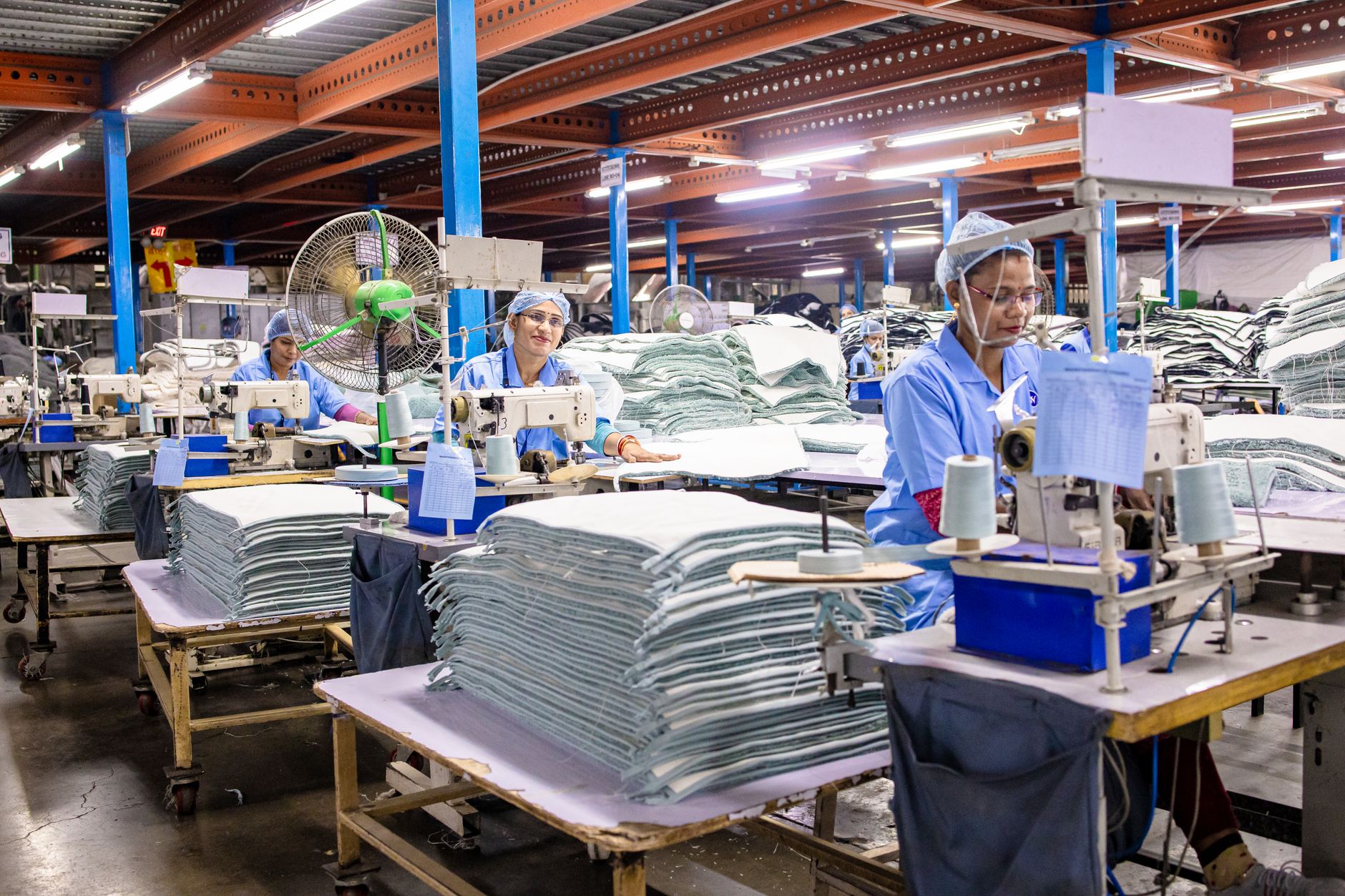
A hand freight, stock and material mover spends most of the shift on tasks that look simple from the outside. They unload or receive loads, move them to staging, break down pallets, restock pick faces, carry totes to packing and bring empties back. A large share of the time goes to walking, waiting for a dock door or lift, and reading labels and paperwork.
The BLS Occupational Outlook Handbook says the work is learned on the job and that most workers are full time. That means much of the local know-how, such as which aisle floods and which dock runs late, sits with experienced staff, and a plan that ignores them will fail.
The useful question for an operations lead is not what the job title covers, but which of these moves repeat on a fixed route. Make a simple list for one shift. Count the trips, note the start and end points, and mark the trips that follow the same path. Those repeated trips are the candidates. Everything else stays with people.
Median hourly wage, Laborers and Freight, Stock, and Material Movers, Hand
$4,380
Monthly cost of one full-time worker in Cleveland, OH, at the median wage plus payroll costs (an estimate, not a quote).
Which parts of the job can a robot take, and which can it not?
An autonomous mobile robot can take fixed-route transport of pallets, carts or totes between defined points, including scheduled runs between docks, staging and production lines. It can also run an empty-return loop and hold the same pace at night, when no one is on the floor. The route has to be mapped, the aisles clear enough for the vehicle to pass, and the stop points fixed in the system.
It cannot unload a trailer that arrives in an irregular stack, decide which order ships first, or handle a damaged load that needs a judgment call. It cannot fix a jam without a person, and it cannot take on a task that needs hands, eyes and a decision in the same motion. Where the job involves picking from mixed shelves, the person keeps the picking.
The boundary is usually clearer on the floor than on paper. Walk the route with the lead and mark every point where a person currently stops to decide something. Each of those stops is a reason to keep a person on that segment, even if the rest of the route is a clean robot run.
- Fixed-route pallet run
Autonomous Mobile Robot
Repeats the same mapped route, including overnight, without breaks
Material Handler
Adjusts the route when a dock door or aisle is blocked
- Irregular trailer unloading
Autonomous Mobile Robot
Cannot unload a mixed or irregular stack
Material Handler
Unloads, sorts and makes the call on damaged goods
- Pace late in the shift
Autonomous Mobile Robot
Holds the same pace through the last hour
Material Handler
Slows down over a long shift, but can switch tasks and talk through a problem
- Exceptions and decisions
Autonomous Mobile Robot
Stops when a load is not where the route expects it
Material Handler
Decides the next move and clears the exception
- Learning the floor
Autonomous Mobile Robot
Needs mapping and configuration before go-live
Material Handler
Learns the floor, the labels and local habits over weeks
- Changing the plan
Autonomous Mobile Robot
A route change needs the site team to remap it
Material Handler
Takes a new assignment from the lead the same day
What does the labor data show for this job in Cleveland?
Nationally, the detailed occupation Laborers and Freight, Stock, and Material Movers, Hand accounted for 2,988,900 jobs in 2024, inside a larger group of about 7.0 million, according to the BLS Occupational Outlook Handbook. The job is common, which means many employers hire for it and compete for the same people.
Cleveland's own figures come from the BLS Cleveland-Elyria release for May 2023 data. That release surveyed 5,015 establishments with a 59 percent response rate. An earlier BLS Cleveland release, for May 2022 data, found that Cleveland wages were below the national average in 16 of 22 major occupational groups. Those are metro-wide measures, so they describe the region, not your payroll.
The local wage for this job sits in the panel next to this text. Read it alongside your own overtime, agency and benefit costs. The BLS also notes that the May 2024 OEWS release introduced new metropolitan area definitions, so Cleveland figures may not line up one for one with older releases.
How do injuries, turnover, overtime, night shifts and sick days affect the decision?
Warehousing and storage, NAICS 493, recorded a total recordable case rate of 4.8 per 100 full-time workers in 2024, according to the BLS Industry at a Glance profile. Cases involving days away, job restriction or transfer ran at 4.1, and days-away cases alone at 1.5. Those are industry rates, but they point to the same place as your floor: repeated pushing, pulling and walking are where a fixed route removes exposure.
We did not find verified local figures for turnover, overtime, night-shift staffing or sick days for this occupation in the Cleveland metro, so this page does not state them. Pull the numbers from your own payroll and attendance records for the last twelve months. Count open shifts, overtime hours and sick days by shift, since those are the figures a site assessment needs.
Night shifts deserve their own count. A route that runs at 2 am with one person on the floor carries separate risk and coverage problems from the same route at 2 pm with a full crew. Note which routes run on nights and weekends, and which of those are covered by overtime today.
How does a team work with a robot?
The robot does not replace the crew. It takes the repeated run so the crew can cover the rest of the shift. In a typical setup, the robot handles the scheduled loops, including overnight, while the people on shift handle receiving exceptions, picking, staging decisions and anything that needs a judgment call. A site with a robot still needs material handlers. We never plan a site with zero staff.
Plan the staffing before the robot arrives. Decide which shift the robot covers, who owns the exception queue and who restarts the vehicle after a stop. Our site team trains the staff on those steps at go-live, so the people who work beside the robot know what it will do and what it will not.
Expect the crew's job to change, not shrink to nothing. Material handlers who once walked the same loop can move to exception handling, dock coordination and checking the vehicle's route log. That change is where the robot earns its place, because it keeps experienced people on the work that needs them.
What can a robot not do, honestly?
A robot does not work well in a building where the aisles change every week, where floors are uneven or wet in ways the sensors do not handle, or where the loads are oversized and sit outside the normal rack. It also does not fix a poor layout. If the route is blocked by pallets staged in the wrong place, the robot will wait, and the whole run slows down.
It will not make a poor fit good. A single robot on one loop may save a handful of trips, but it does not justify a lease if the work is spread across dozens of short moves to different places. Be cautious about any claim of unattended operation with no staff at all. The sites that get the most from these vehicles keep their people and redirect them.
Expect a learning period. Routes need tuning after the first weeks, and the staff need to learn what the vehicle does when it stops. Plan for that period, and do not judge the fit from the first night.
Is adoption of mobile robots in transport and logistics growing?
A trade report summarizing World Robotics 2025 from the International Federation of Robotics says transport and logistics was the largest professional service-robot application, with 102,900 units sold in 2024, up 14 percent. The same summary says that figure was about 52 percent of professional service-robot installations, and it describes these units as mainly mobile robots for transport and handling of goods.
A second trade report on the IFR's World Robotics 2026 figures says professional service-robot sales for transport and logistics rose 21 percent to 117,500 units in 2025. That report also gives industrial robot totals of 542,000 units for 2024 and 603,000 for 2025, as reported by trade press. These are global and sector figures, so they show direction, not what your site will do.
Growth at this scale suggests the equipment and service market is established, which matters when you choose a partner. It does not tell you that a robot fits your aisles, your loads or your night crew.
How do we get started in Cleveland, OH?
Start with one route. Pick the repeated move that costs the most travel or overtime, map it, and measure it for a week. We run a free site assessment that maps the route, checks the floor and sets the stop points. A fixed robot lease payment is quoted after that assessment, through lease financing, so the number reflects your floor and your loads, not a generic estimate.
Once you accept a quote, we deploy and integrate the robot, train the staff who will work beside it and provide go-live support. Service is part of the arrangement, and our team handles on-site dispatch and remote triage. A pilot with one leased unit lets you test the route before you add more, and a backup unit can cover downtime if the route is critical.
Ask for the terms in writing, including what the lease covers, how service is scheduled and who answers when a vehicle stops on a night shift. The right partner is the one who answers those questions before the robot arrives.
Frequently asked questions
Put a robot to work in Cleveland.
We walk your site, learn the job, and recommend the unit that fits. Then we quote the lease, deploy it, and keep it serviced.
Sources
- US Bureau of Labor Statistics, Occupational Employment and Wage Statistics (OEWS May 2024)
- BLS Occupational Outlook Handbook: Hand Laborers and Material Movers
- BLS Industry at a Glance: Warehousing and Storage (NAICS 493)
- BLS Cleveland-Elyria OEWS release, May 2023 data
- BLS Cleveland OEWS release, May 2022 data
- Forklift Action trade report on IFR World Robotics 2025
- Robotics Tomorrow trade report on IFR World Robotics 2026
- BLS OEWS current metropolitan area employment chart