
The short answer
Autonomous mobile robot ROI in Cleveland, OH comes from the laborers and freight, stock, and material movers, hand hours a robot takes off repeat transport runs, and it depends on how many of those hours the robot can realistically cover each week. Savings are ranges, not promises: they move with the share of work the robot takes, the lease cost, and how steady the shifts and floor layout are, and a precise figure comes from a free site assessment.
Key takeaways
- The return comes from repeat transport hours taken off laborers and freight, stock, and material movers, hand work, not from a headcount cut.
- Plan with a low case and a high case built from measured shift logs, not a single figure.
- The share of repeat runs a robot can finish is the biggest lever, and the site assessment measures it.
- Injury rates in transportation and warehousing are high, but count that offset only with your own incident data.
- Start with one route, measure the share it really takes, then decide on more units.
Run the numbers for your site
Auto-detected from your location - we use the real BLS wage here. Not right? Pick your city or state above.
What do you want to automate?
The robot takes the repetitive cart and pallet moves off the heaviest motion.
What is autonomous mobile robot ROI in Cleveland, OH?
Autonomous mobile robot ROI in Cleveland comes down to one comparison: the labor hours the robot takes off a shift, set against the lease cost and the cost of running it. The return is not one fixed number. It moves with how many hours of repeat transport work a site has, how many shifts it runs, and how much of that work a robot can finish without a person beside it.
This page uses the government wage data for laborers and freight, stock, and material movers, hand in Cleveland, OH, shown in the panel beside the text. Every savings range on this page is based on the hours of that kind of work. If the people who mainly work your site hold a different job, the robot takes the laborers and freight, stock, and material movers, hand type of work off their plate, and only that work enters the math.
We are a commercial robot integrator. We pick the robot for the floor, lease it through financing, deploy and integrate it, train staff, and service it nationwide. A lease quote comes after a free site assessment, so no payment figure appears on this page.
Where does the labor saving come from in this setting?
According to the BLS Occupational Outlook Handbook, hand laborers and material movers held about 6.95 million jobs in 2024. The detailed occupation, laborers and freight, stock, and material movers, hand, had 2,988,900 jobs that year. The same handbook projects 4% growth for the broader group over 2024 to 2034, which it describes as about as fast as average. That is a large pool of hours, and some of it goes to moving material along paths that repeat every shift.
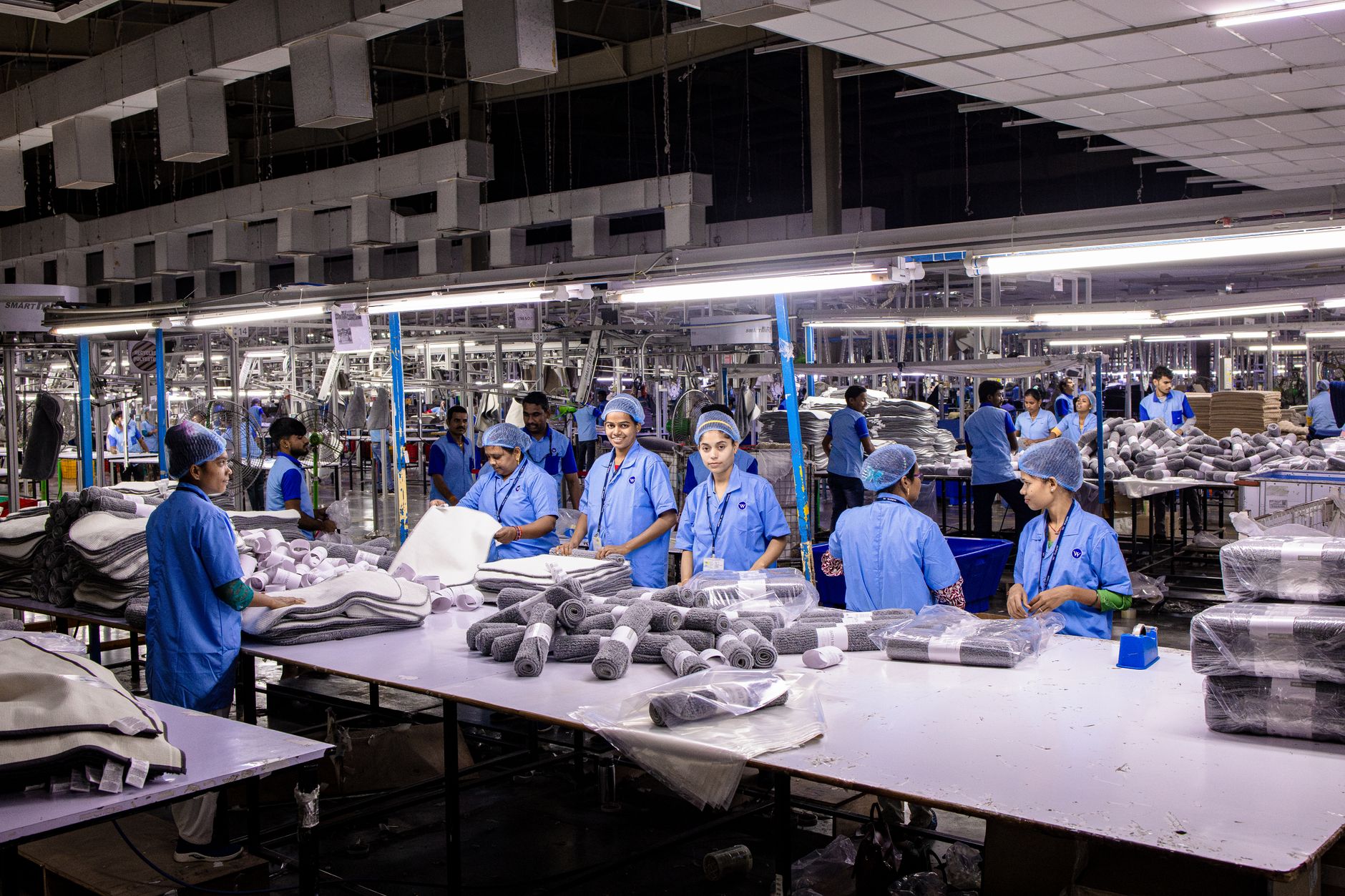
The saving appears on repeat runs: receiving to staging, staging to dock, pick area to pack bench, or a replenishment loop to a production line. A robot takes the run. People still decide exceptions, handle damaged goods, load and unload, and clear faults. So the return tracks the share of hours spent on repeatable runs, not total headcount.
We did not verify a count of warehouse or distribution sites, or their employment, for the Cleveland metro in this research pass, so this page does not state a local headcount. The BLS Quarterly Census of Employment and Wages for Cuyahoga County, under warehousing and storage, is the source to confirm local employment before you size a deployment.
Median hourly wage, Laborers and Freight, Stock, and Material Movers, Hand
$4,380
Monthly cost of one full-time worker in Cleveland, OH, at the median wage plus payroll costs (an estimate, not a quote).
How does the payback math work?
Start with the hours. Log the repeat transport runs for a normal week: how many runs a shift, how long each takes, and who does them. Multiply those hours by the local wage for laborers and freight, stock, and material movers, hand from the panel on this page. That gives the labor value of the work that repeats.
Then apply the share a robot can realistically take. A robot covers one route at a time, needs a clear path, and still needs a person for exceptions, so few sites hand every repeat run to a robot in the first phase. That share is the offset. A site that moves a fixed set of runs on two shifts has a larger offset than one with scattered, changing moves.
Subtract the lease cost and the staff time that stays with the robot, such as supervision, charging checks, and fault response. What is left is the annual return. Show it as a range. The low case uses a smaller share and the high case a larger one, both built from measured hours. A single number hides the uncertainty, and sign off is easier when the range is visible.
What changes the number up or down?
Three things move the return most. The first is route repeatability: fixed, repeat runs are the work a robot does well. The second is hours of operation, since a robot that covers an overnight or second shift adds offset without adding a second person. The third is floor stability: changing layouts, blocked aisles, and frequent exceptions cut the share a robot can take and add supervision time.
Two smaller factors also matter. Lease term and what maintenance is included change the annual cost, so compare quotes on the same terms. Staff plans matter too. If the site moves people to exception work, the offset is real. If it expects the same staff to absorb the same hours with no change to their work, the return is at risk.
What does the work look like in hours?
The table lists the transport tasks where a robot most often takes hours. We did not find published hour figures for these tasks in this research pass, so the hours column is for you to fill from timesheets or a shift log. Your own numbers are the only baseline that holds up at sign off.
The right-hand column shows what remains with staff. Route checks, charging, and fault recovery are small but real. Counting them keeps the offset honest.
How does injury risk affect the return?
According to the BLS Spotlight on transportation and warehousing, that sector had 4.8 nonfatal cases per 100 full-time equivalent workers in 2022, against 3.0 for the nation. Couriers and messengers had 9.4. DC Velocity, reporting on 2023 BLS data, ranked transportation and warehousing first of 19 industries, at 4.5 injuries per 100 full-time workers.
A warehouse safety statistics industry page reports 4.8 for warehousing in 2024 against about 2.6 for all industries. That figure is aggregator reported and we have not checked it against the BLS 2024 tables, so treat it as a lead, not a verified rate.
Injury avoidance is a real offset, but it is hard to bank. Count it only when your own incident log shows strain or collision events on the routes a robot would take. Otherwise leave it out of the low case.
Is adoption high enough to make a pilot worth it?
GlobeST, in March 2026, estimates that autonomous mobile robots and automated guided vehicles are in roughly 10 to 15% of facilities. That is an estimate, not a survey. A survey summarized in financial market news found 39% of operators use mobile robots now and 52% plan to. A vendor-linked study reported by SDC Executive found 70% of companies had never implemented an AMR.
Taken together, most sites have not deployed one. That makes a single route pilot a normal starting point. Because there is no verified local peer data for Cleveland here, your own measured hours are the only reliable baseline for the decision.
What are the risks to the return, and how do you avoid them?
The largest risk is idle time. A robot sits when the route changed, an aisle was blocked, or staff were not trained to clear a fault. Avoid it by mapping the floor before deployment, writing down the route, and training staff on fault and recovery steps before go-live.
The second risk is a smaller share than planned. Use the low case as the planning case, and measure the share of runs completed through the first weeks after go-live. If it falls short, change the route or the staffing plan before adding units.
The third is downtime. Ask what happens when a unit fails: whether a spare or loaner unit is available, how fast a technician responds, and whether remote triage can clear many faults before a visit. Get those terms in writing with the lease quote.
What is the timeline from assessment to payback?
The usual sequence runs from site assessment and floor mapping, to a lease quote, to a pilot on one route, to integration and staff training, to go-live support, and then to the first months of measured offset. Payback is measured against the baseline you logged. We do not publish a fixed payback month, because it depends on lease term, route count, and shift pattern.
Phased deployment keeps early exposure small. You start with one leased unit, measure the share over a period long enough to see routine days and faults, and add units only when the measured share holds. Each step can be checked against the low case before the next one is approved.
How do you get a precise figure from a free site assessment?
Bring a normal week of shift logs, the floor plan, the list of transport routes, and the incident log for those areas. We map the floor, time the runs, confirm the share a robot can take, and return a range with a lease quote.
The quote states the lease term, what maintenance is included, what is not, and the support terms for downtime. It does not promise a savings figure. The range is built on your measured hours, so it is only as precise as the logs you bring, which is why we ask for them first.
Frequently asked questions
Put a robot to work in Cleveland.
We walk your site, learn the job, and recommend the unit that fits. Then we quote the lease, deploy it, and keep it serviced.
Sources
- US Bureau of Labor Statistics, Occupational Employment and Wage Statistics (OEWS May 2024)
- BLS Occupational Outlook Handbook: hand laborers and material movers
- BLS Spotlight: transportation and warehousing employment
- DC Velocity
- Warehouse safety statistics industry page
- GlobeST
- Financial market news summary of a survey
- SDC Executive