
The short answer
Autonomous mobile robot ROI in Louisville/Jefferson County comes from laborer and material mover hours that a leased robot takes over on repetitive transport, staging and floor travel, valued at the local wage for that job. The savings range depends on how much of that work is truly repetitive, how much a single unit can realistically take, and the lease cost quoted after a free site assessment. It is a range, not a promise, and the site assessment turns it into a precise figure for one building.
Key takeaways
- The return comes from laborer and material mover hours a robot takes over, not from cutting a whole team.
- The local government wage for this job sets the value of each hour, and it is shown beside the calculator.
- Savings depend on how much of the work is repetitive and fixed to a route, so time the work before deciding.
- Downtime and service coverage can erase a shift's saving, so the lease quote should spell them out.
- A free site assessment turns the range into a lease quote for one specific building.
Run the numbers for your site
Auto-detected from your location - we use the real BLS wage here. Not right? Pick your city or state above.
What do you want to automate?
The robot takes the repetitive cart and pallet moves off the heaviest motion.
What is autonomous mobile robot ROI in Louisville/Jefferson County?
Autonomous mobile robot ROI in Louisville/Jefferson County is the return a business gets when a leased robot takes over work that laborers and material movers would otherwise do by hand. The return is measured in hours: repetitive transport, staging and floor travel moved from people to the robot, then valued at the local wage for that job. It is not a headcount cut, and it does not replace a supervisor or the people who load, check and clear the route.
The local base for this kind of work is large. According to a Greater Louisville relocation guide, 30 percent of nearly 615,000 Louisville jobs are in trade, transportation and utilities, and 124,000 Kentuckians work in transportation and warehousing across the state. The guide does not state its year, so treat those counts as context rather than live totals.
The calculator on this page is pre-filled for Louisville/Jefferson County. The government wage data shown beside this text covers Laborers and Freight, Stock, and Material Movers, Hand, from the May 2024 occupational survey for the area. The savings range is built from that wage and from hours you verify, so it moves when the site changes.
Where does the return come from in this setting?
Most of the return comes from the transport and handling side of a building: moving goods from receiving to storage, from storage to staging, and along long floors on fixed routes. These tasks repeat and follow the same paths, which is why they suit a leased robot better than a mixed task list. A unit that runs one route all shift takes over hours that people would otherwise spend on the same walk.
The national labor base is also large. According to the Bureau of Labor Statistics Occupational Outlook Handbook, 2,988,900 people were employed in Laborers and Freight, Stock, and Material Movers, Hand in 2024. The handbook's broader hand laborers and material movers group held about 7.0 million jobs, with projected growth of 4 percent from 2024 to 2034.
Adoption figures vary with the question asked. According to a survey reported by an automation trade outlet, with the publication date not confirmed, over 70 percent of respondents have adopted or plan to adopt autonomous mobile robots or automated guided vehicles, and 21 percent use self-driving forklifts. A January 2025 study of 217 respondents on warehouse robotics adoption is another reference point, and it does not use the same wording.
Turnover is a third input, and the surveys disagree. A 2025 warehouse labor survey found that most respondents reported turnover under 10 percent, while a 2025 workforce benchmark puts a good warehouse target at or under roughly 27 percent, based on quit rates for transportation and warehousing. Use your own records when you value turnover, not either survey.
Median hourly wage, Laborers and Freight, Stock, and Material Movers, Hand
$5,160
Monthly cost of one full-time worker in Louisville/Jefferson County, KY, at the median wage plus payroll costs (an estimate, not a quote).
How does the ROI calculator math work?
The calculator starts with hours, not headcount. For each task the robot takes over, we estimate the laborer and material mover hours per shift and per week, then apply the share of those hours a robot can realistically handle. Each hour is valued at the local government wage for this job. Lease cost is subtracted from that value, and the result is a savings range.
Three inputs carry most of the weight. The first is how many hours are repetitive and on a fixed route, since those are the hours a robot takes cleanly. The second is the realistic share of those hours for one unit, because a robot covers its route and does not finish every task in a building. The third is the lease cost, which is quoted after the site assessment as a fixed robot lease payment.
Work through the steps in order. Start with the gross value of the hours on the route, at the local wage. Apply the share a single unit can take. Then subtract the lease cost. What remains is the range, and the calculator keeps each step visible so you can change any one of them and see the effect.
What hours does a robot actually take over?
The honest answer depends on the building, and the number has to be measured rather than assumed. We did not find published task-hour figures for robots in this exact setting, so this page does not quote one. What we can do is identify which kinds of laborer and material mover work are measurable and repeatable enough to fit.
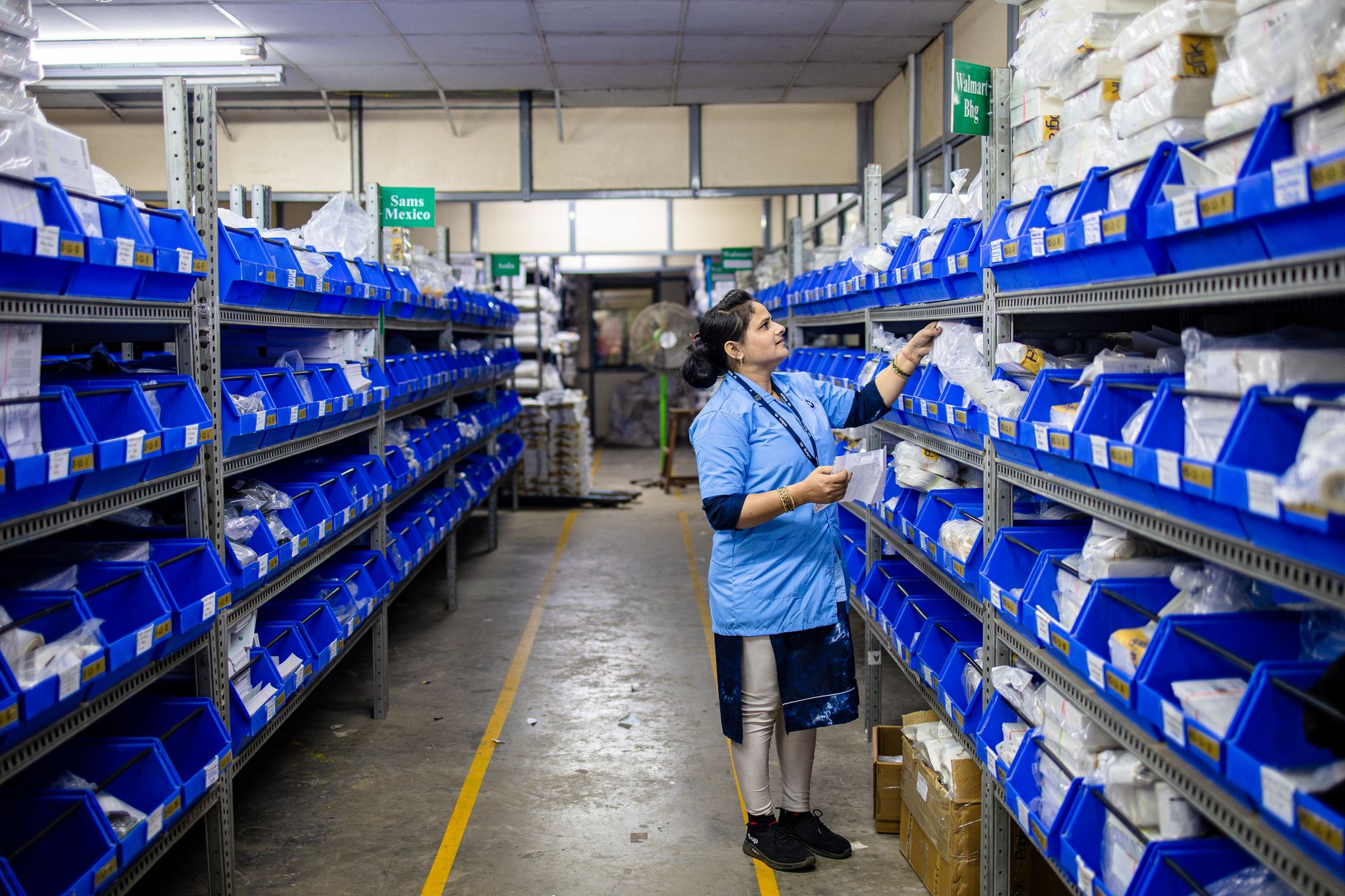
Work that tends to fit: moving totes or pallets between fixed points, carrying staged freight to the outbound dock, delivering material to the same workstations on a schedule, and repeated runs along one main aisle. Work that tends not to fit: unloading mixed trailers, building pallets by hand, picking from shelves with varied layouts, and anything that requires a person to decide where an item belongs.
Read the table below as a checklist for the assessment, not as a result. The right column describes setup and supervision, which is also work. A robot does not remove the need for someone to load it, clear its route and respond when it stops.
What changes the number up or down?
Several factors move the range in a predictable direction. More repetitive hours on a fixed route raise it. Long, clear travel lanes raise it, because the robot spends less time waiting in congestion. A higher local wage for this job raises the value of each hour, which is why the government wage data appears on this page.
Other factors lower it. Mixed or unpredictable work, cluttered floors, heavy foot traffic during the shift, frequent layout changes and inconsistent handoffs all cut the hours a robot can take. A seasonal peak can also mislead: if a unit sits idle for much of the year, the average range overstates the return.
The lease terms matter too. A larger fleet, extra service coverage or a shorter lease term changes the lease cost, and the quote should show each piece separately so you can test the range against different options.
What are the risks to the return, and how do you avoid them?
The biggest risk is valuing hours that are not truly repetitive. A robot that covers the easy route while the hard tasks stay with the same staff saves less than the headline suggests. Avoid this by timing the work across several shifts before deciding, and by naming in writing which tasks the robot owns.
The second risk is downtime. A unit that stops during a busy shift erases the saving for that period. The lease quote should state how a stopped unit is serviced, how quickly it is dispatched, and what coverage exists when a unit is out of service.
The third risk is an unsafe floor. According to the Bureau of Labor Statistics industry page for warehousing and storage, that sector recorded 32 fatalities in 2024, up from 28 in 2023. The bureau notes a series break from 2023 because of a classification revision, so compare those years with care. Floor planning, traffic separation and staff training are part of the return, not an optional extra.
What is a realistic timeline from assessment to payback?
The timeline runs in stages. The site assessment comes first, where the work is timed, the floor is mapped and the route is confirmed. A quote, a lease agreement and a deployment plan follow. The stages run on the calendar, but payback depends on the hours the robot takes over, which only real shift data can confirm.
Go-live usually starts with one unit on one route, with a supervisor recording results for several shifts. That first stage tests the calculator's assumptions. When the hours match the range, a second unit or a second route can be added, and phased deployment keeps the floor running during the change.
Payback arrives when the cumulative value of the hours taken over, at the local wage for this job, covers the lease cost. The range is wide at the start and narrows as shift data comes in. Ask for that data in the quote, not only the headline range.
How do you get a precise figure from a free site assessment?
The free site assessment turns the range into a figure for your building. We map the floor, time the target tasks across shifts, and identify which hours are repetitive enough for a robot. We also check traffic, dock layout, power access and any place where people, forklifts and robots would share a path.
We are a commercial robot integrator. We choose the robot that fits the site, lease it through financing, deploy and integrate it, train the staff who work with it and service it nationwide. The lease quote is a fixed robot lease payment, with service, maintenance and go-live support described in the same document, and it is produced after the assessment.
Bring your shift schedule, task list, floor plan and any records you already keep on incidents and turnover. The more real hours you share, the narrower the range becomes. Use the result to decide whether one unit on one route is the right first step.
Who does what: the robot or the people on the team?
A robot is the better choice for steady, repetitive, measured work on a fixed route, and it keeps that route through a full shift without breaks. People are better when the task changes from hour to hour, when exceptions appear, and when judgment decides where an item goes. The comparison is useful only when it is honest about both sides.
Your staff remains essential. A leased robot needs loading, route checks, clearing and a supervisor who reads its performance data. The goal is to move routine transport work off the laborers and material movers' list so that people spend their time on the work that needs them.
- Repetitive routes
Autonomous Mobile Robot
Runs the same path on schedule, every shift, without breaks.
Staff
Covers the route, but tires over long shifts and is slower on long runs.
- Exceptions and changing loads
Autonomous Mobile Robot
Handles fixed, standard loads, and stops and waits when something falls outside its program.
Staff
Adjusts to odd sizes, damaged items and changing unload order.
- Night and off hours
Autonomous Mobile Robot
Runs when the building is quiet, if the schedule allows it.
Staff
Needs a staffed shift for every hour the work runs.
- Coverage when someone is out
Autonomous Mobile Robot
Keeps its route with one supervisor, but cannot fill a gap elsewhere.
Staff
Can rotate across tasks and fill gaps when a colleague is absent.
- Judgment about where an item belongs
Autonomous Mobile Robot
Follows the programmed destination only.
Staff
Decides where items go and catches errors before they spread.
What should a decision maker ask before signing a lease?
Ask for the hours behind the range, not only the range itself. Ask what the quote covers, including service, maintenance, go-live support and how quickly a stopped unit is repaired or replaced. Ask what happens when the route changes or the building expands, because a fleet that cannot be adjusted loses value.
Ask how the robot shares space with people and forklifts, and who owns the safety plan. Ask for the timeline from assessment to go-live, and what the first several shifts will measure. Answers to these questions should be in writing before anything is signed.
Frequently asked questions
Put a robot to work in Louisville/Jefferson County.
We walk your site, learn the job, and recommend the unit that fits. Then we quote the lease, deploy it, and keep it serviced.
Sources
- US Bureau of Labor Statistics, Occupational Employment and Wage Statistics (OEWS May 2024)
- Bureau of Labor Statistics, Occupational Outlook Handbook: hand laborers and material movers
- Bureau of Labor Statistics, warehousing and storage industry page (NAICS 493)
- 2025 warehouse labor survey report (PDF)
- 2025 workforce benchmark on warehouse turnover
- Automation adoption survey reported by a trade outlet
- January 2025 warehouse robotics adoption study, trade publication
- Greater Louisville relocation guide