
The short answer
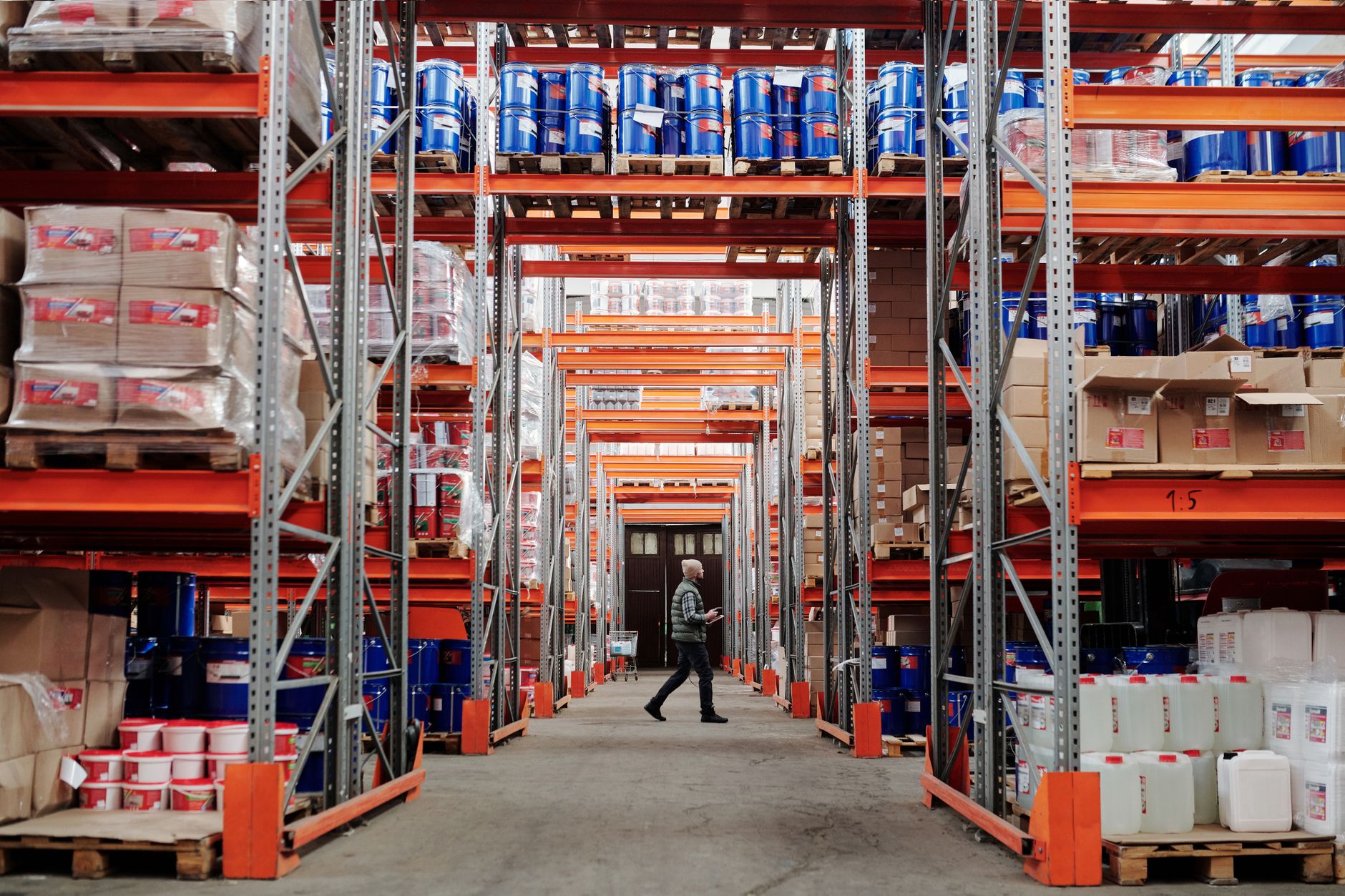
For an autonomous mobile robot vs material handler in Louisville/Jefferson County, the robot makes sense when most of the job is repeat moves on fixed routes, such as pallets or totes between a dock, storage and a line. A material handler stays essential where loads are irregular, trailers need unloading or the work changes hour to hour, and the best fit for most sites is one robot working beside the people who remain, never a robot with zero staff.
Key takeaways
- A robot fits repeat pallet and tote moves on fixed routes, while a material handler keeps trailer work and irregular loads.
- According to Federal Reserve Economic Data, which republishes Bureau of Labor Statistics figures, Louisville/Jefferson County transportation, warehousing and utilities employment was 69.0 thousand in December 2025.
- According to the Bureau of Labor Statistics, warehousing and storage injury and illness ran 4.8 cases per 100 full-time workers in 2024.
- A vendor calculation puts sector turnover near 27 percent, so the staffing plan needs your own separation data.
- Start with one leased unit after a free site assessment, then add units only where the route data supports it.
Autonomous mobile robot vs material handler in Louisville/Jefferson County: which fits?
The right choice depends on the mix of work on a given floor more than on the city it sits in. Louisville/Jefferson County has a large transportation and material moving base: according to the Bureau of Labor Statistics regional release for Louisville, transportation and material moving was the occupational group with the highest employment share in the area, at 14.0 percent in May 2024. That share shows the work is common here. It does not show that every site should automate it.
A robot makes sense when the move repeats: pallets or totes that travel the same path from a receiving dock to storage, a line or a shipping lane, with predictable start and stop points. It also makes sense when a site cannot staff every shift it needs, or when overtime keeps landing on the same people for the same carrying work. Those are the signs we look for in a site assessment.
It does not make sense when most of the work is unloading mixed freight, building pallets by hand, judging damaged or oversize loads, or deciding where things go. In those cases the material handler is the right tool, and a robot adds a second system to supervise without removing the hard part. The practical test is whether the job can be written as a route, a schedule and a list of stops. If it can, the robot is a candidate. If not, keep the person and fix the process first.
What does a material handler actually do in a shift in Louisville?
Material handlers in this region cover receiving, put-away, order pulls, staging, replenishment and dock moves. A shift is usually a loop of short trips with a pallet jack, a cart or a powered pallet truck, broken up by waiting for trailers and for work to be released. One person often covers several of these in the same shift, so the job is harder to measure than its title suggests.
The local job market shows the same duties in written form. A Louisville warehouse and logistics job listing snapshot from July 2026 counted about 133 postings, led by package handler, forklift operator and material handler titles. That snapshot comes from a job aggregator and was not checked against employer records, so read it as a sign of demand, not a headcount.
Employment in the wider sector is also moving. According to Federal Reserve Economic Data, which republishes Bureau of Labor Statistics data, Louisville/Jefferson County transportation, warehousing and utilities employment was 69.0 thousand in December 2025, up from 64.6 thousand in August 2025. The local wage for this job appears on the government wage data panel next to this text. Read it as the cost of the people you already employ, and remember it is one input among hours, turnover and route volume.
Median hourly wage, Laborers and Freight, Stock, and Material Movers, Hand
$5,160
Monthly cost of one full-time worker in Louisville/Jefferson County, KY, at the median wage plus payroll costs (an estimate, not a quote).
Which parts of the material handler job can a robot take?
A robot takes the repeatable transport legs. In a typical Louisville building that means a loaded pallet or tote moved from a dock to a staging point, empty carriers returned to receiving, a cart of picked orders carried to a pack station, or parts carried between two cells on a line. It works best when the start and end points are fixed and the floor between them is mostly clear.
It does not take the work around the move. The robot does not unload a trailer, pick a loose item from a high shelf, decide that a pallet is damaged and needs pulling, or build a mixed pallet to a load plan. Those tasks take hands and judgment, and they fill most of the gaps between transport runs, so they stay with the person.
How many people do this work in Louisville, and how often do they leave?
Turnover is the number that drives staffing risk, and the published figures do not agree. A vendor calculation, published on a workforce vendor's blog and based on 2025 quit rates for transportation, warehousing and utilities, puts annual voluntary turnover near 27 percent. Separately, the Bureau of Labor Statistics JOLTS release reported quits rates of 2.6 percent for the broader trade, transportation and utilities group in December 2025 and 2.3 percent in February 2026. Those are rates for a broader group, not a direct turnover figure for material handlers.
The 2026 Louisville release from the Bureau of Labor Statistics lists hand laborers and material movers at about 29,400 employed, with a location quotient of 2.26, which means the occupation is more concentrated here than across the country. The reference year was not shown in the excerpt we pulled, so confirm it before quoting the number.
We did not find a verified source for overtime rates, sick-day rates or night shift hours for this occupation in Louisville. Those are the figures that move the decision most, so pull them from your own timekeeping and roster before you commit. The checklist below lists what to pull.
What injury rates apply to warehouse material handling?
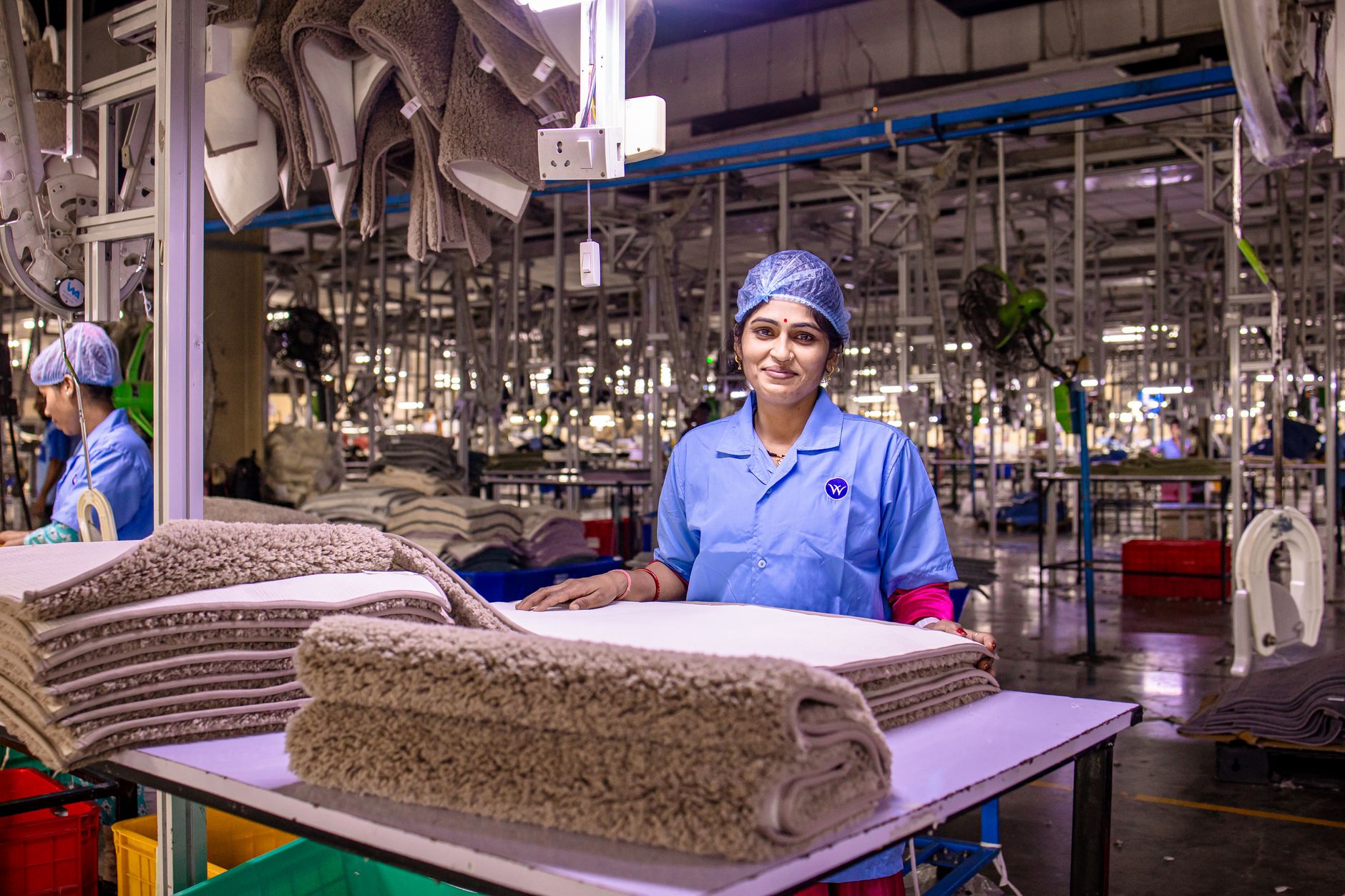
The Bureau of Labor Statistics publishes injury rates for warehousing and storage, NAICS 493. For 2024 it reported a total recordable injury and illness rate of 4.8 cases per 100 full-time workers, a days-away, restriction or transfer rate of 4.1, and a days-away-only rate of 1.5. Fatalities in the sector were 32 in 2024, up from 28 in 2023. These are national figures. BLS also flags a series break starting with 2023 data from the NAICS 2022 revision, so compare years carefully.
The rates point at the work that hurts people: repeat carrying, pallet jack use, lifting and close contact with powered equipment. A robot can reduce how often a person makes the repeat trip, which is where some of that exposure sits. It does not remove the need for trained people on the floor, and it adds powered equipment in the aisles that has to be routed around people and fenced where the layout requires it.
Check the local incident history in your own safety log and with your insurer before assuming the national rate applies to your site. A site with a low rate may still gain from a robot for throughput, and a site with a higher rate may need the robot and retraining both.
How does a team work with a robot in the building?
The robot does not replace the job. It takes over part of the walking and carrying, and the people who remain handle the dock, the exceptions, the damage checks and the moments when the robot stops. The working pattern is one robot on a fixed route with one or more people, not a robot running a shift alone.
Training is short but specific. Staff learn how the robot signals a stop, how to clear a blocked path, how to reset a stuck unit, how to request a dispatch and what to do when a unit is out for service. We deploy and integrate the robot, train the staff and service it nationwide, so the site has one partner to call. Most issues go through remote triage first, and on-site dispatch covers the rest.
Staffing does not vanish. The usual pattern is one robot plus fewer people on the repeat route, with the freed hours moved to dock work, exceptions and supervision. A route that drops to zero staff stops at the first blocked aisle or damaged load, and nobody is on hand to restart it.
What can an autonomous mobile robot not do?
It cannot do judgment work. It cannot decide that a pallet is unsafe, that a load shifted in transit or that a shipment belongs in another lane. It cannot build a load in a trailer, and it cannot handle an odd-shaped or irregular item that does not fit the route it was given.
It needs a clear floor and a mapped route. Heavy debris, deep seams, wet spots, uneven thresholds and frequently blocked aisles lower its uptime. Sites that move racks often need the routes re-mapped, and that work has to be planned rather than discovered on the floor.
It depends on charge and connectivity too. A unit that runs low on charge or loses its network connection stops, and the site needs a plan for that. We can plan spare unit coverage for a route, but a site still needs a person who can move material by hand on a bad night.
- Hours covered
Autonomous Mobile Robot
Runs a fixed route for as long as it has charge and a clear path
Material Handler
Works a full shift with breaks and can take on open tasks when called in
- Irregular loads
Autonomous Mobile Robot
Moves standard pallets and totes on set routes, not odd or damaged freight
Material Handler
Judges loads, reshapes pallets and handles damaged or oversize freight
- Trailer work
Autonomous Mobile Robot
Does not unload a trailer or build the load
Material Handler
Unloads trailers and builds the load by hand
- Layout changes
Autonomous Mobile Robot
Needs routes re-mapped when racks or lanes move
Material Handler
Adapts on the spot when the layout changes
- Repeat transport
Autonomous Mobile Robot
Repeats the same move on the same path every time
Material Handler
Repeats the move well, but gets tired and loses pace when a shift runs long
- Exception handling
Autonomous Mobile Robot
Stops and signals for help when the path is blocked
Material Handler
Clears the blockage, reroutes the work and decides what to do next
- Cost to add a shift
Autonomous Mobile Robot
A fixed robot lease payment, quoted after a site assessment
Material Handler
Wages, overtime and benefits for each added shift
Is autonomous material movement common yet?
Adoption is growing, but most of the figures come from vendors or vendor-linked surveys. A vendor-linked survey, reported by a trade publication, found that more than 70 percent of respondents had adopted or planned to adopt autonomous mobile robots or automated guided vehicles, and that 21 percent used self-driving forklifts. Our pass did not confirm the survey date, so read it as a direction of travel, not as proof of local demand.
A separate vendor-reported study, carried by the same trade publication, found that 70 percent of companies had never implemented an autonomous mobile robot and 76 percent had never deployed an automated guided vehicle. Taken together, the two surveys show strong interest and still-limited deployment. For most sites, a small, measured pilot is the usual way in.
How do you decide, and how do you get started?
Start with the route data, not the robot. Count the repeat moves per shift, the distance along each path, the open shifts and the overtime hours, and note the floor conditions on each route. Those numbers decide whether a robot makes sense, and they set the terms of the lease quote.
We begin with a free site assessment. We map the floor, check the routes and traffic, and recommend the unit that fits the site. You receive a quote for a fixed robot lease payment after the assessment, with lease financing programs available. Deployment, integration and staff training come from the same team that services the unit nationwide.
Begin with one leased unit on one route. Measure the stops, the uptime and the hours moved over a fair period, then add units only where the route data supports it. A pilot keeps the decision reversible and gives your team time to learn the handoffs before a second route depends on them.
Frequently asked questions
Put a robot to work in Louisville/Jefferson County.
We walk your site, learn the job, and recommend the unit that fits. Then we quote the lease, deploy it, and keep it serviced.
Sources
- US Bureau of Labor Statistics, Occupational Employment and Wage Statistics (OEWS May 2024)
- Bureau of Labor Statistics, Louisville occupational employment and wages, 2026 release
- Bureau of Labor Statistics, Louisville occupational employment and wages, 2024 release
- Bureau of Labor Statistics, warehousing and storage injury rates (NAICS 493)
- Bureau of Labor Statistics, JOLTS news release
- Louisville warehouse and logistics job postings snapshot
- Workforce vendor blog on warehouse turnover
- Trade publication report on a vendor-linked automation survey
- Trade publication report on a vendor-reported AMR study