
The short answer
For an autonomous mobile robot vs material handler in Miami decision, a robot makes sense when a site repeats the same transport runs many times a shift on a predictable route, especially on overnight or weekend shifts that are hard to staff. A material handler remains the better choice when loads are irregular, routes change often, or the work needs judgment about what moves next. Most sites end up with a robot plus fewer staff, not a robot in place of the whole crew.
Key takeaways
- An autonomous mobile robot fits Miami sites with repeated, predictable transport runs on stable routes.
- A material handler stays essential for irregular loads, judgment calls and exception work.
- Published hour figures do not cover a specific site, so measure your own floor and use your own payroll records.
- The usual result is a robot plus fewer staff, never a robot with zero staff.
- Start with a free site assessment and a lease quote built on your floor.
Autonomous mobile robot vs material handler in Miami: when does a robot make sense?
An autonomous mobile robot makes sense in Miami when a site repeats the same transport runs many times each shift on a predictable route, such as moving totes from receiving to storage, pallets from a dock to a staging lane, or carts from packing to outbound. It also fits when those runs fall on overnight or weekend shifts that are hard to staff. A material handler stays the better choice when loads are irregular, routes change often, or the work needs judgment about what moves next.
Most Miami operations sit between those cases. A distribution center that runs the same inbound-to-reserve route all night is a strong candidate. A showroom receiving a few deliveries a day usually is not. The useful question is whether enough identical trips happen in a week to keep a robot busy and to justify the mapping work, not whether a robot can technically do a task.
The government wage data on this page gives the local wage for this job in the Miami area. That sets the labor side of the comparison, but the repeated hours and the shifts that are hard to fill are what decide the answer.
What does a material handler actually do during a shift in Miami?
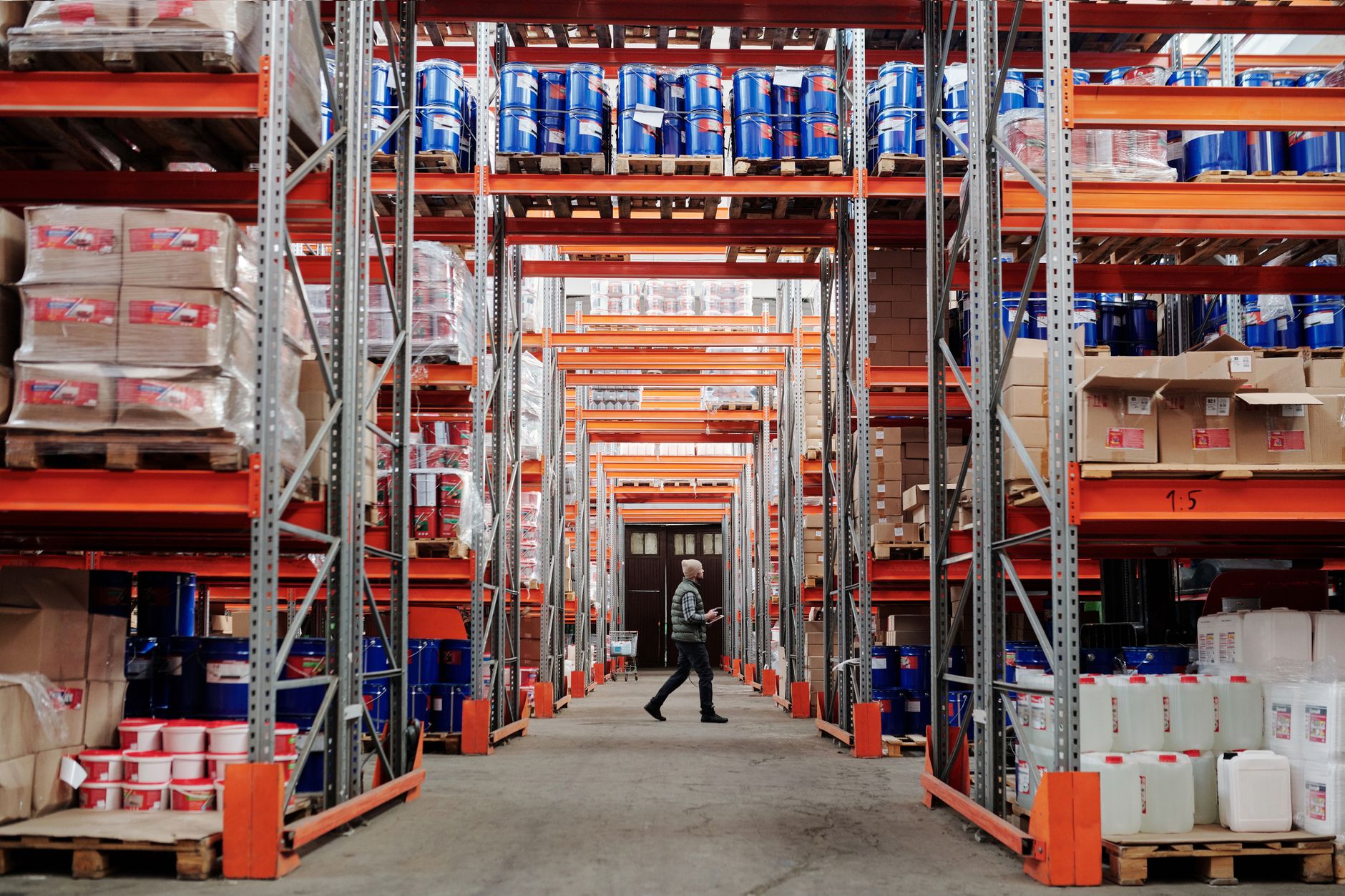
A material handler's shift is less a single task than a stream of small interruptions. Typical work includes unloading or staging inbound freight, putting away received stock, picking orders, replenishing pick faces, moving carts between zones, returning empty containers, and handling damaged or rejected goods. A large share of the time goes to walking, waiting for a dock door to clear, and searching for the right location.
The same shift carries physical risk. According to DC Velocity, reporting on 2023 workplace injury data, transportation and warehousing had 4.5 injuries and illnesses per 100 full-time workers, ranking first of 19 industries. A 2024 report from the National Employment Law Project put the national warehouse worker injury rate at 5.7 per 100 full-time equivalent workers. That report relies on dated data, so read it as a directional figure.
Scale is large. The BLS Occupational Outlook Handbook counts 2,988,900 jobs for Laborers and Freight, Stock, and Material Movers, Hand in 2024. An occupation summary citing the May 2025 OEWS release reports about 2,950,280 jobs nationally. The two counts are close, so the size of the workforce is clear even though the exact figure varies by source.
Median hourly wage, Laborers and Freight, Stock, and Material Movers, Hand
$4,196
Monthly cost of one full-time worker in Miami, FL, at the median wage plus payroll costs (an estimate, not a quote).
Which parts of the work can an autonomous mobile robot take, and which can it not?
A robot does well at repeated point-to-point moves on a mapped route: pulling carts from a pack line to an outbound lane, moving totes from a receiving station to reserve storage, or running a pallet from a staging position to a dock. It also handles scheduled sweeps, such as end-of-shift returns, where the same stops repeat every night. The route, the load size and the stop locations have to stay consistent for the robot to earn its place.
It cannot take the parts of the work that need hands, judgment or variation. It does not unload a trailer, open and inspect cartons, handle a damaged or oddly shaped pallet, pick from mixed shelving, or decide that a load should wait for a different door. It also depends on the building. Doors, elevators, ramps and floor transitions have to suit it, and a blocked route stops the robot until a person clears it.
- Repeated route moves
Autonomous Mobile Robot
Runs the same mapped route at the same pace for the whole shift.
Material Handler
Stays consistent over long repetition only with breaks and attention.
- Overnight coverage
Autonomous Mobile Robot
Runs without a person on the floor once deployed and monitored.
Material Handler
Needs a shift to staff and supervise, often one that is hard to fill.
- Irregular or damaged loads
Autonomous Mobile Robot
Limited to the loads it is designed to carry.
Material Handler
Adjusts, lifts by hand and works around damage.
- Judgment about what moves next
Autonomous Mobile Robot
Follows assigned tasks and stops when it meets an exception.
Material Handler
Sets priorities and reroutes work when the plan changes.
- Lifting strain
Autonomous Mobile Robot
Takes over the repeated transport moves, so people do not lift on those runs.
Material Handler
Carries the strain of repeated lifting and pushing carts.
- Layout changes
Autonomous Mobile Robot
Needs remapping and route updates when shelving or docks move.
Material Handler
Adapts the same day without any setup.
How many hours does the work take, and what does the labor picture look like in Miami?
The honest answer to the hours question is that they have to be measured on your floor. Published sources do not give a per-shift hour figure for a specific Miami site, and any precise-looking number here would be a guess. Start with a time study of the moves you think a robot could take: count the trips, the distance per trip and the minutes per trip across several shifts, including the difficult ones.
The local labor picture starts with the government wage data on this page, which sets the Miami wage for this job. The Bureau of Labor Statistics estimated 48,180 people employed in this occupation in the Miami metro area in its May 2020 release, compared with 55,270 in the May 2019 release. Those are older estimates from a period that includes the start of the pandemic, so compare them with caution. A summary of OEWS data lists about 230 workers in the Miami metro under a narrower category, material moving workers all other, which leaves out most warehouse laborers and should not be used as the size of the local workforce.
Turnover, overtime, night-shift staffing and sick days are the labor issues that change the answer. Published turnover and overtime figures for this occupation in Miami were not available in a form this page can cite, so pull them from your own payroll and time records. Count the open shifts you could not fill, the overtime hours on night and weekend work, and the days lost to absence over the last year.
How does a team work with a robot, and what changes for the staff?
The model that holds up in Miami is a robot plus fewer staff, not a robot in place of the crew. The robot takes the repeated transport moves that consume the most walking time. The people left on the shift move up to work that needs judgment: unloading irregular freight, handling exceptions, supervising the robot, and running the picking and packing the robot does not touch.
Staffing changes are usually gradual. Some sites reduce the number of carts pushed by hand, shift a person from route work to exception work, or stop backfilling one open position while the robot covers the repeated moves. Keep enough people to cover absences, respond to the robot's exceptions and handle its service windows, because the robot can stop and someone must respond.
What can an autonomous mobile robot not do in a Miami warehouse?
A robot cannot make a site safe on its own, and it cannot fix a poor layout. It needs clear floors, consistent aisle widths, reliable network coverage and a planned route for every stop. Where shelving blocks lanes, pallets sit unevenly, or people cross the robot's route all day, the robot will stop more than it moves, and the labor savings shrink.
It also cannot judge whether a load is unsafe. If a pallet leans or a carton is split, a person has to take it off the route. Night and weekend work needs a clear on-call path for stops, faults and blocked aisles. A robot that stops at 2 am with no one to respond is a delay, not a saving. The robot also needs service, so plan for maintenance, spare coverage and repair dispatch before you commit.
Is leasing a robot worth it, and what changes the payback?
A lease is worth considering when the repeated moves are large enough to keep the robot busy for most of its scheduled hours, and when the alternative is covering long night or weekend shifts that are hard to fill. We quote the lease payment after a free site assessment, because the figure depends on the robot, the route, the financing term and the service plan. Ask for the total over the term, including service, so you can compare it with the staff hours it would cover.
Adoption is rising across US sites. According to the International Federation of Robotics, as covered by Manufacturing Digital, US industrial robot installations rose 12 percent to about 38,400 units in 2025, with food, warehousing and logistics among the main drivers. A 2025 study for Modern Materials Handling of 139 respondents reported palletizing robots at 33 percent and automatic guided vehicles at 31 percent of the fulfillment robots respondents reported. Adoption tells you the technology is mature enough to plan around, not that it fits your floor.
Payback depends on utilization, not on the robot's headline capability. A robot running a long, predictable route every night returns more hours than one waiting on irregular requests. Check the items below before you ask for a quote, because each one moves the answer.
How do you get started with a robot lease in Miami?
Start with a free site assessment. Our team maps the building, identifies the routes that repeat, measures trips and floor conditions, and tells you whether a robot fits. If it does, we usually recommend one robot on the most repeated route rather than a fleet, so you can test the work on your floor before adding units.
Next comes the lease. We arrange financing, select the robot for the site, deploy and integrate it, train your staff on starting, stopping and handling exceptions, and go live with support. We service the robot nationwide after go-live, so the same team handles on-site visits and remote triage.
Bring your own time study and payroll records to that first conversation. Those numbers make the quote useful, and they are the numbers the robot's route will be judged against.
Frequently asked questions
Put a robot to work in Miami.
We walk your site, learn the job, and recommend the unit that fits. Then we quote the lease, deploy it, and keep it serviced.
Sources
- US Bureau of Labor Statistics, Occupational Employment and Wage Statistics (OEWS May 2024)
- DC Velocity
- National Employment Law Project
- U.S. Bureau of Labor Statistics, Occupational Outlook Handbook
- WageDex, citing OEWS
- U.S. Bureau of Labor Statistics, OEWS May 2020 Miami metro
- WageDex, Miami metro material moving workers
- Manufacturing Digital, citing International Federation of Robotics
- Material Handling 247, Peerless Research Group study