
The short answer
When weighing an autonomous mobile robot vs material handler in Memphis, the robot makes sense when a site moves the same loads along fixed routes for long stretches, especially on overnight and weekend shifts that are hardest to staff. It does not make sense where loads are irregular, aisles are crowded with people, or most tasks need a person's judgment and hands. For most Memphis operations the best answer is a robot plus fewer staff rather than a full swap, and any lease quote follows a free site assessment.
Key takeaways
- A robot fits repeat moves on fixed routes, while a material handler still covers irregular loads and exceptions.
- Transportation and material moving was 17.1 percent of Memphis metro employment in May 2025, according to BLS.
- Overnight and weekend gaps are where a robot's value is easiest to see on a site.
- Plan for a robot plus fewer staff, never zero staff.
- A lease quote follows a free site assessment that uses your own route and staffing data.
When does an autonomous mobile robot make sense in Memphis, and when does it not?
A robot earns its place when the work is repetitive, the routes stay put and the loads are predictable. Deciding between an autonomous mobile robot vs material handler in Memphis comes down to that test. Usually it means a pallet or tote moving between receiving, staging and the dock the same way every time, on a floor layout that holds for months. Memphis has a large local base for that kind of work, as the next section shows.
It does not earn its place when the job is mostly exceptions. If every load differs, if pallets need inspection or re-staging, or if the floor is crowded enough that a robot spends its time waiting, a material handler usually keeps the work moving better. Small operations with only a few moves a day rarely have enough repetition to justify the setup.
The test is route regularity and staffing gaps, not job titles. Check whether the same moves repeat across a full shift, and whether those moves go unfilled, covered by overtime or missed on nights and weekends. If the answer is yes to both, the work deserves a site assessment.
How big is the material moving workforce in Memphis?
Transportation and material moving was the largest occupational group in the Memphis metro in May 2025, at 17.1 percent of local employment and 104,600 jobs, according to the BLS Southeast regional release on Memphis occupational employment and wages. That share makes material moving a central local labor question, not a niche one.
According to FRED, citing BLS, transportation, warehousing and utilities employment in the Memphis metro was 92.5 thousand in December 2025. That series includes utilities, so it overstates warehousing alone and should be read as an upper bound on the warehousing base.
According to an April 2025 industrial real estate report, 4.2 percent of Memphis industrial inventory was under construction in 2025, or 12.5 million square feet. New buildings give operators a chance to plan robot routes into the layout from the start, which is easier than retrofitting a floor later.
Median hourly wage, Laborers and Freight, Stock, and Material Movers, Hand
$4,263
Monthly cost of one full-time worker in Memphis, TN, at the median wage plus payroll costs (an estimate, not a quote).
What does a material handler actually do in a Memphis shift?
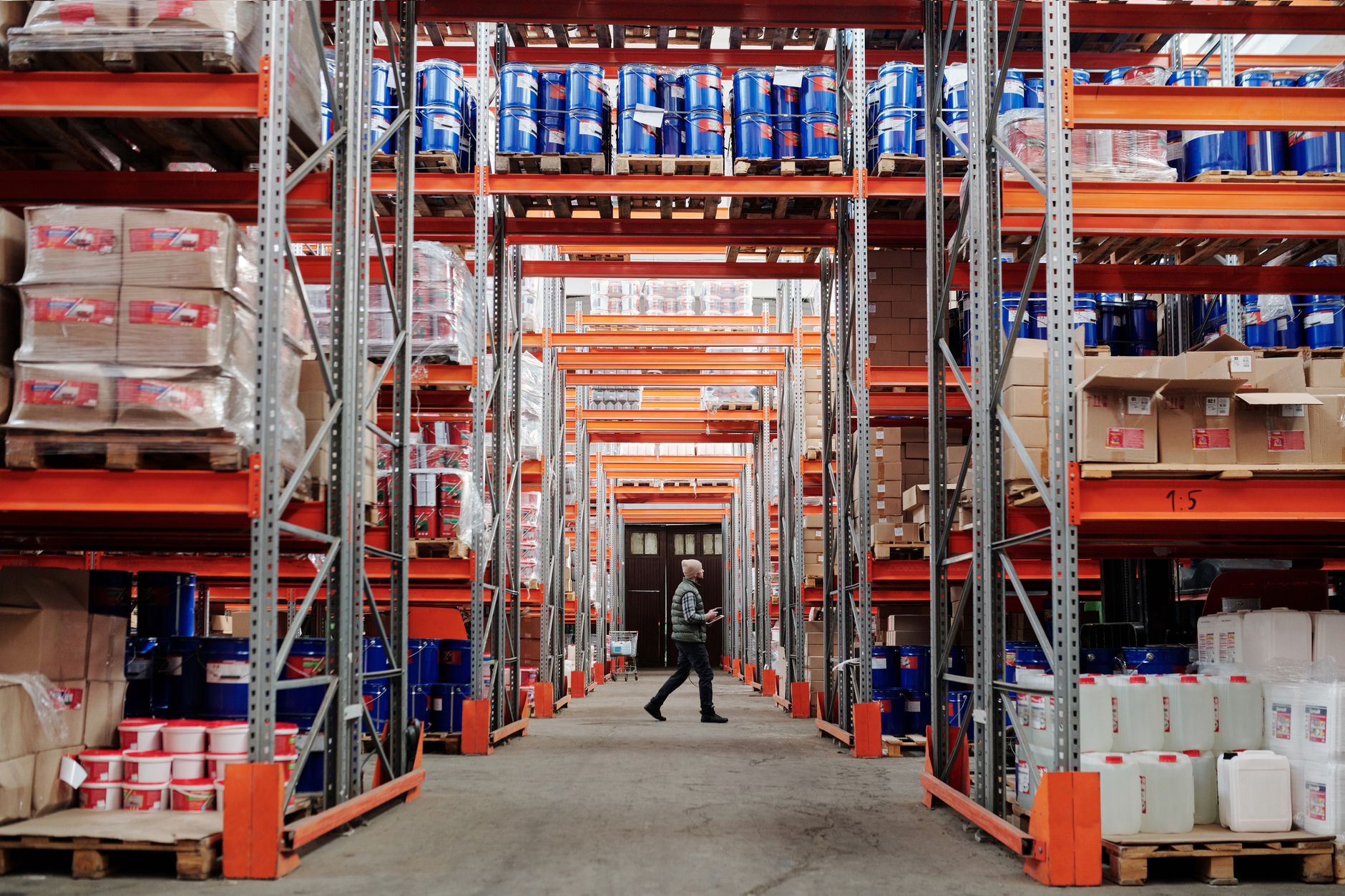
A material handler on a Memphis floor usually covers several jobs in one shift: receiving and putting away inbound loads, pulling orders or totes to staging, returning empty pallets and carts to the dock, and clearing jams or misplaced product. Much of the time goes to short moves with waiting in between, and that gap between moves is what makes the day hard to plan.
The job also carries injury exposure. According to the BLS Occupational Outlook Handbook, laborers and freight, stock, and material movers, hand have some of the highest rates of injuries and illnesses of all occupations, and the occupation accounted for 2,988,900 jobs in 2024.
For the industry, BLS Industry Injury and Illness Data for warehousing and storage (NAICS 493) shows a 2024 total recordable case rate of 4.8 per 100 full-time workers, with 1.5 per 100 involving days away from work. A safety review will ask about those figures, and a robot that takes repeat routes can reduce handling on those routes.

Which parts of the job can a robot take, and which can it not?
A robot takes the repeatable part of the route: moving a defined load from one mapped point to another, returning empty carts or pallets, and running the same loop between receiving, staging and the dock. These moves are where a fixed route pays off, because the robot does not need to be redirected on every run.
It cannot take the parts that depend on a person. It does not decide whether a damaged pallet goes to quality hold, it does not re-stack a leaning load, and it does not clear a blocked aisle or a dropped tote on its own. Those are the moves a material handler keeps, and they are often the ones that interrupt a shift.
Heavy or awkward lifting is the grey area. A standard robot moves loads it is built to carry, on carts or pallets it can engage. Loads that need a person to hook, strap or lift stay with the handler, and the site assessment decides where that line falls.
- Repeat route, same load
Autonomous Mobile Robot
Strong, runs the same loop without tiring
Material Handler
Good, but repetition is where errors and fatigue creep in
- Overnight or weekend coverage
Autonomous Mobile Robot
Runs on its schedule when no one is on site
Material Handler
Must be scheduled, covered and paid for the shift
- Irregular or damaged loads
Autonomous Mobile Robot
Stops or asks for help
Material Handler
Inspects, re-stages and decides
- Crowded floors and changing layouts
Autonomous Mobile Robot
Needs clear, mapped paths and time to re-map
Material Handler
Adjusts within seconds
- Heavy or awkward lifts
Autonomous Mobile Robot
Limited to loads it is built to carry
Material Handler
Can lift and reposition with judgment, though injury risk remains
- Shift changes and sick days
Autonomous Mobile Robot
Keeps its schedule
Material Handler
Needs cover, overtime or a missed route
What do Memphis labor and turnover figures say about nights and sick days?

This research pass did not verify occupation-level turnover, overtime, night-shift or sick-day figures for Memphis material handlers, so this page does not put numbers on them. The closest published proxy is industry-wide: according to the BLS JOLTS annual summary, the 2025 annual average quits rate across all industries was 2.0 percent.
For the trade, transportation and utilities group, FRED's seasonally adjusted quits series shows 2.6 in December 2025 and 2.3 in January 2026. Those are monthly sector rates, not directly comparable to the annual all-industry figure, so read them as a sign of churn in the sector rather than a precise comparison.
The figures that matter most come from your own records: unfilled shifts last quarter, overtime hours on the same route, and nights that ran short. Those counts are the inputs a site assessment will use, and they tell you more than any national rate.
How much of a Memphis shift can a robot take over?
The honest answer depends on how much of the shift is repeat route work. No published hour figures for this task were verified in this research pass, so the table below describes the kind of time each task takes, and the site's own log replaces those descriptions with numbers.
Start with the hours that go unfilled or get covered by overtime, since a robot is easiest to justify on work that is already costing a shift. Overnight route runs and vacancy coverage usually show up there first.
A robot does not reduce the handler's time one for one. The robot takes the route, and the staff member takes the exceptions. The saving shows up as fewer overtime hours and fewer missed routes, not as a smaller headcount.
How does a team work with a robot?
The model that works is a robot plus fewer staff, not zero staff. The robot runs the repeat route on schedule, and the handler moves from carrying every load to clearing exceptions, managing the staging area and watching for jams. Someone still owns the floor.
Staff roles change. The handler who used to run every route becomes the person who keeps the robot working, reloads it, clears its path and handles what it flags. That role needs a short training block and a clear escalation path for stopped units.
Expect the first weeks to look slower. Paths get mapped, the route gets tuned, and staff learn which stops need a person. The timeline below shows a typical shift once that settles.
What can a robot not do?
It cannot judge damage, decide quality holds or handle a load it was not built to carry. It also struggles in spaces with poor mapping, constant layout changes or heavy foot traffic that blocks its path.
It cannot replace a person in an emergency. A stopped robot in an aisle is a hazard until someone clears it, and fire, spill or injury response stays with trained staff.
It cannot remove injury risk from the job. The BLS injury data for this occupation applies to the whole task, and a robot may reduce handling exposure on the routes it takes, but the exceptions where people still lift remain.
Is leasing a robot worth it compared with staff hours?
A robot is leased through financing, and the payment is a fixed robot lease payment quoted after a free site assessment, not from a web estimate. Our team selects the robot for the site, arranges the lease financing, deploys and integrates the unit, trains staff and services it nationwide, so the decision rests on the site's own numbers.
The comparison that matters sets the lease payment against the overtime, missed routes and coverage gaps the robot removes, plus the time staff gain for exceptions. A robot that covers an overnight route nobody can staff is worth more than one that replaces a daytime task someone already does well.
Build the comparison from your own hours, not from a generic savings figure. A written quote should list lease financing, deployment, training and service in one place, and it should say whether maintenance is included.
How do you get started with an autonomous mobile robot in Memphis?
Start with one route, not the whole building. Pick the repeat move with the clearest gap, usually an overnight or weekend route, and measure it for at least one full cycle of shifts before scaling. A pilot on one route tells you more about your floor than any sector average does.
Bring your data. Pull the last few months of overtime, unfilled shifts and missed routes for that task, and note where the loads start and end. Those are the inputs for the free site assessment, which maps the floor and sets the route.
Then compare the quote with the gap, not the headline. Ask what happens when the unit is down, who responds, and how fast, since a robot that stops on a Friday night needs a fast answer. Get those answers in writing before signing.
Frequently asked questions
Put a robot to work in Memphis.
We walk your site, learn the job, and recommend the unit that fits. Then we quote the lease, deploy it, and keep it serviced.
Sources
- US Bureau of Labor Statistics, Occupational Employment and Wage Statistics (OEWS May 2024)
- BLS Southeast regional release, Memphis OEWS May 2025
- FRED, Memphis transportation, warehousing and utilities employment
- April 2025 industrial real estate report
- BLS Occupational Outlook Handbook, hand laborers and material movers
- BLS Industry Injury and Illness Data, NAICS 493
- BLS JOLTS annual summary, 2025
- FRED, quits rate for trade, transportation and utilities